The CoreXY Evolution: Prusa’s Strategic Pivot
For a decade, the ‘i3’ bedslinger was the face of hobbyist 3D printing. But as the market shifted toward enclosed, high-speed machines, Prusa Research faced a choice: adapt or become a legacy brand. The CORE One and CORE One L represent more than just new printers; they are a direct engineering counter-strike against the ‘appliance-style’ dominance of competitors like Bambu Lab. By abandoning the moving-bed architecture for a rigid CoreXY frame, Prusa isn’t just chasing speed—they are attempting to preserve the repairable, open-source ethos in an era of proprietary walled gardens.
Key Takeaways
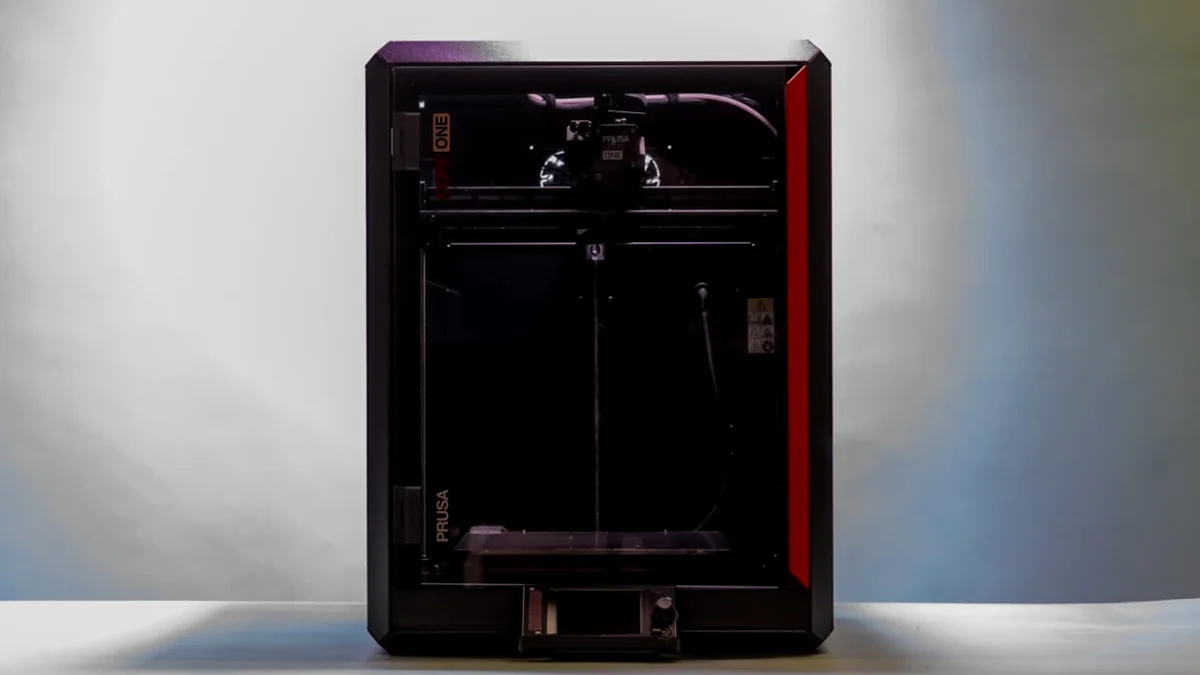
- The CORE One features a unique all-steel exoskeleton that is 50% more space-efficient than an enclosed MK4S.
- Active chamber temperature control (up to 55°C) enables reliable printing of engineering materials like ASA and PC.
- Prusa is introducing the Open Community License (OCL) to protect against patent trolling while maintaining open-source values.
- The upcoming INDX toolchanger (Q2 2026) is the platform’s ‘killer app’ for multi-material printing.
- Significant community tension exists regarding the ‘Prusa Tax’ vs. the out-of-the-box polish of cheaper rivals.
Deconstructing the Exoskeleton: Hardware Specs
| Prusa CORE One vs. CORE One L Technical Specifications | ||
|---|---|---|
| Feature | CORE One | CORE One L |
| Build Volume | 250 x 220 x 270 mm | 300 x 300 x 330 mm |
| Motion System | CoreXY (Steel Frame) | CoreXY (Aluminum Frame) |
| Max Nozzle Temp | 290°C (Standard) | 290°C (Standard) |
| Chamber Temp | Active (up to 55°C) | Active (up to 60°C) |
| Electronics | 32-bit xBuddy / Trinamic 2130 | New AC-powered Heatbed Controller |
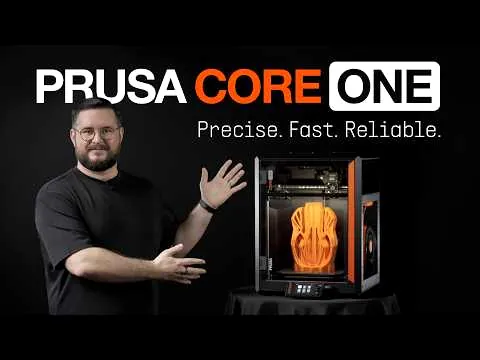
The core of the machine features the refined Nextruder toolhead, 10mm rods for increased rigidity, and active ventilation dampers for precise chamber thermal control.
The Software Ecosystem & The OCL Gambit

PrusaSlicer remains the gold standard for open-source slicing.

Prusa Connect offers cloud-based farm management.

The new mobile app interface for remote monitoring.
“The OCL is a necessary legal shield… providing creators with a second legal weapon—breach of contract—which is often faster and cheaper to prove than prior art.”
— Prusa Research Licensing Brief
The Multi-Material Future: MMU3 vs. INDX
Pros
- Unmatched long-term repairability and part availability.
- Fully open-source firmware and mod-friendly hardware.
- Superior thermal management for engineering-grade filaments.
- Local-only / Offline mode for high-security environments.
Cons
- Premium ‘Prusa Tax’ pricing compared to feature-equivalent rivals.
- Launch ‘quirks’ like VFAs and missing native RFID support.
- MMU3 is less user-friendly than the Bambu AMS.
- 290°C nozzle limit restricts ultra-high-temp engineering plastics.
Frequently Asked Questions
Can I upgrade my MK4S to a CORE One?
Yes, a conversion kit is scheduled for March 2025, though reviews suggest it may be more economical to purchase a new unit given the complexity of the build.
Does the CORE One require an internet connection?
No. Unlike some competitors, the CORE One features a removable Wi-Fi module and can be operated entirely via USB and Ethernet for maximum security.
What is the INDX system?
It is a toolchanging upgrade developed with Bondtech that allows for up to 8 materials with near-zero waste, using magnetic induction heating.
Final Verdict
The Prusa CORE One is a statement of intent. It isn’t trying to be the cheapest or even the fastest ‘gadget’ on the market. Instead, it is a precision tool built for the long haul, catering to those who value engineering transparency and the right to repair over a shiny, closed-source UI. If you are a professional or a serious maker who views a printer as a 10-year investment, the CORE One is the new benchmark. If you want a plug-and-play appliance, the competition still holds the edge in ‘out-of-the-box’ polish.