

For many seasoned PC gamers, the name QPAD evokes a sense of nostalgia, recalling a brand once synonymous with cutting-edge, quality peripherals in the early 2000s. After a period of relative quiet, the iconic Swedish gaming outfit is back, and they’ve returned with a statement piece: the QPAD Flux 65 Model 5. This isn’t just another compact mechanical keyboard; it’s a direct challenge to the burgeoning Hall Effect (HE) market, a technology rapidly gaining traction in competitive circles for its promise of unparalleled speed and customization. The Flux 65 Model 5 arrives ready to prove that QPAD’s legacy of accessible innovation is far from over.
- The QPAD Flux 65 Model 5 delivers excellent typing and gaming performance, showcasing a triumphant return for the brand.
- It offers robust Hall Effect customization, including adjustable actuation and rapid trigger, which provides a significant competitive edge.
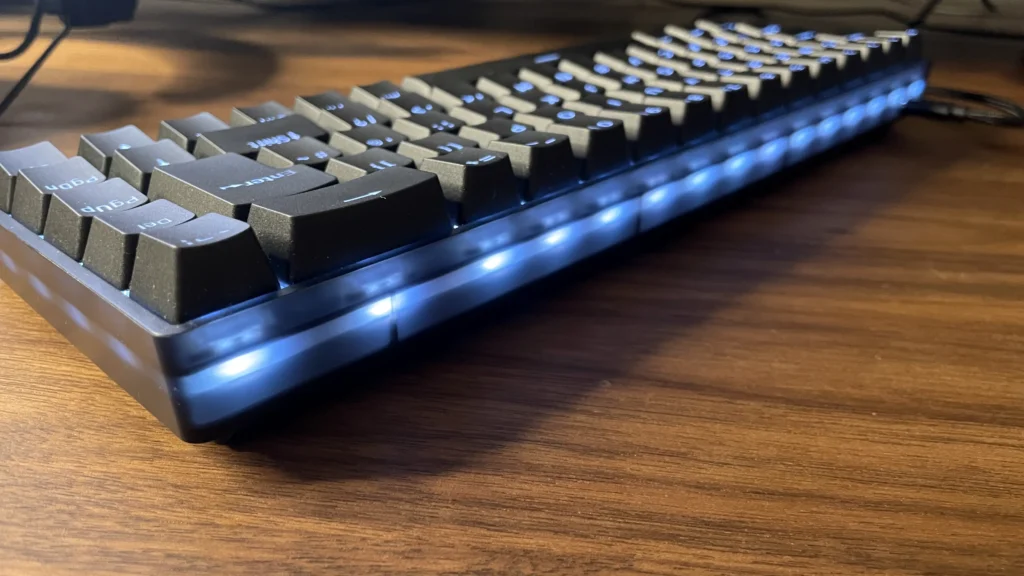
- Despite its competitive price, the keyboard features a premium build quality with effective silicone dampening.
- Key drawbacks include the absence of Bluetooth connectivity and minor keycap shine-through issues.
- Positioned as a strong and value-driven contender, it directly challenges established Hall Effect keyboard leaders.
QPAD’s Resurgence: Blending Legacy with the Future of Input
QPAD, a name etched into the history books of PC gaming, first emerged in 1994 as a Scandinavian studio dedicated to precision peripherals. For years, the brand was a quiet leader, often recommended on forums for its quality mice and keyboards. Now, after a significant hiatus, QPAD has announced its official return, spearheaded by industry veterans like Baron Lee, former HyperX product architect, now their Chief Product Officer, and CEO Morten-Stig Johansen. Their vision is clear: to deliver ‘accessible innovation,’ bringing professional-grade performance and cutting-edge design to a broader audience. This comeback is particularly significant in a competitive peripheral landscape often dominated by a few major players, as QPAD aims to reclaim its spot by bridging the gap between enthusiast-grade quality and mainstream accessibility.
“Having spent years in the gaming peripherals industry, I’ve seen how innovation often reaches players too late. At QPAD, we’re changing that by bringing cutting-edge technologies and design trends to market ahead of the curve. We deliver technology that excites, meaningful innovation that makes a real difference to how people play and create, and performance that lasts.”
Flux 65 Model 5: Deconstructing the Hall Effect Advantage
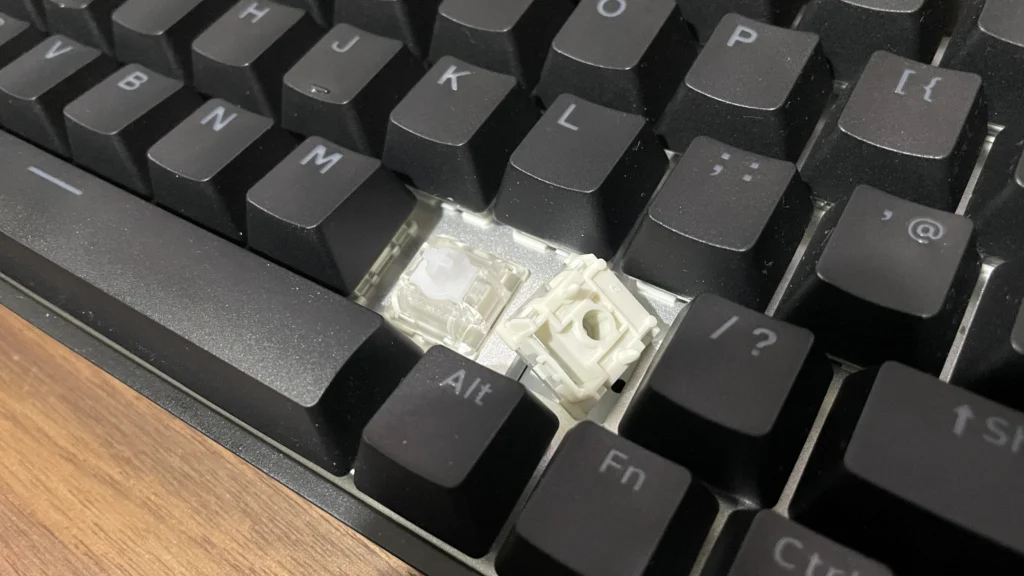
At the heart of the Flux 65 Model 5 lies Gateron Hall Effect Dual Rail switches, representing a significant leap beyond traditional mechanical switches. Unlike their mechanical counterparts, Hall Effect switches utilize magnetic fields to detect keypresses, eliminating physical contact points. This design inherently offers superior durability and precision. Crucially for competitive gamers, these switches enable features like Rapid Trigger, which resets the key the instant pressure is released, and per-key adjustable actuation, allowing users to fine-tune the travel distance required for a keypress from 0.5mm to 3.8mm. These capabilities translate directly into faster, more responsive inputs and unparalleled customization for diverse playstyles.

In Practice: Gaming Performance and Typing Experience
In the heat of battle, the Flux 65 Model 5 truly shines. Its Gateron Hall Effect Dual Rail switches, combined with an ultra-responsive 8K Hz polling rate, deliver a tangible competitive advantage. The Rapid Trigger functionality, allowing keys to reset the instant pressure is lifted, translates into incredibly quick inputs and snappier counter-strafing, particularly noticeable in demanding titles like Counter-Strike 2. With per-key adjustable actuation, users can set ultra-shallow trigger points (as low as 0.5mm for WASD) for lightning-fast reactions, while other keys can be configured for deeper presses to prevent misfires. This level of granular control empowers players to tailor their input precisely to their playstyle, offering a level of responsiveness that feels genuinely game-changing.
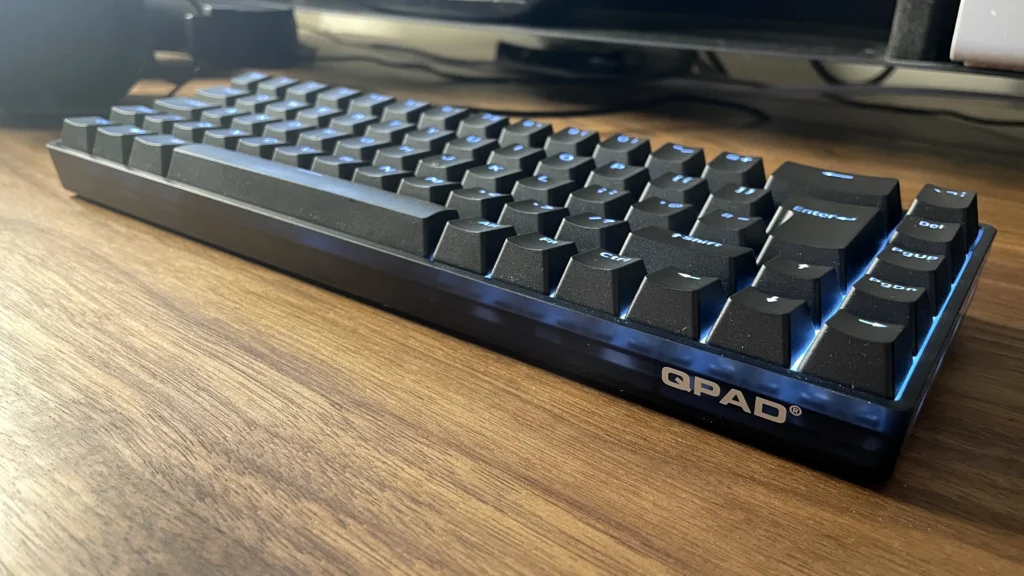
Beyond its gaming prowess, the Flux 65 Model 5 offers a surprisingly premium typing experience. The integrated silicone dampening works wonders, producing a satisfying, somewhat muted ‘mighty clack’ that avoids harsh resonance. Reviewers, including those at PC Gamer, have lauded its acoustic profile, often preferring it over more established premium boards like the Keychron Q5 HE. The smooth, linear Gateron switches, combined with durable double-shot PBT keycaps and well-tuned stabilizers, contribute to an exceptionally stable and enjoyable feel under the fingertips. This thoughtful engineering ensures the Flux 65 is not just a gaming tool, but a pleasure for extended typing sessions too.
The QPAD Qontrol software acts as the command center for the Flux 65, enabling users to fine-tune key bindings, create macros, customize RGB lighting, and, most importantly, meticulously adjust Hall Effect parameters. While functional and responsive, the software’s desktop-based nature is a point of contention in an era where web-based, Via-compatible solutions are becoming the preferred standard for their convenience and cross-platform accessibility. This design choice, as noted in the PC Gamer review, marks a minor but noticeable deviation from modern enthusiast preferences, requiring a local installation rather than a seamless browser experience.
The Verdict: Strengths, Weaknesses, and Value Proposition
- Fantastic typing sound and feel (the ‘mighty clack’)
- Excellent rapid trigger and per-key actuation customization
- Space-saving 65% compact form factor
- Premium build quality with integrated silicone dampening
- Ultra-fast 8K Hz polling rate for competitive precision
- Durable Gateron Hall effect switches
- Competitive price point for a Hall effect keyboard
- Minor keycap shine-through issues on some larger keys
- Software is desktop-based, not web-based (e.g., Via-compatible)
- No Bluetooth connectivity, limiting portability despite compact size
- Default actuation can be very light, requiring adjustment for some users
- No dedicated Function row or Numpad (inherent to 65% form factor)
QPAD Flux 65 Model 5 vs. The Hall Effect Competition
The QPAD Flux 65 Model 5 enters a Hall Effect keyboard market that, while still niche, is rapidly growing and becoming increasingly competitive. Its pricing and feature set position it directly against established players and popular newcomers. While keyboards like the Keychron K2 HE offer a 75% layout with Bluetooth, the Flux 65 counters with its superior 8K Hz polling rate and a notably more refined typing sound. Similarly, it competes with compact options like the NuPhy Air60 HE, often coming in at a more accessible price point without sacrificing core HE performance. Even against the highly acclaimed Wooting 80HE, the Flux 65 offers a compelling alternative, especially for those prioritizing a compact form factor and a slightly more budget-friendly entry into high-performance Hall Effect technology.
| Feature | QPAD Flux 65 Model 5 | Keychron K2 HE | NuPhy Air60 HE | Wooting 80HE |
|---|---|---|---|---|
| Form Factor | 65% | 75% | 60% | 80% (TKL) |
| Switch Type | Gateron HE Dual Rail | Gateron HE | Gateron HE | Lekker switches |
| Connectivity | Wired (USB-C) | Wired / BT | Wired / BT | Wired (USB-C) |
| Polling Rate | 8000 Hz | 1000 Hz | 1000 Hz | 1000 Hz |
| Software | Desktop (Qontrol) | Desktop (Launcher) | Desktop (Console) | Web (Wootility) |
| Approx. Price | £119.99 | ~£140 | Similar | Higher |
Community Pulse: Addressing the Hall Effect Debate and Availability
The gaming community’s sentiment around Hall Effect technology is a complex blend of excitement and skepticism. Many are thrilled by the promise of instant resets and unparalleled customization, viewing HE as the future of competitive input. Yet, a vocal segment expresses doubt, often quipping, ‘Its in their minds lol,’ suggesting the tangible benefits are overstated. Beyond the performance debate, a significant emotional hotspot is the persistent frustration with product availability and market saturation. New HE keyboards often face long wait times or limited regional launches, leading to disappointment. QPAD’s Flux 65 Model 5 navigates this landscape by offering a compelling, readily available option (at least in the UK/EU), directly addressing the demand for high-performance HE tech while striving to overcome the market’s access hurdles.
Is Hall Effect technology truly a game-changer for competitive play?
How does the QPAD Flux 65’s sound profile compare to other premium keyboards?
What are the main alternatives to the QPAD Flux 65, and how does its value compare?
The QPAD Flux 65 Model 5 represents a triumphant and impactful return for a legacy brand. It delivers on its promise of cutting-edge performance with excellent Hall Effect customization and a genuinely satisfying typing experience, all wrapped in a premium, compact package at a competitive price. While the desktop-only software, lack of Bluetooth, and minor keycap inconsistencies are noted flaws, they do little to detract from the overall outstanding package. For competitive gamers and enthusiasts seeking a high-performance Hall Effect keyboard that also excels as a daily driver, the Flux 65 Model 5 is an easy recommendation.