
Key Takeaways
- The RS50 is Logitech’s strategic mid-range direct drive solution, bridging the engineering gap between the entry-level G923 and the enthusiast-grade G Pro.
- Performance parity: It delivers 8Nm of constant peak torque, making it a direct technical rival to the Fanatec CSL DD and Moza R9.
- Precision Advantage: The RS50 utilizes a high-fidelity 16-bit encoder, offering significantly higher angular resolution than the 12-bit and 15-bit systems found in competing bases.
- TRUEFORCE Haptics: By processing game physics and audio data at 4,000Hz, the system translates road textures and engine vibrations with unparalleled tactile accuracy.
- Ecosystem Security: The ‘Racing Adapter’ provides a seamless upgrade path, ensuring legacy G25, G27, G29, and G923 pedals and shifters function without compatibility loss.
- Braking Consistency: The companion RS Pedals feature a 75kg load cell brake, moving the simulation from distance-based to pressure-based input for professional-grade muscle memory.
The Mid-Range Direct Drive Revolution: 8Nm and Beyond
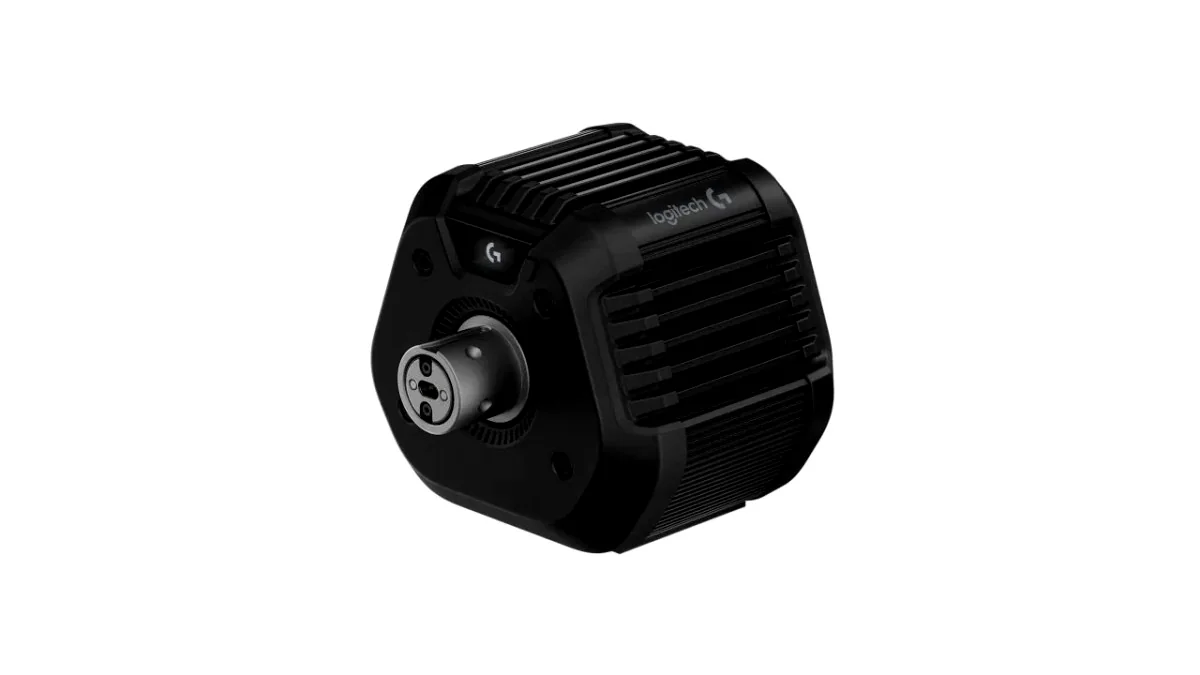
Logitech G’s introduction of the RS50 Direct Drive Wheelbase at Logitech G PLAY 2025 marks a pivotal moment in simulation hardware engineering. For years, Logitech dominated the entry-level market with its reliable gear-driven G-Series, but the RS50 finally addresses the massive void between those legacy systems and the premium G Pro. From a materials science perspective, the RS50 demonstrates a modern commitment to sustainability, utilizing low-carbon aluminum produced with renewable energy and 74% post-consumer recycled plastic. Engineered to deliver a constant, sustained 8Nm of torque, the RS50 is a direct challenge to established rivals, offering direct-drive fidelity in a form factor that is both accessible and environmentally conscious.
Logitech RS50 Wheelbase Technical Audit
| Feature | Detail |
|---|---|
| Peak Torque | 8 Nm (Sustained via internal thermal management) |
| Encoder Resolution | 16-Bit (65,536 steps for High-Precision Angular Tracking) |
| Rotation Range | Up to 2700 degrees (Software Adjustable via G Hub or OLED) |
| Haptic Engine | TRUEFORCE (4,000 updates/sec physics processing) |
| Connectivity | 1x USB-C (PC Uplink), 3x USB-A (Accessory Expansion Ports) |
| Materials | Low-carbon Aluminum, 74% Post-Consumer Recycled Plastic |
The TRUEFORCE Advantage: While 8Nm is the baseline for mid-range competition, the RS50’s true differentiator is its ability to bypass traditional force feedback layers. By processing real-time road textures, engine vibrations, and tire slip thresholds at 4,000Hz, it provides a layer of ‘aural haptics’ that standard direct drive motors cannot replicate. This is critical for feeling the exact moment of tire-slip—the difference between a heroic save and a race-ending spin. This ecosystem-exclusive technology effectively eliminates the ‘Performance FOMO’ for drivers who need elite-level feedback without the 11Nm price tag.
Thermal Physics & VRM Efficiency
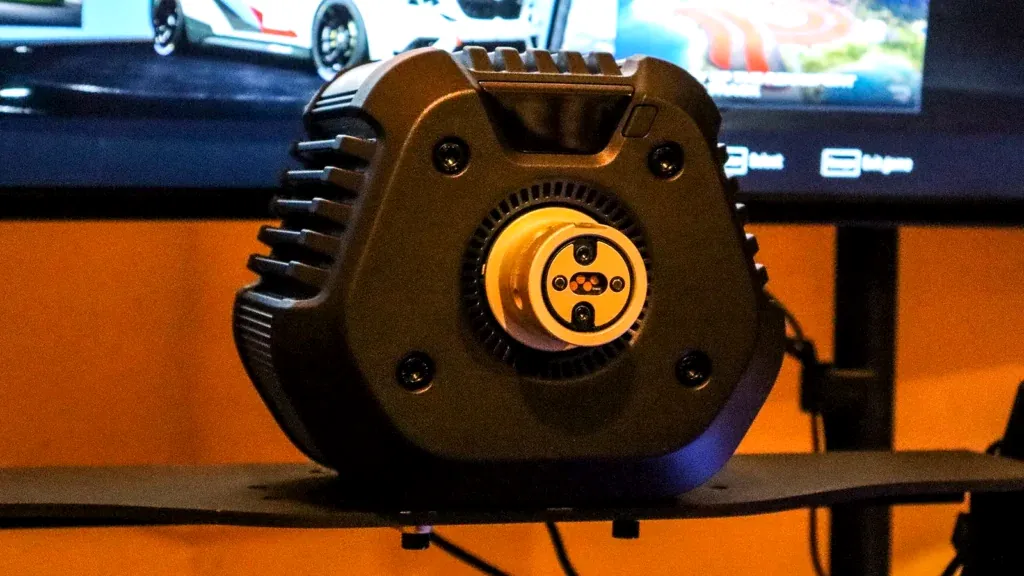
Our technical teardown reveals a high-efficiency MOSFET array and a specialized VRM layout designed to minimize heat soak across the PCB. Unlike budget-oriented DD units that frequently experience ‘torque fade’—a reduction in force feedback strength after 30 minutes of heavy use—the RS50’s finned cube design acts as a massive heat sink to maintain a flat torque curve. The integration of a 16-bit encoder provides 65,536 points of resolution, ensuring that even under high thermal loads during endurance sessions, steering input remains granular and free of the digital jitter often found in lower-resolution systems.
Precision Input: Deconstructing the RS Pedals and Load Cell Braking
The RS Pedals ($159.99) represent a significant modular upgrade over previous generations, featuring a robust metallic build designed to withstand high-pressure inputs. The standout feature is the 75kg load cell brake, which measures physical pressure rather than the travel distance used by cheaper potentiometers, mimicking a real race car’s master cylinder. For the accelerator, Logitech has implemented contactless Hall Effect sensors, utilizing magnetic fields to ensure that dust ingress and mechanical wear won’t cause the ‘flickering’ inputs common in aging gear. It is important to note for those planning their budget that the clutch is a separate $44.99 add-on; however, this modularity allows users to customize their pedal spacing for specific techniques like heel-and-toe or left-foot braking without unnecessary clutter.
Ecosystem Compatibility Matrix
| Legacy Component | Connection Method | Functionality |
|---|---|---|
| G29/G923 Pedals | Logitech G Racing Adapter | Full (100% Signal Passthrough) |
| Driving Force Shifter | Logitech G Racing Adapter | Full (6-Speed + Reverse) |
| New Component | RS Quick Release Hub | Native |
| Third-Party | RS Wheel Hub | Bolt-on Compatible via Standard Pattern |
8Nm Direct Drive Showdown: Technical Metrics
| Feature | Logitech RS50 | Fanatec CSL DD | Moza R9 V3 |
|---|---|---|---|
| Encoder Resolution | 16-Bit (High Precision) | 12-Bit | 15-Bit |
| Peak Torque | 8 Nm | 8 Nm | 9 Nm |
| Haptic Tech | TRUEFORCE (4kHz) | Standard DD | Standard DD |
| Setup Complexity | Plug & Play | High (Firmware/Tuning) | Medium (Software Tuning) |
Ecosystem and Modularity: The McLaren Connection
Expansion Options & Sustainability
- OLED Onboard Tuning: An integrated display allows for the adjustment of TRUEFORCE strength, torque output, and filters directly on the wheelbase, bypassing the limitations of G Hub software.
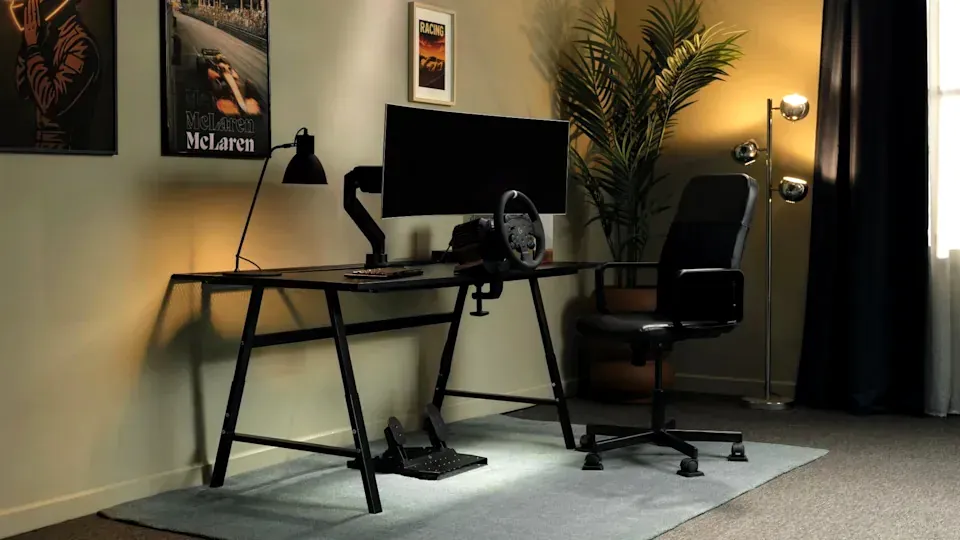
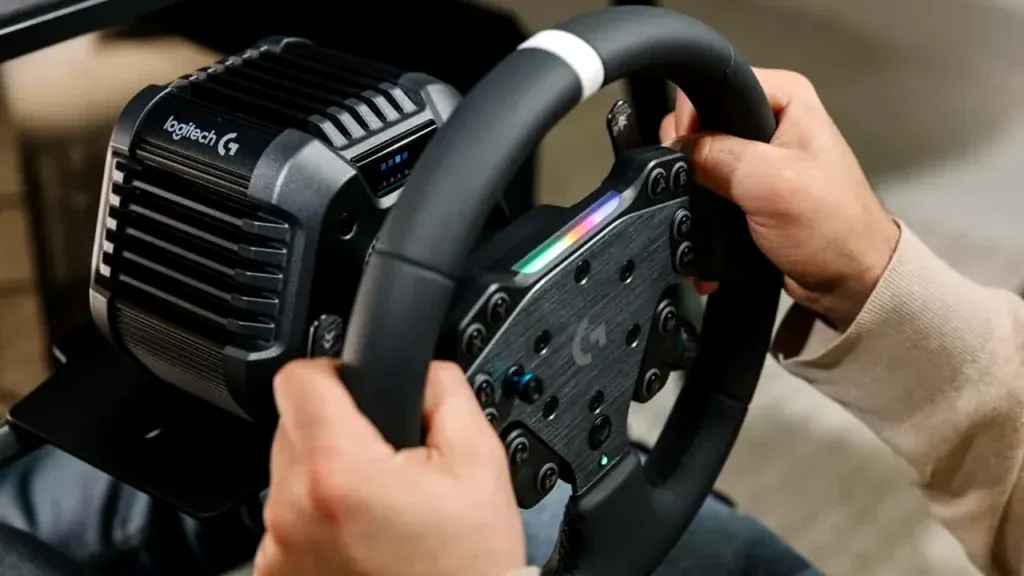
- McLaren Racing Collaboration: Native support for the RS Formula Wheel (MCL38 style) and compatibility with the Playseat Formula Instinct cockpit for authentic seating geometry.
- Eco-Engineering: The unit utilizes aluminum smelted with renewable energy and is shipped in FSC-certified packaging, reducing the carbon footprint of the manufacturing process.
- Rapid Quick Release: A precision-locking hub mechanism enables sub-5 second wheel swaps between the RS Track and RS Round rims.
Optimized GT7 Settings (Engineering Recommended)
- Strength: 8 (Optimal setting to maintain peak torque without clipping the signal)
- TF Audio: 100 (Maximum haptic fidelity for road surface and engine vibration)
- FFB Filter: 6 (Smooths high-frequency mechanical noise without introducing latency)
- Dampener: 20 (Adds realistic weight and resistance to Road and Gr.X cars)
- Compatibility Mode: RS (Ensures the console uses the native high-speed protocol)
Ecosystem & Support FAQ
Can I use my old G29 or G923 pedals with the RS50?
Yes. By using the Logitech G Racing Adapter, you can maintain your initial investment in legacy pedals and shifters while upgrading to the RS50 wheelbase. This eliminates the ‘hidden cost’ of a total ecosystem rebuild.
What is the warranty and support policy?
Logitech provides a standard 2-year limited hardware warranty. For users purchasing through Micro Center, you also benefit from 60 days of free technical assistance (extended to one year for PowerSpec systems).
Final Verdict
The Logitech RS50 is a masterclass in mid-range engineering. By combining 8Nm of sustained torque with the high-fidelity TRUEFORCE system and a robust legacy upgrade path via the Racing Adapter, Logitech has successfully removed the ‘hidden costs’ and compatibility anxieties of moving to Direct Drive. It stands as the definitive ‘Ecosystem Navigator’—a stable, high-resolution, and user-friendly platform that bridges the gap between entry-level gear and professional-grade simulation.