
Key Takeaways
- The Steam Machine (dubbed the ‘GabeCube’ by fans) is a compact, powerful living room PC running Zen 4 CPU and RDNA 3 GPU (equivalent to an RX 7600M), offering six times the power of the Steam Deck.
- Its success hinges entirely on hitting the $400-$500 ‘sweet spot’ price point to compete with consoles, but Valve’s estimated Bill of Materials (BoM) is only $300.
- A major report warns that a looming worldwide DDR5 RAM shortage could severely limit availability, force Valve to sell ‘bare bones’ units without pre-installed RAM/SSD, or potentially cancel the launch entirely.
The Second Coming: Why Valve is Betting on the ‘GabeCube’
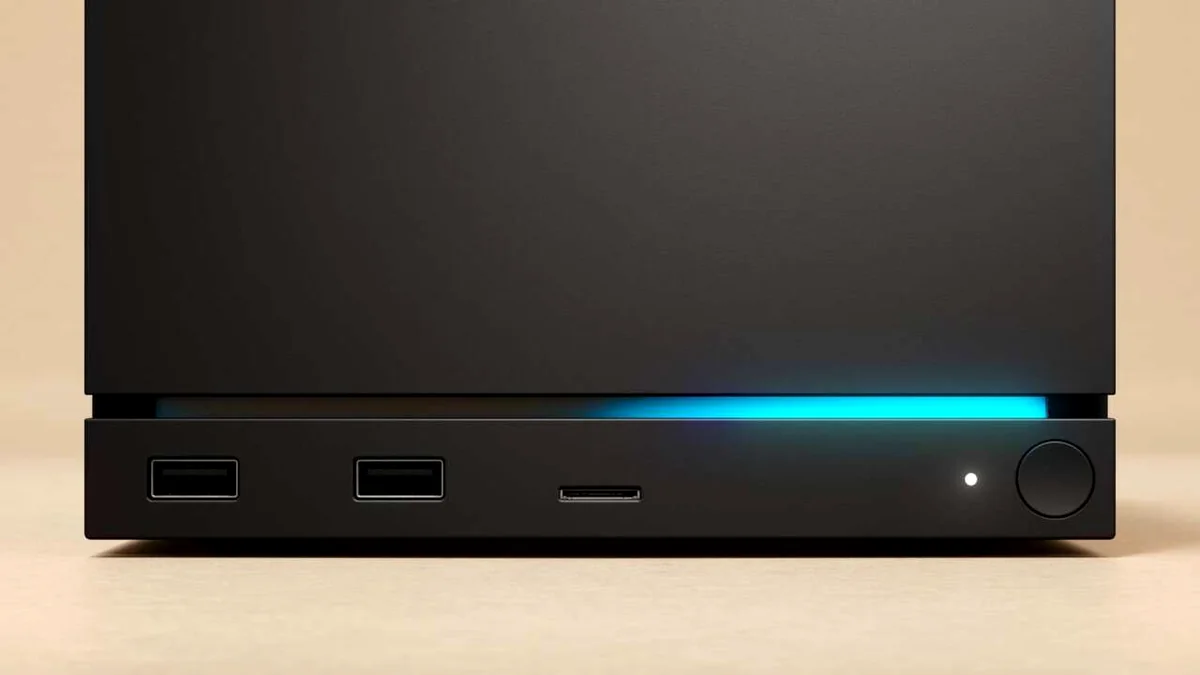
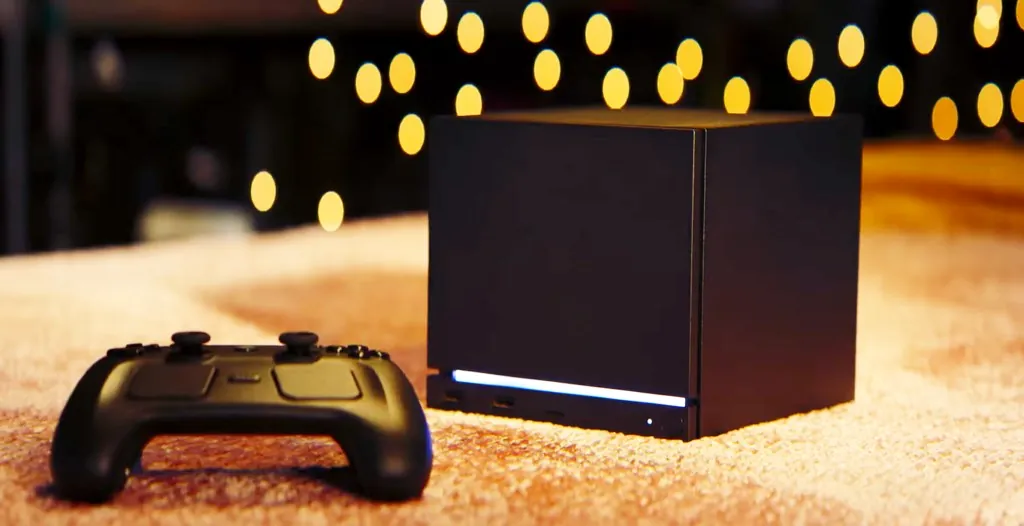
Valve’s first attempt at a living room PC over a decade ago failed due to fragmented hardware and an immature Linux ecosystem. Now, the landscape is entirely different. The new Steam Machine—a sleek, 2.6 kg black cube—is the direct strategic successor to the massively successful Steam Deck. Valve is leveraging the robust SteamOS 3 and Proton compatibility layer, which has proven it can run the vast majority of Windows games seamlessly on Linux. The goal is clear: capture the 20% of existing Steam Deck users who already utilize a dock to connect their device to a TV. By offering six times the raw processing power of the Deck in a dedicated, high-performance living room box, Valve aims to convert these power users into permanent PC gamers, providing console-like convenience with PC openness. This device is not merely a console competitor; it is a full-fledged, user-upgradeable PC designed to anchor Valve’s ecosystem in the center of the home.
Let’s be honest. It is not the lunch box. Regardless of its success or failure, this device will forever be known as the ‘Valve GabeCube.’
Hardware Deconstructed: The Steam Machine’s Core Specifications
Valve Steam Machine (2026) Technical Specifications
- CPU
- 6c/12t Zen 4, up to 4.8 GHz, 30W TDP
- GPU
- RDNA 3, 28 CUs, 110W TDP, RX 7600M equivalent
- Memory
- 16GB DDR5 System RAM, 8GB GDDR6 VRAM
- Storage
- 512GB / 2TB NVMe SSD, M.2 2230/2280 upgradeable
- Video Output
- DisplayPort 1.4, HDMI 2.0
- Dimensions
- 152mm x 162.4mm x 156mm, 2.6 kg
Steam Machine vs. Current-Gen Consoles: The Power Balance
| Criteria | Valve Steam Machine (Estimated) | PlayStation 5 | Xbox Series X |
|---|---|---|---|
| CPU Architecture | Zen 4 (6 cores, newer architecture) | Zen 2 (8 cores, older architecture) | Zen 2 (8 cores, older architecture) |
| GPU Power | 28 CUs RDNA 3 (RX 7600M equivalent) | 36 CUs RDNA 2 (10.28 TFLOPS) | 52 CUs RDNA 2 (12.15 TFLOPS) |
| Dedicated VRAM | 8GB GDDR6 (Dedicated) | Unified (16GB GDDR6 shared) | Unified (16GB GDDR6 shared) |
| Target Resolution/FPS | 4K/60 via FSR 3 Upscaling | 4K/60–120 (Native/Upscaled) | 4K/60–120 (Native/Upscaled) |
| Estimated Price | $400–$500 | $500 | $500 |
The Performance Reality: 8GB VRAM and the FSR 3 Dependency
The raw specification sheet reveals a critical bottleneck that could define the Steam Machine’s long-term viability: the 8GB of dedicated GDDR6 VRAM. While this is a significant step up from the Steam Deck’s unified memory, 8GB is rapidly becoming the minimum acceptable standard for 1080p, let alone the 4K resolution Valve is targeting. Modern AAA titles, especially those utilizing high-resolution textures and ray tracing effects, routinely demand 10GB or more VRAM at 4K settings. Consequently, Valve’s ambitious claim of “4K/60 FPS” is entirely dependent on the effectiveness of AMD’s FidelityFX Super Resolution 3 (FSR 3) upscaling technology. The Steam Machine will not run demanding titles natively at 4K/60 FPS; it will render at a lower internal resolution and use FSR 3 to reconstruct the image. Furthermore, the RDNA 3 architecture used in the GPU is not forward-compatible with the next generation of features, such as the rumored RDNA 4 advancements or FSR 4 upscaling. This means that while the Zen 4 CPU is cutting-edge, the GPU may lag behind console rivals in future performance updates, forcing the Steam Machine to rely on current-gen upscaling techniques for the entirety of its lifecycle.
The Trade-Off: Convenience vs. Customization
Pros
- Plug-and-play living room experience via SteamOS, offering instant suspend/resume.
- Open platform: Users can easily install Windows, GOG, Epic Games Store, and Game Pass.
- User-upgradeable RAM (SODIMM) and SSD (M.2 2230/2280), extending the device’s lifespan.
Cons
- CPU and GPU are BGA soldered and non-replaceable, frustrating DIY enthusiasts.
- Performance relies heavily on AI upscaling (FSR 3) to hit 4K/60 FPS targets.
- Limited 8GB VRAM may bottleneck future 4K titles running high-fidelity textures.
The Existential Threat: Why the Steam Machine Might Be Impossible to Buy in 2026
The single greatest threat to the Steam Machine’s successful Q1 2026 launch is not its competition, but the global supply chain. According to a recent report from tech insider Moore’s Law Is Dead (MLID), a massive worldwide shortage of DDR5 RAM is expected to peak throughout 2026. Since the Steam Machine relies on 16GB of DDR5 memory modules, this looming crisis poses an existential risk. MLID issued a dire warning, suggesting that if Valve failed to secure a massive, dedicated stockpile of DDR5 components many months ago, the resulting shortage could force the company to severely limit availability, delay the launch, or even cancel the product entirely. Valve’s ability to hit the crucial $400-$500 price point relies entirely on the cost and availability of these components, making proactive supply chain management the most critical factor in the device’s market success.
Supply Chain Warning: MLID suggests Valve’s mitigation strategy may involve releasing a ‘bare bones’ version of the Steam Machine—sold without RAM or an SSD—until the shortage subsides. Only the initial launch batch may contain the full components, making day-one purchases crucial.
Ecosystem and Peripherals: The New Steam Controller
New Steam Controller Key Features
- Symmetrical layout with two magnetic TMR thumbsticks (eliminating drift and enhancing precision).
- Dual pressure-sensitive haptic touchpads, mirroring the acclaimed Steam Deck input style.
- Proprietary 2.4GHz wireless puck that provides ultra-low latency (8ms) and doubles as a charging unit.
- Capacitive grips and 6-axis IMU gyro, enabling comprehensive motion control and input activation.
Steam Machine Cornerstone FAQ
When is the official release date?
Valve has provided a release window of Q1 2026, meaning the device is expected to go on sale no later than March 31, 2026.
Can I install Windows or other launchers?
Yes. The Steam Machine is an open platform. While it ships with SteamOS, users can install Windows, or utilize third-party launchers such as Epic Games Store, GOG, and the Xbox App/Game Pass.
What is the expected price range?
Analysts predict a crucial price point between $400 and $500, which is necessary to compete with current-gen consoles. Valve’s estimated Bill of Materials (BoM) sits around $300.
Is the RAM or storage upgradeable?
Yes. Valve designed the machine with user modularity in mind. Both the DDR5 SODIMM RAM and the NVMe SSDs (M.2 2230/2280) are user-accessible and upgradeable.
Final Verdict
The new Steam Machine, affectionately dubbed the ‘GabeCube,’ is perhaps the most compelling piece of gaming hardware announced for 2026. It strikes a near-perfect balance, offering the plug-and-play convenience of a console while retaining the necessary openness and upgradeability (RAM and SSD) that defines the PC ecosystem. Its Zen 4/RDNA 3 architecture provides genuine current-gen performance, making it a powerful entry point into 4K gaming, even if that promise is contingent upon AMD’s FSR 3 upscaling technology. However, the Steam Machine’s narrative is entirely overshadowed by two colossal external risks. First, Valve must achieve the aggressive $400-$500 price target to make a dent against the PS5 and Xbox Series X, a feat made easier by its reported $300 BoM. Second, the impending global DDR5 shortage threatens to choke supply lines entirely. If Valve successfully navigates the supply crisis and commits to the $400 sweet spot, the ‘GabeCube’ will be a market phenomenon, bringing millions of new users into the Steam ecosystem. If they fail to secure stock or are forced to raise the price due to component costs, the Steam Machine risks becoming the second, decisive flop in Valve’s history of living room hardware.