
Key Takeaways
- The game is slated for a worldwide release on February 6, 2026, across all major platforms.
- The story mode covers the climactic Final War arc, offering full narrative coverage playable from both Hero and Villain perspectives.
- It introduces the ‘Team-Up Mission’ mode, functioning as a fully realized open-world hub for training, exploration, and game-original side quests.
- Despite ambitious new features, the community harbors deep skepticism, fearing low-quality execution and genre fatigue typically associated with anime arena fighters.
All For One vs. All For Naught: Why Fan Cynicism Is the Real Final Boss
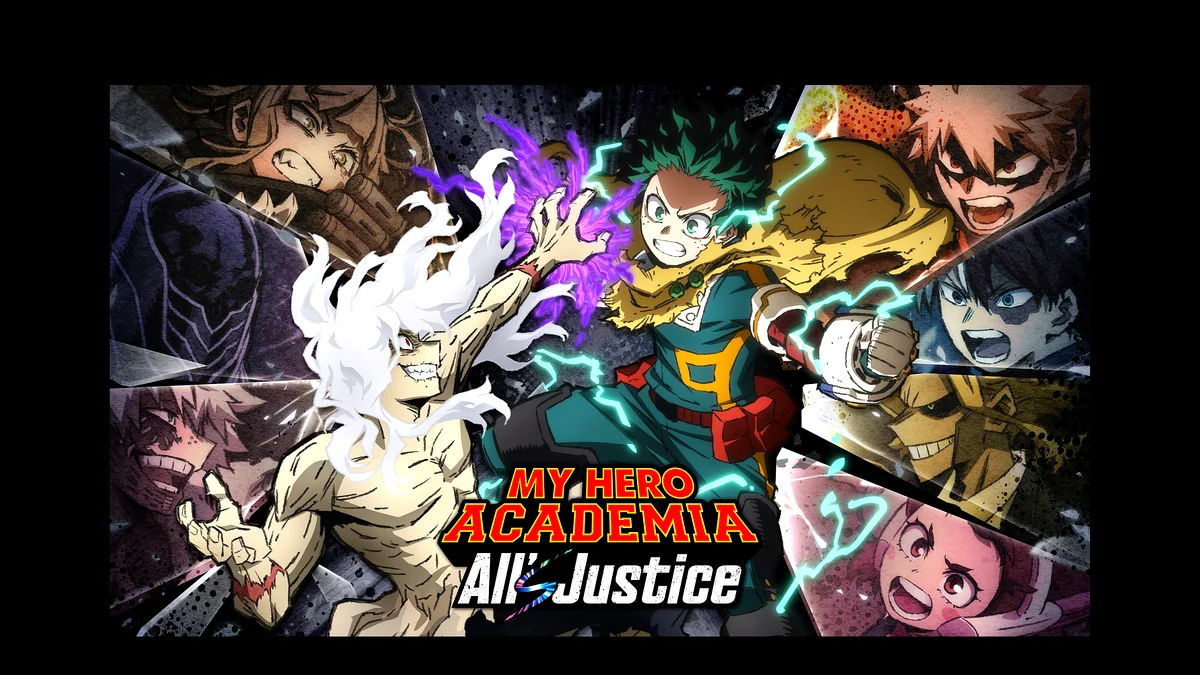
The announcement of MY HERO ACADEMIA: All’s Justice, a super-powered 3D arena fighter focused squarely on the series’ climactic Final War arc, should have been a guaranteed slam dunk for Bandai Namco. It promises the largest roster in franchise history, a refined 3v3 tag-battle system, and game-exclusive cinematics designed for maximum spectacle. Yet, the community reaction is less ‘Plus Ultra’ and far more ‘Plus Anxiety.’ Decades of anime game adaptations, often perceived by players as low-effort cash-ins built on recycled engines, have created a profound genre fatigue. Based on our cultural analytics, the core question facing this title isn’t whether it covers the story—which it does—but whether it can technically deliver the high-fidelity spectacle and polish that MHA fans demand from a modern AAA-adjacent title.
“This game is gonna be so ass. Anime companies should start hiring actual triple A studios, I’m tired of this.”
Deconstructing the Team-Up Mission: A Full Open World Mode?
The most ambitious and potentially disruptive feature revealed during the Tokyo Game Show 2025 presentation was undoubtedly the ‘Team-Up Mission’ mode. Presented as a virtual reality city where U.A. High students undertake training exercises, this mode functions as a fully realized open-world hub. Producer Aoba Miyazaki confirmed that this system seamlessly blends open-world exploration—allowing players to swing around the city and interact with Pro Heroes like Endeavor and Present Mic—with the core arena combat loop. This is far more than a simple menu screen; it is an entire, dedicated entity incorporating shops, complex side missions, and game-original narratives. Its design philosophy centers on maximizing fan choice and providing unprecedented player interaction with the MHA universe outside of linear story progression.
Team-Up Mission: The Good, The Bad, and The Limit
Pros (Plus Ultra)
- Maximizes Fan Choice: All Class 1-A students are playable in this mode for any mission, allowing fans to use their preferred heroes.
- Original Content: Features game-exclusive mission stories, unique low-level crooks, and villains not seen in the anime/manga.
- Exploration & Interaction: Allows free-roam, shopping for utility items (pharmacy, gym), and dialogue with Pro Heroes (Endeavor, Present Mic).
Cons (Plus Anxiety)
- Character Limitations: Key heroes like All Might and many Pro Heroes are explicitly excluded from free-roam play, limited to U.A. students.
- Single Health Bar: Players must manage a single health bar across the entire mission, adding an unexpected layer of difficulty and reliance on healing items.
- Genre Hybrid Risk: Combining open-world elements with arena combat risks spreading development resources too thin, potentially diluting the quality of both experiences.
The most immediate source of fan ‘Anger’ and ‘Disappointment’ stems from the confirmation that only U.A. students are playable in the free-roam Team-Up Mission mode. This means iconic characters like All Might, while playable in the structured story and arena modes, cannot be used to explore the virtual city, a huge ‘L’ for many players hoping to fully embody the Symbol of Peace and swing through the environment with maximum power. This limitation directly contradicts the ‘fan choice’ philosophy elsewhere in the mode.
The Refined Battle System and the Missing Plus Ultra 2
At its core, All’s Justice is fundamentally a 3v3 tag-fighter, built upon a ‘Refined Battle System’ that emphasizes seamless character switching mid-combo. The new ‘Rising’ mechanic offers temporary boosts to power, speed, and Quirk effectiveness—a necessary addition for enhancing the visual spectacle required in the MHA universe. However, the anxiety reported by the community regarding the potential removal or downgrading of the ‘Plus Ultra 2′ mechanic (which defined the previous series’ ultimate move spectacles) is a statistically valid concern. If the game’s ultimate moves lack the visual fidelity and devastating impact fans expect, the ‘Refined Battle System’ risks feeling like a step backward, regardless of how innovative the open-world wrapper is. The core engine must feel AAA to overcome the genre fatigue.
All’s Justice vs. The Predecessor (MHA Arena Fighters)
| Feature | MHA: All’s Justice (2026) | Previous MHA Arena Fighters (e.g., Ones Justice) |
|---|---|---|
| Core Genre | 3D Arena Fighter with Open-World Hub | 3D Arena Fighter (Linear/Mission-Based) |
| Tag Team Size | 3 Characters (Seamless Switching) | 2 Characters (Limited Tag Mechanics) |
| Primary Arc Focus | Final War Arc (Full Narrative Coverage) | Earlier Arcs (Up to Provisional License/Shie Hassaikai) |
| New Mechanics | ‘Rising’ Power Boost, Team-Up Missions, Archives Battle | Standard Plus Ultra 1 & 2 |
Final Verdict: The Quirk Singularity
MY HERO ACADEMIA: All’s Justice is making a calculated and high-stakes risk. By introducing a full, cohesive open-world hub (Team-Up Mission), Bandai Namco is directly attempting to address the deep-seated genre fatigue that has plagued its anime titles for years. If the technical execution of the open-world is genuinely polished—featuring smooth exploration, meaningful side quests, and minimal loading times—it could represent the necessary evolution the franchise needs to justify its existence. However, the community’s skepticism regarding the core combat visuals and the immediate disappointment over character limitations in free-roam are serious hurdles that must be overcome. The final verdict hinges entirely on whether the ‘Refined Battle System’ feels like a true AAA fighting game experience, or merely a recycled B-tier engine wrapped in an ambitious, but potentially buggy, new map.