
The RAMaggedon Report: Welcome to the New Era of PC Gaming Hardware
For years, PC gamers have navigated the ebb and flow of hardware prices, from GPU mining booms to SSD price wars. We’ve seen it all, or so we thought. But 2025-2026 marks a new, unprecedented challenge: a ‘RAMaggedon’ driven by the insatiable demands of Artificial Intelligence. This isn’t just another market fluctuation; it’s a fundamental shift, reshaping the very economics of PC building and upgrading. As memory prices skyrocket and supply tightens, the dream of a powerful, affordable gaming rig is becoming a distant memory for many. Here at LoadSyn.com, we’re committed to demystifying complex topics and explaining why they matter to your gaming experience. We’re here to break down exactly how we got here, what it means for your wallet and your passion, and what the future holds for PC gaming.
Key Takeaways
- AI demand for HBM and server memory is the primary driver of current DRAM shortages and price hikes.
- Memory prices (DDR4, DDR5) have doubled or tripled in months, with NAND flash following suit.
- Manufacturers are prioritizing high-margin AI memory, leading to reduced consumer supply.
- PC gamers and builders face unprecedented costs, pushing upgrades out of reach for many.
- The shortage is projected to persist beyond 2026, with no immediate relief in sight.
Chapter 1: The AI Insatiables – Why Memory Demand Exploded
The memory market has always been cyclical, with periods of feast and famine for both manufacturers and consumers. But the current ‘supercycle’ is different. It’s not driven by typical PC or smartphone upgrade cycles; it’s fueled by the explosive, unprecedented demand from Artificial Intelligence. AI models, especially large language models (LLMs) and advanced accelerators, require truly astronomical amounts of high-bandwidth memory (HBM) and high-density DDR5. These systems aren’t just ‘hungry’ for memory; they are insatiable, consuming resources at a rate that traditional manufacturing simply cannot match. From Nvidia’s cutting-edge GPUs to vast data centers powering the next generation of AI, every computation demands more and faster memory. This profound shift has completely re-prioritized the global memory industry, effectively outbidding consumer markets for available DRAM and fundamentally altering the supply landscape.
High-Bandwidth Memory (HBM) Generations: Key Specs
| Type | Release | Max Data Rate (per pin) | Channels | Max Capacity (per stack) | Max Data Rate (per stack) |
|---|---|---|---|---|---|
| HBM | Oct 2013 | 1.0 Gb/s | 8×128 bit | 4 GB | 128 GB/s |
| HBM2 | Jan 2016 | 2.4 Gb/s | 8×128 bit | 8 GB | 307 GB/s |
| HBM2E | Aug 2019 | 3.6 Gb/s | 8×128 bit | 24 GB | 461 GB/s |
| HBM3 | Jan 2022 | 6.4 Gb/s | 16×64 bit | 48 GB | 819 GB/s |
| HBM3E | May 2023 | 9.8 Gb/s | 16×64 bit | 48 GB | 1229 GB/s |
| HBM4 | April 2025 | 8 Gb/s | 32×64 bit | 64 GB | 2048 GB/s |
“Just as Parkinson’s Law observes that work expands to fill the time allotted, modern AI follows a ‘memory-Parkinson’ dynamic in which neural-network architectures relentlessly grow to occupy whatever HBM becomes available. Each generational bump in HBM capacity and throughput, whether 80 GB at 3 TB/s on H100 or 192 GB at 8 TB/s on GB200, quickly encourages designers to increase parameter counts, context lengths, and KVCache footprints, nullifying the headroom that seemed ample only months earlier.”
— Nvidia CEO Jensen Huang
Chapter 2: The Supply Squeeze – How Manufacturers Responded
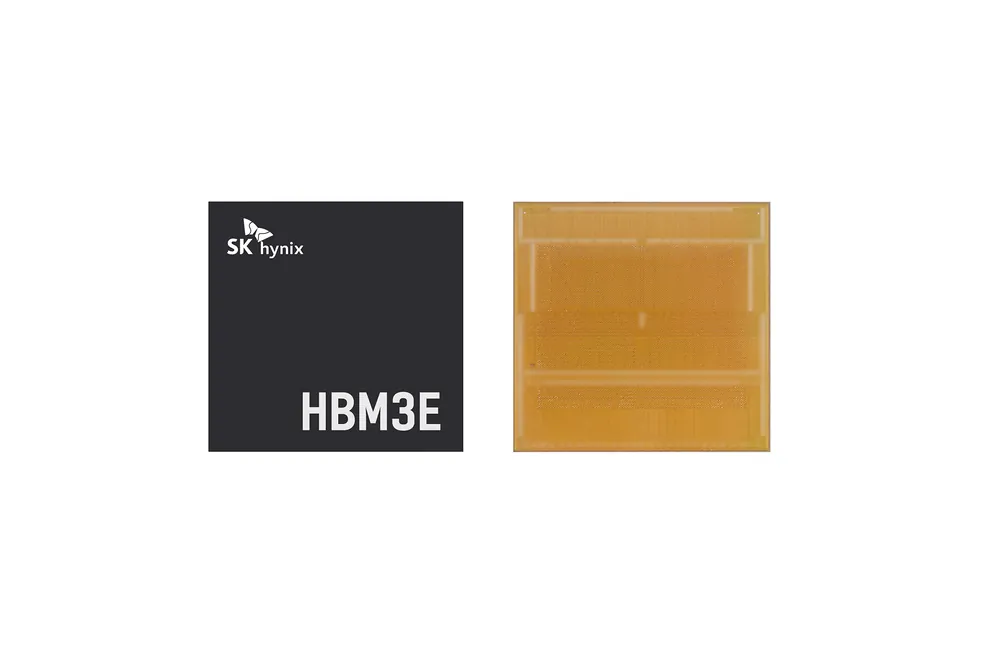
With AI demand soaring, the world’s leading memory manufacturers—Samsung, SK Hynix, and Micron—have found themselves in an unprecedented position. Historically, they’ve grappled with cycles of oversupply and undersupply, often leading to production cuts to stabilize prices. This time, however, the response is different. Faced with a highly lucrative AI market, these giants are strategically reallocating their manufacturing capacity, prioritizing the production of high-margin HBM and server-grade memory over traditional consumer DRAM. This shift, while financially sound for the companies and boosting their profits, has created a severe bottleneck and an effective supply crunch for everything from gaming PCs to smartphones. This means less available memory for the systems you rely on, and higher prices when you can find it.
The Big Three: Memory Manufacturer Strategies in the AI Era
| Manufacturer | Key Strategy (2025-2026) | Impact on Consumer Market | AI Focus |
|---|---|---|---|
| Samsung Electronics | Restraining commodity DRAM output; selling short-run/spot orders at higher prices; investing in HBM and advanced nodes. | Declined long-term contracts; quietly raised prices on existing inventory (+60% from Sept 2025); fulfilling ~70% of DRAM orders. | Prioritizing HBM, LPDDR R&D developing GDDR6X/LPDDR5X. |
| SK Hynix | Doubling down on AI; dominating HBM3/HBM3E supplies; massive capital plan ($500B) for 4 new fabs (first by 2027). | Pulled ahead of Samsung in market revenue (36.2%) due to HBM; fewer commodity DRAM lines in short term; stockpiling profit. | Dominating HBM supplies for Nvidia; expanding into HBM4. |
| Micron | Winding down Crucial consumer brand; focusing on server, automotive memory, and next-gen technology (1β nm processes). | Partially retreated from consumer RAM market; not significantly bolstering supply for PCs/servers; no major new commodity DRAM fabs until late-2028. | Content to let Samsung/Hynix cover AI rush; priority spending on processing and scaling existing tech. |
An Unprecedented Shortage
Micron Executive Vice President of Operations Manish Bhatia stated, “The shortage we are seeing is really unprecedented.” This sentiment is echoed across the industry, highlighting a crisis unlike any seen before in memory markets, making it clear this isn’t just another dip in the market cycle.
The technical challenges of producing advanced memory are also contributing to the bottleneck. Manufacturing HBM involves complex processes like through-silicon vias (TSVs) and advanced packaging, which consume significantly more wafer capacity than standard DRAM. This means that even if a manufacturer has the raw silicon, converting it to HBM takes more time and resources, directly impacting the availability of consumer-grade memory. Building new fabrication plants (fabs) to meet this demand takes years—typically 3-5 years from planning to full production. While companies like SK Hynix are investing hundreds of billions into new fabs, their output won’t materialize until late 2027 or even 2028, leaving a massive supply gap in the interim. This inherent rigidity in the supply chain means quick fixes are impossible, and the market is left to grapple with severely constrained resources, directly affecting how much RAM reaches your gaming rig.
Chapter 3: The Price Shockwave – Data Behind the Devastation
The most tangible consequence of the AI-driven memory crunch for consumers is the brutal surge in prices. Across the board, from cutting-edge DDR5 to older DDR4, memory modules have seen unprecedented price hikes, leaving many gamers and PC builders reeling. Data from market analysts and retailers paints a stark picture of a market spiraling upwards, directly hitting your wallet.
DDR5-6000 CL30 32GB Kit Price Evolution (Sept – Nov 2025)
Average Price (USD)
Our analysis, mirroring reports from GamersNexus and Tom’s Hardware, shows that popular DDR5-6000 CL30 32GB kits have surged by an average of 100% since September 2025, with some individual kits seeing increases of up to 169%. This means a kit that cost $130 a few months ago could now easily set you back $270 or more. Even faster DDR5-7000+ kits followed a similar pattern, with average price increases also around 100%. The situation for DDR4 is even more dire; while still in demand for older platforms, its production wind-down combines with the current crunch to create percentage increases greater than DDR5, with some kits rising by 180%. This isn’t just a bump; it’s a monumental shift in pricing dynamics that makes upgrading significantly more painful.
Beyond RAM, the crisis extends to NAND flash, the core component of SSDs. Analysts predict severe NAND shortages and price hikes, with some contract prices already doubling in less than six months. This means not only will your RAM cost more, but your storage solutions will too, making that new game library or essential software more expensive to house. Furthermore, the impact is bleeding into GPU VRAM (GDDR7), with rumors suggesting NVIDIA’s potential ‘Super Series’ refresh could be delayed or deprioritized for consumer cards as dense GDDR7 modules are diverted to lucrative workstation GPUs. The entire PC hardware ecosystem is feeling the tremors, and gamers are caught in the crossfire.
Chapter 4: The Gamer’s Plight – Fandom’s Fury and Fatalism
The financial data tells only part of the story. For the LoadSyn.com community, the ‘RAMaggedon’ is more than just an economic trend; it’s a source of deep frustration, anxiety, and even a sense of betrayal. Gamers, who invest their time and money into building and upgrading their rigs, feel directly impacted by corporate AI priorities that seem to devalue their hobby. The emotional pulse of the fandom is clear: an external force is actively sabotaging their ability to participate in PC gaming, turning a passion into an increasingly unaffordable luxury. It’s not just about money; it’s about the erosion of a beloved pastime.
“So not only is the price of ram going up, we are literally paying for it to go up. Awesome.”
— LoadSyn.com Community Member
“My dream of tech job is now being crushed before I join the workforce out of college.”
— LoadSyn.com Community Member
“So we’re telling me ai is polluting the environment, makes you dumber when using it, 95% of businesses don’t see any profit increases when it’s adopted, permanently damaged the internet by creating a bastion of misinformation and low quality slop, and now they have jacked up the price on electronics at billions of people all around the globe rely on. Yep. it’s official I’m a luddite”
— LoadSyn.com Community Member

AI’s Memory Boom: Who Wins, Who Loses?
Wins
- Record profits for memory manufacturers (Samsung, SK Hynix, Micron).
- Accelerated innovation in AI hardware (HBM, advanced packaging).
- Enables next-gen AI models and data center capabilities.
- Drives strategic investments in new fab construction.
Losses
- Skyrocketing prices for consumer DDR4, DDR5 RAM, and NAND flash.
- Reduced supply of memory for consumer PCs and gaming.
- Delayed or canceled PC hardware upgrades for gamers.
- Increased cost of entry for new PC builders.
- Sense of ‘betrayal’ among the gaming community.
- Potential for an ‘AI bubble’ and future volatility.
Chapter 5: Navigating the New Normal – Strategies for Gamers & Builders
Given the grim outlook for memory prices and availability, PC gamers and builders need to adapt their strategies. Waiting for prices to ‘return to normal’ might mean waiting until 2027 or beyond, an unacceptable delay for many. This isn’t about finding a quick fix, but about smart, long-term planning. Here’s how to navigate the current ‘RAMaggedon’ and keep your gaming dreams alive, ensuring your passion doesn’t become an insurmountable financial burden:
Smart Moves in a High-Price Memory Market:
- Evaluate Your Current Needs
Before upgrading, assess if your current RAM configuration is truly bottlenecking your system. For many games, 16GB is still sufficient, though 32GB is becoming the standard.
- Consider Older Platforms/Used Market
Look at mature DDR4 platforms (AMD AM4, older Intel) where RAM is cheaper, or explore the used market cautiously.
- Buy Prebuilt Systems (Strategically)
OEMs like Lenovo or Dell often secure bulk memory at better prices than individual consumers.
- Optimize Existing Systems
Focus on other upgrades like CPU coolers or GPU fine-tuning to reduce memory pressure.
- Embrace Patience
Budget accordingly and prioritize components that offer the most tangible performance gain.
- Stay Informed
Keep an eye on market trends here at LoadSyn.com for shifts in pricing.
Pro-Tip: Don’t Neglect Cooling!
High-performance memory, especially DDR5, can run hot. As prices climb, protecting your investment becomes crucial. Ensure adequate case airflow and, if overclocking, consider active RAM cooling. Stable temperatures prolong component lifespan and prevent performance throttling.
Memory Acquisition Strategies: Pros & Cons
| Strategy | Pros | Cons | Best For |
|---|---|---|---|
| Buying New DDR5 | Latest tech, best performance. | Extremely high prices, uncertain value. | Enthusiasts / No budget limit. |
| Sticking with DDR4 | Lower cost, compatibility. | Performance ceiling, EOL status. | Budget-conscious builders. |
| Prebuilt PC | Guaranteed allocation, bulk value. | Less choice, high overall cost. | New PC owners. |
| Used Market | Lower entry price potential. | No warranty, risk of failure. | Experienced builders. |
Future Outlook: Beyond 2026 – The Long Road to Recovery
The memory industry is a slow-moving giant, and the current ‘RAMaggedon’ is not a short-term blip. Industry analysts like TrendForce and Phison CEO Pua Khein-Seng predict that DRAM and NAND supply will remain tight until at least 2027, with some forecasts extending the shortage past 2028. The primary bottleneck remains the time required to bring new fabrication plants online and the strategic choices of manufacturers to prioritize AI-driven, high-margin products. While companies like SK Hynix are investing hundreds of billions into new fabs, and Micron has plans for new plants, their impact on consumer markets is years away.
Intel’s push into ‘AI PCs’ with integrated NPUs and Core Ultra Series 3 processors, as showcased at CES 2026, aims to bring AI processing closer to the user. While these innovations promise efficiency for lightweight AI tasks on edge devices and could improve local AI experiences, it’s unlikely to significantly alleviate the demand for high-bandwidth HBM in data centers. The massive appetite of AI factories will continue to dictate the market, leaving consumer-grade memory in a secondary, less prioritized position.
The New Reality of Memory: Adapt or Be Left Behind
The ‘RAMaggedon’ is more than a temporary inconvenience; it’s a paradigm shift. AI’s insatiable hunger for high-bandwidth memory has fundamentally reshaped the global supply chain, prioritizing enterprise and data center needs over the traditional consumer market. While memory manufacturers reap record profits, PC gamers face skyrocketing prices and dwindling options. The era of cheap, abundant RAM is over, at least for the foreseeable future. LoadSyn.com will continue to provide critical analysis and actionable strategies to help our community navigate this challenging new landscape. Your PC upgrade dreams aren’t dead, but they will require more strategic planning and a heavier wallet to keep pace with this new reality.
Your RAMaggedon FAQs Answered
Why are RAM prices so high right now?
The primary reason is unprecedented demand for High-Bandwidth Memory (HBM) and advanced DDR5 from AI data centers. Manufacturers are prioritizing these high-margin products over consumer-grade RAM.
Will RAM prices go down in 2026?
Most analysts predict prices will remain elevated through 2026, with no relief expected until late 2027 or 2028 when new fabrication plants become operational.
Is DDR4 still affected, even though DDR5 is newer?
Yes, DDR4 prices are rising due to production winding down and a ripple effect from the general DRAM shortage.
How does this affect GPU prices and VRAM?
Memory shortages impact GDDR7 as well, potentially increasing the cost of next-gen graphics cards or delaying consumer releases.
What should I do if I need to upgrade my PC’s RAM now?
Assess your actual needs, explore the used market cautiously, or look at prebuilt systems. Waiting for a price drop is currently a long-term gamble.