The 40-Year Odyssey: Why the Commodore 64 Still Matters
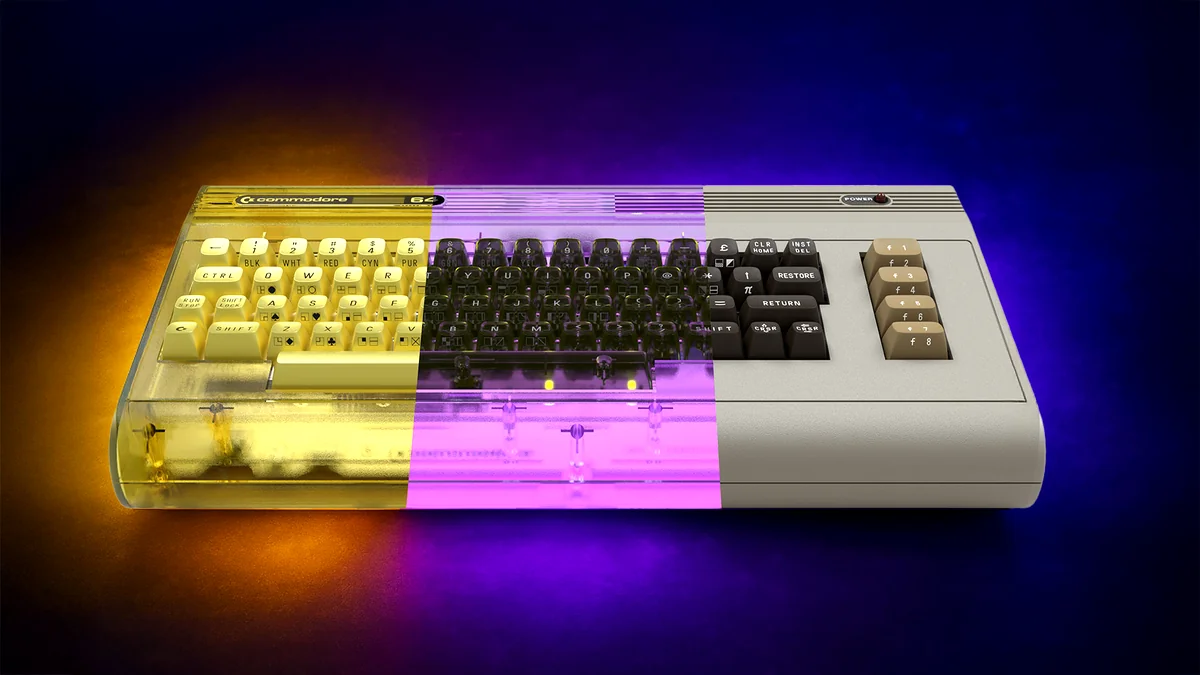
To truly appreciate the Commodore 64 in the modern era, one must undergo a Yoda-like process of unlearning. In the early 1980s, this machine wasn’t just a gadget; it was often the singular computing presence in a household, a far cry from today’s world where embedded silicon resides in everything from thermostats to toothbrushes. The C64’s iconic ‘wedge’ design—integrating the motherboard and a rugged keyboard into a single chassis—remains a masterclass in functional industrial design. While modern software emulation offers convenience, it often feels like a second-class experience, visually constrained and stripped of the physical soul that real hardware provides. Building a modern successor isn’t just about playing games; it’s about reclaiming a machine that serves as a transparent tool for exploration.
This project focuses on integrating the high-performance Raspberry Pi 5 with the cycle-accurate VICE emulation suite, housed within custom 3D-printed enclosures. Key engineering goals include the integration of a mechanical keyboard powered by QMK firmware and the preservation of the physical gaming ritual through a functional cartridge system.
The Silicon Heart: Modern Power Meets Retro Soul
Hardware Evolution: Original C64 vs. The Ultimate Build
The Tactile Ritual: Engineering the Perfect Input
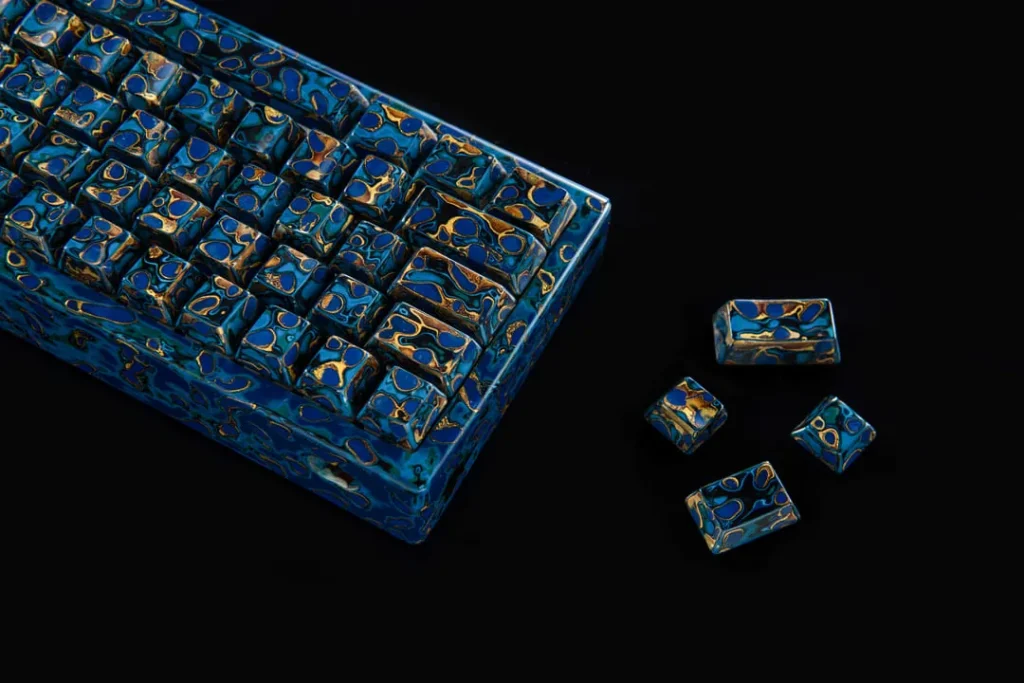
The soul of the C64 experience lives in the fingertips. To replicate the typewriter-esque resistance of the original keyboard, we look to mechanical switches. A modern switch is a four-part symphony: the housing dictates the acoustic profile, the stem defines the travel, the stainless steel spring sets the actuation force, and the copper leaf completes the circuit. For this build, tactile switches like Gateron Browns or clicky Cherry MX Blues are essential; they provide the physical confirmation of a keypress that modern membrane boards lack. Managing this input requires the QMK firmware ecosystem, an open-source powerhouse that allows us to map the C64’s unique 66-key layout—including its non-standard cursor keys—onto modern hardware without losing the 1980s muscle memory.
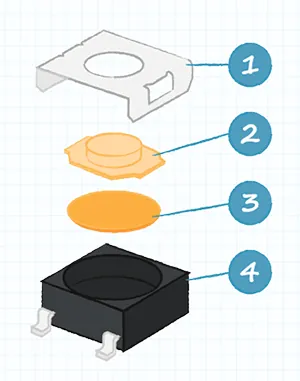
Switch Component Breakdown
- 1 Top Housing
- 2 Stem (Dictates Linear/Tactile/Clicky)
- 3 Spring (Actuation Force)
- 4 Metal Contacts (Leaf)
- 5 Bottom Housing
Software Architecture: RetroPie and the KERNAL
Essential Software Stack
- RetroPie: Debian-based Operating System
- EmulationStation: Graphical Front-end
- VICE: Cycle-accurate C64 Emulator
- Commodore BASIC v2: The authentic ‘READY’ prompt environment
Beyond gaming, this project serves as a ‘Digital Detox’ portal. Following the philosophy of the Commodore 64 Ultimate, we advocate for using this build to introduce the next generation to the fundamentals of computing. Commodore BASIC v2, with its 71 commands and zero external dependencies, offers a transparent environment where children can see the immediate results of their logic. It is an inviting path to mastering technology rather than just consuming it.
The Physicality of Gaming: Cartridges & Peripherals
There is a romanticism in the cartridge that digital menus cannot replicate. Cartridges act as a ‘barrier-to-entry’ reducer—they make the technology tangible and shareable, much like a physical book. To achieve total immersion, our build integrates Software-IEC modules to emulate the 1541 floppy drive, allowing for standard LOAD and SAVE commands that interact directly with the Pi’s file system. We even support virtual ‘Datasette’ tape emulation for those who crave the rhythmic wait of a .TAP file loading. By bridging the gap between modern storage and physical DB9 joystick ports, we ensure that the ritual of gaming remains as tactile as it was in 1982.