
LoadSyn’s Snapshot: Valve’s 2026 Hardware Ecosystem
- Valve has announced a trio of new hardware devices: the next-generation Steam Machine (a living room console PC), the Steam Frame (a VR headset successor), and a fully redesigned Steam Controller.
- The Steam Machine boasts a semi-custom AMD Zen 4/RDNA 3 APU, which targets 4K resolution at 60 FPS, a goal heavily reliant on aggressive FidelityFX Super Resolution (FSR) upscaling technology.
- This hardware is specifically positioned as a ‘console PC’ designed to bridge the gap between the successful Steam Deck handheld and a full desktop rig, running Valve’s streamlined SteamOS.
- The success of the entire ecosystem hinges entirely on a competitive price point, which remains unannounced. Market launch is currently expected in early 2026.
The Specs: Six Times the Deck, But Is It Enough for 4K?
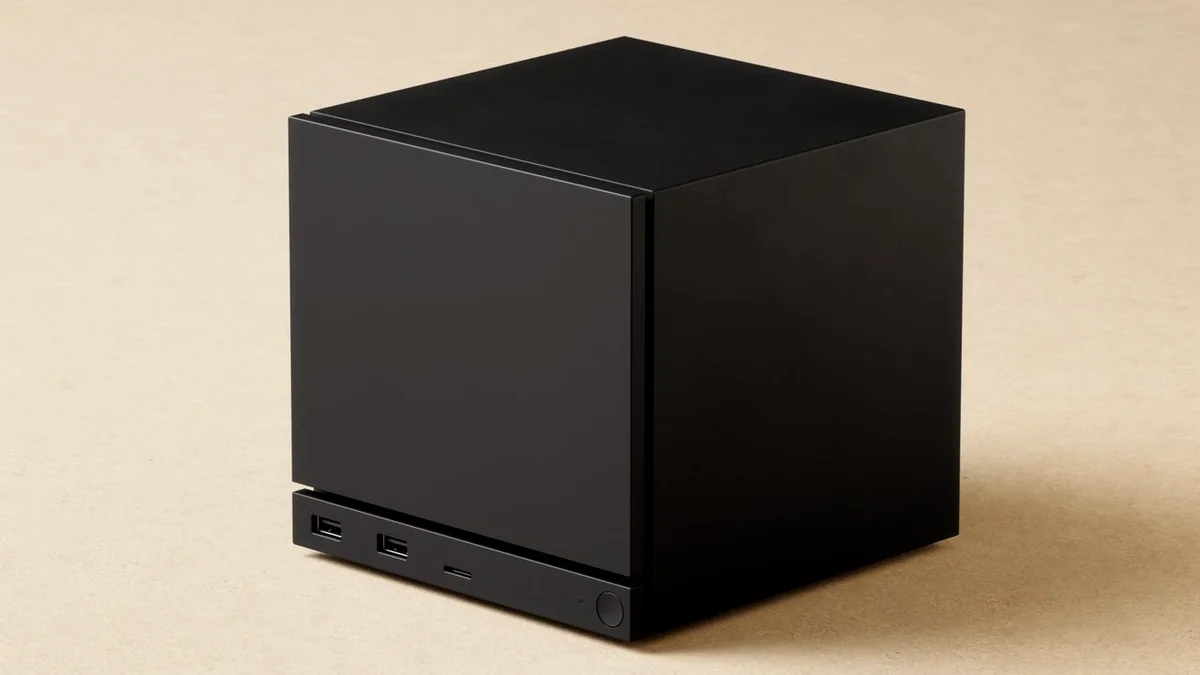
The new Steam Machine is a compact, 6-inch cube designed to sit unobtrusively in a living room entertainment center. Despite its small footprint, its internal hardware specifications are far from subtle. Powered by a semi-custom AMD APU featuring a 6-core/12-thread Zen 4 CPU and a robust RDNA 3 GPU with 28 Compute Units, Valve is confident the device offers ‘over six times the horsepower’ of the original Steam Deck. This monumental jump in power is intended to push the device into the competitive 4K resolution space, a move that requires heavy reliance on advanced upscaling technology, specifically AMD’s FidelityFX Super Resolution (FSR). Valve intends this device to offer a console-like experience, complete with fast suspend/resume features, but with the open flexibility of SteamOS.
Next-Generation Steam Machine (2026) Preliminary Specifications
| CPU | AMD Zen 4 (6C/12T, up to 4.8 GHz) |
|---|---|
| GPU | AMD RDNA 3 (28 CUs, 110W TDP) |
| Memory | 16GB DDR5 RAM + 8GB GDDR6 VRAM (Shared Pool) |
| Storage Options | 512GB or 2TB NVMe SSD |
| Target Performance | 4K/60 FPS (with FSR/Upscaling) |
| OS | SteamOS (Linux-based) |
Critical Reality Check: The FSR Factor
Achieving consistent 4K/60 FPS in modern AAA titles with an RDNA 3 GPU featuring only 28 Compute Units is a massive technical ask, even with aggressive optimization. For context, this GPU setup is roughly equivalent to a desktop RTX 4060 Ti in raw compute, but crucially constrained by a lower power envelope. The 4K/60 FPS claim is thus entirely dependent on running FSR in Quality mode or better, meaning the image is rendered at a lower resolution (likely 1440p) and then upscaled. Users should realistically anticipate rock-solid native 1080p or 1440p performance for demanding titles, with upscaling handling the final pixel count for 4K displays. This is a 1440p machine that can render 4K, not a native 4K powerhouse.
The Ghost of 2015: Why Valve’s Timing is Different Now
The original Steam Machine line, which was pulled from shelves in 2018, failed primarily because the market wasn’t ready for a Linux-based living room PC. At that time, Windows was the uncontested OS for PC gaming, console exclusivity was rigid, and the original Steam Controller was too alienating for casual users. Today, the landscape is transformed in Valve’s favor. The runaway success of the Steam Deck proves SteamOS is a viable, consumer-friendly platform capable of handling triple-A titles. Furthermore, major console players like Sony and Microsoft have embraced PC ports, meaning a gamer’s library is no longer shackled to one proprietary box. Valve is now targeting a highly engaged segment: PC gamers who want console-like convenience without sacrificing their existing library investment, coupled with the ideological freedom of an open platform.
The Console PC Niche: Steam Machine vs. Competitors
| Criteria | Steam Machine (2026) | PS5 / Xbox Series X (Current Gen) | Budget Mini-ITX PC Build (RTX 4060) |
|---|---|---|---|
| Primary Goal | Living Room PC Console (4K/60 Upscaled) | Proprietary Console Gaming (Locked Ecosystem) | Flexible, User-Built Desktop Gaming |
| Operating System | SteamOS (Linux-based, Open) | Proprietary/Closed | Windows/Linux (User Choice) |
| Library Access | Steam, Epic, GOG (Open) | Platform-Specific Storefront | All PC Storefronts |
| Repairability/Openness | High (Valve supports repair community) | Moderate to Low | Highest |
| Anticipated Price Point | $700 – $800 (Speculated) | $500 – $600 | $850 – $1000+ |
The New Steam Controller: Magnetic Sticks and HD Haptics
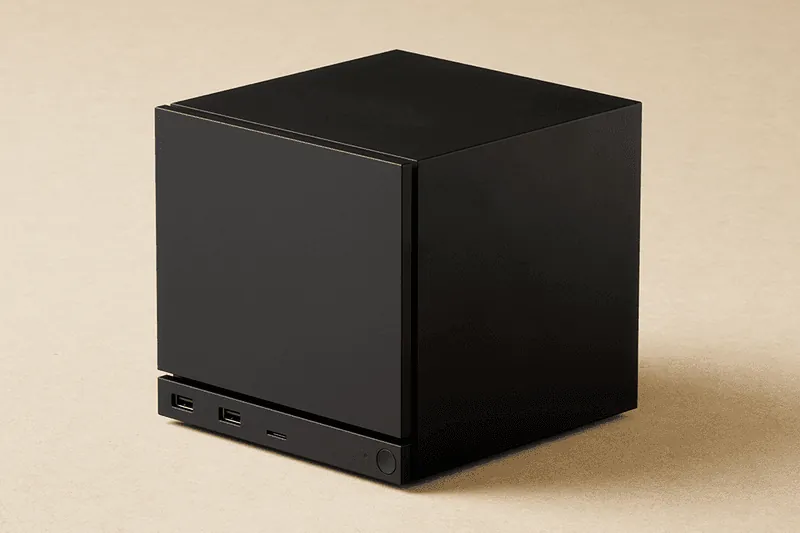
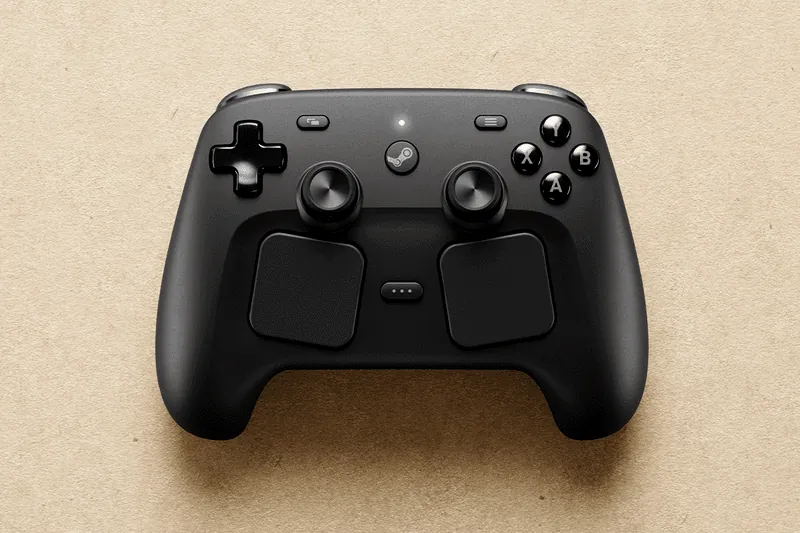
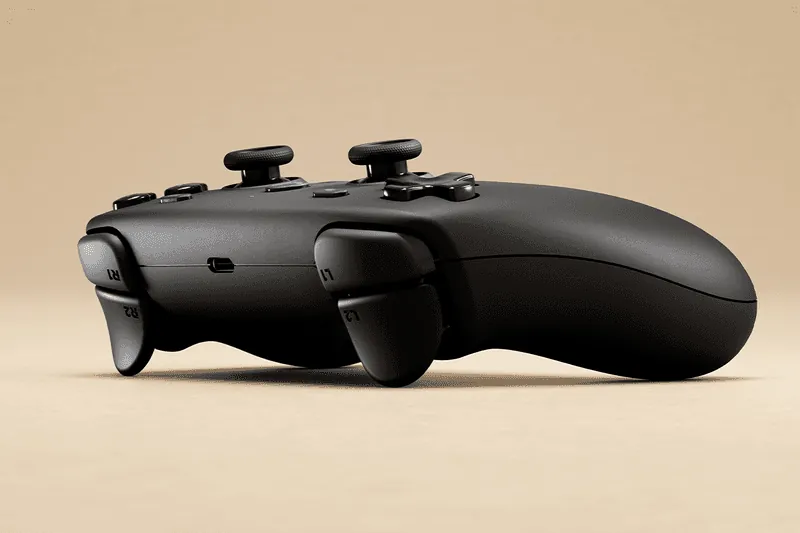
Visuals of the new Steam Machine (The Cube) and the redesigned Steam Controller, featuring magnetic thumbsticks and dual trackpads.
Controller Innovations That Matter
- Magnetic Thumbsticks (TMR): Utilizing Tunnel Magnetoresistance (TMR) sensors, this design completely eliminates mechanical contact, thereby preventing the notorious ‘stick drift‘ that plagues standard potentiometers. They also feature capacitive touch.
- Advanced HD Haptics: The controller incorporates four distinct haptic motors (two powerful Linear Resonant Actuators in the grips and two within the trackpads) to provide detailed, nuanced tactile feedback superior to standard rumble.
- Grip Sense: Pressure-sensitive grips allow for instant, intuitive activation of the 6-axis gyroscope, enabling motion controls without needing to press a dedicated button.
- Flexible Connectivity: Supports Valve’s proprietary low-latency Puck (4ms polling at 5m) for highly responsive play, standard Bluetooth, and USB tethering for universal compatibility across Steam devices, ensuring over 35 hours of battery life.
This exactly what I’ve been wanting. I’ve literally been shopping for old 3070 class gaming laptop to put under the living room TV to act like a console. But having to open it up to power it on every time and have a keyboard handy just in case was gonna be annoying. Now I’m definitely getting this! I don’t care that it’s not particularly powerful, if I really need performance I’ll use my desktop. This isn’t meant to compete with that, this thing looks awesome.
The Price is the Only Benchmark That Matters
Valve has successfully identified and engineered a product for a long-underserved niche: the need for a seamless, open-platform PC console that leverages a user’s existing Steam library. The hardware is sound, the SteamOS platform is mature and stable, and the new Controller definitively addresses past failures like stick drift and confusing input schemes. However, the entire strategy is a high-stakes gamble against the highly subsidized and established ecosystems of the PS5 and Xbox Series X. If Valve prices the Steam Machine aggressively—ideally between $650 and $750 for the base model—it will successfully dominate the ‘living room PC’ segment and potentially convert a new wave of console users. If, however, it pushes toward the $900 mark, it risks repeating the 2015 failure, collapsing under the weight of competition from self-built Mini-ITX systems and the inevitable launch of the next console generation. Ultimately, the hardware is ready, but the market demands pricing discipline.