
Key Takeaways: The Silicon Shockwave
- OpenAI executed a secret, unprecedented deal to secure 40% of the world’s raw DRAM wafers from Samsung and SK Hynix, initiating a global panic buying spree across the tech industry.
- Consumer DDR5 RAM and high-speed NVMe SSD (NAND) prices have doubled in just three months, rapidly transforming planned PC upgrades from affordable projects into unaffordable luxury builds.
- Semiconductor manufacturers are aggressively reallocating wafer capacity to high-margin High Bandwidth Memory (HBM) for AI servers, causing a severe and structural shortage in commodity consumer memory.
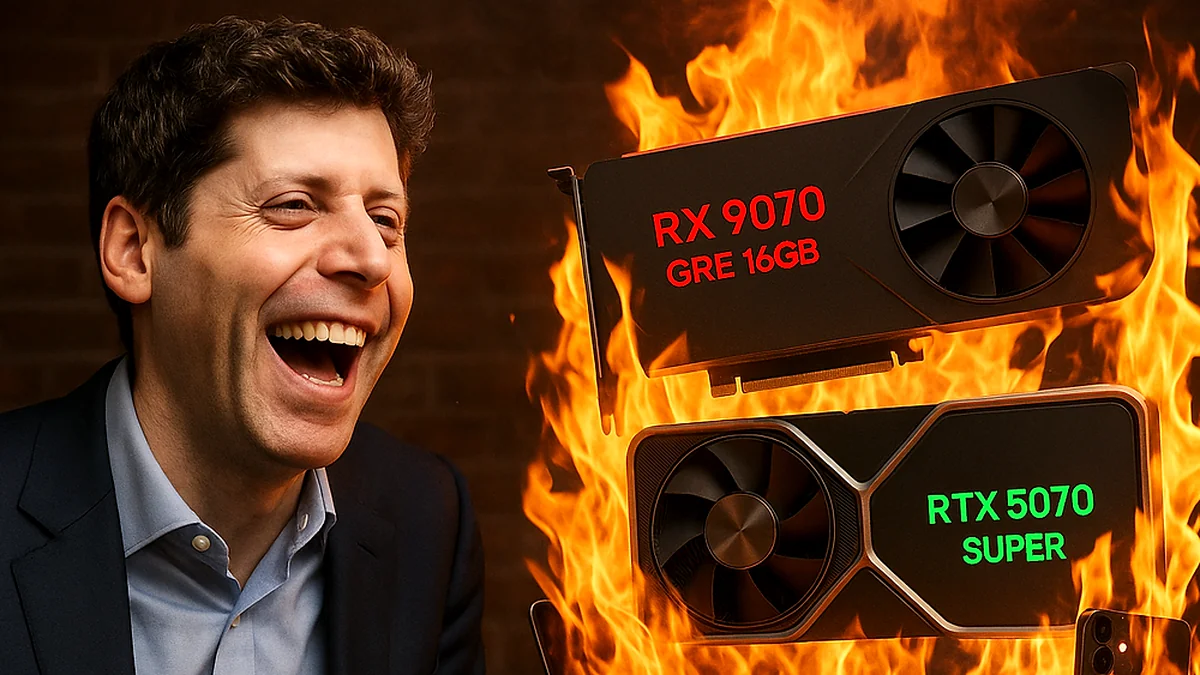
- The supply crunch is projected to intensify through 2026 and 2027, threatening delays for major gaming hardware releases like Nvidia’s anticipated SUPER refresh and potentially impacting the supply and pricing of next-gen consoles (Xbox/PS).
- Gamers planning a new build must prioritize immediate purchases of memory and storage, as experts project quarterly price hikes of 20–40% will take effect before mid-2026.
The Price Shock: What Your DDR5 and SSD Kit Costs Now
The feeling of deep financial shock currently gripping the PC gaming community is palpable. Just six months ago, we were celebrating the steady decline in component costs, making the leap to DDR5 and high-speed NVMe SSDs an affordable reality. Now, that period of consumer grace is brutally over. The latest Fandom Pulse reports show that gamers who opted to wait for the traditional ‘next dip’ are being financially punished by rapid, unprecedented inflation. High-performance memory kits, which were the cornerstone of value builds last quarter, have seen their prices surge by over 150%. A standard 64GB DDR5 kit, recently available for around $200, is now routinely priced at $379 or higher. Similarly, the essential 2TB high-speed NVMe SSDs, like the popular SN850X, have climbed from a summer low of $118 to nearly $170 today. This isn’t a minor fluctuation; it is a full-blown market correction dictated by forces far beyond the gaming sphere.
“September 20th I bought Corsair Vengeance 64gb CL 30 kit for 200 new… I just checked and it’s now 379… INSANE”
The October 1st Secret: How OpenAI Cornered 40% of the World’s DRAM
The root cause of this market instability can be traced back to a single, extraordinary day: October 1st. On that date, OpenAI executed two unprecedented, simultaneous deals with the world’s two largest memory producers, Samsung and SK Hynix. The objective was audacious: secure 40% of the global DRAM supply, purchased not as finished modules, but as raw, uncut silicon wafers. This procurement was executed with extreme secrecy, leveraging the fact that neither Korean firm was aware of the scale or simultaneity of the other’s commitment to OpenAI. This aggressive, high-stakes maneuver immediately triggered panic buying across the entire technology ecosystem. Competitors, cloud providers, and OEMs—many of whom had negligible safety stock due to prior market volatility—scrambled to secure their own supply. This corporate ‘land grab’ for silicon instantly squeezed the consumer market, leading directly to the 156% price spike observed on commodity DDR5 kits within weeks. The consensus among industry analysts is that this move was intended not just to fuel OpenAI’s own massive infrastructure needs, but strategically to deprive rivals like Anthropic, Meta, and Google of the foundational memory required to compete in the burgeoning AI arms race.

The Technical Shift: Why HBM is Killing Consumer Memory Supply
The financial drama of the OpenAI deal is built upon a deeper, structural change in semiconductor manufacturing. Chipmakers are aggressively prioritizing products that offer maximum margin, meaning High Bandwidth Memory (HBM) and high-density DDR5 Registered DIMMs (RDIMMs) for AI servers are receiving preferential wafer allocation. This shift is starving the commodity market for consumer-grade DDR5 and NAND flash. Crucially, the engineering benefits of DDR5 make this focus inevitable. DDR5 operates at a lower voltage (1.1V), which is critical for minimizing power draw in massive, power-hungry data centers. Furthermore, it incorporates essential Reliability, Availability, and Serviceability (RAS) features, such as On-die ECC (Error Correcting Code), which ensures data integrity—a non-negotiable requirement for training vast, multi-trillion parameter AI models. This technical superiority means that DDR5 is not just faster than DDR4; it is fundamentally more reliable and efficient for AI workloads, justifying the industry’s permanent focus away from consumer volume.
DDR5 vs. DDR4: Why Manufacturers Are Phasing Out the Old Standard
| Feature | DDR4 (Legacy) | DDR5 (AI Priority) |
|---|---|---|
| Data Rate (MT/s) | 1866–3200 | 4800–8800 |
| Operating Voltage | 1.2V | 1.1V |
| Max Density (Die) | 16Gb | 32Gb |
| Error Correction | Write-only CRC | On-die ECC (128b+8b SEC) |
The Gaming Fallout: Delays, Console Risk, and the SSD Shortage
- Nvidia SUPER Delay: The dramatic scarcity of high-capacity DDR5, which is essential for upcoming high-end GPUs, could force Nvidia to delay its anticipated SUPER refresh until Q3 2026 or later, impacting the rollout of next-generation graphics cards.
- Console Vulnerability: While Sony’s PlayStation division is currently protected by aggressive purchasing during the summer price trough, Microsoft’s Xbox could face significant price hikes or supply constraints in 2026 due to the worsening DRAM market squeeze.
- The NAND Crisis: The reallocation of production capacity from NAND flash to DRAM is triggering a severe NVMe SSD shortage projected to run from late 2025 through 2026. SSD manufacturers are already reporting fully pre-sold 2026 production, meaning consumer availability will plummet.
- Small Builder Risk: Boutique and smaller prebuilt PC companies are extremely vulnerable. Unlike hyperscalers, they lack the inventory buffers and negotiation leverage required to secure long-term contracts, leading to potential product bottlenecks and higher final prices for their customers.
Immediate Tactical Advice for PC Builders
The memory market has fundamentally shifted to an allocation-only model, where supply is dictated by the highest bidder. If you are planning a DDR5 or NVMe build within the next 18 months, you must secure these components NOW. Do not wait for prices to drop; market experts project quarterly increases of 20–40% through mid-2026. Given that CPUs and GPUs are less constrained by this specific memory crisis, prioritize purchasing RAM and SSDs immediately over procuring your processor or graphics card.
Frequently Asked Questions
When are DRAM and NAND prices expected to stabilize?
Industry experts warn that the structural supply crunch, driven by massive AI demand and deliberate capacity reallocation, will likely persist until late 2027 or potentially mid-2028. Stabilization will not occur until new, multi-billion dollar fabrication lines—such as Samsung’s announced facility—are fully operational and achieving efficient yields, a process that takes years.
Is it better to buy DDR4 now or pay the premium for DDR5?
While DDR4 is currently cheaper, its supply is being aggressively phased out by manufacturers who are shutting down older nodes. This leads to highly unpredictable lead times (currently 26–34 weeks). DDR5, conversely, offers substantial performance gains (up to 85%+) optimized for modern gaming and is the definitive future standard. If a build is necessary, secure DDR5 now. Its price increases are driven by high demand, whereas DDR4’s increases are driven by phase-out risk and scarcity.
The DRAM and NAND crisis is not a temporary market correction; it is a permanent, structural shift driven by the massive, foundational needs of the AI industry. The era of cheap, abundant memory for PC gamers is definitively over, replaced by an allocation model where hyperscalers and AI firms dictate pricing and supply across the globe. Gamers must adapt immediately, treating memory and storage components as Tier-1 risk purchases. The Silicon Shockwave has arrived, and it will fundamentally redefine the cost of entry for high-performance PC gaming for the rest of the decade.