

Key Takeaways
- AMD’s 3D V-Cache, now integrated into the 9800X3D, has conclusively secured the title of the world’s fastest gaming processor, validating its supremacy against the Intel i9-14900KS across a rigorous 40-game benchmark suite.
- The foundational Chiplet Strategy, initially adopted in 2013 out of financial necessity, has become the architectural revolution enabling AMD’s cross-market dominance in gaming (Ryzen), data center (EPYC), and AI acceleration (Instinct).
- The upcoming Zen 5 architecture introduces the high-density ‘Zen 5c’ cores (utilizing 3nm lithography), specifically engineered for maximizing core count (up to 192) and efficiency in high-density AI and enterprise workloads, targeting double-digit IPC gains.
- CEO Lisa Su has articulated an aggressive strategy to capture leadership in the anticipated $1 Trillion AI market, leveraging the modular chiplet architecture to rapidly deploy cutting-edge solutions like the MI450 and MI500 series accelerators.
- AMD is making a critical design shift in its high-end mobile platform (Strix Halo APU), moving toward a more monolithic die structure to eliminate chiplet-induced latency, thereby delivering true desktop-class gaming responsiveness in laptops.
The story of AMD’s resurgence is not merely a corporate comeback; it is a foundational architectural revolution. A little over a decade ago, in 2013, the company was burdened by over $2.2 billion in debt, struggling to compete with the monolithic die structures favored by its primary rival. Without the capital or manufacturing scale to pursue ever-larger chips, AMD, under the subsequent leadership of Dr. Lisa Su, was forced into a radical engineering pivot: the modular chiplet design. This necessity birthed the Ryzen era. Today, AMD stands as a $330 billion titan, its success engineered almost entirely on the back of this single strategic decision. The chiplet—a modular, self-contained compute unit—has not only allowed AMD to sidestep the reticle limits and yield issues plaguing traditional monolithic designs but has also provided the scalable, flexible foundation required to conquer two vastly different markets: the high-frequency gaming segment and the high-density, high-demand AI data center.
The Gaming Crown: Why 3D V-Cache Remains Untouchable
Flagship Gaming CPU Comparison (AMD vs. Intel)
| Feature | AMD Ryzen 7 9800X3D (Zen 5) | Intel Core i9-14900KS (Raptor Lake Refresh) |
|---|---|---|
| Architecture | Zen 5 + 3D V-Cache | Raptor Lake (Hybrid) |
| Core Count (P+E) | 8 (Gaming Optimized) | 8 P-Cores + 16 E-Cores |
| Max Boost Clock | Up to 5.2 GHz | Up to 6.2 GHz |
| L3 Cache (Total) | 128MB (96MB Stacked) | 36MB |
| Performance Claim | World’s Fastest Gaming CPU (40-Game Suite) | High Clock Speed Leader |
| Process Node | 4nm | Intel 7 (10nm Enhanced) |
Zen 5: The Architecture Built for the AI Era
Zen 5 Core Architecture Details
- Zen 5 (Standard)
- 4nm Process, High Per-Core Performance, Up to 128 Cores (EPYC)
- Zen 5c (Density Optimized)
- 3nm Process, High Density/Efficiency, Up to 192 Cores (EPYC 9965)
- IPC Goal
- Double-digit Increase over Zen 4
- Interconnect
- 5th Gen Infinity Fabric (Scale-in, Scale-up, Scale-out)
- Target Workloads
- AI, Generative AI, HPC, Big Data
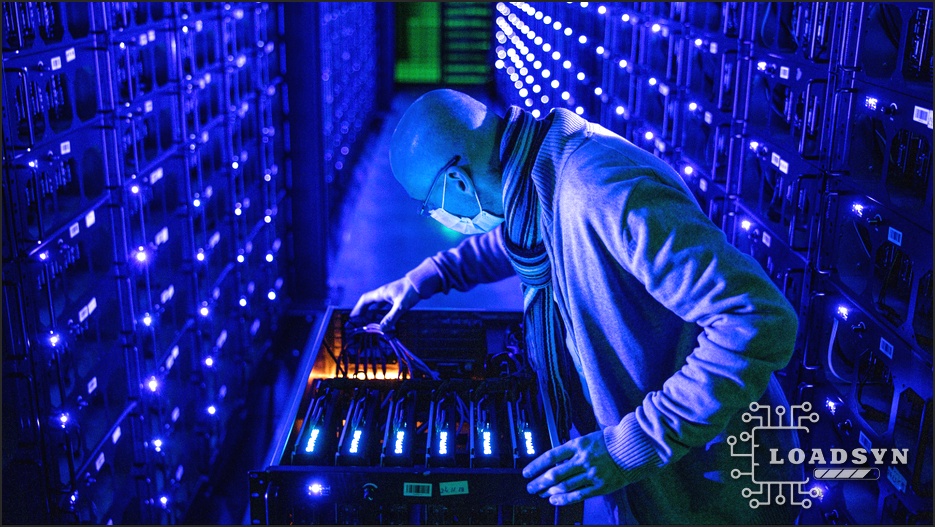
Key Architectural Annotations:
- MI350/MI450 Series: Accelerators driving data center AI leadership, leveraging modular chiplets.
- Venice EPYC CPUs: Next-gen server CPUs designed for density and energy efficiency to support AI infrastructure.
- Chiplet Foundation: The reuse of proven silicon (like EPYC CCDs) to rapidly deploy new Instinct accelerators.
AMD’s strategy is centered on accelerating revenue growth, delivering compelling profitability expansion, and allocating capital specifically to drive AI leadership, aiming for a revenue CAGR greater than 35% over the next three to five years.
Dr. Lisa Su, AMD Financial Analyst Day (November 2025)
The Mobile Battle: Strix Halo vs. Panther Lake
AMD Ryzen AI Max PRO ‘Strix Halo’ APU
Pros: Strategic Advantages
- Desktop-Class Performance: Up to 16 Zen 5 cores and 40 RDNA 3.5 CUs.
- Monolithic Shift: Moving away from high-latency chiplets in this specific design for better responsiveness and efficiency.
- GPU Power: Performance rivals the dedicated NVIDIA RTX 4050 Laptop GPU class.
- AI Ready: Integrated NPU capabilities for next-gen AI PCs.
Cons: Key Challenges
- Departure from Pure Chiplet Philosophy: The move to a more monolithic design for mobile suggests chiplet latency remains a gaming bottleneck.
- Intense Competition: Faces immediate, aggressive challenge from Intel’s 18A-based Panther Lake.
Next-Gen Mobile Platform Showdown (2026)
| Criteria | AMD Strix Halo (Ryzen AI Max PRO) | Intel Panther Lake (Core Ultra X) |
|---|---|---|
| Process Node | TSMC 4nm (CPU/GPU) | Intel 18A (CPU) + TSMC N3E (GPU) |
| CPU Architecture | Zen 5 | Hybrid Cores (Next-Gen) |
| Integrated GPU | RDNA 3.5 (Up to 40 CUs) | Xe3 (Up to 12 Cores) |
| Memory Interface | 256-bit LPDDR5X-8000 | TBD |
| AI Performance | High TOPS (Specifics TBD) | Up to 99 TOPS (Confirmed SKUs) |
The Innovation Paradox: Can AMD Remain the Underdog?
AMD’s trajectory, from the brink of financial collapse to its current status as an architectural leader, remains a powerful testament to engineering necessity driving innovation. The chiplet strategy, born from a lack of capital, is now the de facto industry standard for scaling high-performance computing and the $1 Trillion AI market. For the gaming enthusiast, this means AMD offers continued, unchallenged leadership in raw gaming performance, exemplified by the 9800X3D’s empirical victory over the Intel flagship. However, the community’s skepticism is both understandable and valid: as AMD aggressively targets $20 EPS and aims for over 50% server share, their focus must inevitably broaden and shift. The central challenge for Dr. Su is maintaining the relentless pace of innovation—the internal mandate for “negative slack” timelines—while navigating the complexities of global policy (tariffs, export controls) and managing a rapidly expanding market. AMD has conquered the architecture; now they must conquer the market without sacrificing the innovative, underdog spirit that propelled them to this height.
Frequently Asked Questions
What is the difference between Zen 5 and Zen 5c?
Zen 5 is optimized for high per-core performance and maximum clock speeds, utilizing a 4nm process node, and is typically deployed in standard Ryzen and high-speed EPYC variants (up to 128 cores). Zen 5c, conversely, is optimized for density and extreme power efficiency using a denser 3nm lithography. Zen 5c enables EPYC processors to achieve maximum core counts (up to 192) within controlled TDP envelopes, making it ideal for large-scale data center, cloud, and AI inference workloads.
Will 3D V-Cache come to lower-end Ryzen CPUs?
3D V-Cache is a technically complex and costly process involving advanced hybrid bonding. Historically, AMD has reserved this technology exclusively for its flagship gaming SKUs (e.g., the 7800X3D and 9800X3D) where the massive L3 cache provides the largest, most measurable performance uplift. Due to the specialized manufacturing requirements, it is highly improbable that V-Cache will migrate to budget or mid-range chips in the near future; it will remain a premium feature for competitive gaming.
Why is AMD shifting Strix Halo to a more monolithic design?
While AMD’s general architecture relies on chiplets for scalability, they introduce minor but measurable latency due to the high-speed die-to-die communication required. For high-end mobile APUs like Strix Halo, minimizing latency is paramount for achieving desktop-like gaming responsiveness and frame-time consistency. The strategic shift toward a more tightly integrated, monolithic approach for the CPU and GPU cores allows AMD to eliminate this latency bottleneck, significantly improving efficiency and performance in a portable form factor, which is critical for competing against increasingly powerful ARM-based alternatives.