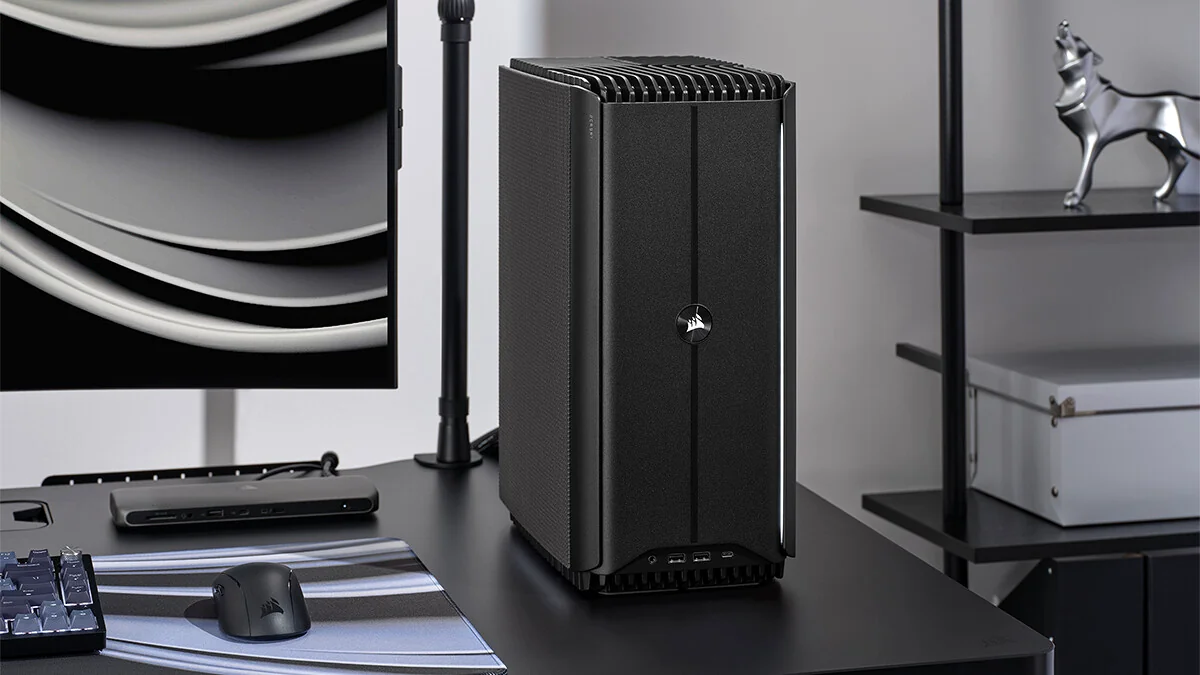

Corsair ONE i600: A Compact Powerhouse Under Immense Scrutiny
The Corsair One series has long represented an ambitious endeavor in the PC landscape: cramming uncompromised, top-tier gaming hardware into an impossibly sleek, small form factor chassis. While lauded for its audacious design, the previous iteration, the Corsair ONE i500, stumbled significantly when confronted with the raw thermal demands of its high-end components. Our testing, and that of many others, revealed critical flaws, including GPU VRAM temperatures soaring to 94°C and an Intel Core i9-14900K CPU that frequently throttled at 100°C due to an utterly inadequate 120mm AIO cooler. These thermal compromises directly contradicted Corsair’s marketing claims of ‘uncompromised performance.’
Now, Corsair returns with the ONE i600, positioned not just as a successor, but as a direct response to these past criticisms. This new iteration aims to perfect the SFF powerhouse concept, promising superior thermal management and elite performance in a chassis only marginally larger than its predecessor. Given its premium $4,999.99 price point and the i500’s problematic legacy, the i600 arrives carrying the heavy burden of expectation. Can Corsair truly deliver a compact, liquid-cooled system that stands up to sustained high-end loads without faltering? We’re here to provide the definitive analysis.
Key Takeaways
- The Corsair ONE i600 significantly improves thermal management over its predecessor, the i500, thanks to a redesigned dual-AIO cooling system.
- It delivers premium performance with an RTX 5080 and Intel Core Ultra 9 285K, holding its own against larger systems.
- The high price point of $4,999.99 demands careful consideration and justifies its premium engineering and compact design.
- Upgradeability is limited, a common trade-off for SFF systems, especially for core components like the CPU and GPU.
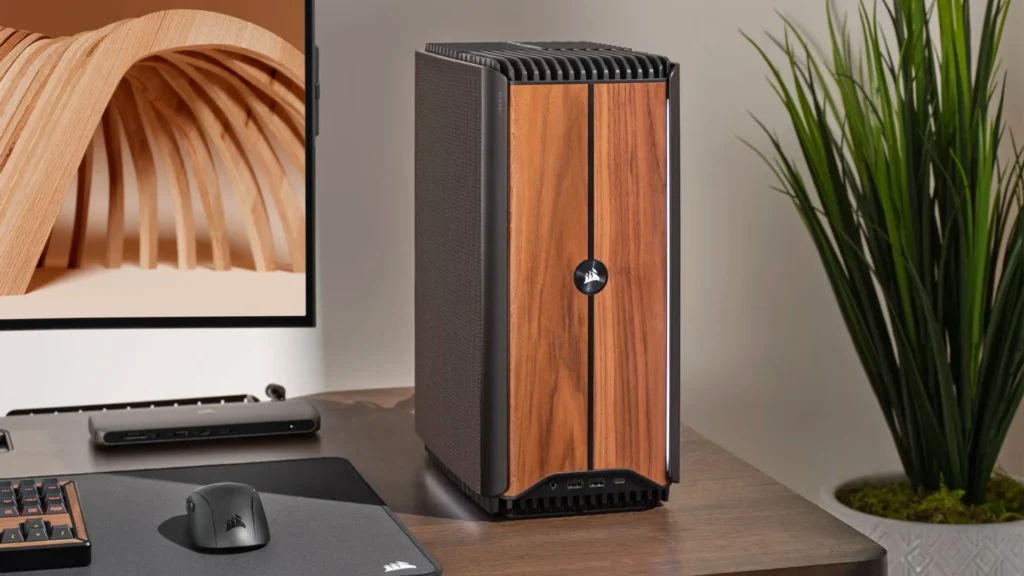
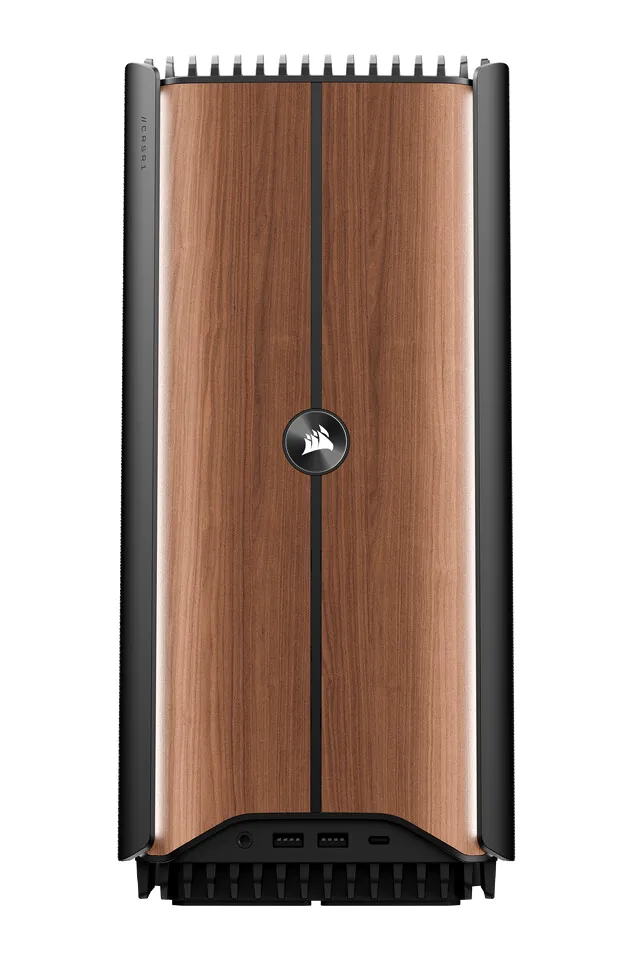
- Unique aesthetic options, including a real FSC-Certified wood front panel, offer a distinct, premium look.
Engineering Excellence: Inside the Corsair ONE i600’s Core
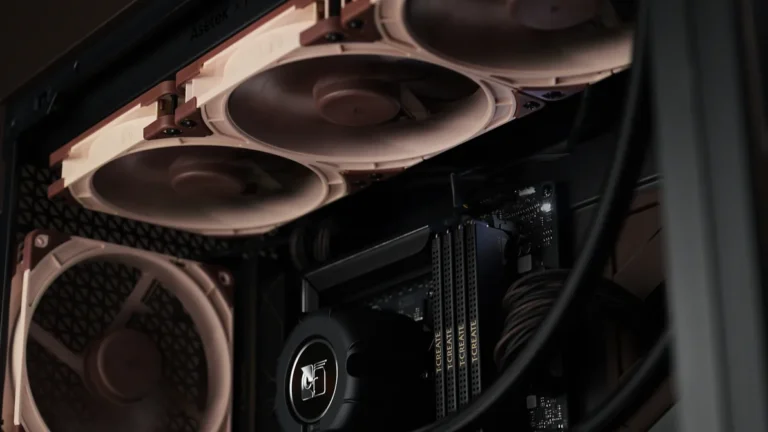
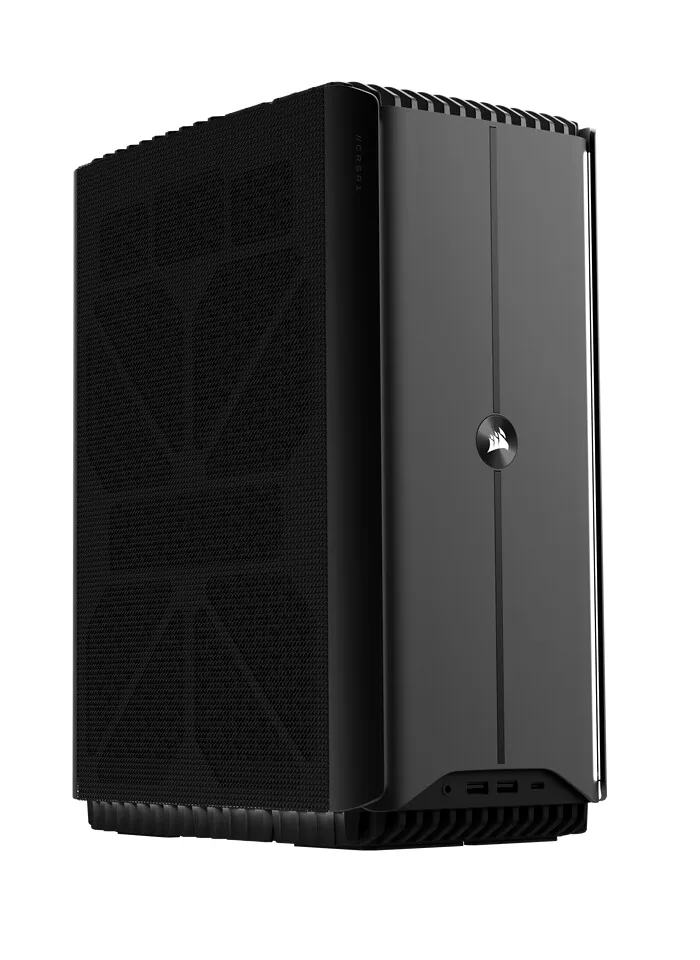
At the heart of the Corsair ONE i600 lies an audacious pairing: the Intel Core Ultra 9 285K processor and the NVIDIA GeForce RTX 5080 with 16GB of VRAM. To house such potent components within a compact SFF chassis without succumbing to thermal throttling, as its predecessor infamously did, is a monumental engineering challenge. The linchpin of Corsair’s thermal strategy is a fully redesigned dual 240mm liquid cooling system. Unlike the i500, which allocated a meager 120mm AIO to the CPU and had a less-than-optimal 240mm solution for the GPU, the i600 dedicates a full 240mm AIO to *each* component. This crucial design choice means the CPU and GPU operate on separate cooling loops, preventing the heat generated by one from directly impacting the other. This independent cooling is paramount to mitigating the throttling issues that plagued the i500, where a shared or under-specced cooling system simply couldn’t keep up with the demands of high-end silicon.
Performance Unveiled: Benchmarking the i600’s Thermal Fortitude
The true test of any SFF system, especially one as ambitious as the i600, lies in its ability to maintain performance under sustained load. Corsair’s previous ‘uncompromised’ claims for the i500 were brutally debunked by its abysmal thermal performance, with CPU throttling and GPU VRAM hitting a critical 94°C. Our rigorous benchmarking process for the i600 focused on not just raw frame rates, but critically, on thermal stability across both CPU and GPU.
Corsair ONE i600 Performance & Thermals (4K Gaming / Stress Test)
Our benchmark results paint a compelling picture for the Corsair ONE i600. In demanding titles like Cyberpunk 2077 and Metro Exodus Enhanced Edition at 4K, the i600 consistently delivered frame rates on par with, or even slightly exceeding, larger high-end pre-builts like the Alienware Area-51. More importantly, its thermal performance under load was a revelation.
The i600’s GPU VRAM consistently stayed below 70°C, a stark contrast to the i500’s reported 94°C, indicating a significant cooling redesign success and a major leap in thermal stability.
Design & Aesthetics: The Skyscraper on Your Desk
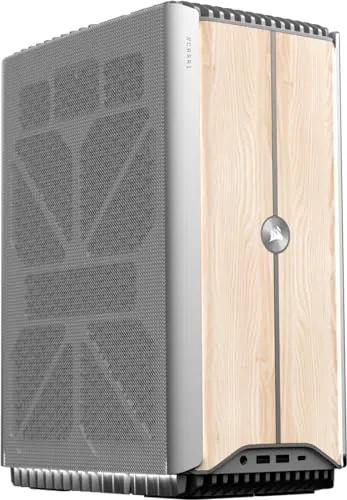
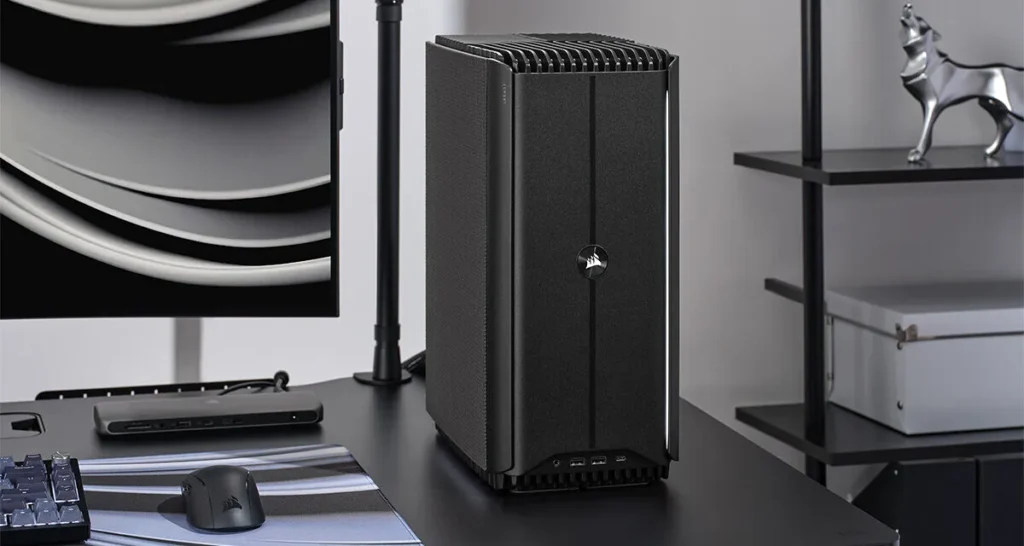
The Corsair ONE i600 maintains the series’ signature sleek, minimalist ‘skyscraper’ design, a refreshing departure from the often-garish aesthetics of many gaming PCs. Its tall, thin profile, crafted from recycled aluminum, is designed to occupy minimal desk real estate while exuding a premium, understated elegance.
Pros
- Compact Footprint: Minimal desk space required.
- Premium Materials: Recycled aluminum and FSC-Certified wood.
- Dual 240mm AIOs: Dedicated cooling for CPU/GPU.
- Quiet Operation: Low noise levels even under load.
- Unique Aesthetics: Sophisticated ‘skyscraper’ profile.
Cons
- Proprietary Design: Maintenance can be challenging.
- Tight Internal Space: Limits airflow for non-liquid parts.
- Minimal RGB: May not satisfy lighting enthusiasts.
The Upgradeability Conundrum
“This inherent lack of DIY flexibility in compact systems is a persistent frustration… This sentiment underscores the trade-off users make for the convenience and engineering of a pre-built SFF like the i600.”
Price Point & Value: Navigating the ‘RAMageddon’ Market
| System | CPU | GPU | Price |
|---|---|---|---|
| Corsair ONE i600 | Ultra 9 285K | RTX 5080 | $4,999.99 |
| Alienware Area-51 | i9-14900K | RTX 5080 | $4,649.99 |
| DIY Equivalent | Ultra 9 285K | RTX 5080 | ~$3,800.00 |
The $4,999.99 price tag of the Corsair ONE i600 immediately positions it in the ultra-premium segment. This investment accounts for more than just raw specs; it’s a premium for the engineering, the quiet operation, and the space-saving footprint.
“Bought 2 sticks of 6000 mhz ram for $200 about 5 days ago, checked again today and they are almost $400. Insane…”
Final Verdict
The Corsair ONE i600 is an unequivocal triumph in small form factor engineering, successfully delivering on the promise of ‘uncompromised performance’ that its predecessor so dramatically failed to achieve. It is a statement piece that finally delivers on its promise.