

Key Takeaways
- NVIDIA CEO Jensen Huang confirmed that the GB10 Superchip (for AI servers) and the consumer N1/N1X SoC (for laptops) share the exact same core architecture: Grace ARM CPUs fused with Blackwell GPUs.
- The GB10/N1X features a 20-core ARM CPU cluster, a 6,144 CUDA core Blackwell GPU (equivalent to the RTX 5070 desktop core count), and 128GB of unified LPDDR5X memory connected via the high-bandwidth NVLink-C2C.
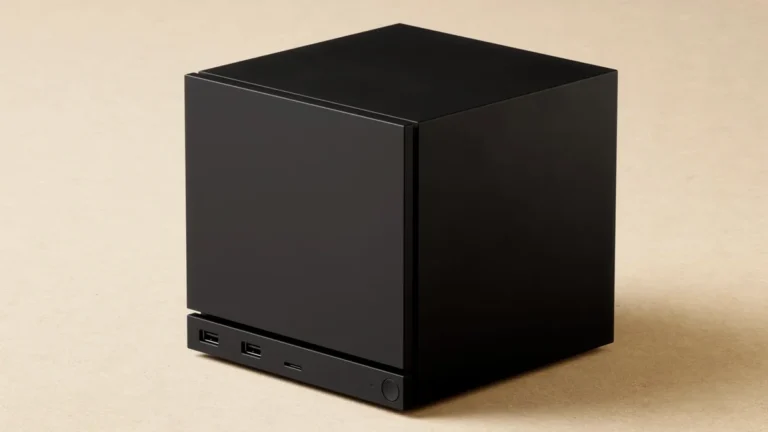
- In the professional space, this chip already powers the $3,999 DGX Spark ‘personal supercomputer,’ demonstrating massive success in local AI inference, model fine-tuning, and handling models up to 200 billion parameters.
- In the consumer space, the N1X faces immense skepticism due to the historical failure of Windows on ARM (WoA) compatibility and the high price point, despite promising raw performance leaks when running native code.
- For the N1X to succeed in gaming, NVIDIA must achieve widespread native Arm compilation for AAA titles, as current emulation layers (such as Microsoft’s Prism) introduce significant performance penalties and compatibility issues, especially with kernel-mode drivers.
NVIDIA is executing one of its most ambitious architectural plays: deploying a single, unified silicon design to conquer two wildly different markets. The Grace Blackwell (GB10) Superchip, the heart of the AI revolution, is now confirmed to be the exact same architecture powering the long-rumored consumer N1/N1X System-on-a-Chip (SoC) targeting high-end Windows laptops, specifically Alienware. This dual identity means the core engineering principles that deliver petaflops of AI performance in the data center—namely, high-efficiency, coherent memory, and massive parallelism—are being scaled down for your next gaming machine. But this strategy is a high-stakes gamble. While the GB10 is a proven, transformative success in the professional AI space, the N1X must overcome the graveyard of failed Windows on ARM (WoA) platforms and the deep skepticism of a gaming community burned by poor emulation performance and systemic compatibility failures.
The Core Identity: GB10 is N1X
NVIDIA GB10 / N1X Unified Architecture Specifications
| Feature | Detail |
|---|---|
| Architecture Base | Grace (ARM) CPU + Blackwell (GB10) GPU |
| CPU Cores | 20-core ARM (10x Cortex-X925, 10x Cortex-A725) |
| GPU Cores (SMs/CUDA) | 48 SMs / 6,144 CUDA Cores (Equivalent to RTX 5070 desktop) |
| Unified Memory | 128 GB LPDDR5X |
| Interconnect | NVLink-C2C (273 GB/s bandwidth) |
| Target TDP (N1X Laptop) | Capped at ~120W |
| AI Performance (DGX Spark) | 1 PFLOP (FP4 with sparsity) |
Front One: The DGX Spark and AI Supercomputing Success
The GB10 architecture has already proven its mettle in the data center and, critically, on the developer’s desk. The NVIDIA DGX Spark, internally codenamed Project DIGITS, is a lunchbox-sized ‘personal AI supercomputer’ that leverages the 128GB unified memory pool and NVLink-C2C to run AI models up to 200 billion parameters locally. This is a massive, game-changing advantage for developers, offering a known-good platform that dramatically lowers the barrier to entry for serious, large-scale AI development. Its real-world performance in demanding tasks like Stable Diffusion 1.5 inference (2.3x faster than AMD Strix Halo) and complex LLM reasoning showcases the raw power of the Grace-Blackwell fusion when operating within a native, optimized software stack like DGX OS/Linux. This guaranteed performance under native conditions is the architecture’s core technical promise.

Key Architectural Points:
- Unified Memory Pool: 128GB LPDDR5X shared by CPU and GPU.
- NVLink-C2C: High-bandwidth, coherent interconnect linking the Grace CPU and Blackwell GPU.
- Blackwell GPU: The foundation for both the DGX Spark and the N1X consumer chip.
GB10 (DGX Spark) AI Inference Comparison
| Metric | DGX Spark (GB10) | AMD Strix Halo (Competitor) |
|---|---|---|
| Memory Capacity | 128 GB Unified LPDDR5X | Unknown (Likely up to 32GB) |
| LLM (Llama 70B) First Token Latency | Sub-0.2 seconds (using TensorRT-LLM) | 78 seconds |
| Stable Diffusion 1.5 Inference | 2.3x Faster (19 images/min) | Baseline (8 images/min) |
| Max Model Size (4-bit quantized) | 200 Billion Parameters | Significantly smaller |
Front Two: The High-Stakes Bet on Windows on ARM Gaming
The N1X is rumored for a late 2025 or early 2026 launch in high-end Alienware laptops, positioning it as a direct competitor to high-end x86 platforms like AMD’s Strix Halo. However, moving this powerhouse silicon from the controlled, optimized Linux environment of the DGX Spark to the chaotic compatibility landscape of Windows on ARM (WoA) is fraught with risk. The gaming community is already deeply skeptical of ARM platforms, viewing the necessary translation layers as performance killers and compatibility headaches. The N1X’s success hinges entirely on whether NVIDIA and Microsoft can compel game developers to compile natively for ARM, something that has failed repeatedly over the last decade across multiple generations of WoA hardware. If native support stalls, the N1X risks becoming another expensive curiosity.
The PC gaming community is currently so disillusioned by the high cost and poor performance of existing ARM emulation solutions that any new Nvidia ARM client chip (N1/N1X) will be met with immediate skepticism and must deliver revolutionary native performance to justify the platform’s price premium over dedicated budget Windows hardware.
NVIDIA N1X Consumer Viability: Pros and Cons
Pros (The Technical Edge)
- Architectural Power: Shares the proven, high-efficiency Blackwell/Grace design, guaranteeing top-tier performance when running native Arm64 code.
- Unified Memory: The 128GB LPDDR5X capacity is massive, providing unparalleled headroom for local AI, generative workloads, and large creative projects.
- GPU Performance: Leaked benchmarks and internal rumors suggest native performance competitive with an RTX 4070 mobile GPU.
- AI Integration: Features built-in NPU capabilities and 5th-gen Tensor Cores for Copilot+ features and highly efficient local LLM execution.
Cons (The Compatibility Crisis)
- Windows on ARM (WoA): Compatibility remains the single largest hurdle, especially for essential kernel-mode drivers (e.g., VPNs, advanced security software).
- Emulation Overhead: Microsoft’s Prism emulator, even with recent AVX/AVX2 support, introduces unpredictable performance penalties and frame-time inconsistency in x86/x64 games.
- Memory Bandwidth Constraint: The 273GB/s LPDDR5X bandwidth is significantly less than dedicated desktop GPUs (e.g., the RTX 5070’s 672GB/s), potentially throttling peak gaming performance at high resolutions.
- Price Point: Rumored high-end pricing ($2000+) makes the platform a hard sell against cheaper, proven x86 alternatives offering guaranteed compatibility.
The Prism Problem: Why Emulation Isn’t Enough for Gaming
Microsoft has made significant strides in WoA compatibility with the Prism emulator, recently rolling out support for critical x86 instructions like AVX and AVX2. These extensions are essential for modern game engines and professional creative suites (such as Adobe) that previously refused to launch on ARM devices. While this allows most apps to run, it does not guarantee competitive performance. Emulation inherently adds overhead, which can severely impact frame-time consistency and 1% Lows—metrics absolutely critical to a fluid gaming experience. Furthermore, Prism only handles user-mode code. This means essential system components like kernel-mode drivers (used by VPNs, advanced security software, and some peripherals) must still be compiled natively as Arm64, a major, unresolved pain point for early adopters and enterprise users alike.
Deconstructed: How NVLink Fusion Links the ARM Ecosystem
The true architectural commitment defining the N1X/GB10 platform is found not just in the cores, but in the interconnect. The Grace Blackwell platform’s core strength is its high-bandwidth, coherent connective fabric, NVLink Fusion. This technology, previously only seen in NVIDIA’s highest-end Grace Hopper platforms, is now being extended across the entire Arm Neoverse ecosystem. This represents a massive strategic move, allowing any custom Arm Neoverse CPU to seamlessly integrate with NVIDIA GPUs and accelerators via the proprietary AMBA CHI C2C (Coherent Hub Interface Chip-to-Chip) protocol. This integration fundamentally removes the traditional memory and bandwidth bottlenecks imposed by standard PCIe connections, enabling a rack-scale, unified memory architecture—a critical requirement for the next generation of AI data centers and the key to the N1X’s 128GB unified memory pool.
Key Benefits of Arm/NVIDIA NVLink Fusion Integration
- Coherent Memory: Allows the CPU and GPU to share the same memory pool (like the N1X’s 128GB LPDDR5X) without duplication.
- High Bandwidth: NVLink-C2C provides 5x the bandwidth of PCIe Gen5, eliminating data bottlenecks.
- Ecosystem Flexibility: Enables hyperscalers (AWS, Google, Microsoft) to pair custom Arm Neoverse CPUs with NVIDIA accelerators.
- Rack-Scale Architecture: Facilitates the creation of massive, unified systems like the GB300 NVL72, which functions as a single massive GPU.
The Verdict: Can Raw Power Overcome Compatibility?
The NVIDIA N1X/GB10 is arguably the most advanced System-on-a-Chip ever designed for a consumer device, boasting a unified 128GB memory architecture and Blackwell GPU power that is genuinely revolutionary. In a native Linux/AI environment, its success is already guaranteed, as demonstrated by the transformative capabilities of the DGX Spark. However, the N1X is entering the volatile Windows gaming market, where this technical excellence faces a fundamental compatibility crisis. Unless NVIDIA and Microsoft can compel the industry to deliver a truly seamless, native-compiled gaming experience for the vast majority of AAA titles, the N1X will be relegated to a niche AI development machine that happens to run Windows. Its technical brilliance is undeniable, but its market success hinges entirely on software adoption—a factor historically outside of NVIDIA’s direct control. We remain highly skeptical of its consumer gaming viability until a critical mass of native Arm titles is confirmed at launch.
Frequently Asked Questions (FAQ)
Is the GB10 Superchip the same as the N1X consumer chip?
Yes, NVIDIA CEO Jensen Huang confirmed that the GB10 (used in DGX Spark) and the N1/N1X (targeting laptops) share the identical core architecture, including the 20-core Grace ARM CPU cluster and Blackwell GPU cores.
What is the N1X’s main competitor in the laptop market?
The N1X is positioned against high-end laptop processors, primarily AMD’s Strix Halo (8060S) and Intel’s next-generation Core Ultra chips. Early benchmarks show a significant performance gap against Strix Halo that NVIDIA must overcome.
What is NVLink Fusion and why is it important for ARM?
NVLink Fusion is a high-bandwidth, coherent interconnect technology that allows CPUs (including Arm Neoverse) and GPUs to share memory seamlessly. Its adoption by Arm is a critical step in building energy-efficient, high-performance AI data center systems.