
Introduction: The New Horizon for 1440p/4K Gaming
The landscape of mid-to-high-end gaming PCs is rapidly evolving, driven by an insatiable demand for immersive 1440p and 4K experiences. Gamers are no longer content with just hitting 60 FPS; they crave higher refresh rates, stunning visual fidelity, and the power to tackle the most demanding titles. AMD is making an aggressive play for this crucial segment with the highly anticipated launch of its RDNA 4-powered RX 9070 series graphics cards. Positioned alongside the acclaimed Ryzen 7 7800X3D, this new GPU lineup promises a formidable duo capable of dominating high-resolution gaming. This release comes amidst significant competitive pressure, with NVIDIA’s RTX 50 series already making waves, setting the stage for an intense battle for market share.
Key Takeaways
Before we dive deep into the technical intricacies, here are the key takeaways for LoadSyn readers:
- AMD’s RX 9070 & 9070 XT launch at competitive price points ($549 & $599) for 1440p/4K gaming.
- Ryzen 7 7800X3D remains a top-tier CPU choice, especially with new AMD GPU pairings.
- RDNA 4 architecture brings significant improvements in ray tracing, AI acceleration, and FSR 4 technology.
- Performance claims suggest strong competition against NVIDIA’s RTX 5070 and 5070 Ti, with crucial emphasis on real-world availability and pricing.
The Enduring Powerhouse: Ryzen 7 7800X3D’s Role in Modern Gaming
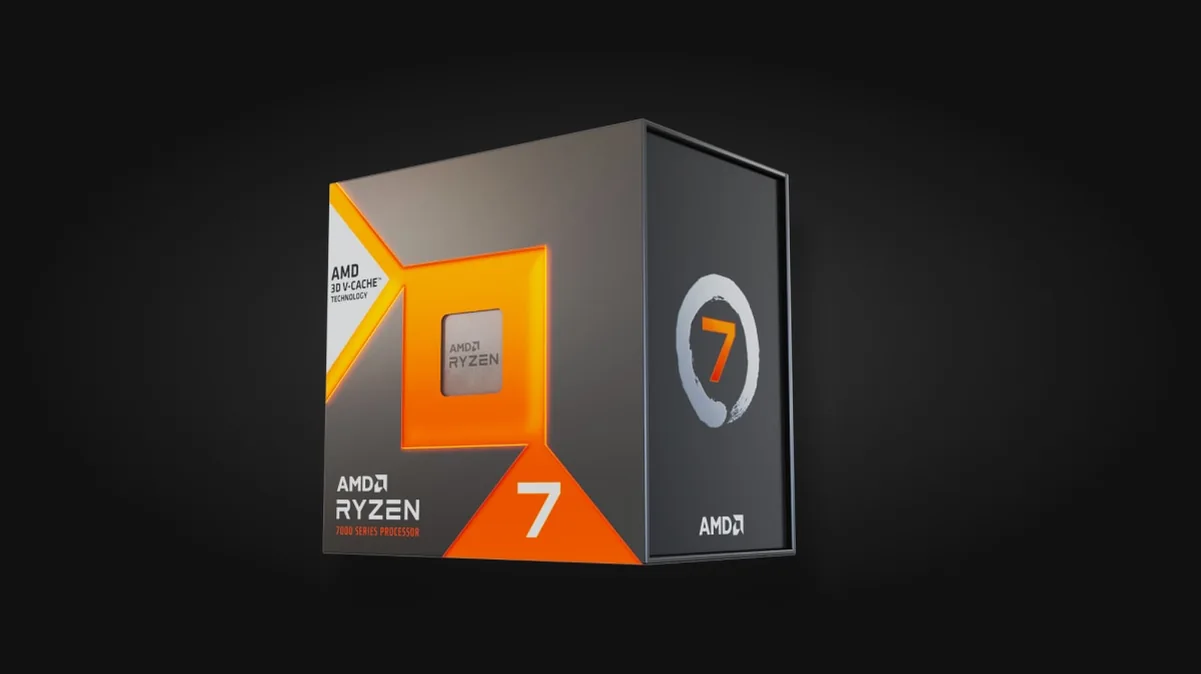
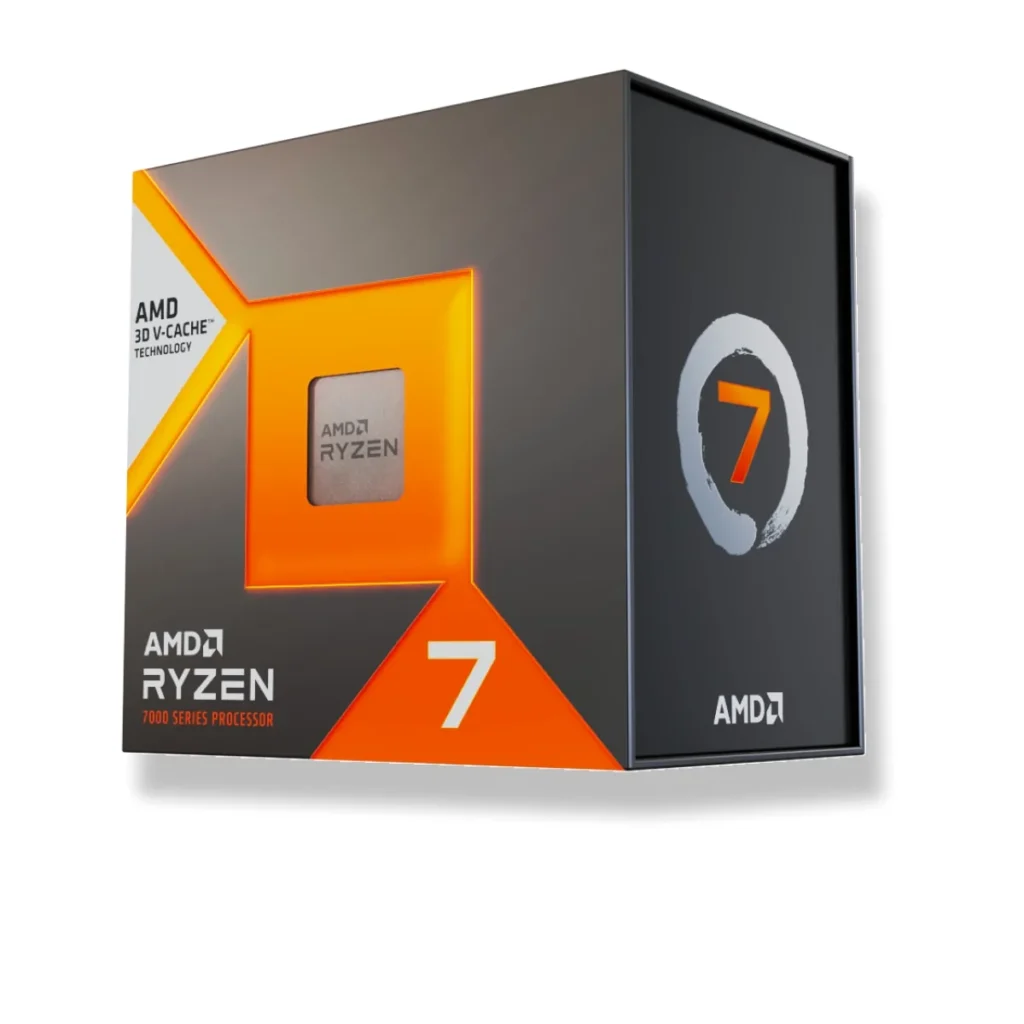
At the heart of any high-performance gaming rig lies a capable CPU, and for years, the AMD Ryzen 7 7800X3D has reigned as a gaming champion. Its unique 3D V-Cache technology, packing a massive 96MB of L3 cache, dramatically reduces latency and boosts frame rates in cache-sensitive games. Built on the Zen 4 architecture, this 8-core, 16-thread processor boasts a Max. Boost Clock of up to 5.0 GHz and a 4.2 GHz base clock, delivering exceptional single-threaded and multi-threaded performance. As an AM5 socket CPU, it fully supports the latest DDR5 memory, with speeds up to DDR5-5200, and leverages PCIe 5.0 for next-generation GPU and NVMe SSD connectivity. This makes it an ideal partner for high-end GPUs like the new RX 9070 series, ensuring CPU bottlenecks are minimized even at demanding 1440p and 4K resolutions. While its 120W TDP is manageable, a liquid cooler is recommended for optimal performance, allowing it to maintain peak clock speeds under sustained gaming loads.
| AMD Ryzen 7 7800X3D Key Specifications | |
|---|---|
| Architecture | Zen 4 |
| # of CPU Cores | 8 |
| # of Threads | 16 |
| Max. Boost Clock | Up to 5.0 GHz |
| Base Clock | 4.2 GHz |
| L3 Cache | 96 MB (with 3D V-Cache) |
| Default TDP | 120W |
| CPU Socket | AM5 |
| System Memory Type | DDR5 |
| Max Memory Speed | DDR5-5200 |
| PCI Express® Version | PCIe® 5.0 |
| Integrated Graphics | AMD Radeon™ Graphics (2 Cores, 2200 MHz) |
RDNA 4 Arrives: Detailing the RX 9070 and RX 9070 XT
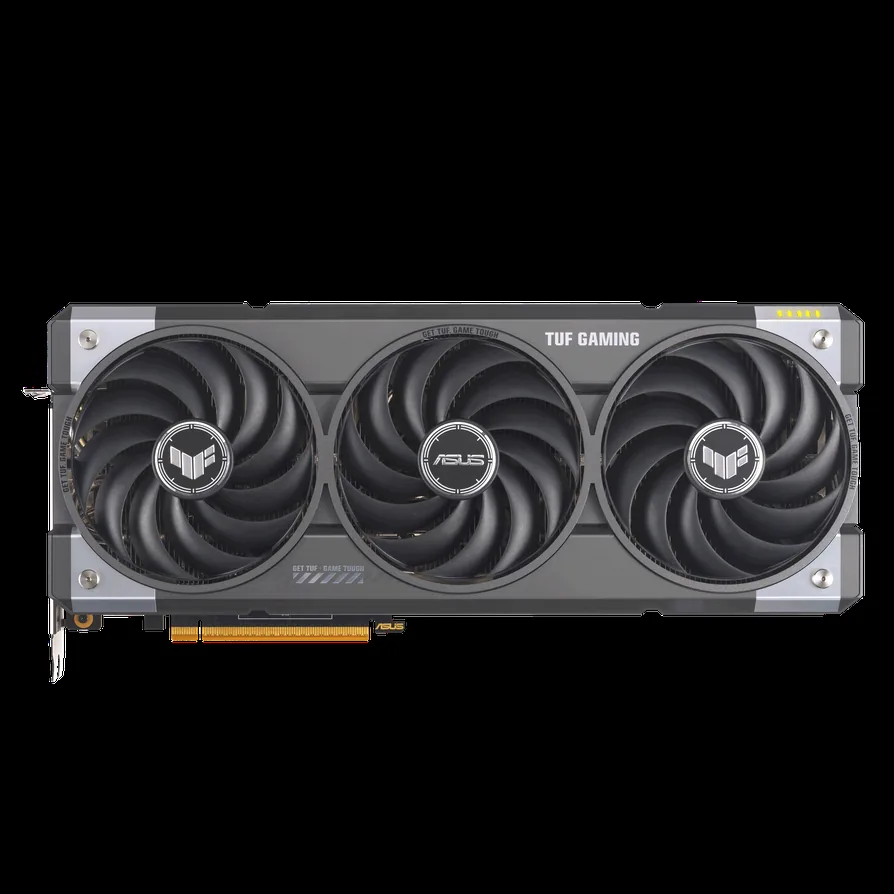
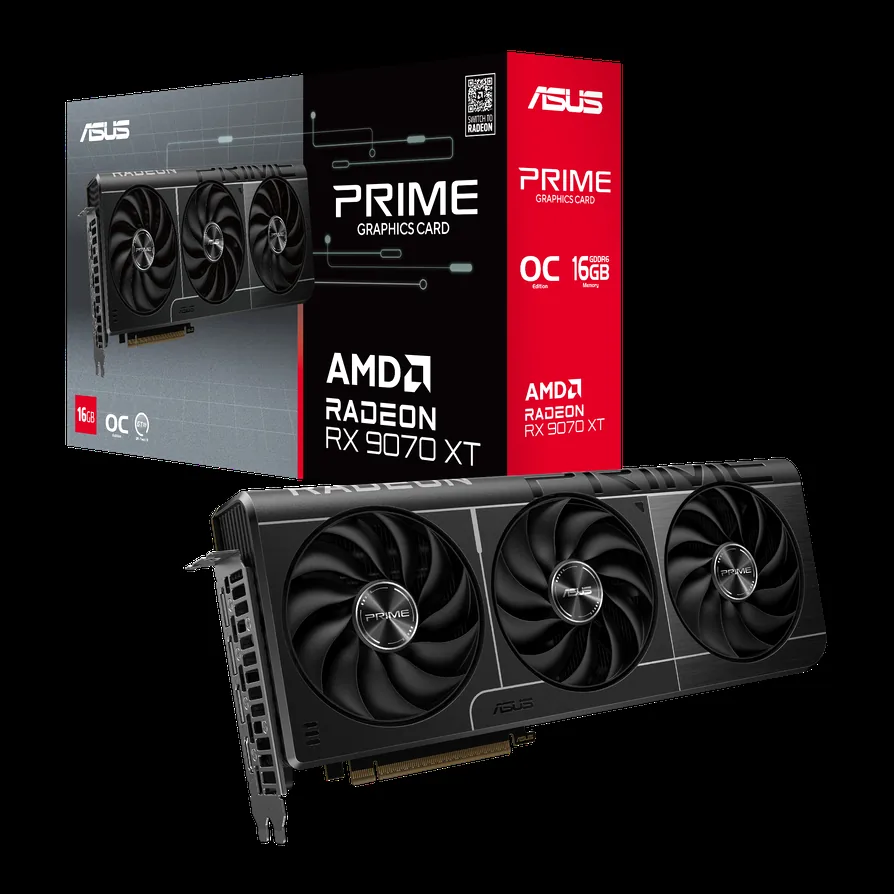
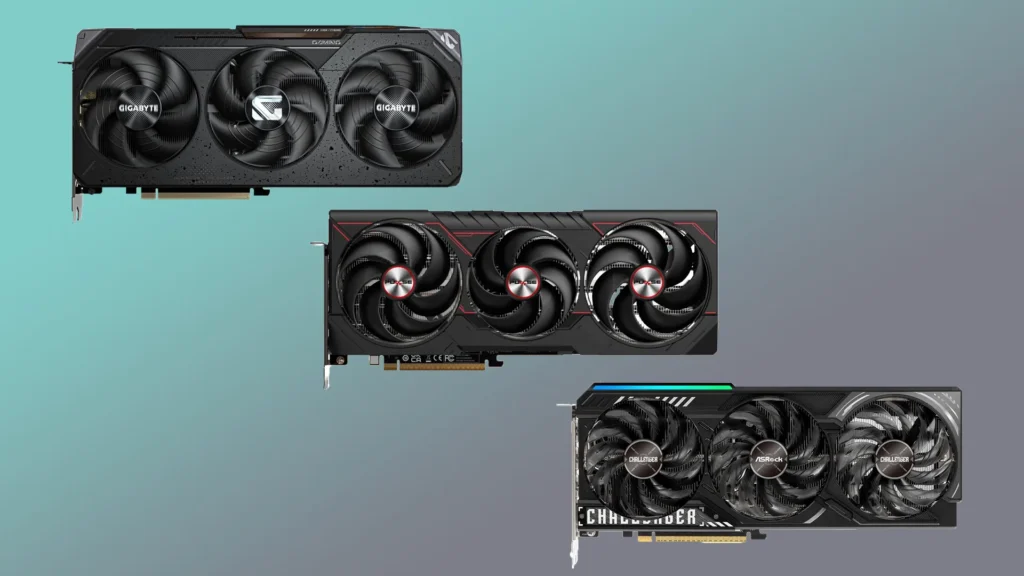
AMD has officially pulled back the curtain on its highly anticipated Radeon RX 9070 and 9070 XT graphics cards, ushering in the RDNA 4 architecture. These new GPUs are strategically positioned to capture a significant share of the mid-to-high-end market, with AMD openly stating its goal to aggressively compete on both price and performance against NVIDIA’s latest offerings. Designed specifically for demanding 1440p and 4K gaming, both the RX 9070 and RX 9070 XT come equipped with a generous 16GB of GDDR6 VRAM. This substantial memory buffer is a key selling point, providing ample headroom for high-resolution textures and ensuring future-proofing against increasingly VRAM-hungry titles. With a focus on delivering exceptional value, AMD aims to make high-fidelity gaming more accessible than ever.
RX 9070 Series: Core Specifications and Architectural Leaps
The RDNA 4 architecture powering the RX 9070 series represents a significant leap forward for AMD. At its core, RDNA 4 features enhanced compute units, but the most impactful improvements come in the form of its 3rd generation ray tracing accelerators. AMD has doubled ray intersection rates and significantly improved ray traversal, addressing a historical weakness in its GPU lineup. This means more realistic lighting, shadows, and reflections, bringing a new level of immersion to ray-traced titles. Furthermore, the inclusion of 2nd generation AI accelerators, delivering up to 8x INT8 throughput, is crucial not only for AI-powered upscaling technologies but also for emerging creative workloads that leverage machine learning. The decision to equip both the RX 9070 and 9070 XT with 16GB of GDDR6 VRAM on a 256-bit memory bus is a strategic one, ensuring these cards can handle the increasingly complex texture demands of modern games and remain relevant for years to come. This focus on VRAM and targeted architectural enhancements demonstrates AMD’s commitment to delivering a robust, future-proof gaming experience.
| Feature | AMD Radeon RX 9070 XT | AMD Radeon RX 9070 |
|---|---|---|
| Architecture | RDNA 4 | |
| Compute Units | 64 | 56 |
| Memory | 16 GB GDDR6 | 16 GB GDDR6 |
| Memory Interface | 256-bit | 256-bit |
| Memory Speed | 20 Gbps | 20 Gbps |
| Infinity Cache | 64 MB | 64 MB |
| Boost Clock | Up to 3.0 GHz | Up to 2.5 GHz |
| Game Clock | 2.4 GHz | 2.1 GHz |
| TBP (Total Board Power) | 304 W | 220 W |
| PCI Express Version | PCIe 5.0 | PCIe 5.0 |
| Display Outputs | DP 2.1a, HDMI 2.1b | DP 2.1a, HDMI 2.1b |
| MSRP | $599 | $549 |
AMD’s Software Arsenal: FSR 4, HYPR-RX, and AI-Powered Enhancements
Beyond raw hardware, AMD is bolstering its software ecosystem to extract maximum performance and user value from the RX 9070 series. A cornerstone of this strategy is FidelityFX Super Resolution 4 (FSR 4), which now incorporates a new ML-powered upscaling algorithm. This advancement promises enhanced image quality and frame rates, particularly in demanding scenarios like 4K gaming with ray tracing enabled. FSR 4 will be available in over 30 games at launch, with more to follow. For an instant performance boost, AMD offers HYPR-RX, a one-click solution that intelligently combines Radeon Super Resolution, Fluid Motion Frames 2.1, Anti-Lag, and Boost technologies. This integrated suite provides a noticeable uplift in FPS and responsiveness. Furthermore, the new AI-enhanced AMD Software: Adrenalin Edition application expands the ecosystem with features like AMD Chat for support and the App Portal for discovering AI applications. These software innovations underscore AMD’s commitment to a holistic, performance-driven user experience.
Performance Showdown: RX 9070 Series vs. NVIDIA RTX 50 Series
The true test of any new GPU lies in its real-world performance against the competition. AMD’s first-party performance claims position the RX 9070 against the RTX 5070 and the RX 9070 XT against the RTX 5070 Ti. Internally, AMD claims the RX 9070 delivers an average of 21% more performance than the previous-generation RX 7900 GRE at 4K/Ultra, with the RX 9070 XT extending that lead to over 40% on average. Against NVIDIA’s older generations, AMD touts the RX 9070 as 26% faster than the RTX 3080 and the RX 9070 XT as 26% faster than the RTX 3090. A critical point of focus for AMD is ray tracing, an area where they have historically lagged. The RDNA 4 architecture’s 3rd generation ray tracing accelerators show disproportionately favorable gains, with some titles seeing up to a 34% uplift over the RX 7900 GRE in ray-traced scenarios.
Projected 1440p & 4K Gaming Performance (FPS Average)
A conceptual visualization based on initial AMD claims and early third-party data. Actual performance may vary depending on game, settings, and system configuration.
“I hope they release a driver for this game for those who own an AMD GPU, it is weird seeing the 9070xt do worse than the 5070ti when the game was made alongside amd”
The Value Proposition: Pricing, Availability, and Overclocking Potential
AMD has set aggressive launch pricing for the new series, with the RX 9070 at $549 and the RX 9070 XT at $599. These price points directly challenge NVIDIA’s offerings, aiming to deliver superior performance per dollar. However, as experienced gamers know, MSRPs are often theoretical. The real test will be actual street prices and consistent availability, a crucial factor given past market volatility and NVIDIA’s tendency for ‘fake MSRPs.’ AMD needs to ensure robust supply to capitalize on this competitive positioning.
Overclocking the RX 9070 XT
Initial specifications suggest the RX 9070 XT, with its 304W TBP, offers significant headroom for overclocking. AIB partners like ASUS and XFX have already detailed OC Edition cards reaching Boost Clocks of 3.0-3.1 GHz, indicating potential for users to push performance beyond stock settings and gain even more value against competitors.
Final Verdict: Is AMD’s Duo Your Next 1440p/4K Powerhouse?
Pros
- Competitive pricing for both RX 9070 and 9070 XT.
- Generous 16GB GDDR6 VRAM across the series for high-resolution gaming.
- Significant architectural improvements in Ray Tracing and AI acceleration with RDNA 4.
- Strong software suite with FSR 4 and HYPR-RX for performance boosts.
- Ryzen 7 7800X3D provides exceptional gaming CPU performance, minimizing bottlenecks.
Cons
- First-party benchmarks against NVIDIA’s latest (40/50 series) are limited, requiring third-party verification.
- Potential for ‘pop-in’ or optimization issues in some games, as noted by the community.
- Availability at MSRP remains a concern, despite AMD’s assurances.
- The $50 price gap between RX 9070 and 9070 XT might cannibalize the lower-tier model.
The AMD RX 9070 series, paired with the Ryzen 7 7800X3D, presents a compelling and value-driven option for gamers targeting 1440p and 4K resolutions. With substantial architectural enhancements in RDNA 4, particularly for ray tracing and AI, and a robust software ecosystem, AMD is making an aggressive push. While real-world performance will need to be thoroughly validated by independent benchmarks, the initial pricing and specifications position these cards as serious contenders. Gamers looking for a powerful, future-proofed system without breaking the bank should keep a close eye on the RX 9070 XT, especially if it maintains its MSRP and availability.