
Key Takeaways
- The Blackwell Architecture (RTX 5080-class) is rolling out globally, delivering 62 TFLOPS of compute power. This massive boost enables 5K 120 FPS streaming and ultra-low latency 360 FPS competitive play.
- Latency is dramatically reduced via NVIDIA Reflex and the new Cloud G-Sync (VRR) synchronization, making the Ultimate Tier viable for most competitive games, provided the user has extremely stable fiber internet.
- The core conflict remains: GFN Ultimate offers access to hardware far exceeding a local PC’s value, but the new 100-hour monthly playtime cap (for new users) and the philosophical dread of ‘renting’ hardware remain major barriers for core gamers.
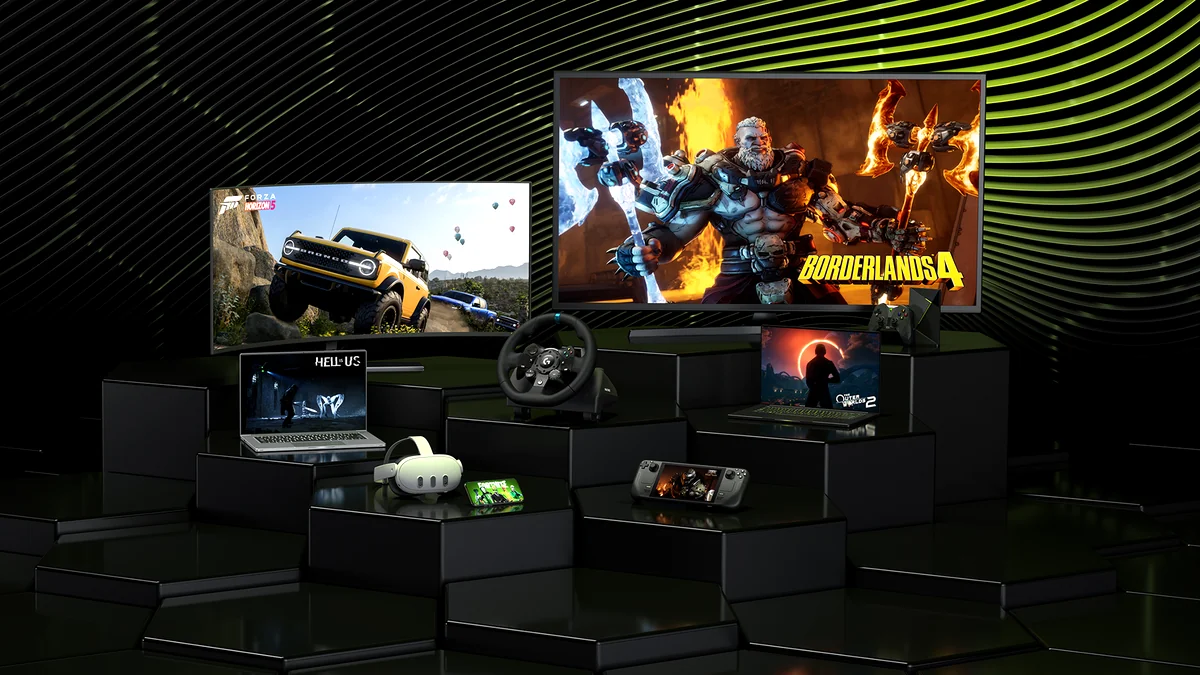
- The new Install-to-Play feature instantly doubles the available library, allowing premium members to stream over 2,200 additional publisher-opted-in Steam titles, bringing the total library to over 4,500 games.
Decoding Blackwell: The RTX 5080-Class Cloud Rig
The introduction of the NVIDIA Blackwell architecture represents the most significant performance update to GeForce NOW since its inception. This isn’t a marginal refresh; NVIDIA is claiming GeForce RTX 5080-class performance in the cloud, boasting 62 teraflops of compute power—a raw capability that is more than three times the power of a PlayStation 5 Pro. This massive infrastructure overhaul is designed to eliminate the performance gap between local and streamed gaming. The new architecture unlocks features like 5K 120 FPS streaming and significantly enhanced ray tracing capabilities via DLSS 4 Multi-Frame Generation. Crucially, the underlying server hardware has also seen an upgrade, featuring AMD ‘Zen 5’ CPUs and NVIDIA ConnectX-7 SmartNICs. This ensures the entire system—from CPU processing to network transmission—is optimized to prevent bottlenecks and deliver the consistent frame times required for competitive play.
GeForce NOW Ultimate Tier (Post-Blackwell Upgrade)
- GPU Class
- GeForce RTX 5080-Class (Blackwell)
- Compute Performance
- 62 TFLOPS
- Max Streaming Resolution
- 5K (5120x2180p) at 120 FPS
- Competitive Mode Max FPS
- 360 FPS at 1080p (via Reflex)
- Key Rendering Tech
- DLSS 4 Multi-Frame Generation, Enhanced Ray Tracing
- Streaming Standard
- Cinematic-Quality Streaming (CQS) with 100 Mbps, AV1, 10-bit HDR, 4:4:4 Chroma
The Latency Validation: Is Cloud Gaming Finally Competitive?
The single greatest hurdle for cloud gaming, particularly for performance enthusiasts, has always been input latency. To counter this, NVIDIA has launched a multi-layered attack combining proprietary hardware and software optimizations. The primary goal is to push the entire click-to-pixel response time below 30 milliseconds, a threshold that finally makes competitive titles genuinely viable. This is achieved through the integration of NVIDIA Reflex, which bypasses the CPU queueing delay on the server side; Cloud G-Sync (VRR), which synchronizes the streamed frames with the client display to eliminate tearing and timing delays; and specialized networking hardware like the ConnectX-7 SmartNICs. However, regardless of how optimized the server is, the latency chain is only as strong as its weakest link. We must examine the four critical stages of the end-to-end latency chain, as network instability (jitter) in non-fiber connections remains the final, unavoidable bottleneck.
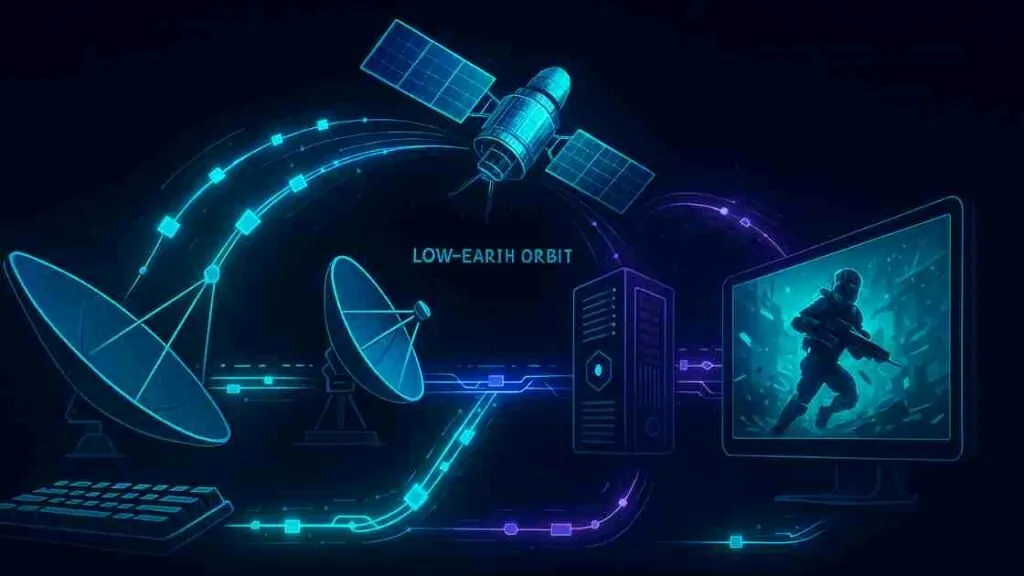
Latency Chain Breakdown
- Input Lag: Minimized by low-latency peripherals (Marcus Coleman’s expertise).
- Network RTT: The user’s internet connection (Fiber vs. Starlink).
- Server Processing: Optimized by Blackwell RTX and NVIDIA Reflex.
- Client Decoding: Optimized by AV1 codec and Cloud G-Sync (VRR).
The Ultimate Paradox: Value vs. Restriction
The economic argument for GFN Ultimate is compelling and difficult to ignore: for $19.99 a month, you rent access to hardware that would cost thousands to build locally. This financial advantage is directly challenged by two major restrictions imposed by NVIDIA: the strict 100-hour monthly playtime cap for new users and the inherent philosophical shift from ownership to rental. Core gamers must confront the dread of paying for access rather than owning the machine. The following comparison puts the hard numbers into perspective, analyzing the cost-per-frame trade-off against local hardware ownership.
GFN Ultimate vs. Local Hardware: Cost & Limits
| Criteria | GFN Ultimate (New User) | Mid-Range Gaming PC | Steam Deck OLED |
|---|---|---|---|
| Initial Cost | $0 | $1,500 – $2,000 | $550 – $650 |
| Annual Cost (Year 1) | $240 | $0 (Excluding Electricity) | $0 |
| Performance Class | RTX 5080-Class | RTX 4070-Class | Custom AMD APU |
| Latency Consistency | Excellent (Network Dependent) | Near-Perfect (Sub-15ms) | Near-Perfect (Local Play) |
| Playtime Restriction | 100 Hours/Month (with paid add-ons) | Unlimited | Unlimited |
| Game Library Access | 4,500+ Titles (Requires ownership) | Full PC Library (Mods, non-Steam) | Steam Library (Limited to Hardware Capability) |
The Community Backlash: The 100-Hour Cage
NVIDIA’s decision to impose a strict 100-hour monthly playtime cap for new Ultimate and Performance members starting in 2025 has been met with significant backlash from the core gaming community. This limitation, introduced to premium tiers that previously offered unlimited access, fundamentally changes the service’s value proposition. While NVIDIA attempts to justify the limit as a necessary means to ensure service quality and shorter queues—claiming it affects less than 6% of their current base—heavy users view it as a punitive measure that forces constant budgeting of playtime. The grandfather clause, which allows existing members to retain unlimited play throughout 2025, only slightly softens the blow. Ultimately, this restriction highlights a clear pivot: GeForce NOW is being positioned as a supplemental, high-end streaming solution, rather than a primary PC replacement.
“Can’t wait to rent a skin in my rented Game, in my rented GamePass, in my rented cloud computer, in my rented house. Ohh man, the future is truly awesome! The problem is that GeForce Now changed its pricing model, users are now limited to 100 hours of gameplay per month, and if you want more, you have to pay extra. For core gamers who play a lot every month, the service just isn’t worth it anymore.”
Post-Blackwell GFN Ultimate: Summary of Trade-Offs
✅ Pros
- Unmatched Performance: Access to RTX 5080-class power (62 TFLOPS) for a low monthly fee.
- Ultra-Low Latency: Near-native competitive performance (sub-30ms) via Reflex and Cloud G-Sync.
- High Fidelity Streaming: Supports 5K 120 FPS and Cinematic Quality Streaming (CQS).
- Massive Library Expansion: Install-to-Play feature instantly doubles the available Steam library (4,500+ games).
❌ Cons
- Restrictive Playtime Cap: New members are limited to 100 hours per month starting 2025.
- Network Dependency: Requires fiber or extremely stable, high-bandwidth connections (100 Mbps for CQS).
- No Ownership: Philosophical anxiety over renting access to hardware and limited mod support.
- Geographic Limits: Performance is highly dependent on proximity to NVIDIA data centers.
Frequently Asked Questions (FAQ)
What is the ‘Install-to-Play’ feature?
Install-to-Play allows premium members to install over 2,200 additional publisher-opted-in Steam games directly onto cloud storage (100GB included), significantly expanding the library beyond the 2,300 ‘Ready-to-Play’ titles. Persistent storage add-ons are available for purchase for users needing more than the basic 100GB.
Does the 100-hour limit apply to existing Ultimate members?
No. Existing paid subscribers who maintain continuous membership through December 31, 2024, are grandfathered into unlimited playtime throughout 2025. The cap applies to all members starting January 1, 2026, or immediately for new subscribers who join starting in 2025.
What is Cloud G-Sync (VRR) and who can use it?
Cloud G-Sync synchronizes the stream rate with your VRR-capable monitor (G-Sync, FreeSync, ProMotion) to eliminate screen tearing and further reduce latency. It currently requires an NVIDIA GPU on Windows devices, though it also supports Mac ProMotion displays.
🏆 Final Verdict: The Cloud Paradox
The Blackwell RTX upgrade is a technical triumph that finally validates cloud gaming as a legitimate high-performance solution. For the casual or mid-core gamer seeking access to cutting-edge 5K/120 FPS hardware without the massive upfront cost, GFN Ultimate is an unparalleled value proposition. The latency improvements, combined with Cloud G-Sync and Reflex, make competitive titles viable for the first time, provided the user has a rock-solid fiber connection. However, the 100-hour playtime cap is a poison pill. It transforms the service from a potential PC replacement into a very expensive, high-end supplement. Until NVIDIA commits to truly unlimited playtime for its premium tier, GFN Ultimate remains the best cloud gaming service available today, but it is not, and cannot be, the definitive future of primary PC gaming.