
Key Takeaways: The Seneca Contradiction
- The Norbauer Seneca is an apex predator in the input device market, priced from $3,600, with the ultra-rare Veracity Titanium model exceeding $8,000.
- This staggering cost is the direct result of a five-year, six-figure R&D initiative dedicated to eliminating the mechanical flaw that has plagued the industry for decades: stabilizer rattle.
- Its construction features 682 bespoke components, plasma ceramic finishes, solid brass plates for superior acoustic dampening, and adherence to International Tolerance Grade 10 precision, verified by forensic 3D CT scanning.
- This device is fundamentally a philosophical statement, rejecting the “economic over-optimization” of modern tech by prioritizing sensual luxury and acoustic integrity over common features like wireless connectivity or RGB lighting.
The Philosophical Irony: Why a Stoic Keyboard Costs $8,000
Founder Ryan Norbauer describes the Seneca as ‘exuberantly irrational’ and a ‘sentimental escape hatch’ from the ‘economic over-optimization of 21st century life.’ This defiance is not merely marketing; it is physically baked into the design, which consciously rejects modern convenience—there is no wireless connectivity, no RGB lighting, and no numpad—in favor of uncompromising, almost absurd build quality. Yet, the price—starting at $3,600 and climbing past $8,000 for the raw Veracity Titanium chassis—creates a profound and deliberate irony. The keyboard is named after Lucius Annaeus Seneca, who famously advocated for abstaining from wealth and practicing poverty. To name a device that costs more than many high-end gaming PCs after the ultimate Stoic philosopher is to acknowledge the product’s own luxurious absurdity.
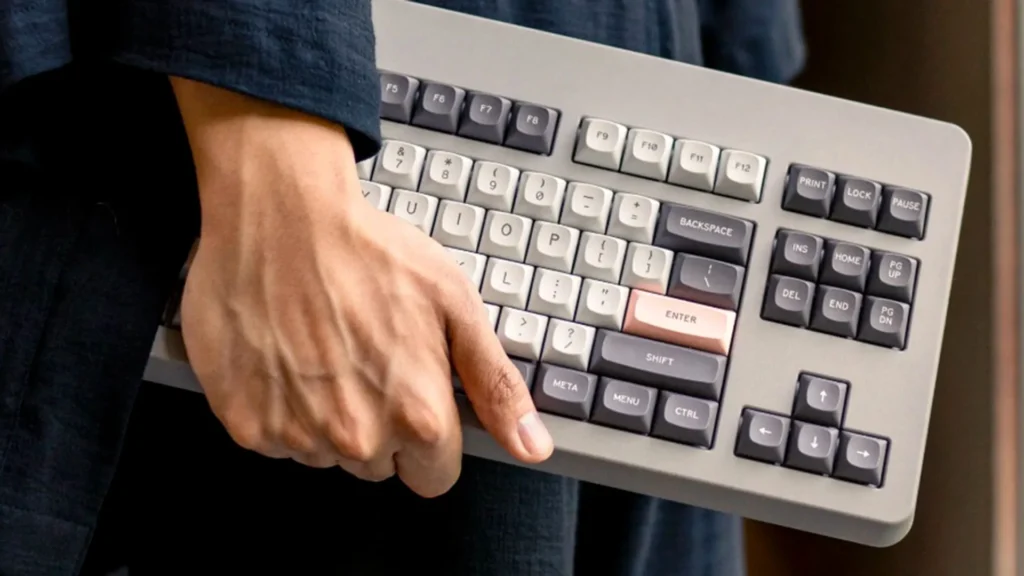
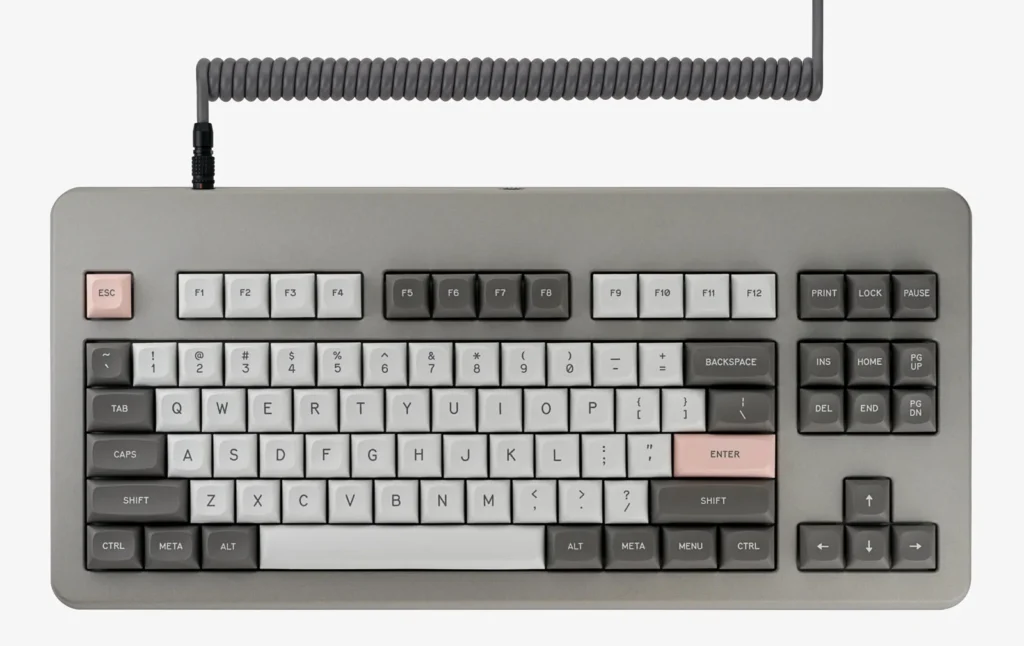
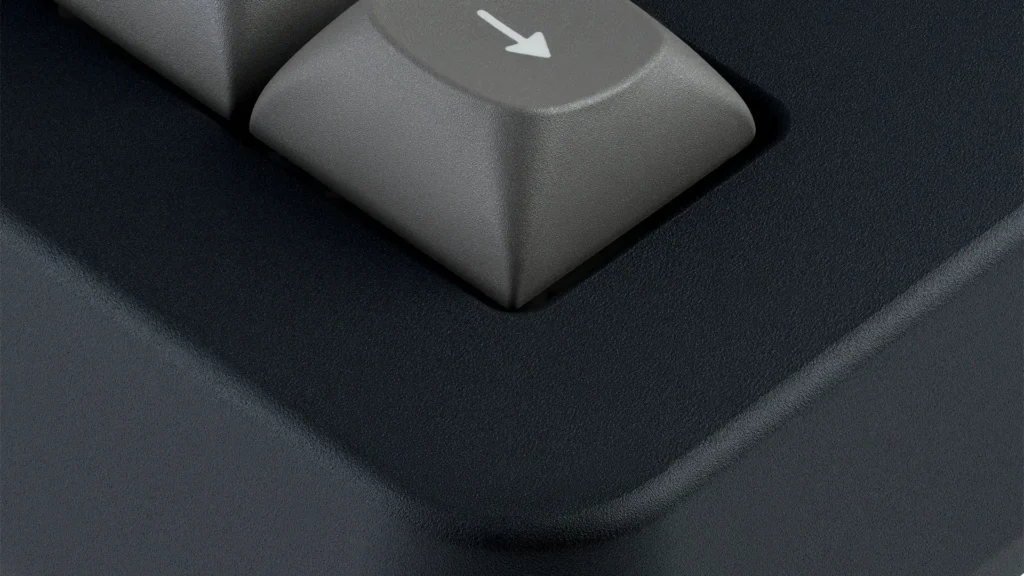
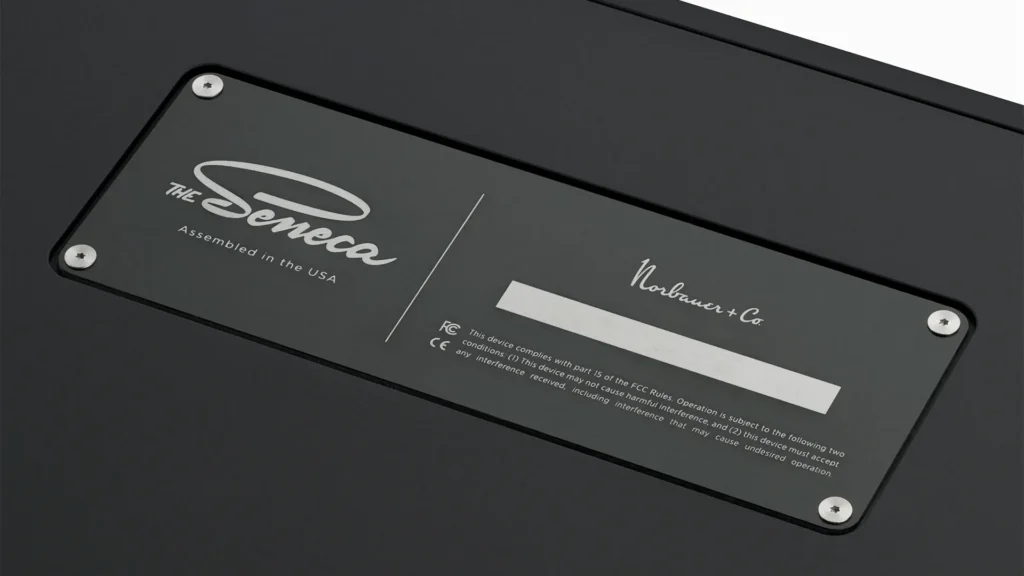
A look at the Seneca’s premium finishes, including Oxide Gray, Travertine, and the raw Veracity Titanium option.
The Engineering Deep Dive: Solving the ‘Great Unsolved Problem’ of Stabilizers
For decades, the luxury keyboard market has been plagued by a fundamental acoustic flaw: stabilizer rattle. Standard Cherry-style stabilizers, while mechanically functional, are kinematically over-constrained. This means their design inherently contains redundant constraints, making the entire system hypersensitive to minute manufacturing variance. The result is wire rattle and ticking, which forces hobbyists to compensate with inconsistent hand-lubrication—a messy, temporary “acoustic band-aid” for what is fundamentally poor engineering. Norbauer spent five years and well into the six figures to solve this paradox, partnering with the Danish firm RD8 to apply robust design and advanced kinematic analysis. The result is a proprietary, 21-part, multi-mechanism assembly that eliminates rattle and ticking entirely, achieving silence without the need for grease.
Kinematic Stabilization: A 21-Part Solution
The Seneca stabilizer achieves perfect kinematic scoring by using a tongue-in-groove design with multiple compliant preload mechanisms. This allows for near zero-clearance gaps (eliminating ticking and wobble) while accommodating keycap variations through free translation. Two compliant sub-mechanisms—a molded beam and a brass spring—press the rotating wire against the housing and floor, respectively, ensuring smooth, silent travel and eliminating the primary sources of rattle without requiring grease.
Seneca: First Edition Core Specifications
- Layout
- Tenkeyless (TKL)
- Chassis Material
- Milled Aluminum (Plasma Ceramic Finish) or Raw Veracity Titanium
- Switch Type
- Proprietary Electro-Capacitive (Custom Domes, Free-Sliding Linear Bearing)
- Keycap Material
- Double-Shot PBT (MTNU Profile, GMK Manufactured)
- Stabilizer System
- Proprietary, Kinematically Optimized (21 parts per assembly, grease-free)
- Manufacturing Tolerance
- International Tolerance Grade 10 (Verified by 3D CT Scans)
- Connectivity
- Wired (Lemo Connector, USB-C distal end)
- Weight
- 7 lbs (3.18 kg)
Acoustic Perfection: Achieving the ‘Raindrop Thock’
The Multi-Layered Dampening Philosophy
- Chassis Isolation: The monolithic, seven-pound milled aluminum housing and the solid brass switch plate—chosen specifically for its density and acoustic absorption—are vibration-isolated by soft interstitial acoustic-dampening interface layers.
- Switch Dampening: Custom silicone rings cushion the upstroke, while the compliant rubber domes handle the downstroke, contributing to the deep, soft sound profile.
- Coil Crunch Elimination: A special dampening layer is placed between the helical capacitive coils and the PCB, successfully eliminating the unpleasant high-frequency ‘crunch’ sound typical of traditional capacitive boards.
- Internal Absorption: Natural wool felt dampener is meticulously used in the interior chamber to absorb stray sound waves and further deaden case reverb.
Seneca vs. HHKB: Comparing the Electro-Capacitive Titans
Norbauer Seneca vs. HHKB Professional Hybrid
| Feature | Norbauer Seneca (Base) | HHKB Professional Hybrid |
|---|---|---|
| Base Price | $3,600 | $281 – $337 |
| Stabilizer System | 21-Part Proprietary Kinematic (Grease-Free) | Factory-Lubed Topre (Improved over Pro 2) |
| Chassis Material | Milled Aluminum/Brass Plate (Plasma Ceramic) | Injection-Molded Plastic (AES/ABS) |
| Connectivity | Wired (Lemo Connector) | Wired (USB-C) and Wireless (BT 4.2LE) |
| Design Philosophy | Irrational Perfection; Defiant Luxury | Minimalist Efficiency; Unix Workflow Focus |
The Market Disconnect: Fandom’s Focus on Value
The current emotional landscape of the PC gaming keyboard community is overwhelmingly focused on value and performance-for-cost, rendering the ultra-high-end segment, such as the $8,000 Seneca, entirely outside the scope of mainstream discussion and emotional consideration.
Objective Assessment of the Seneca’s Design Choices
Pros (+)
- Unmatched Engineering: Solves decades-old mechanical flaws (stabilizer rattle) with proprietary, kinematically optimized technology.
- Extreme Material Quality: Plasma ceramic coatings, solid brass, and Grade 10 tolerances ensure lifelong durability and a non-negotiable feel.
- Acoustic Tuning: Achieves a deep, quiet ‘thock’ through multi-layered dampening and proprietary electro-capacitive switches.
- Collector Status: Extreme scarcity, hand-built nature, and philosophical positioning make it a unique, high-value centerpiece.
Cons (-)
- Prohibitive Cost: The price point is inaccessible to 99.9% of the market, limiting its practical relevance.
- Feature Omissions: Lacks modern conveniences like wireless connectivity, hot-swap switches, and RGB lighting.
- Wait Time: The First Edition is sold out, requiring a 6-9 month waitlist and a non-refundable deposit to secure a build slot.
- Fixed Angle: The default flat typing angle, while ergonomic, may necessitate the purchase of the $290 optional wooden riser for users preferring an incline.
Frequently Asked Questions (FAQ)
What is the Seneca’s unique switch technology?
It uses proprietary electro-capacitive switches, redesigned from Topre principles. Key features include custom elastomeric domes for tactile snap, a free-sliding linear bearing to ensure zero wobble, and compatibility with standard MX keycaps, all while focusing on deep acoustic performance.
Why is the Seneca so expensive?
The cost is primarily due to the five-year, six-figure investment in R&D required to solve fundamental engineering problems (like stabilizer rattle). Furthermore, the device uses 682 custom-made parts, exotic finishes like plasma ceramic, and demands a time-intensive, low-volume manual assembly process to meet the ultra-tight International Tolerance Grade 10 standards.
What is the significance of the Lemo connector?
Lemo connectors are precision machined brass assemblies traditionally used in high-stakes fields like avionics. Their use here provides a secure, positive lock, contributes to the overall aesthetic of uncompromising quality, and supports the internal galvanic isolation chip designed to prevent current surges from the USB-C bus.
Final Verdict
The Norbauer Seneca is not a product; it is a statement. It is a monument built to the asymptotic difficulty of achieving the final 10% of engineering perfection. For the technical enthusiast, the Seneca offers a masterclass in robust design, kinematic optimization, and acoustic physics—solving problems the rest of the industry deemed too costly or complex to touch. The proprietary, 21-part stabilizer alone justifies its position as a technical marvel. However, its philosophical defiance of value, coupled with its extreme scarcity, means it exists entirely outside the consumer market. It is the world’s best, most technically fascinating, and most gloriously irrational keyboard, designed not to be used by everyone, but to be admired by those who understand the engineering depth required to build a true ‘endgame’ device.