
The Nothing Phone (3) & Brand Identity: Key Takeaways
- The Nothing Phone (3) marks the brand’s ambitious push into the flagship market, priced at $799, directly competing with established players like Samsung and Google.
- It features a powerful Snapdragon 8s Gen 4 chip, a stunning 6.67-inch 120Hz AMOLED display, a robust 5150mAh battery, and a versatile triple 50MP camera system.
- Nothing OS 3.5, based on Android 15, offers a clean, customizable experience with 5 years of OS updates and 7 years of security patches, alongside new AI features like ‘Essential Space’ and an evolved Glyph Matrix.
- Despite hardware strengths, the Phone (3) faces criticism for thermal throttling, inconsistent camera performance at higher zooms, and the Glyph Matrix being perceived as gimmicky by some.
- A significant controversy has erupted around Nothing’s introduction of ‘Lock Glimpse’ (lock screen ads) and unremovable Meta bloatware (Meta Services) on the Nothing Phone (3a) series, leading to widespread community backlash.
- Users feel a profound sense of betrayal, as these changes directly contradict Nothing’s founding promise of a clean, ad-free Android experience, threatening the brand’s unique selling proposition.
Nothing’s Bold Leap: The Phone (3) Enters the Flagship Arena
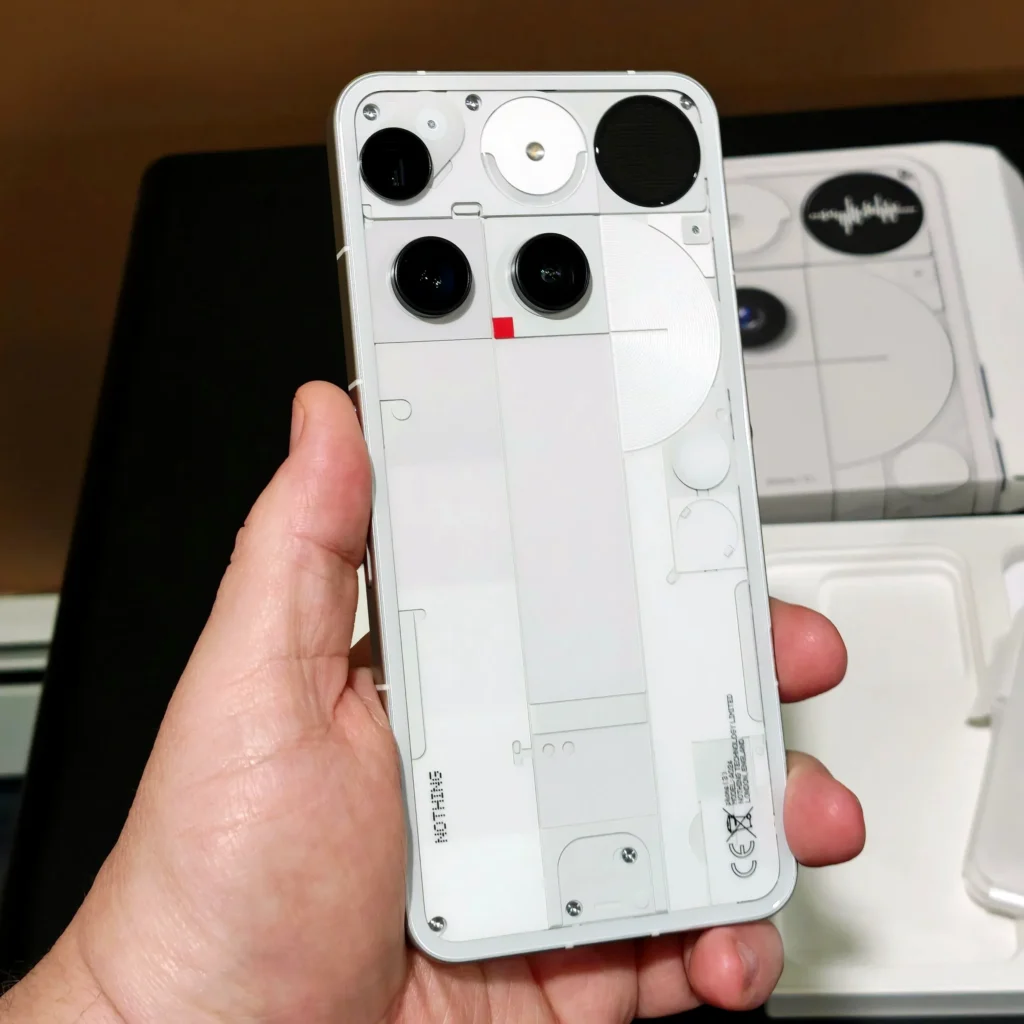
Nothing, the London-based tech company founded by OnePlus co-founder Carl Pei, has always prided itself on challenging the status quo with unique design and a promise of a clean Android experience. With the launch of the Nothing Phone (3), the company is making its most ambitious move yet: a full-fledged entry into the flagship smartphone market. Priced at $799 for the base model, the Phone (3) aims to compete directly with industry giants like Samsung and Google. It boasts significant upgrades and a refined aesthetic, signaling Nothing’s deliberate move upmarket to secure better margins and fund vital R&D. But can its hardware prowess and distinctive software truly justify this premium price tag, especially in light of recent controversies that threaten to erode its core brand identity and alienate its loyal community?

Under the Hood: Specifications and Performance
The Nothing Phone (3) is powered by the Snapdragon 8s Gen 4 chipset, a 4nm Qualcomm processor that, while not the absolute top-tier flagship silicon, delivers impressive burst performance comparable to the Snapdragon 8 Gen 3. This means that for everyday tasks and demanding games, the device offers a buttery-smooth experience, especially when paired with up to 16GB of LPDDR5X RAM and 512GB of UFS 4.0 storage. However, a notable concern arises from its thermal management; during stress tests, the Phone (3) exhibits aggressive throttling, leading to uncomfortable heat and significant performance drops. This cooling inadequacy is a potential Achilles’ heel for sustained heavy use, impacting its competitive standing against other flagships that manage heat more effectively.
Nothing Phone (3) Key Specifications
| Display | 6.67-inch AMOLED, 2800×1260 (1.5K), 120Hz refresh rate, 4500 nits peak brightness, Gorilla Glass 7i (front), Victus Glass (rear) |
|---|---|
| Processor | Qualcomm Snapdragon 8s Gen 4 (4nm) |
| RAM/Storage | 12GB/256GB, 16GB/512GB (UFS 4.0, non-expandable) |
| Rear Cameras | 50MP Wide (OIS/PDAF), 50MP Ultrawide, 50MP 3x Telephoto (OIS, macro support) |
| Front Camera | 50MP |
| Battery | 5150mAh (5500mAh in India) with silicon-carbon tech |
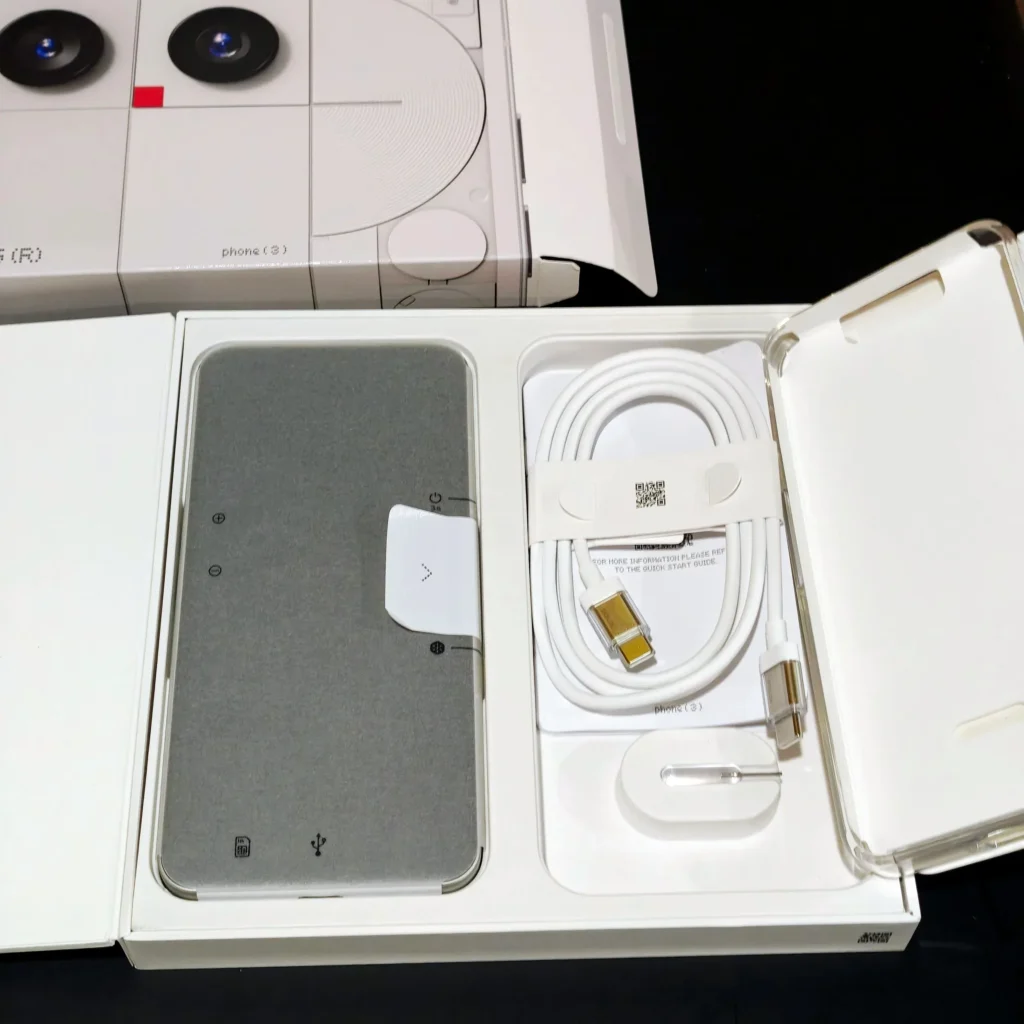
| Charging | 65W wired, 15W wireless (no charger included) |
| Operating System | Nothing OS 3.5 (Android 15) |
| Updates Promised | 5 years OS updates, 7 years security patches |
| Connectivity | Wi-Fi 7, Bluetooth 6.0, 5G |
| Durability | IP68 water/dust resistance |
| Price | $799 / £799 / €799 (base model) |
Display and Battery: Bright Spots
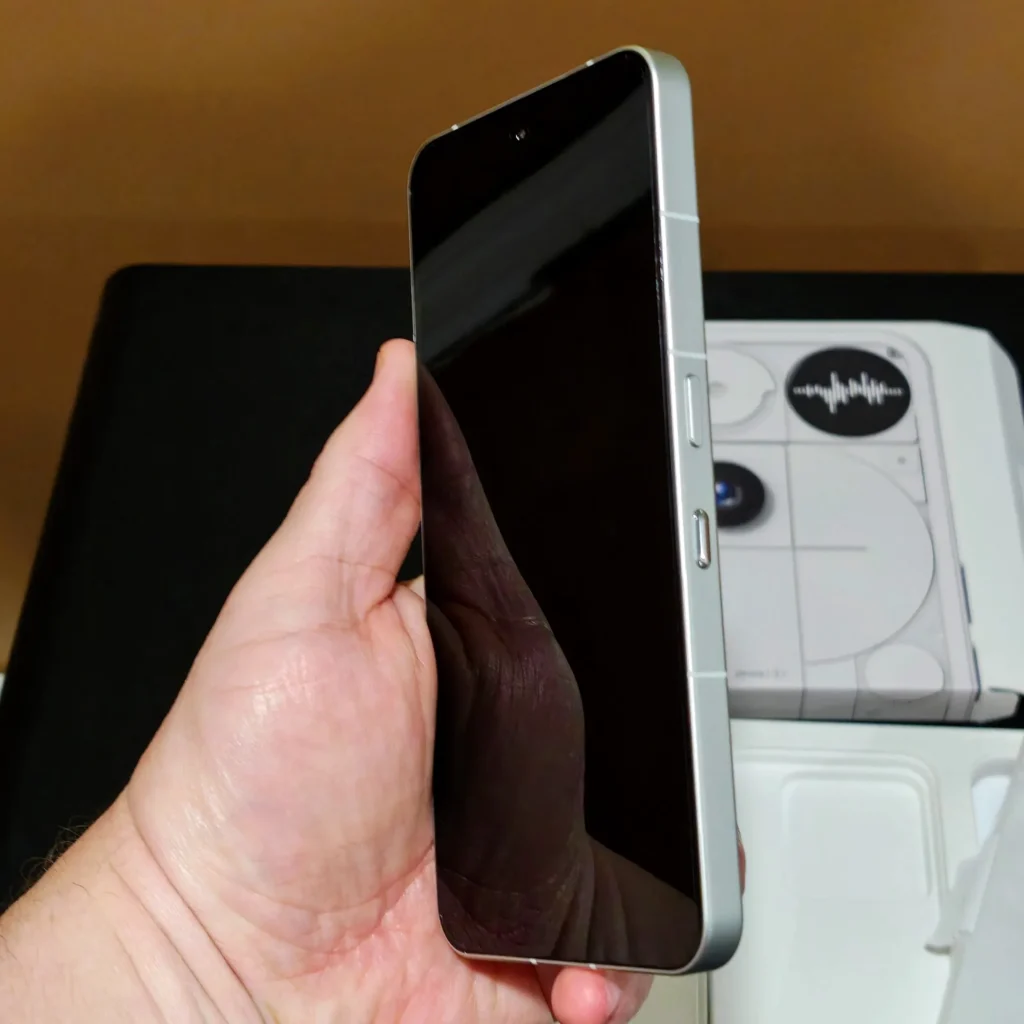
The 6.67-inch AMOLED display on the Phone (3) is a definite highlight, showcasing Nothing’s commitment to premium components. With a sharp 2800×1260 resolution, a smooth 120Hz refresh rate (though not LTPO, only dynamically dropping to 60Hz), and an astonishing peak brightness of 4500 nits (1600 nits full-screen outdoor), it delivers vibrant colors, sharp text, and excellent visibility even in direct sunlight. This makes for a superb media consumption and gaming experience, where visual clarity and responsiveness are paramount. Battery life is equally impressive, thanks to the large 5150mAh cell. Users can comfortably expect all-day usage, often extending into a second day with moderate use, positioning the Phone (3) as a potential ‘battery king’ in its segment. It supports rapid 65W wired charging and 15W wireless charging, although, like many modern flagships, it omits a charger from the box.
Camera System: A Mixed Bag
Nothing has significantly upped its camera game with a versatile triple 50MP setup, including a main sensor with OIS/PDAF, an ultrawide, and a 3x periscope telephoto lens that uniquely supports macro photography. While the main sensor captures lovely photos with clear details and lifelike colors, and portrait shots excel with a pleasing soft blur, consistency across all lenses can be an issue. Early reports noted inconsistent color reproduction between sensors, occasional slow shutter speeds leading to blurry shots, and less sharpness at full zoom compared to rivals like the Pixel 9. However, the dedicated macro mode is a standout, delivering sharp and color-accurate close-ups that genuinely outperform many competitors. The 50MP front camera also performs well, offering accurate portrait detection and supporting 4K 60fps video recording, matching the rear cameras’ capabilities.
Nothing OS 3.5 & The Glyph Matrix: Evolution or Gimmick?
Running on Android 15 with Nothing OS 3.5, the software experience remains a core strength for the brand, known for its clean, minimalist aesthetic, distinct dot matrix font, and extensive customization options including a new custom monochrome icon pack. Nothing promises an industry-leading 5 years of Android OS updates and 7 years of security patches, showcasing a significant commitment to longevity and user value. New AI-centric features like ‘Essential Space’ (for quick notes, voice memos, and screenshot collection), generative AI for wallpapers, and convenient ChatGPT access are integrated. The ‘Flip to Record’ feature for discreet audio capture and ‘Essential Notifications’ leveraging the Glyph Matrix are also notable additions, aiming to enhance the user experience with smart, contextual tools.
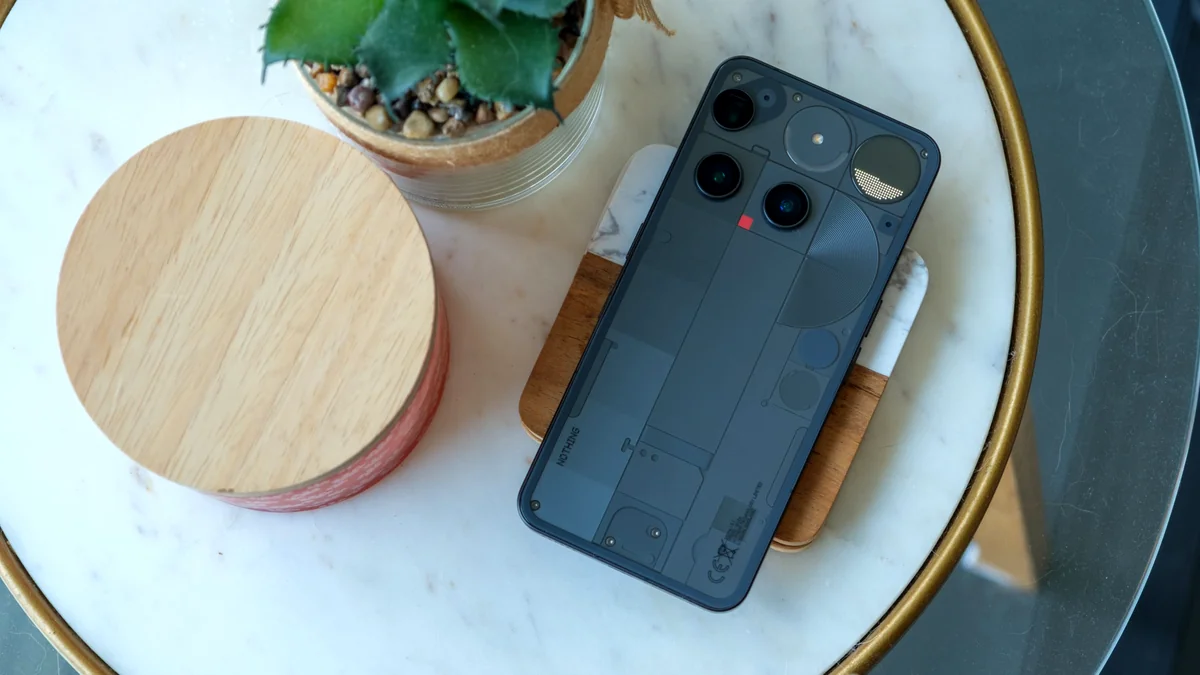
The most significant design departure from previous models is the new Glyph Matrix, a small, circular dot-matrix display replacing the larger LED strips of previous models. While it can show battery percentage, time, and even mini-games (‘Glyph Toys’), and an SDK is available for developers, its utility is hotly debated. Many reviewers and users find it less functional and more gimmicky than the original Glyph Interface, which supported third-party integrations like Uber and Calendar. Its placement and limited functionality, along with a dedicated ‘Essential Key’ button that cannot be remapped, contribute to usability frustrations, including accidental presses that often trigger unwanted screenshots. This shift raises questions about whether Nothing is evolving its unique design language or simply introducing features for novelty’s sake.
The Darkest Update? Nothing’s Bloatware & Ad Controversy
Amidst the launch of its new flagship, Nothing has faced a fierce backlash from its community over controversial software changes, specifically on its Nothing Phone (3a) series. The company, which built its brand on a promise of a clean, bloatware-free Android experience, quietly introduced ‘Lock Glimpse’ – a lock screen wallpaper carousel powered by the Hong Kong-based firm Boyuan, effectively bringing advertisements to user devices. Furthermore, the Android 16-based Nothing OS 4.0 beta initially shipped with unremovable Meta Services bloatware, including the Meta App Installer and Manager, forcing users to keep components active for ‘stability’ of pre-installed apps like Instagram. This move has been widely seen as a direct contradiction to Nothing’s foundational ethos, fueling a profound sense of betrayal among its loyal user base.
The only reason why I bought nothing phone is because of no ads and clean UI… If they mess it up I’m going to pixel
Nothing’s co-founder Akis Evangelidis defended these decisions, citing the necessity of offsetting high Bill of Materials costs and achieving sustainable revenue, particularly for non-flagship devices. While Evangelidis stated that ‘Lock Glimpse’ is disabled by default and offers an easy opt-out, and that Meta apps would eventually be uninstallable (a fix targeted for late November), the damage to Nothing’s reputation for a ‘clean OS’ has been significant. Many users feel that the brand has fundamentally broken its core promise, losing its unique identity and becoming ‘just like every other Android brand.’ This perceived pivot threatens to alienate the very community that helped bootstrap Nothing’s success, highlighting the delicate balance between financial realities and maintaining a distinct value proposition.
Nothing Phone (3) vs. The Competition
Nothing Phone (3) vs. Key Flagship Rivals
| Feature | Nothing Phone (3) | Samsung Galaxy S25 (Projected) | Google Pixel 9 (Projected) |
|---|---|---|---|
| Price (Base) | $799 | ~$799-$899 | ~$699-$799 |
| Processor | Snapdragon 8s Gen 4 | Snapdragon 8 Elite / Exynos 2500 | Tensor G4 |
| Display | 6.67″ AMOLED 120Hz (1.5K) | 6.2″ Dynamic AMOLED 2X 120Hz | 6.1″ Actua OLED 60-120Hz |
| RAM/Storage | 12GB/256GB (base) | 8GB/128GB (base) | 8GB/128GB (base) |
| Battery | 5150mAh | 4000mAh (est.) | 4492mAh |
| Camera System | Triple 50MP (Main, UW, 3x Tele) | Triple Camera (Main, UW, Tele) | Dual Camera (Main, UW) |
| OS Updates | 5 years OS, 7 years security | 7 years OS, 7 years security | 7 years OS, 7 years security |
| Unique Features | Glyph Matrix, Essential AI, Unique Design | Galaxy AI, DeX, Ecosystem | Pixel AI, Call Screen, VPN |
Nothing Phone (3): Pros & Cons
Pros
- Stunning 6.67-inch AMOLED display with high brightness.
- Exceptional all-day battery life (5150mAh).
- Smooth performance from Snapdragon 8s Gen 4 for daily use and gaming.
- Clean, customizable Nothing OS 3.5 with 5 years OS updates and 7 years security patches.
- Versatile triple 50MP camera system, with excellent macro capabilities.
- Unique, eye-catching design with transparent elements.
Cons
- Aggressive thermal throttling under sustained load.
- Glyph Matrix often perceived as gimmicky, less functional than original Glyph Interface.
- Inconsistent camera performance (color, sharpness at zoom) compared to top flagships.
- Dedicated, non-remappable ‘Essential Key’ can lead to accidental presses.
- Significant community backlash over ‘Lock Glimpse’ ads and unremovable Meta bloatware.
- Flagship pricing ($799) puts it against stronger performers, making its value proposition questionable without discounts.
The Price of Ambition: A Crossroads for Nothing
The Nothing Phone (3) is undoubtedly the company’s most ambitious device to date, a solid and distinctive smartphone with a fantastic display, stellar battery life, and a clean, feature-rich software experience. Its hardware pushes Nothing into the flagship conversation, but not quite to the top tier, especially when considering thermal performance under sustained load and camera consistency compared to its $799 price point rivals. However, the Phone (3)s biggest challenge isn’t its specs; it’s the profound crisis of confidence brewing within its community. The introduction of ads and bloatware, a direct contradiction to Nothing’s foundational promise of an unadulterated Android experience, risks alienating the very users who championed its unique vision. While Nothing’s leadership cites business realities, this perceived pivot could cost them their most valuable asset: user trust and a distinct brand identity. The Phone (3) is a good phone, but its true legacy will depend on whether Nothing can navigate this reckoning without losing its soul and its core community.
Nothing Phone (3) & Brand Controversy: Your Questions Answered
Is the Nothing Phone (3) a true flagship?
While the Nothing Phone (3) features flagship-level pricing and many premium components like its display and battery, its Snapdragon 8s Gen 4 chipset and thermal performance place it slightly below the absolute top-tier flagships from Samsung, Apple, and Google. It’s best described as an ‘upper mid-range’ or ‘semi-flagship’ device at a flagship price point.
What is the ‘Glyph Matrix’ and is it useful?
The Glyph Matrix is a small, circular dot-matrix display on the back of the Phone (3) that replaces the larger LED strips of previous models. It can show time, battery status, and mini-games. While unique, many reviewers find it more of a gimmick than a practical notification or interaction tool compared to the older Glyph Interface.
What is the controversy about ads and bloatware on Nothing phones?
Nothing has introduced ‘Lock Glimpse,’ a lock screen ad carousel, and pre-installed unremovable Meta Services bloatware (like Meta App Installer/Manager) on its Nothing Phone (3a) series. This has caused widespread user backlash, as it contradicts Nothing’s original promise of a clean, ad-free Android experience.
Will the Nothing Phone (3) also get ads or bloatware?
The initial controversy primarily affected the Nothing Phone (3a) series. While Nothing’s co-founder stated ‘Lock Glimpse’ is opt-out and Meta apps will eventually be uninstallable, the community remains wary. Nothing’s commitment to a clean OS for its flagship devices will be a critical watch point for future updates, as any deviation could further erode user trust.
How long will the Nothing Phone (3) receive software updates?
Nothing promises an impressive 5 years of major Android OS updates and 7 years of security patches for the Phone (3), which is competitive, though slightly less than the 7-year commitment from Google and Samsung for their latest flagships.
Sources
- TechRadar (Jamie, Mobile Computing Staff Writer)
- Nothing Technology Limited Official Terms & Conditions (Phone (3) Pre-Order, Phone (3) Upgrade Promotion)
- YouTube: ‘The Darkest Update For Nothing Phones!’
- Carl Pei Interviews (General Strategy, AI Vision)
- Various Tech Review Outlets (Phone (3) reviews, Phone (3a) reviews, comparison articles)