
The siren call of a truly no-compromise gaming PC is irresistible. Machines like the NZXT Player Three Prime, a sleek, imposing monolith of power, promise an untethered 4K experience, where every frame is rendered flawlessly and every setting cranked to ‘Ultra’. But as we’ve learned in the rigorous world of system analysis, the pursuit of ultimate luxury often comes with an equally staggering price tag. And sometimes, beneath the surface of bleeding-edge GPUs and CPUs, there lurk unexpected component choices that challenge the very definition of “no compromise.” This is the paradox of the Player Three Prime.
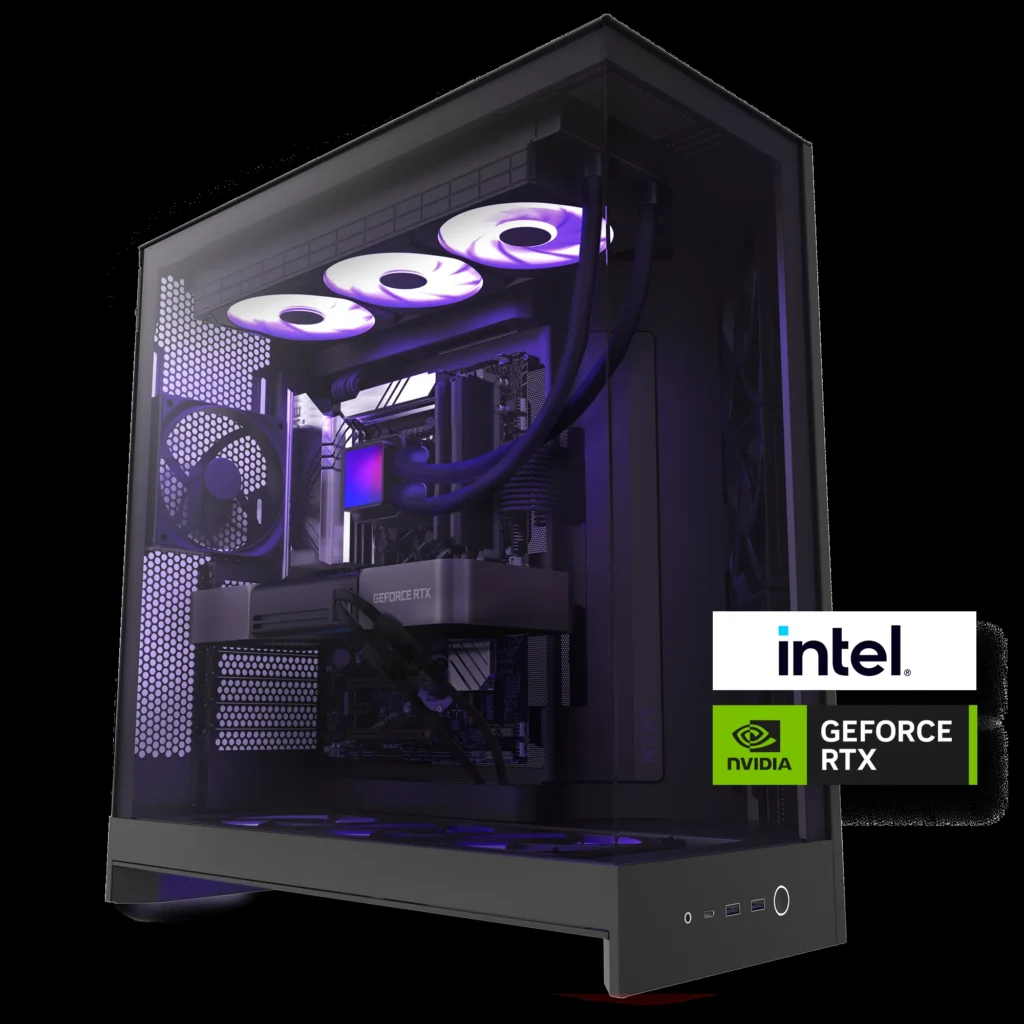
The Unquestionable Power: Diving into the Flagship Specs
At the heart of the Player Three Prime’s formidable appeal lies its core hardware: the NVIDIA GeForce RTX 5090 GPU and the AMD Ryzen 7 9800X3D CPU. This combination represents the absolute pinnacle of current gaming technology. The RTX 5090, with its immense 32GB of VRAM, is engineered to render the most graphically intensive titles at native 4K resolutions with ease, even with demanding features like ray tracing enabled. Paired with the Ryzen 7 9800X3D, a CPU widely lauded as the reigning champion for gaming performance thanks to its 3D V-Cache technology, this system is purpose-built to deliver not just high fidelity, but also exceptionally high refresh rates, ensuring a buttery-smooth experience across the most challenging game landscapes.
NZXT Player Three Prime (RTX 5090 / Ryzen 7 9800X3D) Key Specifications
First Impressions: A Masterclass in Design & Build Quality
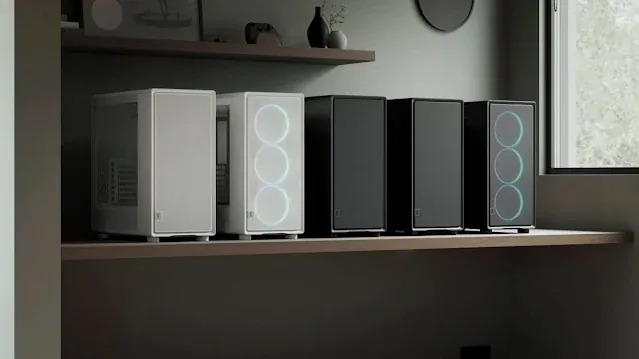
Visually, the NZXT Player Three Prime is a masterclass in understated elegance, housed within NZXT’s acclaimed H9 Flow case. This chassis, available in both black and white, boasts a sophisticated dual-chamber design that ingeniously separates the power supply and storage drives from the main components. This segregation not only facilitates superior airflow but also allows for truly meticulous cable management, ensuring the tempered glass front and side panels—which wrap seamlessly for a panoramic view—showcase nothing but pristine hardware. The system further impresses with its customizable RGB lighting, easily controlled via the NZXT CAM app, allowing users to tailor fan, RAM, and GPU accents. A delightful touch of personalization comes from the 360mm AIO liquid cooler’s 1.5-inch LCD display, capable of presenting vital system information or even animated GIFs, adding a unique flair to this otherwise minimalist marvel.
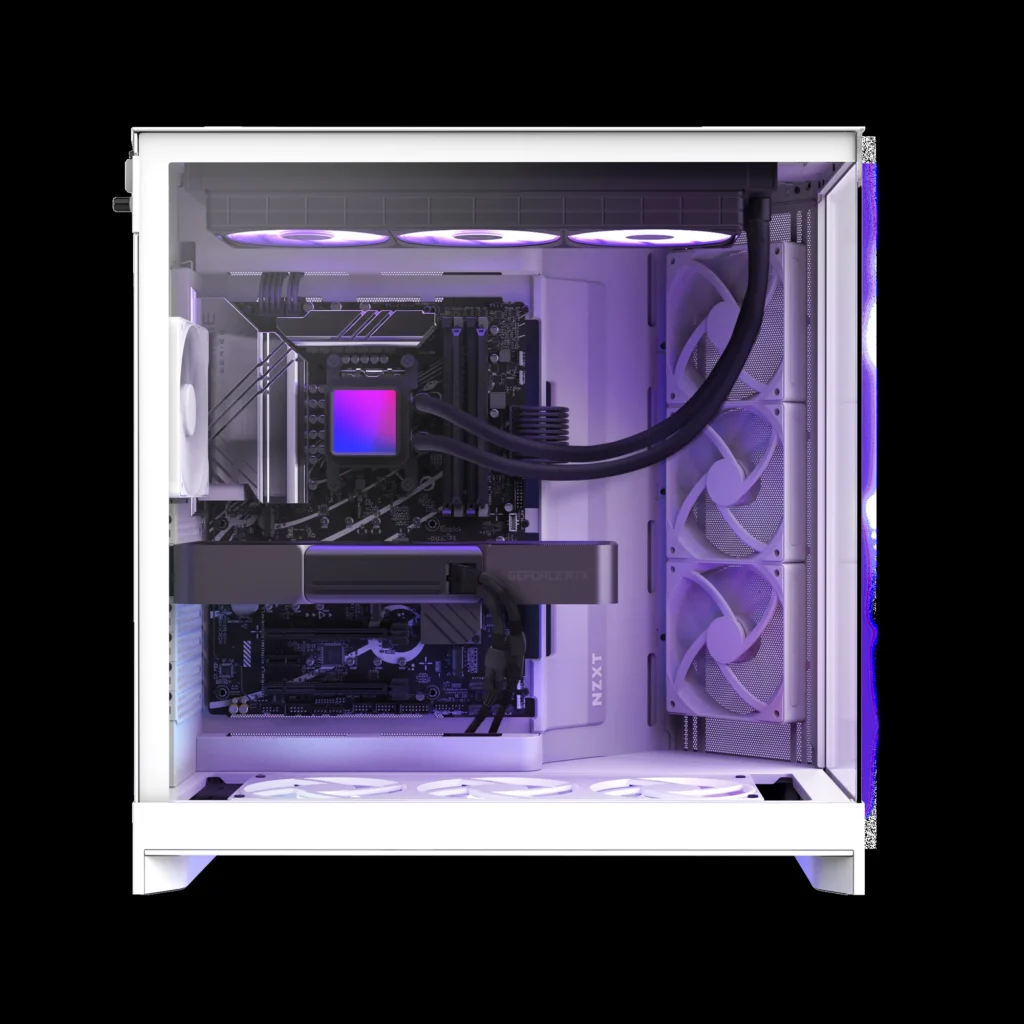
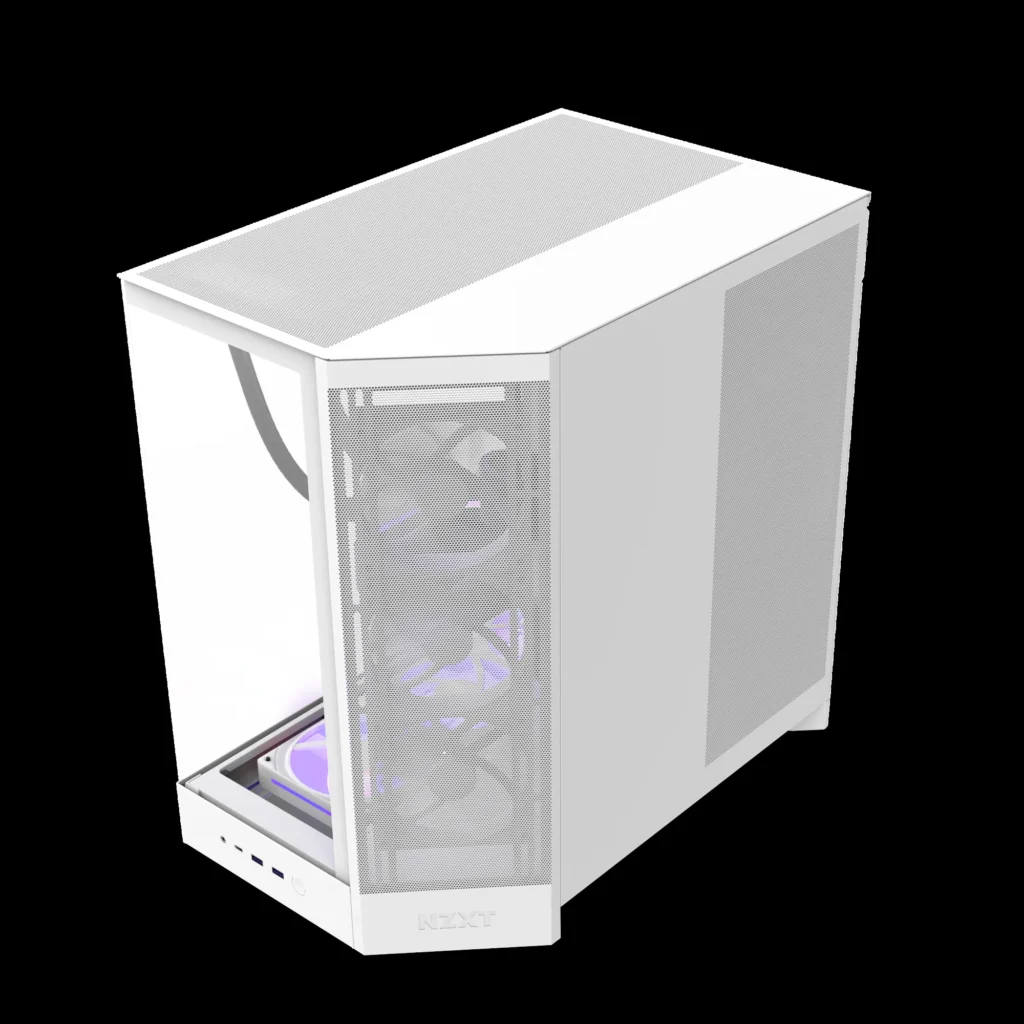

The NZXT H9 Flow case offers exceptional aesthetics and clever dual-chamber design for pristine cable management and component display.
The Performance Beast: Unmatched 4K Gaming
When it comes to raw gaming horsepower, the NZXT Player Three Prime lives up to its “Prime” designation. Our rigorous benchmark testing confirms its status as an absolute beast in the 4K arena. This machine effortlessly tackles the most graphically demanding titles, rendering them at maximum settings with consistently high framerates. In tests like Cyberpunk 2077 with Ray Tracing Ultra and DLSS in performance mode, the system maintained a stunning 129 FPS, showcasing the RTX 5090’s formidable capabilities. Even notoriously unoptimized games like Black Myth: Wukong yielded over 100 FPS at cinematic presets. What truly impresses, however, is that this exceptional performance is delivered with remarkable efficiency. The cooling system, featuring the NZXT Prime LC 360 ARGB AIO, keeps both the CPU and GPU well within optimal thermal ranges, ensuring stable operation even under sustained loads. Furthermore, the entire system operates with surprising quietness, a gentle hum rather than a distracting roar, allowing for complete immersion in the gaming experience.
4K Gaming Performance (Ray Tracing Ultra, DLSS Performance)
Thermal Performance (Gaming Load)
“The Player Three Prime absolutely demolished Avatar: Frontiers of Pandra with a 146 fps average (zero upscaling) and its gains over the Alienware is in large part thanks to the 9800X3D chip, still our reigning champ as the best CPU for gaming.”
— PC Gamer Review
The Hidden Flaws: Where the $5K Apex Predator Shows its Teeth
While the Player Three Prime’s headline components sing a symphony of raw power, a closer inspection reveals a discordant note in its composition. For a system commanding a $5,000 price tag and marketed as the “ultimate” gaming solution, one might expect every component to be hand-picked from the absolute top shelf. Yet, NZXT has made some surprising choices in the supporting cast that, while not immediately crippling, represent compromises that feel incongruous with the machine’s luxury positioning. Specifically, the inclusion of a mid-range Gigabyte B650 Aorus Elite AX V2 motherboard and a PCIe 4.0 NVMe SSD, such as the WD Blue SN5000, stand out. These components, though perfectly functional, fall short of the cutting-edge PCIe 5.0 standard that one would anticipate in a truly “money-no-object” build, creating a subtle but undeniable paradox within this apex predator.
The Highs
- Unbeatable 4K gaming performance
- Classy, minimalist H9 Flow aesthetic
- Efficient and quiet cooling
- Meticulous cable management
- Strong 2-year warranty
The Lows
- $4,999+ price point is massive
- Mid-range B650 motherboard choice
- Slower PCIe 4.0 SSD in a 5.0 system
- No PCIe 5.0 GPU support for future
- Component brand “lottery”
The PCIe 4.0 Dilemma in a Premium Build
Despite sporting a cutting-edge RTX 5090, the NZXT Player Three Prime’s Gigabyte B650 Aorus Elite AX V2 motherboard and WD Blue SN5000 SSD are both limited to PCIe 4.0. While still fast, this means the system doesn’t fully leverage the latest PCIe 5.0 standard for future-proofing or the absolute fastest storage speeds available, a peculiar choice for a $5,000 machine.
These component decisions carry tangible implications. While a PCIe 4.0 NVMe SSD like the WD Blue SN5000 is by no means slow in isolation, its inclusion in a system with a PCIe 5.0 capable CPU and a flagship GPU means it’s not leveraging the absolute fastest storage speeds available on the market. More critically, the B650 motherboard, despite being a competent mid-range option, lacks PCIe 5.0 support for the GPU slot. This immediately limits future upgrade potential, as next-generation GPUs may increasingly benefit from the expanded bandwidth of PCIe 5.0. For a $5,000 investment, this feels like an unnecessary bottleneck on the horizon. Adding to this uncertainty is NZXT’s practice of varying component brands for motherboards, RAM, and SSDs. While common in prebuilts, it means buyers are effectively “playing the lottery” on specific internal hardware. Furthermore, reviewers noted receiving units with outdated BIOS versions, requiring manual updates for essential features like Secure Boot, a minor but irksome detail for a premium, “plug-and-play” experience.
The Cost-Benefit Equation: Is This $5,000 Beast Worth It?
This brings us to the elephant in the room: the $5,000 price tag. In the current PC gaming landscape, where the cost of high-end components like RAM and storage has skyrocketed, this figure is daunting. While traditionally building your own PC offered significant cost savings, the current market volatility means a DIY build of comparable specs could actually cost more—upwards of $5,800—making the Player Three Prime a “turnkey solution” that offers relative value despite its steep entry point. However, this doesn’t mute the community’s inherent skepticism surrounding such exorbitant hardware claims. Our Fandom Pulse analysis consistently shows a blend of “Amusement” and “Pragmatism” when discussing bleeding-edge GPUs, with many preferring “tangible, verifiable value over speculative, expensive performance claims.” The enthusiasm for a flagship product like the RTX 5090 often collides with the “Disappointment of the Ideal,” as gamers weigh the incremental performance gains against the substantial financial outlay. It’s a constant quest for true value, even at the highest echelons of performance.
| Model | CPU | GPU | Price | Key Differentiator |
|---|---|---|---|---|
| NZXT Player Three Prime | Ryzen 7 9800X3D | RTX 5090 | $4,999 | Gaming-first CPU, aesthetic design |
| Alienware Area 51 | Core Ultra 9 285K | RTX 5090 | $5,000+ | Strong multi-core, higher thermals |
| Corsair Vengeance A7500 | Ryzen 7 9800X3D | RTX 5080 | ~$3,850 | High-tier value, RTX 5080 cap |
Community skepticism often highlights the gap between expensive hardware claims and tangible consumer value.
The Verdict: Is the Player Three Prime Your Apex Predator?
The NZXT Player Three Prime is an undeniable powerhouse, meticulously engineered to deliver an exceptional 4K gaming experience within a stunning, understated package. Its combination of the formidable RTX 5090 and the game-dominating Ryzen 7 9800X3D CPU ensures it will effortlessly conquer modern titles and remain a top-tier performer for years to come. However, this apex predator is not without its surprising flaws. The $4,999+ price tag is made even more challenging by the inclusion of a mid-range B650 motherboard and a PCIe 4.0 SSD, components that represent unexpected compromises in a system positioned as the ultimate. Ultimately, for the enthusiast with a generous budget seeking a visually striking, high-performance prebuilt that prioritizes immediate, flawless gaming, the Player Three Prime is a compelling, albeit subtly flawed, choice.
Key Takeaways
- Unmatched 4K Performance: Dominates all modern games at max settings.
- Premium Design & Build: Gorgeous H9 Flow case with excellent cable management.
- Surprising Compromises: Features mid-range B650 and PCIe 4.0 SSD in a $5K build.
- Future-Proofing Concerns: Lack of PCIe 5.0 GPU support on the motherboard.
- Value vs. Price: A premium turnkey solution that warrants careful component scrutiny.