
The Phoenix Rises: Valve’s Audacious Return to Living Room Gaming
Remember the Steam Machine? For many, it’s a distant memory of a promising concept that never quite delivered. But Valve, ever the innovator, isn’t one to shy away from a challenge. Fresh off the monumental success of the Steam Deck, the company is once again setting its sights on your living room, unveiling a new trio of hardware led by a revitalized Steam Machine. This isn’t just a console; it’s a compact, Linux-powered PC designed to bridge the gap between traditional gaming rigs and the simplicity of a console. But can Valve truly rewrite history, or is this another ambitious gamble?

The Ghost of Steam Machines Past: A History Lesson in Ambition
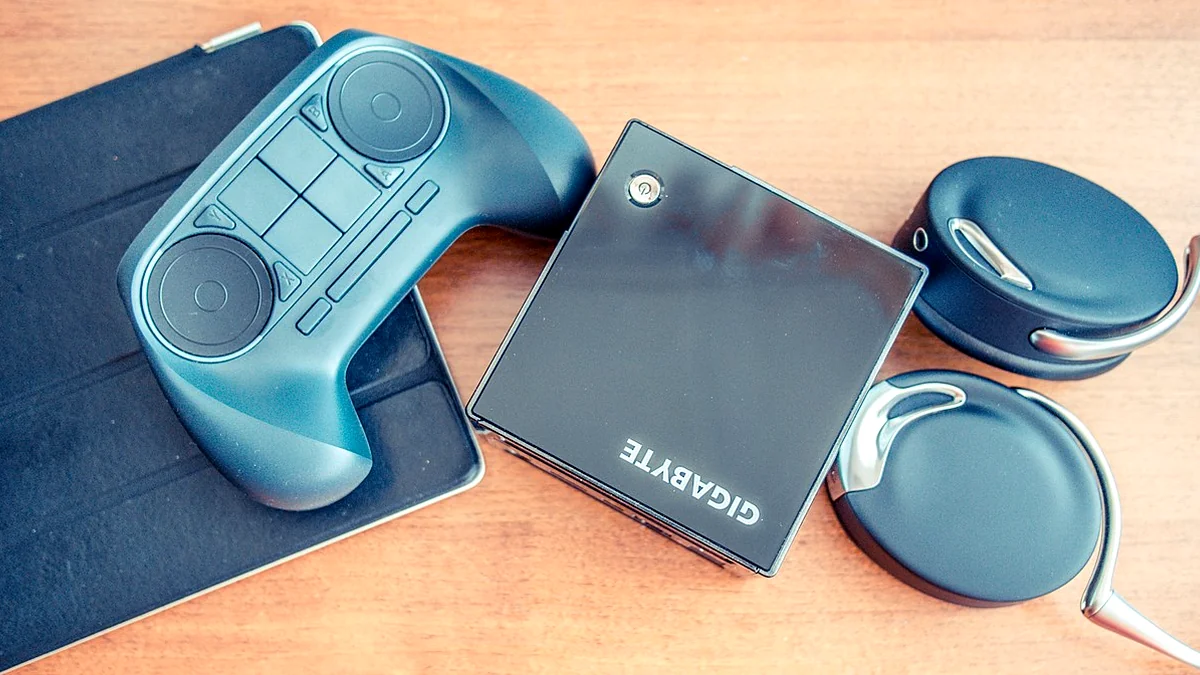
The original Steam Machine initiative, launched in 2015, was born from Gabe Newell’s vision to free PC gaming from restrictive operating systems like Windows 8. Valve partnered with numerous vendors to create diverse small form-factor PCs running SteamOS, aiming for a console-like experience with PC openness. Despite innovative peripherals like the Steam Controller and the Proton compatibility layer, the project largely failed, selling fewer than half a million units. Post-mortem analysis pointed to an immature SteamOS, delayed controller release, and a market resistant to the hybrid concept, compounded by a lack of native Linux games. It was, as Newell himself admitted, ‘super-incomplete.’

From Deck to Desk: The Lessons That Forged a New Future
The commercial failure of the original Steam Machine was a harsh but invaluable teacher. The lessons learned directly informed the design and strategy behind the wildly successful Steam Deck. Valve realized the importance of internal design, a robust Linux-based SteamOS, and the Proton compatibility layer for game availability. Now, Valve is applying this refined philosophy to a new generation of living room hardware, aiming to deliver a more complete and compelling experience from day one. This strategic shift, moving away from reliance on external manufacturers, underscores their commitment to a cohesive, internally-driven ecosystem.
Unveiling the Trio: Steam Machine, Controller 2, and Steam Frame VR
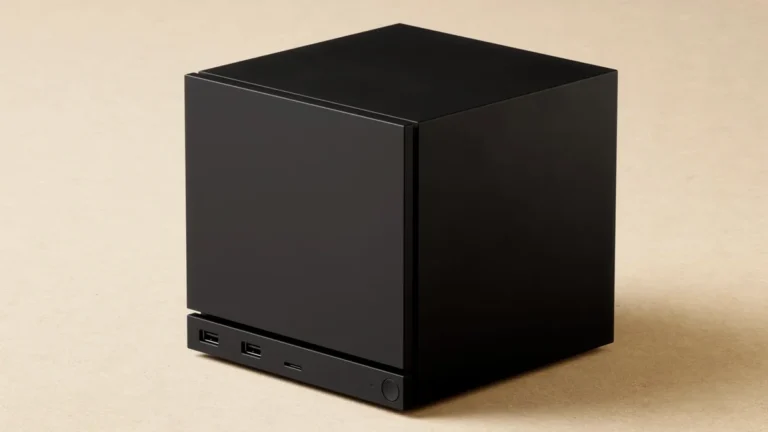
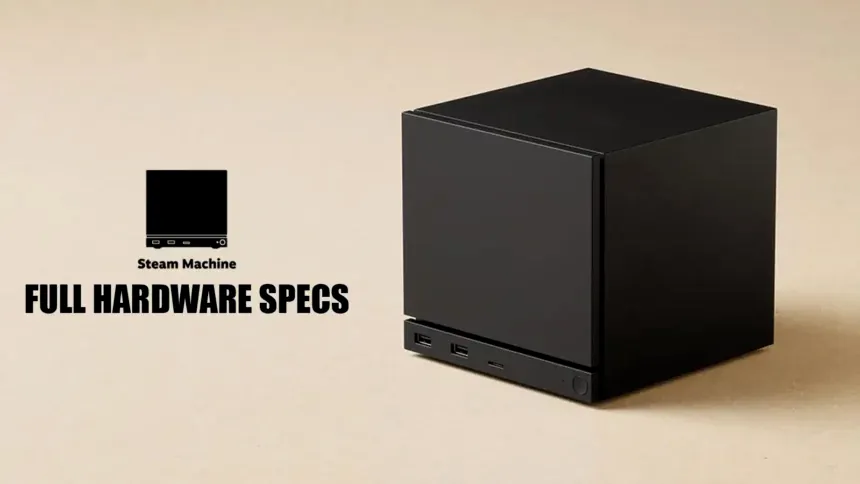
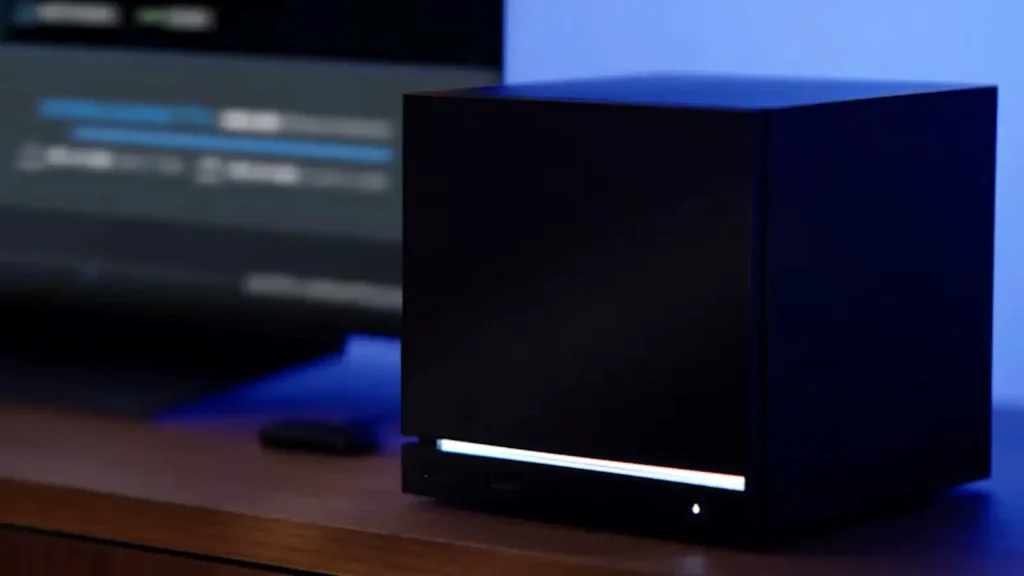
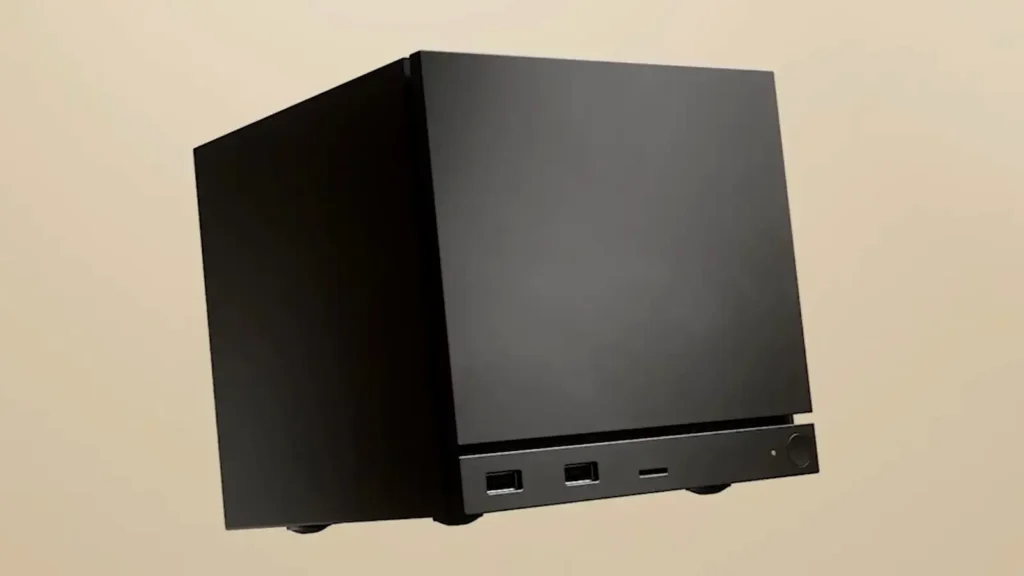
Valve isn’t just launching a new Steam Machine; they’re rolling out a full hardware ecosystem in early 2026. This includes a revised Steam Controller, a new iteration of the Steam Machine (dubbed the ‘GabeCube’ by some for its cubical form factor), and the intriguing Steam Frame, a lightweight, wireless VR headset. This comprehensive approach signals Valve’s serious commitment to a unified living room gaming experience, promising deep integration across all components and the Steam platform.


The Heart of the System: New Steam Machine Specifications
Valve Steam Machine (2026) Key Specifications
| Feature | Detail |
|---|---|
| CPU | Semi-custom AMD Zen 4 (6 cores/12 threads, up to 4.8 GHz, 30W TDP) |
| GPU | Semi-custom AMD RDNA 3 (28 Compute Units, 1792 Shading Units, up to 2.45 GHz, 110W TDP, Navi 33 architecture) |
| VRAM | 8GB GDDR6 (128-bit interface, 18 Gbps effective) |
| System RAM | 16GB DDR5 |
| Storage | 512GB or 2TB NVMe SSD (upgradable), high-speed microSD slot) |
| Connectivity | Wi-Fi 6E, Bluetooth 5.3, Gigabit Ethernet, proprietary 2.4GHz for Controller |
| Video Output | DisplayPort 1.4 (up to 8K@60Hz), HDMI 2.0 (up to 4K@120Hz) |
| I/O | 2x USB-A (front), 3x USB (rear, incl. 1x USB-C), SD card slot |
| Operating System | SteamOS 3 (Arch-based, with KDE Plasma desktop) |
| Form Factor | Compact cube (160mm x 160mm x 152mm), 2.6 kg |
| Target Performance | 4K/60fps with FSR 3, Ray Tracing capable (6x Steam Deck performance) |

Performance Promises: 4K/60FPS with a Catch?
Valve is touting impressive performance targets: up to six times the graphical output of the Steam Deck, aiming for smooth 4K 60 fps gameplay with AMD’s FSR 3 upscaling. Internal tests reportedly show Cyberpunk 2077 hitting 65 fps at 4K medium settings with ray tracing. However, the 8GB of GDDR6 VRAM has sparked debate within the engineering community. While some argue it’s insufficient for demanding 4K titles, particularly when considering modern consoles often utilize a shared 16GB pool, others believe Valve’s software optimization and FSR 3 could bridge the gap. The underlying Navi 33 GPU, a scaled-down version of the Radeon RX 7600 with 1792 shaders and a constrained 110W power limit, suggests a focus on efficiency over raw brute force. This delicate balance between power, VRAM, and software optimization will ultimately define its real-world performance metrics.
The Proton Advantage
Valve’s continued investment in Proton, the Steam Play compatibility layer, is perhaps the most critical component of the new Steam Machine. By allowing Windows-based games to run seamlessly on SteamOS, Proton eliminates the need for native Linux ports, directly addressing one of the original Steam Machine’s biggest shortcomings and ensuring a vast game library from day one. This robust software solution is a testament to Valve’s commitment to overcoming past hurdles through innovative engineering.
The Fandom Pulse: Hope, Frustration, and the Quest for Value
The PC gaming community currently finds itself at a crossroads. Frustration over escalating RAM and SSD prices makes budget DIY builds increasingly challenging, eroding the value proposition of recent purchases and creating a strong demand for value-driven, compact solutions. This backdrop makes the new Steam Machine particularly compelling. There’s palpable anticipation for a device that could offer console-like simplicity and a strong price-to-performance ratio. However, skepticism lingers regarding its final price point, with many wary of it exceeding the ‘budget’ threshold. The appeal of Small Form Factor (SFF) PCs is undeniable, but so are the concerns about airflow and thermal management that often accompany such designs, a critical engineering challenge in compact chassis.
“People expect the Steam Machine to be $600 but it has a 7600 CPU and GPU along with DDR5 RAM, better PSU, Custom motherboard, etc. I’d like to see someone try to build a steam machine equivalent for the least amount of money”
— A skeptical but hopeful gamer, online forum
Beyond the Box: Valve’s Broader Vision and Market Impact
Positioned by Valve not as a direct competitor to high-end consoles like the PS5 Pro, but as a distinct offering deeply integrated with Steam and Steam Big Picture, the new Steam Machine aims to carve its own niche. Analysts predict a competitive $400-$500 price range, potentially challenging current-gen consoles if priced closer to the lower end. Furthermore, this launch could serve as a demonstration for OEMs, much like the Steam Deck inspired third-party handhelds, showcasing a viable path for Linux-powered, compact gaming PCs. Valve’s commitment to releasing CAD files for 3D-printable custom designs also speaks to an open, community-driven approach, fostering an ecosystem rather than just selling a product. Moreover, its SteamOS 3 provides a full KDE Plasma desktop environment, allowing users the flexibility to install alternative storefronts or applications, truly blurring the lines between console and PC.
A Second Chance for Living Room PC Gaming?
Valve’s new Steam Machine represents a far more mature and strategically sound approach than its predecessor. Backed by the resounding success of the Steam Deck, a robust Proton layer, and a clear vision for a unified hardware ecosystem, it has the potential to redefine living room PC gaming. The critical factors will be its final price, how effectively SteamOS 3 leverages its custom AMD hardware through software optimization, and whether the 8GB VRAM can truly deliver on 4K/60fps promises in demanding real-world scenarios. If Valve can hit the sweet spot of price and performance, the ‘GabeCube’ might just be the console-sized PC that finally captures the hearts (and living rooms) of gamers worldwide, solidifying Valve’s place as a hardware innovator.