
The Micro-ATX Paradox: Small Cases, Big Ambitions
The allure of a compact, yet potent gaming PC is undeniable. Micro-ATX (mATX) cases often embody this dream: a sleek footprint that, in theory, doesn’t sacrifice the raw horsepower demanded by today’s most graphically intensive titles. However, as many seasoned builders and eager newcomers quickly discover, this aspiration frequently comes with a complex set of trade-offs. The community’s palpable desire for smaller cases, driven by aesthetics and space efficiency, often leads to a journey fraught with challenges. From the intricate dance of component compatibility to the critical demands of thermal management, achieving a balanced, high-performance compact build is a true engineering feat. This article delves into the heart of the Micro-ATX paradox, meticulously exploring how enthusiasts are navigating these tight spaces to forge their ultimate gaming rigs, seeking that elusive synergy between form and function.
I really Like the Lian Li Dan A3, but i think im going with the slightly larger Phanteks XT V3 instead 🙂
The Tight Fit: Navigating GPU, CPU Cooler, and PSU Clearance
The most significant hurdle in any Micro-ATX build is undoubtedly component clearance. While the mATX form factor is inherently designed to be smaller than full ATX, it frequently necessitates either significant compromises or the selection of very specific, often premium, components. Builders routinely grapple with the sheer dimensions of modern, multi-slot GPUs, which can easily exceed 300mm in length, making case selection critical. Similarly, high-performance air coolers, often favored for their superior reliability and cost-effectiveness compared to liquid solutions, frequently stand tall, pushing past the 150mm mark. Even power supply units (PSUs) demand careful consideration; while many mATX cases technically support full-size ATX PSUs, their depth can directly impinge upon other vital clearances, such as radiator mounting options or crucial drive bays. This tight fit transforms every component choice into a strategic decision, directly impacting the build’s overall thermal dynamics and upgrade potential.
- GPU Length: Many high-end GPUs exceed 320mm, requiring specific case designs or vertical mounting solutions to avoid physical obstruction and ensure adequate airflow.
- CPU Cooler Height: Air coolers over 157mm tall can conflict with side panels or top-mounted radiators, limiting effective thermal dissipation and potentially leading to throttling.
- PSU Depth: While standard ATX PSUs are 150mm wide, their length (e.g., 160mm+) can restrict other components, such as front-mounted radiators or fan arrays, demanding modularity.
Lian Li DAN A3: A Tale of Two Micro-ATX Cases
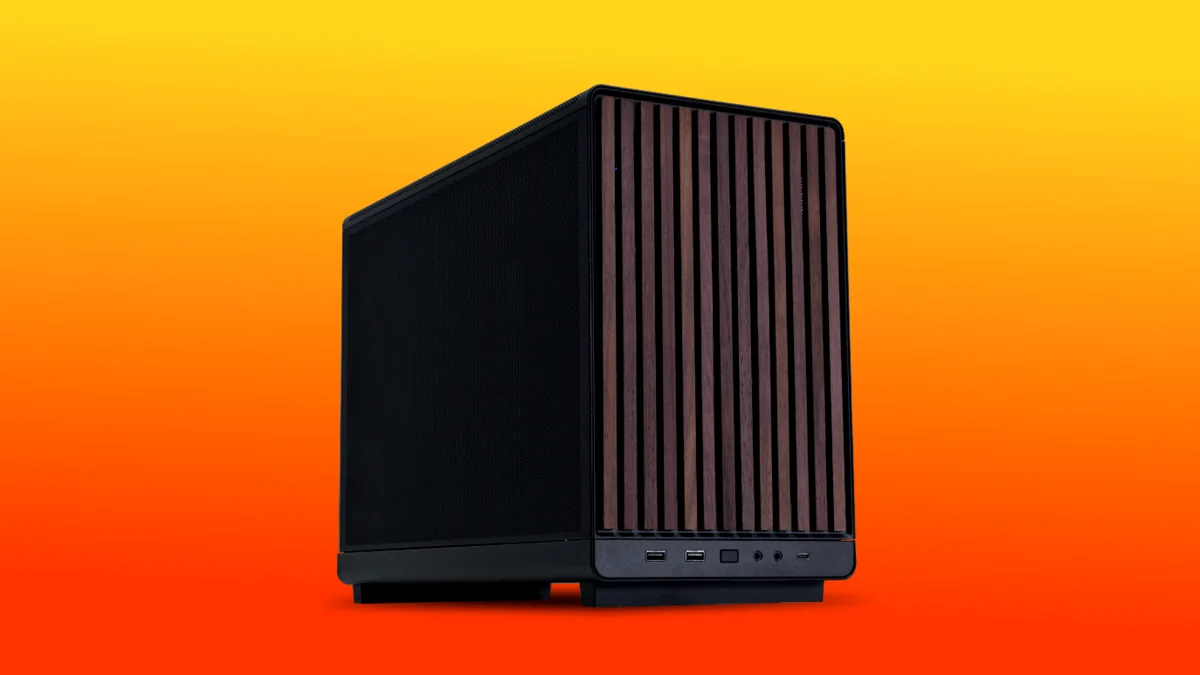
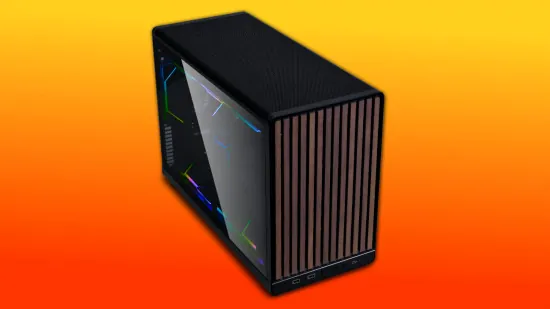
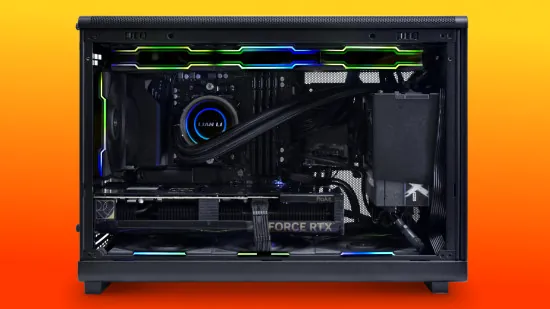
The Lian Li DAN A3 stands out as a prime example of the evolving Micro-ATX landscape, a testament to collaborative engineering. Born from a partnership with compact chassis specialist DAN Cases, this model is available in both a budget-friendly standard variant and a premium wooden edition, which replaces the standard plastic front panel with elegant walnut-colored slats. Despite its relatively compact 26-liter volume, the A3 boasts impressive hardware compatibility, a critical feature for builders aiming for verifiable framerates in a small form factor. It supports both mini-ITX and micro-ATX motherboards and accommodates various power supply formats, including full-size ATX, SFX-L, and Lian Li Edge designs. This inherent modularity provides builders with significant flexibility, allowing for GPU lengths up to an astonishing 425mm and CPU cooler heights up to 165mm. Such generous clearances, especially for GPUs, are rare in this volume class, reflecting a design philosophy focused on high-performance component synergy.
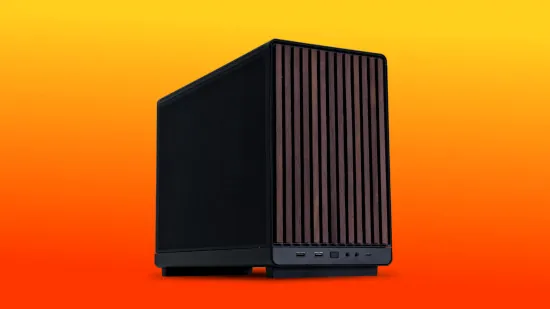
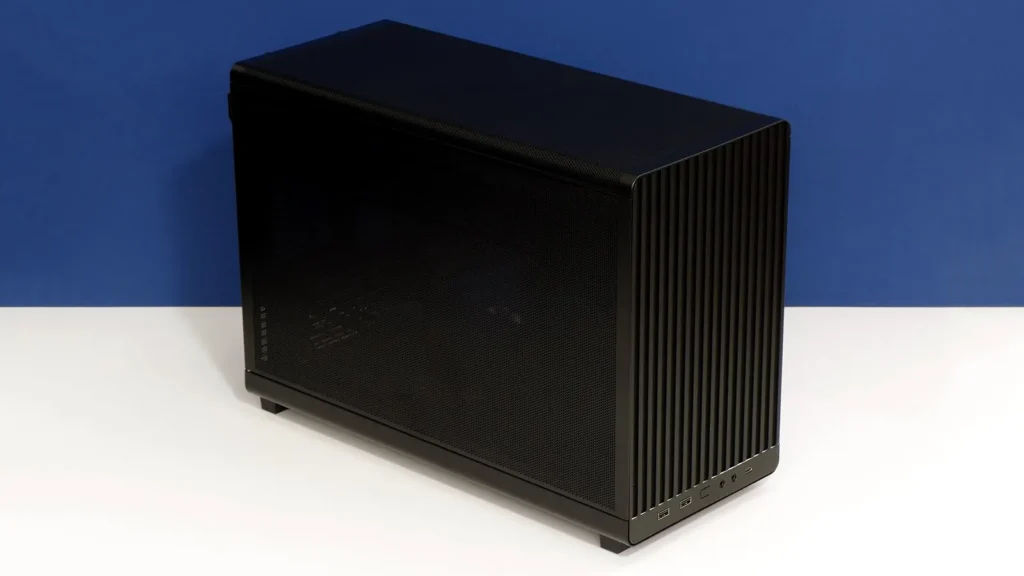
Lian Li DAN A3: A Builder’s Perspective
Pros
- Broad hardware compatibility (GPUs up to 425mm, CPU coolers up to 165mm) allows for powerful configurations.
- Supports multiple PSU formats (ATX, SFX, SFX-L), offering flexibility in power delivery.
- High modularity for power supply and drive tray placement enables diverse build strategies.
- Excellent value for its feature set, especially the standard model at $69.99, making high-performance compact builds more accessible.
- Robust cooling capacity with support for up to two 360mm radiators (with caveats) promises strong thermal potential.
Cons
- Significant GPU cooling issues were observed in initial test configurations, necessitating careful component selection or design compromises to prevent thermal throttling.
- Virtually non-existent cable management space behind the motherboard tray complicates clean builds and can obstruct airflow.
- Lacks bundled fans, adding to the overall build cost and requiring builders to source their own cooling solutions.
- Can be considered large for a ‘compact’ mATX case (26 liters), potentially disappointing those seeking ultra-small footprints.
- Thermal performance requires strategic planning and component choices to avoid performance degradation, highlighting the inherent mATX paradox.
Powering Your Compact Beast: PSU and Cooling Considerations
Beyond the chassis itself, the selection of power supply and cooling solutions becomes paramount in any Micro-ATX system. A compact build demands not just raw power, but efficient and often physically smaller power delivery. High-quality PSUs, such as the Sharkoon WPM Gold Zero series, exemplify the kind of careful engineering required. With an impressive 80Plus Gold efficiency rating and a semi-modular design, these units offer reliable power while inherently minimizing cable clutter – a crucial factor in the confined spaces of an mATX case. Minimizing excess cabling directly contributes to improved internal airflow, which is critical for maintaining stable component temperatures. Similarly, effective cooling is non-negotiable, requiring a deep understanding of airflow dynamics and pressure within a constrained chassis to prevent performance throttling and ensure component longevity.
Silent Power in Small Spaces
The Sharkoon WPM Gold Zero 550W PSU features a ‘ZERO RPM’ function, allowing its 140mm fluid dynamic bearing fan to remain off under low to moderate loads (activating around 330W). This innovative design results in near-silent operation during typical use, a significant advantage for compact builds where ambient noise can be more noticeable due to closer proximity to the user and potentially less sound-dampening material.

Cooling Under Constraint: Navigating Thermal Trade-offs
Thermal performance is often the Achilles’ heel of compact builds, representing a core challenge in the mATX paradox. While cases like the Lian Li DAN A3 offer extensive fan and radiator support, achieving optimal temperatures for all components, especially high-power GPUs, can be a delicate balancing act. Initial testing on the A3-mATX, for instance, revealed significant graphics card cooling issues leading to thermal throttling. This underscores the critical need for builders to make strategic choices: limiting top radiator size, adjusting side radiator placement for optimal intake, or even selecting shorter GPUs or smaller PSUs to ensure adequate airflow. Such compromises are not merely suggestions but often necessities for maintaining verifiable, tested framerates. Brands like Zalman, with their extensive expertise in advanced cooling components, offer a range of solutions—from CPU coolers to case fans—that can be critical for maintaining longevity and performance in these constrained environments, ensuring components operate within their optimal thermal envelopes.
- Prioritize direct airflow to the GPU, potentially sacrificing a top-mounted radiator for better intake or exhaust, depending on the case’s specific design and component layout.
- Consider high-static pressure fans for radiators, as they excel at pushing air through dense fin arrays, and high-airflow fans for general case exhaust to quickly remove hot air.
- Utilize AIO liquid coolers for CPUs to free up valuable internal space around the CPU socket, improving thermal dissipation and allowing for better airflow to other components.
- Carefully plan cable routing to avoid obstructing airflow paths, even if dedicated cable management space is limited; every millimeter counts in a compact chassis.
- Monitor component temperatures closely during initial use and under load to identify and address any hotspots, which is crucial for preventing long-term performance degradation.
The Builder’s Dilemma: Finding the ‘Perfect’ Compact Case
The Micro-ATX community remains in a perpetual quest for the ‘perfect’ compact case – one that seamlessly marries small size with uncompromising performance and cooling. The inherent difficulty in confidently recommending specific models, as frequently highlighted by community discussions, stems directly from the highly individualized nature of these builds. What constitutes optimal component synergy for one builder’s GPU might inadvertently choke another’s high-TDP CPU cooler. This pervasive uncertainty fuels a constant search for innovative designs that push the boundaries of what’s truly possible in a smaller footprint, balancing the desire for compactness with the frustration of thermal and compatibility limitations.
Some people have been asking for smaller cases and im not sure what to recommend in those categories The NZXT H3 is pretty small (and it has limited support for radiators) Some people want even smaller though I dunno what to say
| Feature | Lian Li DAN A3 | NZXT H3 Flow | Cooler Master Qube 500 Flatpack |
|---|---|---|---|
| Volume (Liters) | 26L | ~26L (approx) | 33L (approx) |
| Max GPU Length | 425mm | 365mm | 365mm |
| Max CPU Cooler Height | 165mm | 165mm | 172mm |
| PSU Support | ATX, SFX, SFX-L | ATX | ATX |
| Price (Approx. USD) | $70 – $85 | $80 – $90 | $80 – $90 |
| Key Design Feature | Modular internal layout, optional wooden front panel | Perforated front panel for airflow, compact design | Flatpack design for customization, high compatibility |
Key Takeaways for Your Micro-ATX Build
- Plan Dimensions Meticulously: Always double-check GPU length, CPU cooler height, and PSU depth against case specifications. Every millimeter can dictate compatibility and cooling effectiveness.
- Prioritize Airflow: Compact cases inherently demand strategic fan placement and exceptionally careful cable management to prevent thermal throttling and maintain peak performance.
- Consider Component Trade-offs: Be prepared to make educated choices between component size, cooling capacity, and overall build volume. High-performance often requires thoughtful compromise in smaller form factors.
- Modularity is Key: Cases with movable PSU mounts or adjustable drive trays offer significantly greater flexibility, allowing for more complex builds and better component synergy.
- Embrace Efficiency: High-efficiency PSUs (like 80Plus Gold) and effective CPU/GPU cooling solutions are not merely upgrades but vital necessities for stable and long-term performance in small form factor systems.
The Future of Compact Power
Building a high-performance PC in a Micro-ATX case is a uniquely rewarding challenge that continues to captivate the gaming community. While it undeniably demands careful planning, an understanding of inherent trade-offs, and a keen eye for optimal component synergy, the relentless innovation in case design and component efficiency is steadily closing the gap between compact aesthetics and uncompromising power. For those willing to meticulously navigate the tight fits and thermal considerations, the Micro-ATX paradox offers a compelling path to a truly personal, potent, and elegantly space-efficient gaming machine. The future of compact power promises to be as exciting as it is challenging, pushing the boundaries of what a small PC can truly achieve.