
Key Takeaways
- Magnetic wireless power banks offer unparalleled convenience but demand careful selection for optimal performance.
- True fast charging often relies on wired USB-C PD, with wireless Qi2/MagSafe speeds capped lower, especially for Android.
- Compatibility is key: iPhones (12+ series) benefit most, while Android users need magnetic cases or should prioritize wired charging.
- Travel-friendly models (under 100Wh) are essential; always check airline regulations for carry-on limits.
- Innovative solid-state battery tech (e.g., BMX SolidSafe) promises enhanced safety and longevity, but at a higher cost.
Introduction: The Future of Portable Power – Or Just Hype?
In the fast-paced world of gaming and mobile tech, keeping your devices charged is non-negotiable. Traditional power banks have long been a staple, but the advent of magnetic wireless power banks with integrated cables promises a new era of convenience. Yet, as our Fandom Pulse reveals, many users are deeply skeptical and frustrated, questioning advertised speeds, compatibility, and overall value. Is this truly the next evolution in portable charging, or just another wave of overhyped gadgets? This ultimate guide will deconstruct everything you need to know, providing clear, data-backed insights to help you make an informed decision.
What Exactly is a Magnetic Wireless Power Bank?
At its core, a magnetic wireless power bank combines a portable battery with wireless charging capabilities, enhanced by a circular array of magnets for perfect alignment. Pioneered by Apple’s MagSafe, this technology ensures your device snaps securely into place, instantly initiating efficient power transfer without fumbling for cables. Many modern iterations further boost convenience by integrating built-in USB-C cables, offering multi-device charging versatility alongside the wire-free experience. This grab-and-go ease makes them ideal for on-the-go top-ups, reducing wear and tear on your phone’s charging port.

Beyond the Snap: Why Magnetic Charging Matters (and Its Limitations)
The Magnetic Advantage
- Effortless, secure magnetic alignment for stable charging.
- Reduces wear and tear on device charging ports.
- Allows continued device use (calls, gaming) while charging.
- Often includes additional wired ports and integrated cables for versatility.
- Qi2 certification offers improved efficiency and safety over older Qi.
The Practical Trade-offs
- Wireless charging is generally slower than wired, even with Qi2 (7.5W-15W typical).
- Potential for heat generation, impacting long-term battery health if not managed.
- Limited native compatibility (primarily iPhone 12+), requiring accessories for Android.
- Often higher cost than traditional power banks of similar capacity.
- Capacity trade-offs for slimmer, more portable designs.
Heat Management is Critical!
Excessive heat during wireless charging can degrade battery longevity for both your phone and the power bank. Prioritize models with advanced temperature control and use in well-ventilated areas. If your phone stops charging at 80%, it’s likely iOS thermal management kicking in – a safety feature.
Wired vs. Wireless: Unpacking True Charging Speeds
One of the most common points of ‘Frustration’ among users is the discrepancy between advertised charging capabilities and real-world performance, especially for Android devices. While many magnetic power banks boast 15W Qi2 wireless charging, this is often the *maximum* output for compatible iPhones. For Android phones, wireless speeds can be significantly lower (often 10W or less for older Qi standards), and even with Qi2, the lack of native magnetic alignment can lead to less efficient power transfer and more heat. For truly rapid power restoration, the integrated USB-C Power Delivery (PD) port is often your best bet, with some models offering 20W, 30W, or even 45W+ wired output – a speed that far outpaces most wireless options and is universally more stable.
Capacity, Portability & Travel: The Practical Realities
When choosing a power bank, capacity (mAh) is often the first metric people look at, but it’s not the only factor. A 5,000mAh unit typically offers one full charge for a modern smartphone, while 10,000mAh provides multiple charges. For laptops or heavier devices, output power (watts) is more critical, often requiring 20,000mAh or more. Magnetic power banks often trade raw capacity for a slimmer, more portable form factor, which can lead to ‘Disappointment’ if expectations aren’t managed.
Airline Travel Regulations: What You Need to Know
- Carry-on Only: Power banks are generally permitted only in carry-on luggage, never in checked baggage, due to fire risk.
- Under 100Wh (approx. 27,000mAh): Most common power banks fall into this category and are allowed without prior airline approval.
- 100Wh to 160Wh (approx. 27,000mAh to 43,000mAh): May require explicit airline permission. Check with your specific carrier beforehand.
- Over 160Wh (approx. 43,000mAh): Typically banned from aircraft entirely. High-capacity laptop power banks often exceed this limit.
- Always verify the Watt-hour (Wh) rating on your power bank, not just mAh, as Wh is the regulated metric.
Compatibility Conundrum: iPhone’s Advantage vs. Android’s Challenge
The magnetic wireless charging ecosystem is fundamentally designed around Apple’s iPhone, specifically models from the iPhone 12 series onward, which feature integrated magnets for perfect MagSafe alignment. This native support ensures a secure snap and efficient power transfer. For Android users, the situation is more challenging. Most Android phones lack these built-in magnets, leading to unreliable physical coupling and potential disconnections. While aftermarket magnetic rings or specialized cases can provide basic adherence, the experience will rarely be as seamless or secure as on an iPhone. This disparity is a key reason for the ‘Frustration’ expressed by many Android users.
S Pen Interference Alert for Samsung Users!
Be aware that strong magnetic accessories, including some magnetic power banks, can interfere with the S Pen functionality on Samsung Galaxy S23, S24, and S25 series phones when used with a case. This can disrupt normal S Pen operation, so test compatibility before relying on magnetic charging if S Pen use is critical.
Innovative Features & Notable Models
What to Look for: The Ideal Magnetic Power Bank Blueprint
| Feature | Optimal Specification | Why it Matters |
|---|---|---|
| Capacity | 10,000mAh+ | Provides multiple phone charges or single laptop top-up. |
| Wireless Output | 15W Qi2/MagSafe | Fastest available wireless charging for compatible devices. |
| Wired Output | 30W+ USB-C PD | Essential for rapid charging, especially for Android and tablets. |
| Integrated Cables | USB-C (retractable/lanyard) | Ultimate convenience, reduces clutter, always ready. |
| Display | Full-color LCD | Real-time battery percentage, wattage, and status for clarity. |
| Safety Features | 10+ Protections (Overheat, Overcharge) | Crucial for device longevity and user safety. |
| Form Factor | Slim (under 20mm), Durable | Enhances portability without sacrificing build quality. |
| Compatibility | iPhone 12+ (native), Android (with MagSafe case) | Ensures broad device support. |
| Battery Technology | Solid-State/Hybrid (Emerging) | Promises enhanced safety and longevity, though at a premium. |
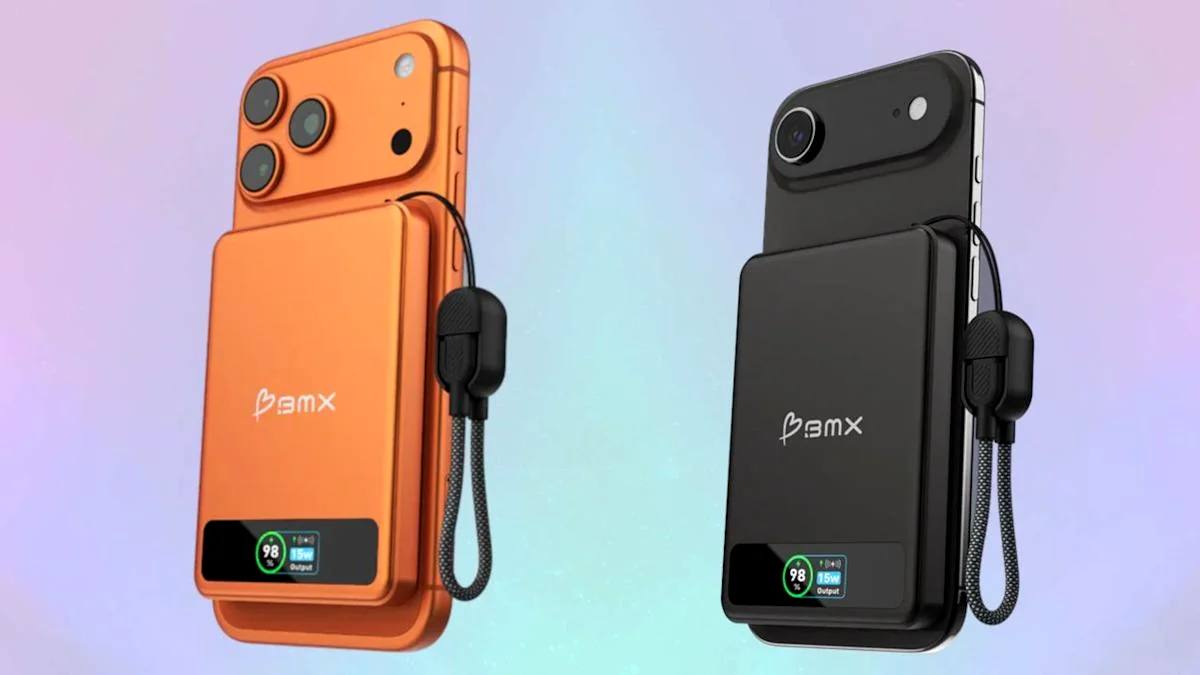
The Solid-State Revolution: BMX SolidSafe
The BMX SolidSafe series stands out by incorporating a hybrid ‘solid-state’ battery technology, a significant departure from traditional lithium-ion cells. This innovation promises enhanced safety – demonstrated by surviving piercing without ignition – and potentially double the longevity. While currently more expensive than conventional power banks, this technology directly addresses concerns about battery safety and lifespan, offering a glimpse into the future of portable power.
Solid-State Battery Advantages
- Significantly enhanced safety (reduced fire/overheating risk).
- Potentially twice the longevity compared to traditional Li-ion.
- More stable performance under stress.
Solid-State Battery Challenges
- Higher manufacturing cost, leading to premium pricing.
- Potential for increased internal resistance over long-term cycles.
- Still an emerging technology with mass production challenges.
Integrated Cables & Multi-Device Charging: UGREEN & Others

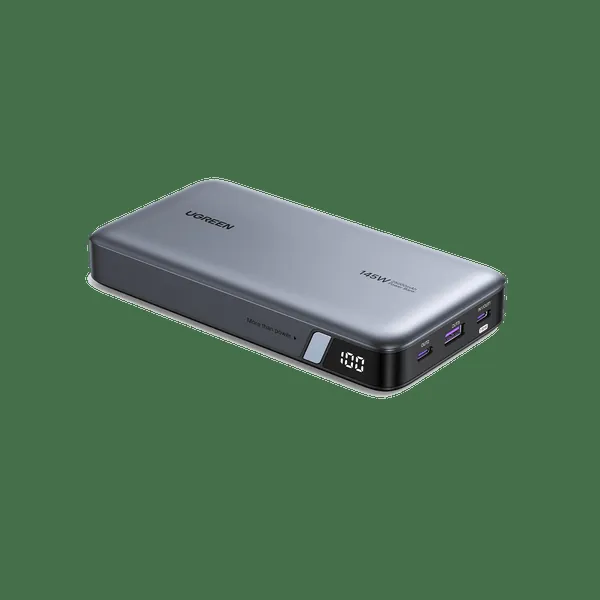
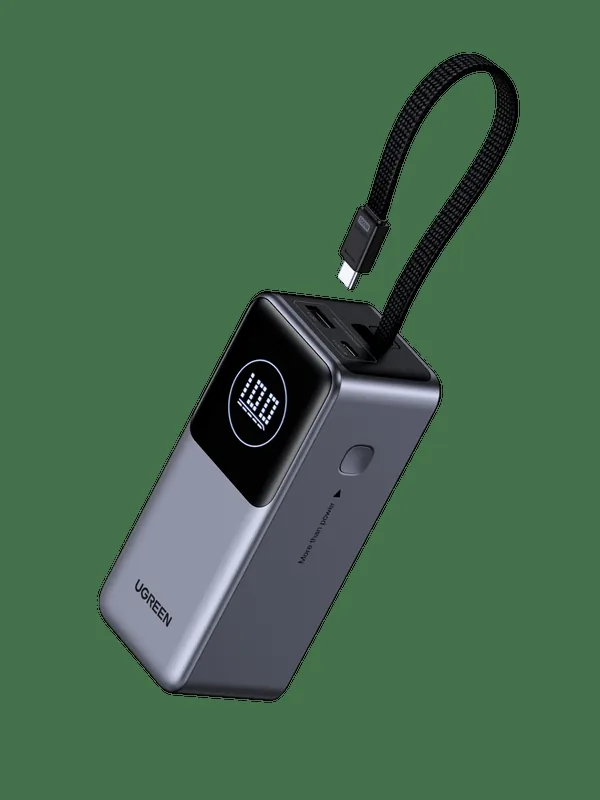
For ultimate convenience and a minimalist carry, power banks with integrated or built-in USB-C cables are a game-changer. Brands like UGREEN offer models such as the Nexode 20000mAh 130W or 165W with retractable cables, eliminating the need to carry extra cords. This feature, combined with multiple output ports (wireless + wired USB-C), enables true multi-device charging – powering your phone, earbuds, and even a laptop simultaneously. This directly addresses the desire for better value and practical functionality that resonates with the ‘Disappointment’ often felt when features are lacking.
Slim Design & Smart Displays: EcoFlow & (Re)Classic
Beyond raw power, design and user experience play a crucial role. The EcoFlow RAPID Mag Power Bank, for instance, is marketed as one of the industry’s slimmest magnetic power banks, emphasizing portability. It also features a clear LED Digital Display for real-time status checks, addressing the need for ‘display clarity’ identified in our initial topic analysis. Similarly, the (Re)Classic Power Bank combines an ultra-slim profile with premium, animal-free leather aesthetics and LED indicators, demonstrating that style and functionality can coexist. These design choices directly impact the ‘Portability’ and ‘Display Utility’ ‘Concern’ points from our Fandom Pulse.
Maximizing Longevity: Care and Maintenance Tips
- Avoid Extreme Temperatures: Do not expose your power bank to very hot or very cold conditions, as this can degrade battery cells.
- Prevent Overcharging & Deep Discharging: High-quality units have protection, but as a best practice, avoid leaving them plugged in indefinitely or letting them drain to 0% regularly.
- Store at Partial Charge: For long-term storage, keep your power bank at around 50% charge to preserve battery health.
- Use Quality Chargers: When recharging the power bank itself, use a compatible wall charger (ideally PD/QC) rather than a computer’s USB port for faster and more efficient charging.
- Regular Use: Occasional charging and discharging cycles help maintain battery health, but avoid full cycles constantly.
Frequently Asked Questions
Are magnetic power banks safe for my phone’s battery?
Yes, high-quality magnetic power banks with proper temperature control and protection circuits are safe. The magnets themselves do not harm your phone’s battery. However, misalignment during charging can cause excess heat, which can degrade battery longevity over time. Always use certified accessories.
Why is my magnetic power bank charging my Android phone slowly?
Android phones generally lack native magnetic alignment, leading to less efficient wireless charging. Also, many Android devices only support older Qi wireless standards (often 10W max), not the faster 15W Qi2. For faster charging, prioritize using the power bank’s wired USB-C Power Delivery (PD) port, which can offer 30W or more.
Can I use a magnetic power bank if my phone has a case?
For iPhones, MagSafe-compatible cases work seamlessly. For Android phones, you’ll need a case with an integrated magnetic ring or an adhesive magnetic ring applied to your existing case to ensure proper alignment and secure attachment. Thin cases (under 2.5mm) are generally recommended for optimal wireless charging efficiency.
Can I take my power bank on an airplane?
Yes, but only in your carry-on luggage, never in checked baggage. Most airlines allow power banks up to 100 Watt-hours (Wh) without prior approval. Units between 100Wh and 160Wh may require airline permission. Any power bank exceeding 160Wh is typically banned. Always check the Wh rating on your device.
How long do magnetic power banks typically last?
With proper care, a high-quality magnetic power bank can last 3 to 5 years, maintaining over 80% capacity after 300 charge cycles. Lower-quality units may only last 1 to 2 years. Avoiding extreme temperatures, overcharging, and deep discharging will significantly extend its lifespan.
The Magnetic Future: Smart Power for Smart Devices
Magnetic wireless power banks represent a significant leap in portable charging convenience, offering seamless attachment, multi-device capabilities, and increasingly faster speeds. However, our deep dive reveals that navigating this market requires a discerning eye. While iPhones enjoy native, optimized experiences, Android users must be more strategic, often relying on wired PD for peak performance or investing in magnetic cases. The emerging solid-state battery technology hints at a safer, more durable future, albeit at a premium. Ultimately, for gamers and tech enthusiasts seeking a reliable, travel-friendly, and truly versatile charging companion, the right magnetic power bank can be an invaluable asset – provided you cut through the hype and choose based on proven performance, thoughtful features, and genuine compatibility for your specific setup.
Sources
- UGREEN US Website (Product Catalog)
- INIU Product Information (Magnetic Power Bank for iPhone)
- EcoFlow RAPID Mag Power Bank Specifications & Operational Guidelines
- Aramid Fiber Magnetic Power Bank Product Details
- BMX SolidSafe Power Bank Press Releases & Product Specifications
- Apple MagSafe Battery Pack Official Documentation & Testing
- (Re)Classic Power Bank Product Details
- HUAWEI SuperPower Magnetic Power Bank Specifications
- Wireless Power Consortium (WPC) – Qi2 Standard Information
- International Civil Aviation Organization (ICAO) Guidelines for Portable Electronic Devices (PEDs)