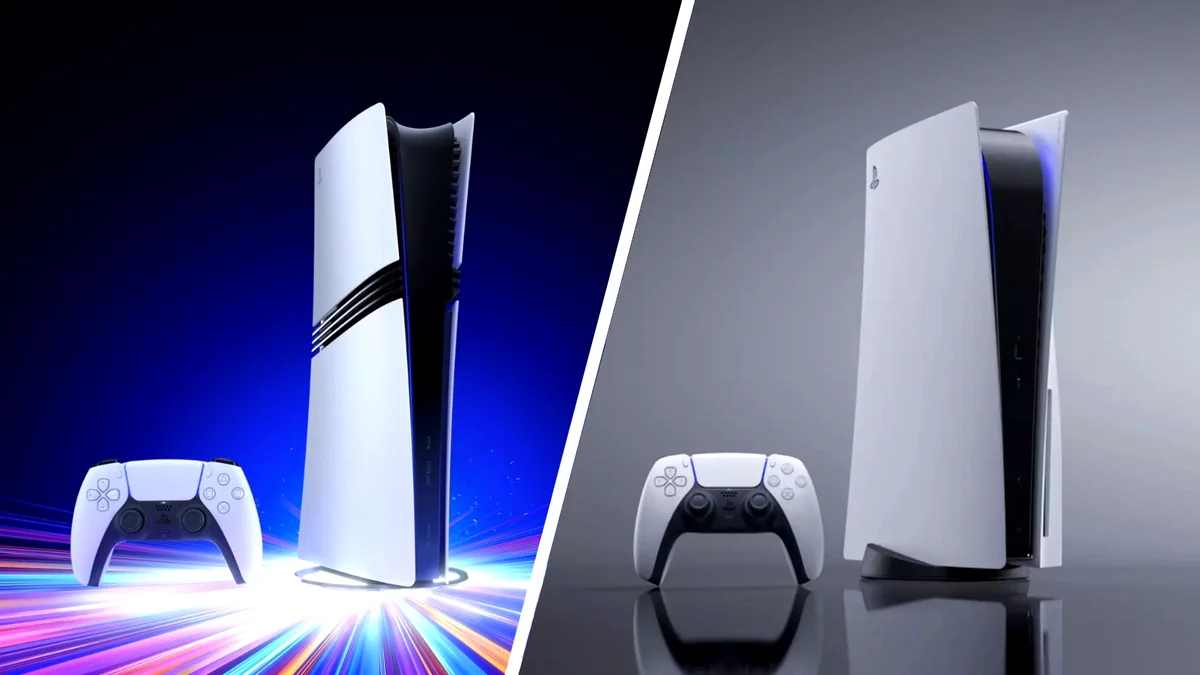

The PlayStation 5’s innovative liquid metal cooling, while a potent thermal solution, is inherently prone to degradation over time. This means that all console models, including the Slim and the anticipated Pro, are likely to eventually necessitate professional maintenance to ensure optimal performance and longevity. Crucially, engineering insights debunk pervasive community myths regarding console orientation and its impact on liquid metal integrity. Owners must remain vigilant and aware of these potential long-term issues to proactively manage future service needs and safeguard their investment.
The PS5’s Liquid Metal Advantage: A Double-Edged Sword
When Sony unveiled the PlayStation 5, a significant point of technological pride was its innovative liquid metal thermal interface material (TIM). This Gallium-based alloy, applied directly to the console’s System-on-Chip (SoC), promised vastly superior thermal conductivity compared to traditional thermal pastes. The initial hype was palpable: a cooler, quieter console capable of sustaining peak performance through demanding next-generation titles. Indeed, this advanced cooling solution was a primary driver behind the console’s substantial physical dimensions, as confirmed by Sony Mechanical Design VP Yasuhiro Ootori, who emphasized the necessity of a robust thermal system. However, as the PS5 ages, a growing apprehension has emerged within the gaming community and among professional technicians regarding the long-term reliability of this liquid metal, casting a shadow over its initial brilliance. The very properties that make it so effective also render it susceptible to degradation, leading to concerns about its longevity and the potential for eventual performance decline.
Deconstructing the Degradation: How Liquid Metal Fails Over Time
Liquid metal, typically composed of Gallium-based alloys, offers a thermal conductivity coefficient orders of magnitude higher than conventional silicone-based thermal pastes. This allows for incredibly efficient heat transfer from the processor die to the heatsink. However, this superior performance comes with inherent material challenges. Over extended periods, especially under the relentless thermal cycling of a gaming console, liquid metal is susceptible to what technicians term the ‘pump-out effect,’ where the material can be displaced from the center of the die. Furthermore, it can dry out, losing its liquid properties, or even migrate due to gravity and surface tension, particularly when interacting with specific substrate materials. This degradation process leads to a loss of contact between the SoC and the heatsink, creating ‘dry spots’ that severely impede cooling efficiency. These thermal compromises can manifest as increased fan noise, performance throttling, or even system instability. Disturbingly, professional technicians like modyfikatorcasper have asserted that, given these intrinsic material behaviors, all PS5 systems will eventually require liquid metal maintenance to restore optimal thermal performance and prevent catastrophic failure. This perspective underscores a fundamental vulnerability in an otherwise groundbreaking cooling solution.
- Liquid metal (often Gallium-based) offers significantly better thermal conductivity than traditional thermal paste, crucial for high-performance SoCs.
- Over time, especially with repeated thermal cycling (heating and cooling), liquid metal can degrade, dry out, or migrate from its intended contact area due to gravity and surface tension.
- This degradation leads to the formation of ‘dry spots’ on the CPU die, which critically reduces cooling efficiency and can cause overheating, performance throttling, or system malfunctions.
- A technician, modyfikatorcasper, has made the sobering claim that all PS5 consoles will eventually necessitate liquid metal maintenance to counteract these inevitable effects.
- The issue is further compounded by the potential for liquid metal to leak onto other sensitive components, posing risks of electrical shorts, corrosion, and irreversible damage to the console’s circuitry.
Sony’s Evolution: From Launch to Slim to Pro – Are the Fixes Enough?
Sony has not been static since the PS5’s launch, introducing several hardware revisions aimed at optimizing manufacturing costs and, implicitly, addressing performance aspects. These revisions include changes to heatsink designs, with some models featuring lighter heatsinks, and internal layout modifications. The latest CFI-2100 Slim model, for instance, boasts a reduced volume by over 30% and weight by 18-24% compared to previous iterations, alongside a new thermal interface material (TIM) layout. While initial tests on revised models (like the CFI-1100) showed a remarkable 10°C drop in SoC temperatures compared to launch units (from ~51.15°C to ~40.08°C), this came at the cost of slightly higher VRAM and VRM temperatures. This raises a critical question: do these design changes truly prevent the long-term liquid metal degradation, or do they merely delay its onset? Community skepticism, as captured by ‘The Fandom Pulse,’ suggests a deep distrust, with many feeling that earlier adopters have been left without a definitive solution. From an engineering standpoint, while improved containment and application methods can mitigate migration, the fundamental material properties of liquid metal and the relentless thermal cycles of a gaming console suggest that complete immunity from eventual degradation remains an elusive goal.
PS5 Cooling System Evolution: Thermal Performance Across Revisions
| Model Revision | SoC Temp (C) | VRAM Temp (C) | VRM Temp (C) | Cooling Design Notes |
|---|---|---|---|---|
| Original Launch (e.g., CFI-1000) | ~51.15 | ~40.88 | ~44.97 | Larger heatsink, original liquid metal application |
| Revised (e.g., CFI-1100) | ~40.08 | ~48.20 | ~46.32 | Smaller, lighter heatsink; improved SoC cooling, but higher VRAM/VRM temps |
| New Slim (CFI-2000/2100) | N/A | N/A | N/A | Reduced volume/weight, new TIM layout; uncertainty about long-term liquid metal retention |
| PS5 Pro (Anticipated) | N/A | N/A | N/A | Expected further refinements; potential for updated liquid metal application or containment measures |
“So they had an issue with the old one, fixed it, and the old owners are left holding the bag?”
The Great Debate: Vertical vs. Horizontal – Separating Fact from Fandom
Few topics have generated as much fervent debate and misinformation within the PlayStation community as the optimal console orientation. A pervasive belief suggests that placing the PS5 vertically directly contributes to liquid metal leaks, driven by anecdotal evidence and visually striking images of damaged consoles. However, this widely held concern has been definitively addressed by none other than Sony’s Mechanical Design Department VP, Yasuhiro Ootori. In a clear statement, Ootori confirmed that, “From the designer’s point of view, there is no difference in cooling performance between vertical and horizontal installation.” This expert testimony fundamentally debunks the myth. The misconception likely gained traction due to a classic case of correlation versus causation: many consoles are indeed displayed vertically, and when leaks occur, they are often visually depicted in this orientation. Yet, the underlying cause of liquid metal migration is primarily related to material properties and thermal cycling, not gravitational pull in a sealed environment. While precautionary measures are understandable given the potential for damage, the engineering reality is that the console’s design accounts for both orientations without compromising its thermal integrity or increasing the risk of liquid metal displacement.
The Inevitable Maintenance: Expert Projections for All PS5 Consoles
The consensus among many professional technicians and hardware analysts is that the PS5’s liquid metal cooling, while effective, is not a permanent solution. The aforementioned modyfikatorcasper, a technician with extensive experience, has bluntly stated that all PS5 systems, regardless of their revision, will eventually require maintenance to address liquid metal degradation. This stems from the inherent nature of Gallium-based alloys and the relentless thermal cycles they endure. Each heating and cooling phase contributes to the material’s gradual loss of integrity, making future intervention a strong probability rather than a remote possibility. This creates a ‘ticking time bomb’ scenario for console longevity, forcing owners to consider potential out-of-warranty repair costs down the line. Matthew Cassels, founder of Alderon Games, has echoed similar concerns, highlighting the long-term implications for consumers. While Sony’s warranty covers initial defects, the anticipated need for liquid metal reapplication years into the console’s life could become a significant financial burden for owners, fundamentally altering the traditional expectation of console maintenance.
Liquid Metal Cooling in PS5: Pros and Cons
Pros
- Offers significantly superior thermal conductivity compared to traditional thermal paste, leading to more efficient heat dissipation.
- Facilitates robust cooling within potentially more compact internal designs, although the PS5’s overall size is influenced by other factors like its large fan.
- Enables the SoC to operate at higher sustained clock speeds without thermal throttling, translating to more consistent performance in demanding games.
- Contributes to quieter console operation by allowing the cooling system to dissipate heat more effectively, reducing the need for aggressive fan speeds.
Cons
- Prone to degradation, drying out, and migration over extended periods, especially under thermal cycling, potentially leading to reduced cooling efficiency.
- Possesses electrical conductivity, meaning it can leak onto other components and cause dangerous electrical shorts or corrosive damage.
- Requires highly specialized and precise application during manufacturing, making it less forgiving than thermal paste.
- Presents significant challenges and risks for end-users to maintain or replace themselves, often leading to voided warranties or irreparable damage.
- Introduces a potential long-term maintenance cost that is atypical for gaming consoles, impacting the total cost of ownership.
Navigating the Future: A Guide for Current & Prospective PS5 Owners
- Monitor Performance: Remain attentive to any changes in your console’s behavior, such as unusually loud fan noise under load, unexpected system shutdowns, or noticeable drops in game performance. These could be early indicators of cooling system degradation.
- Understand Your Warranty: Familiarize yourself with Sony’s warranty policy, particularly concerning hardware malfunctions and the implications of unauthorized repairs. This knowledge is crucial for making informed decisions should an issue arise.
- Consider Professional Service: If you suspect liquid metal degradation or any other cooling problem, it is imperative to seek out reputable, professional console repair services. Alternatively, contact Sony’s official support for guidance and potential in-warranty solutions.
- Keep It Clean: Regularly clean dust from your console’s vents and chassis using compressed air. Maintaining optimal airflow is a universally effective practice that can prolong the life and efficiency of any cooling system, regardless of its thermal interface material.
- Stay Informed: Continue to follow LoadSyn and other trusted technology sources for ongoing updates regarding PS5 hardware revisions, long-term reliability reports, and emerging best practices for console care. Knowledge is your best defense against unexpected hardware issues.
Frequently Asked Questions
While liquid metal offers superior cooling performance, its inherent properties—such as potential for migration and degradation over time—introduce long-term maintenance challenges that are less common with traditional thermal pastes. It represents a calculated trade-off for enhanced performance.
No. According to Yasuhiro Ootori, Sony’s Mechanical Design VP, the console’s orientation (vertical or horizontal) has no impact on its cooling performance or the risk of liquid metal leakage from a design perspective. This is a common misconception.
Some expert technicians, citing the intrinsic nature of liquid metal and the effects of thermal cycling, claim that all PS5 systems will eventually require maintenance for liquid metal degradation, irrespective of their specific hardware revision. While Sony’s design changes aim to mitigate this, long-term data for newer models is still emerging.
Common indicators include an increase in fan noise under load, thermal throttling (manifesting as sudden drops in frame rate or overall performance), system instability during intensive gaming sessions, or unexpected console shutdowns.
It is strongly advised against. Replacing liquid metal is a complex, delicate, and risky procedure that can easily damage your console, void your warranty, and potentially cause catastrophic electrical shorts if not executed with extreme precision. Always consult professional repair services or Sony’s official support.
Final Verdict
The PlayStation 5’s deployment of liquid metal as a thermal interface material stands as a testament to Sony’s pursuit of cutting-edge performance. However, as our analysis demonstrates, this powerful technology is intrinsically linked to long-term maintenance challenges. While Sony has introduced various hardware revisions, the community’s wariness regarding the permanence of these ‘fixes’ is understandable. The expert consensus points towards the strong possibility of eventual liquid metal degradation, necessitating professional intervention for many consoles over their lifespan. For current and prospective PS5 owners, understanding this nuanced reality is not merely academic; it is crucial for managing expectations, planning for potential future service needs, and ultimately ensuring the sustained performance and longevity of their prized gaming hardware. The era of ‘set it and forget it’ console ownership may be evolving, demanding a more informed and proactive approach from enthusiasts.