
Despite being over a decade old, The Elder Scrolls V: Skyrim continues to defy expectations, not just as a beloved classic, but as a surprisingly viable ‘next-gen’ gaming experience. While the wait for Elder Scrolls 6 stretches on, the vibrant modding community has taken up the mantle, transforming Skyrim into something truly astonishing. This isn’t merely about aesthetic touch-ups; it’s a complete reimagining, where advanced graphical overhauls and emerging AI technologies like DLSS 3 are pushing visual boundaries, allowing the Dragonborn’s world to rival even the most modern titles in fidelity and performance.

The Unsung Architects: How Modders Keep Skyrim Alive and Thriving
Bethesda’s long-standing pro-modding stance has cultivated an unparalleled ecosystem, a digital frontier where creativity knows no bounds. This philosophy has led to an astounding volume of content, with Skyrim Special Edition alone boasting over 123,400 mods available on Nexus Mods—nearly double that of its closest competitor, Fallout 4. While this sheer quantity offers limitless possibilities, it also introduces immense complexity. Enter ‘modpacks’ like those facilitated by Wabbajack, a crucial innovation that bundles thousands of carefully curated mods into cohesive, pre-configured experiences. These automated solutions democratize access to advanced visual overhauls, sidestepping the labyrinthine process of manual installation and conflict resolution, making truly transformative graphical fidelity accessible to a much wider audience.
The Titans of Transformation: Nolvus, LoreRim, and Gate to Sovngarde
Among the myriad of modpacks, Nolvus stands out as a prime example of a ‘next-gen’ visual overhaul. It delivers breathtaking graphics, with new textures, advanced lighting, and realistic physics that often lead players to mistake it for a game built on Unreal Engine 5. This extreme fidelity, however, comes with significant hardware demands, requiring a minimum of 345GB of SSD storage and at least an NVIDIA GTX 1080 GPU for its most basic versions. What sets Nolvus apart in terms of accessibility for such a demanding list is its dedicated auto-installer, the Nolvus Dashboard, which meticulously handles the complex installation process, streamlining what would otherwise be an overwhelming task for most users.
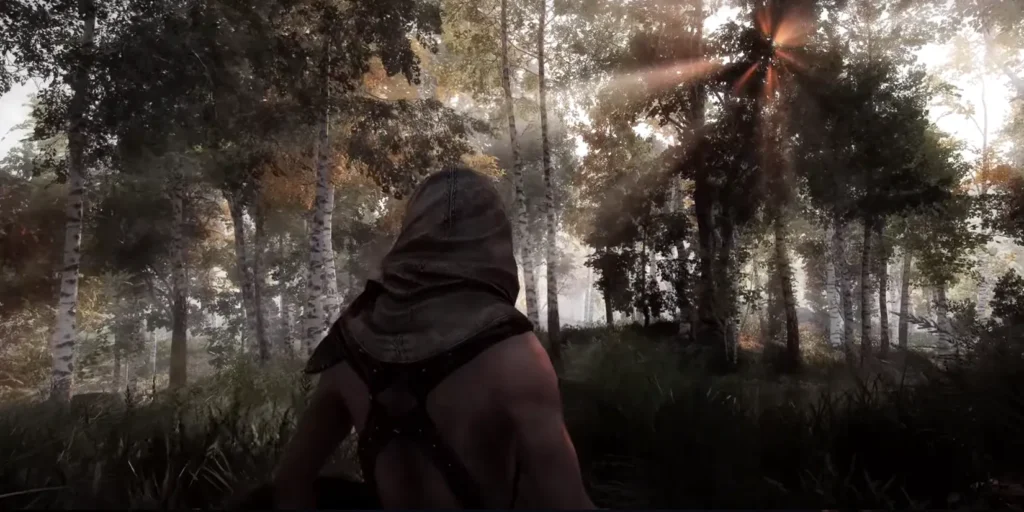
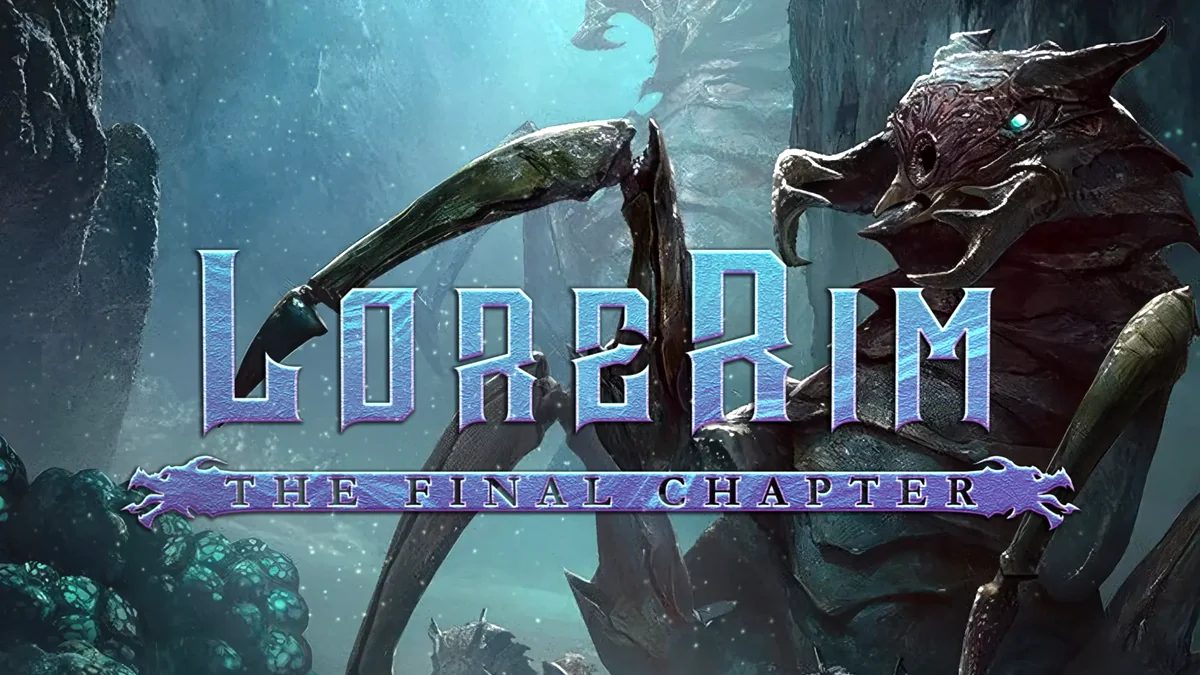
Shifting focus, LoreRim offers a distinct philosophy, aiming to modernize visuals, systems, and immersion while rigorously adhering to Elder Scrolls lore. This ambitious project, curated by modder Biggie_boss, integrates over 4,000 mods, delivering deeper character customization and a unique ‘Requiem-EnaiRim hybrid’ gameplay experience. While its dedication to a cohesive, lore-friendly aesthetic is commendable, the community has had mixed reactions, with some finding its transformed world almost unrecognizable from vanilla Skyrim. This highlights a critical aspect of modding: the subjective nature of aesthetic preference and the delicate balance between innovation and preserving the original game’s identity. Despite varied opinions on its visual style, the depth of its RPG mechanics and commitment to lore are undeniable.
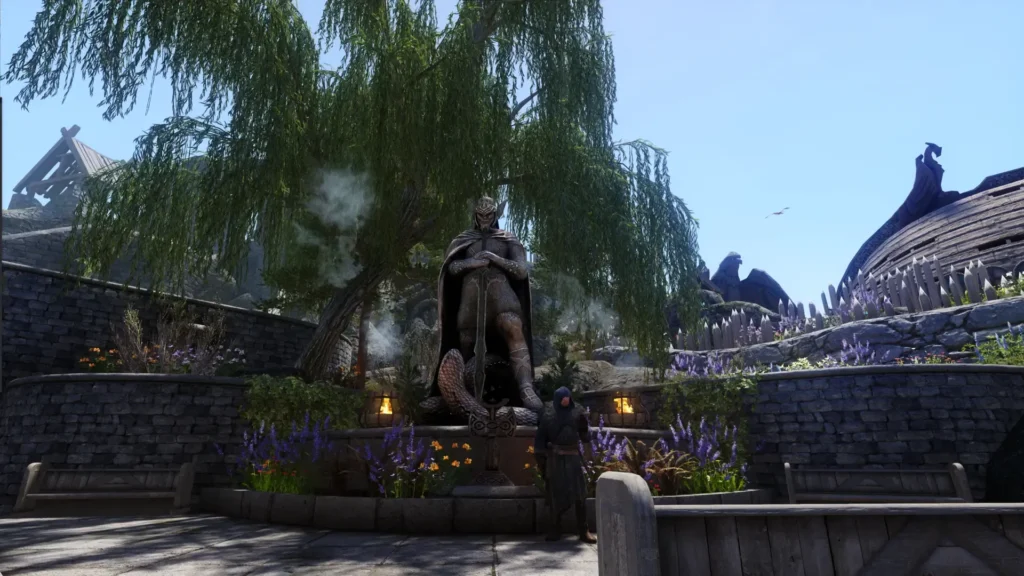
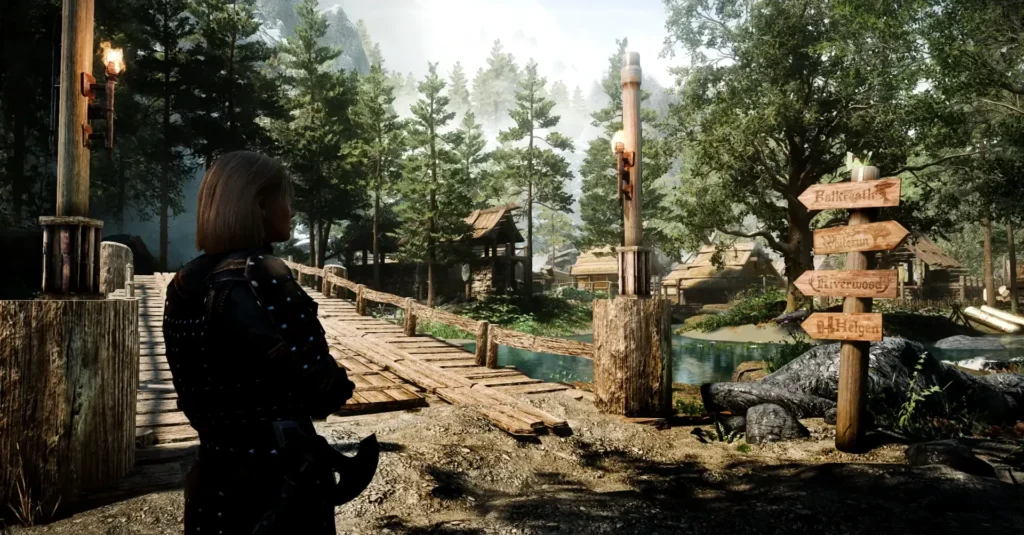
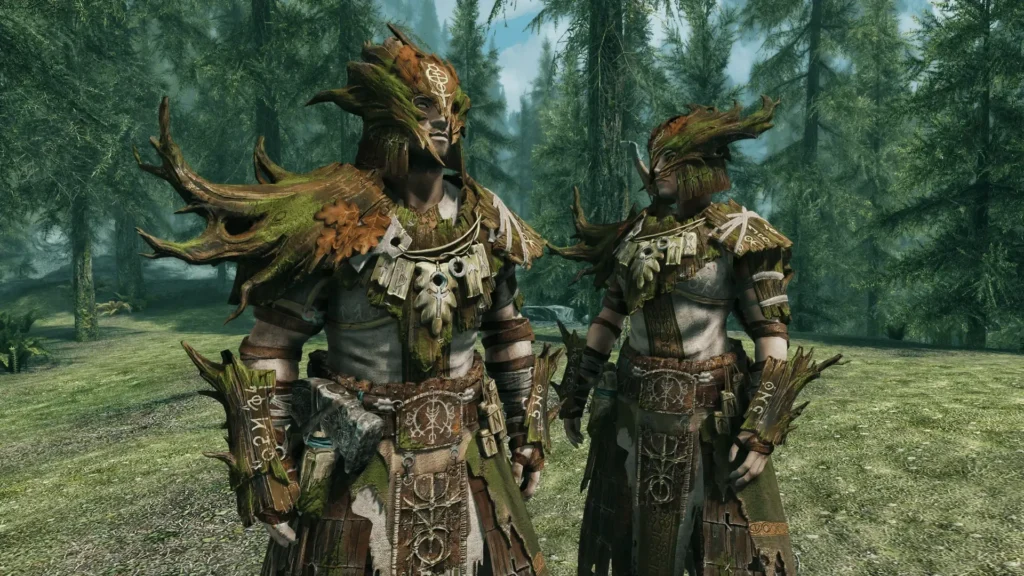
LoreRim 4.0 aims for a modernized yet lore-accurate aesthetic, transforming iconic locations and character gear within the Elder Scrolls universe.
For players seeking a compelling experience without the intense hardware demands of lists like Nolvus or the complete aesthetic overhaul of LoreRim, Gate to Sovngarde presents an excellent alternative. This modpack, featuring over 1,500 mods, is meticulously designed to be performance-friendly and vanilla-adjacent, enhancing graphics and adding substantial content without heavy performance penalties. It leverages popular SimonRim mods for deep immersion and utilizes Community Shaders instead of traditional ENBs, which are notorious for performance hits. This strategic choice allows Gate to Sovngarde to achieve stable frame rates (e.g., 30-40 FPS on a GTX 1650 with an Intel i3) on mid-range hardware, making a significantly enhanced Skyrim accessible to a much broader audience.
The AI Advantage: DLSS 3 and the Future of Skyrim Visuals
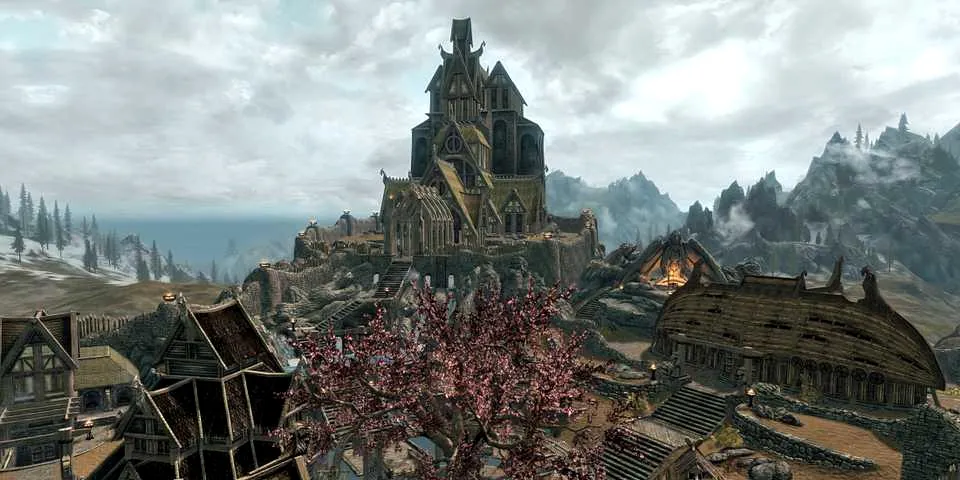
A critical advancement in transforming Skyrim into a ‘next-gen’ title comes from the integration of AI-powered technologies. Modder PureDark’s introduction of DLSS 3 Frame Generation for Skyrim is nothing short of revolutionary. This NVIDIA technology, previously exclusive to newer, natively supported games, now allows even the most heavily modded Skyrim to achieve unprecedented frame rates. For instance, testing on an RTX 4090 reported a remarkable 39% increase in FPS within graphically intensive areas like Whiterun. This empirical validation underscores DLSS 3’s critical importance: it not only maintains smooth performance with the most demanding graphical overhauls but effectively makes previously ‘impossible’ framerates a reality, allowing players to experience stunning visuals without compromise. It’s a testament to the power of community-driven innovation leveraging cutting-edge AI.
The Modder’s Dilemma: Passion, Complexity, and the Pursuit of Perfection
“as a big skyrim modder myself: the fun doesn’t come from playing, the fun comes from imagining playing with certain mods, then getting stuck in a maze of perfecting your load order and fixing bugs and errors until you eventually quit”
The journey to a perfectly modded Skyrim is often a testament to the modder’s unwavering dedication, fraught with significant technical hurdles. The Creation Engine imposes strict limits, such as a 254-plugin ceiling for regular plugins (though light plugins expand this to 4096 slots) and a hard limit of 1,048,576 total active references. Each individual plugin can only rely on a maximum of 254 other ‘master’ plugins, creating complex interdependencies. As LoreRim creator Biggie_boss detailed in an interview, overcoming these constraints, especially when merging massive overhauls like Requiem and EnaiRim, requires immense time investment in optimization, patching, and rigorous testing. This involves everything from reviewing every texture for appropriate size (no 16k apples!) to avoiding high-poly meshes and using tools like Papyrus Profiler to identify and eliminate script pileups. This deep dive into the technical intricacies highlights the engineering prowess and sheer perseverance required to craft a stable, expansive modlist.
The Modded Skyrim Experience: Pros & Cons
Pros
- Unparalleled visual overhauls (e.g., Unreal Engine 5 level graphics with Nolvus).
- Deeply enhanced gameplay and immersion (e.g., LoreRim’s RPG mechanics, Gate to Sovngarde’s exploration).
- Longevity for a classic title, offering ‘new game’ experiences.
- AI upscaling (DLSS 3) allows for high performance even with extreme graphical mods.
- Community tools (Wabbajack, auto-installers) simplify complex installations.
Cons
- Significant hardware requirements for top-tier visual modpacks (e.g., 345GB SSD, high-end GPU).
- Steep learning curve and time investment for manual modding and troubleshooting.
- Potential for instability, crashes, and bugs, even with curated modpacks.
- Aesthetic preferences can vary widely; ‘photorealistic’ doesn’t always mean ‘better’ for everyone.
- Modding can sometimes obscure the original game’s identity (‘This Ain’t Even Skyrim Anymore’).
The Final Verdict: A New Horizon for Old Worlds
Verdict Summary
The evidence is clear: despite its venerable age, The Elder Scrolls V: Skyrim, through the relentless dedication of its modding community and the strategic integration of AI advancements like DLSS 3, genuinely delivers a ‘next-gen’ experience that can stand shoulder-to-shoulder with modern titles. The ultimate choice for players hinges on their priorities: whether to prioritize absolute visual fidelity, balanced performance, or unwavering lore-friendliness, all while considering their available hardware. Here at LoadSyn, we firmly believe in the transformative power of community-driven innovation. Skyrim’s enduring legacy is a powerful testament to how passionate players and cutting-edge technology can reshape gaming culture, proving that old worlds can indeed offer new, breathtaking horizons.
Frequently Asked Questions
For modpacks like Nolvus, you’ll generally need a powerful GPU (GTX 1080 minimum, but RTX 30 Series or higher recommended for best results), a substantial SSD (345GB+ for Nolvus), and a good CPU. Lighter, performance-friendly lists like Gate to Sovngarde can run on on more modest hardware (e.g., GTX 1650).
While traditional modding can be very complex, tools like Wabbajack and dedicated auto-installers (like Nolvus Dashboard) have significantly simplified the process. Nexus Premium is often recommended for faster, automated downloads. Following specific guides (often video tutorials) is crucial.
AI upscaling technologies like DLSS 3 (via community mods) can dramatically improve performance, allowing modders to push graphical limits further without crippling frame rates. Combined with thousands of high-resolution textures, models, and advanced lighting mods, Skyrim can indeed achieve a photorealistic, ‘next-gen’ visual quality, though aesthetic preference remains subjective.
Many modpacks, like LoreRim, introduce significant gameplay overhauls (e.g., deeper RPG mechanics, new combat systems). Others, like Gate to Sovngarde, aim for a more vanilla-friendly experience with enhanced immersion. It depends on the modlist’s philosophy, but most go beyond just visuals.