
FSR 4: AMD’s AI Leap Ignites a Community Uprising Over RDNA 4 Exclusivity
AMD’s latest FidelityFX Super Resolution (FSR) 4 arrived with a promise: a new era of AI-enhanced upscaling, designed to bring Radeon GPUs to parity with the industry’s best. Leveraging dedicated Machine Learning (ML) accelerators within its RDNA 4 architecture, FSR 4 was poised to deliver significant image quality and performance uplifts. However, this technological leap was immediately overshadowed by a contentious decision: FSR 4 would be exclusive to the new RDNA 4 GPUs. This move sparked an immediate and fervent backlash from the PC gaming community, particularly among owners of relatively recent RDNA 3 cards, who felt abandoned and, frankly, betrayed by what many perceived as arbitrary gatekeeping.
Deconstructing FSR 4: The AI-Powered Super Resolution Engine
At its core, FSR 4 represents a profound shift in AMD’s upscaling philosophy, moving away from the purely heuristic-based approaches of its predecessors. This iteration introduces a sophisticated Machine Learning (ML)-based super-resolution algorithm, dubbed the ‘Kernel Prediction Network.’ Unlike FSR 2, which relied heavily on temporal anti-aliasing (TAA) and a series of hand-tuned heuristics to manage motion and edge cases, FSR 4 replaces these with a compact neural network. This network intelligently predicts optimal filtering kernels for each pixel, significantly improving image quality, stability, and reducing common TAA artifacts like smearing and shimmering that often plagued earlier FSR versions. The focus here is unequivocally on visual fidelity, aiming for a near-native 4K output that is comparable to FSR 3.1’s native AA preset.
FSR 4: Key Technical Innovations
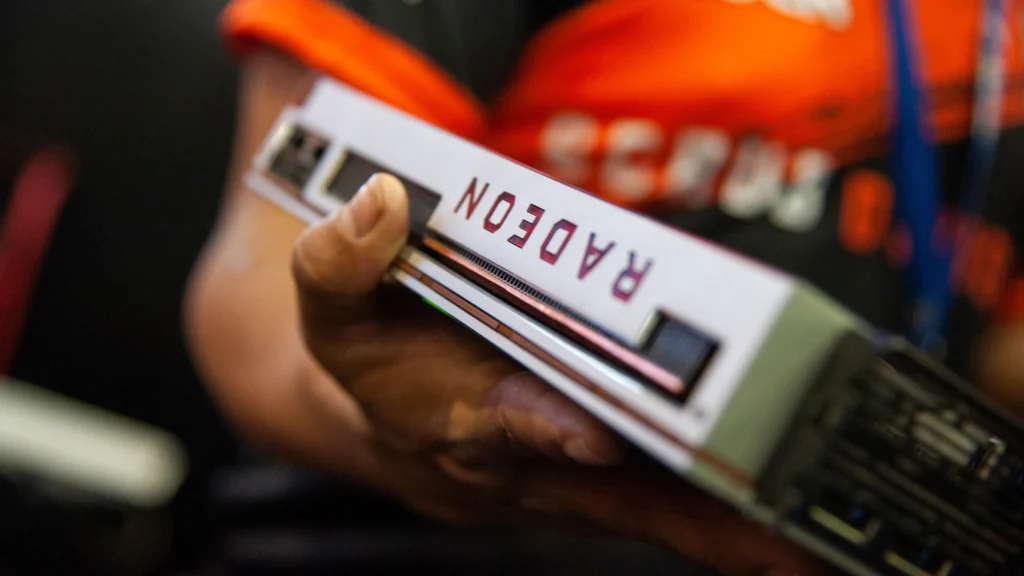
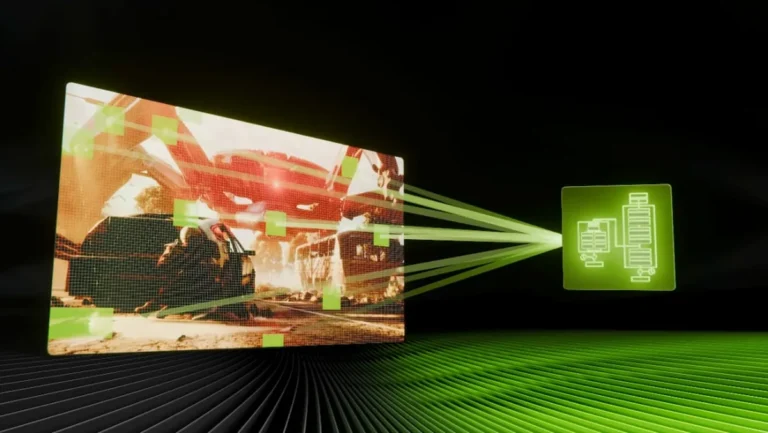
Conceptual overview of how FSR 4 leverages on-die AI accelerators for advanced upscaling. (Note: Specific hardware layout varies by GPU generation).
AMD’s Stance: Why RDNA 4 Exclusivity is a ‘Difficult Technical Challenge’
AMD’s official rationale for FSR 4’s RDNA 4 exclusivity centers on fundamental hardware differences, particularly the architecture’s dedicated AI accelerators. According to AMD, the FSR 4 ML models are meticulously tuned and optimized for the FP8 (8-bit floating point) data format, which is natively supported by RDNA 4 GPUs. While RDNA 3 cards do possess AI accelerators, they lack native FP8 support. Attempting to simulate FP8 operations using FP16 (16-bit floating point) on older hardware introduces significant computational overhead. This emulation can lead to noticeable performance degradation and increased power consumption, issues that AMD argues would prevent FSR 4 from meeting its stringent ‘quality bar.’ The company emphasizes its commitment to delivering a high-fidelity, near-native quality experience, a standard they believe cannot be consistently met on older generations without native FP8 capabilities.
“When we introduced FSR 4, the models that we built were tuned for and optimised for the ML operations that are in the RDNA 4 architecture. For mobile gaming platforms, it is highly valuable, and we recognise that. We absolutely see that. [AI Upscaling] is a capability that would absolutely add to the gaming experience. The technical challenge is bringing those models back to older-generation hardware that doesn’t have the ML ops, doesn’t have the TOPS, and doesn’t have the AI throughput to deliver an upscaling experience that meets the quality bar that needs to be met. At the end of the day, we’ve got to make sure that whatever we do, let’s call it augmented gaming experiences, it has to be a high fidelity experience. It has to deliver near native quality. Doing that on older hardware is a very difficult technical challenge for us to solve.”
— David McAfee, VP and GM of Ryzen CPUs and Radeon graphics at AMD
The Modding Community Strikes Back: Unofficial FSR 4 on RDNA 3
The narrative shifted dramatically following an accidental leak of FSR 4 code via a GitHub repository in August. This unexpected release provided industrious modders with the raw materials they needed, and they swiftly leveraged it to defy AMD’s hardware restrictions. Recognizing the potential, these community developers adapted the FSR 4 algorithm for RDNA 3 and even older cards, demonstrating remarkable ingenuity. On Linux systems, modders achieved success by modifying Mesa drivers to convert FP8 data to FP16 processing, effectively bypassing the native hardware limitation. For Windows users, tools like OptiScaler and custom DLL swaps were employed to inject FSR 4 into DirectX12 games. This collective effort quickly yielded tangible results, with modders successfully running FSR 4 on cards like the Radeon RX 7900 XTX, proving that where there’s a will (and leaked code), there’s a way.
Key Modding Approaches for Unofficial FSR 4
- Mesa Driver Modifications (Linux): Open-source nature of Mesa allows for direct driver-level changes to convert FP8 data to FP16 processing, bypassing hardware limitations.
- OptiScaler & DLL Swapping (Windows): Tools that intercept and replace FSR 3.1 DLLs with custom FSR 4 (INT8) implementations, forcing compatibility in DirectX12 games.
- Leveraging Leaked Source Code: The accidental August leak of FSR 4 libraries provided the necessary foundation for community developers to experiment and port the technology.
- Focus on INT8 Arithmetic: Modders utilized an unreleased INT8-based FSR 4 implementation, which is more compatible with older RDNA 3/2 hardware compared to RDNA 4’s FP8.
Unofficial FSR 4: Performance and Image Quality Realities
Empirical validation from modders and early testers paints a clear picture: unofficial FSR 4 delivers noticeable image quality improvements on RDNA 3 hardware. In titles like Cyberpunk 2077, testers reported superior edge quality and significantly less smearing on foliage compared to FSR 3.1. Similarly, Oblivion saw greatly reduced smearing during fast motion, leading to a more stable overall image, though some minor artifacts on trees were noted. This qualitative leap brings FSR 4 much closer to the visual fidelity often associated with NVIDIA’s DLSS. However, this enhanced quality comes at a cost: a measurable performance hit. On an RX 7900 XTX, Cyberpunk 2077 saw frame rates drop from 85 FPS with FSR 3.1 to 56 FPS with unofficial FSR 4. This 20-30% FPS reduction is attributed to the computational overhead of emulating FP8 operations on RDNA 3’s FP16-centric AI accelerators. Despite this, the unofficial FSR 4 often still yields higher frame rates than native 4K rendering, making it a viable, albeit compromised, option for those prioritizing visual fidelity.
Unofficial FSR 4 vs. FSR 3.1 on RDNA 3 (RX 7900 XTX)
| Game | Setting | FSR 3.1 FPS | Unofficial FSR 4 FPS | Image Quality (FSR 4 vs. FSR 3.1) |
|---|---|---|---|---|
| Cyberpunk 2077 | Quality Mode | 85 FPS | 56 FPS | Superior edge quality, less smearing on foliage. |
| Oblivion | Quality Mode | Variable (High) | 20-30% lower | Significantly reduced sword swinging smearing, more stable overall (some minor artifacts on trees). |
Performance Impact: FSR 3.1 vs. Unofficial FSR 4 on RDNA 3
Unofficial FSR 4 on RDNA 3: Pros & Cons
Pros
- Improved Image Quality: Significantly better edge fidelity and reduced smearing.
- Access to Latest Tech: Experience AMD’s newest AI upscaling on RDNA 3.
- Higher Than Native FPS: Still often outperforms native resolution rendering.
- Community Empowerment: Overcoming vendor-imposed hardware restrictions.
Cons
- Performance Penalty: 20-30% frame rate drops due to FP8 emulation.
- Potential for Artifacts: New visual glitches (e.g., tree artifacts).
- Lack of Official Support: No guarantees of stability or future compatibility.
- Limited OS Support: Primarily Linux; Windows is complex and less stable.
- Scalability Issues: Diminishing returns at lower quality modes.
The Fandom Pulse: Betrayal, Anger, and the Fear of Gatekeeping
AMD’s decision to restrict FSR 4 to RDNA 4 GPUs has resonated deeply and negatively within the PC gaming community, particularly among owners of RDNA 3 cards who invested in what they believed was current-generation hardware. The emotional fallout is palpable: feelings of betrayal, abandonment, and anger dominate discussions across forums and social media. Many users express profound distrust, viewing the exclusivity as a deliberate act of ‘gatekeeping’ that prematurely obsolesces their expensive, relatively new graphics cards. This sentiment is so strong that numerous RDNA 3 owners have publicly vowed to switch to competitors like NVIDIA for their next GPU purchase, fearing that this pattern of restricting features will continue with future FSR iterations, forcing them into a continuous upgrade cycle that feels disingenuous.
“If they deliberately don’t let their previous customer use the feature going forward, what’s to say they won’t gatekeep FSR5 features from RDNA4 in order to sell more RDNA5? 😩”
— Anonymous Gamer (via LoadSyn Fandom Pulse Report)
Community sentiment regarding AMD’s FSR 4 strategy is evident in the comments sections of related content, with many expressing disappointment and frustration.
AMD’s Future: Project Redstone and the Glimmer of Hope for RDNA 3
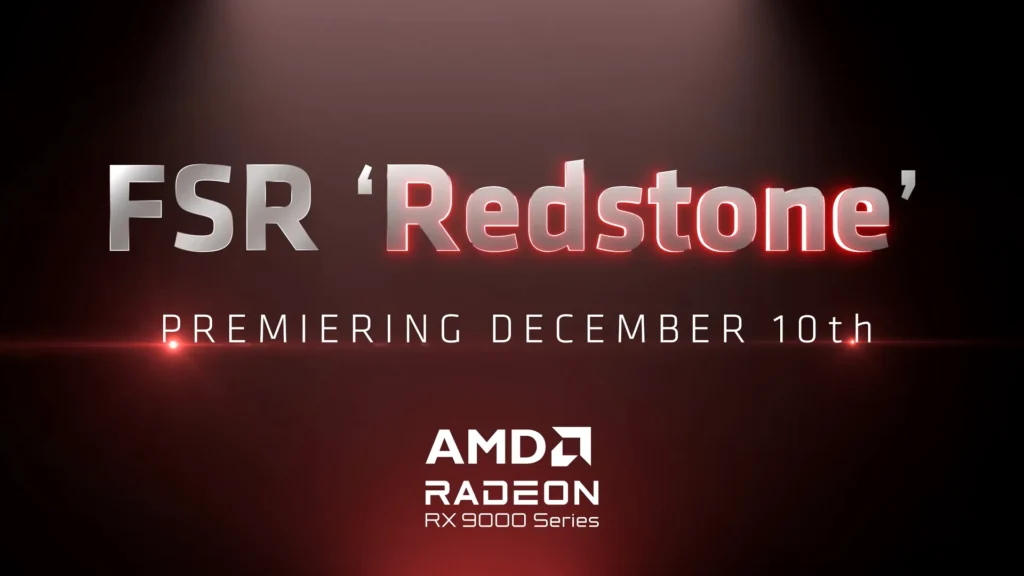
In response to both the accidental leak and the community’s outcry, AMD has begun to clarify its future plans, albeit cautiously. Andrej Zdravkovic, AMD’s President of GPU Technologies, hinted at officially open-sourcing the FSR 4 library as a ‘long-term plan,’ while acknowledging the necessity of keeping the core AI models proprietary to maintain a competitive edge. This move, potentially forced by the August code leak, could streamline developer adoption. Looking further ahead, AMD is championing ‘Project Redstone,’ an ambitious initiative slated for the second half of 2025. Redstone aims to achieve technological parity with NVIDIA’s DLSS 3.5/4 by integrating FSR 4’s AI ML super resolution with new features such as neural radiance caching, AI ML-based Ray Regeneration (functionally similar to DLSS 3.5 Ray Reconstruction), and a new ML-based Frame Generation model that replaces FSR 3’s interpolation. Crucially, AMD has acknowledged the strong community demand for FSR 4 on older hardware, with Zdravkovic offering a subtle ‘hint’ about potentially providing an ‘experimental’ or ‘beta’ version for RDNA 3 GPUs. However, this remains an uncommitted consideration, leaving RDNA 3 owners in a state of hopeful anticipation.
Project Redstone: The Future of AMD’s AI Upscaling (2H 2025)
- AI ML Super Resolution: Enhanced image quality across performance presets (already in FSR 4).
- Neural Radiance Caching: AI ML model learns light bounces to predict and store indirect lighting, reducing ray tracing cost.
- AI ML-based Ray Regeneration: Functionally similar to NVIDIA DLSS 3.5 Ray Reconstruction for improved reflection quality.
- AI ML-based Frame Generation: Replaces FSR 3’s interpolation with a new ML model for more accurate frame doubling.
- Open-Source Plans (Library): AMD hints at open-sourcing the FSR 4 library while keeping core models proprietary.
- Potential RDNA 3 Beta: AMD is considering an ‘experimental’ beta for older RDNA 3 GPUs, though no official commitment.
Final Verdict
AMD’s FSR 4 represents a significant technical leap, finally bringing competitive AI-enhanced upscaling to Radeon GPUs. However, the decision to restrict it to RDNA 4 has ignited a firestorm of community backlash, fueling distrust and accusations of planned obsolescence. While modders have demonstrated the technical feasibility of FSR 4 on older RDNA 3 hardware, albeit with performance caveats, AMD’s cautious stance highlights the delicate balance between quality control, hardware differentiation, and community relations. Project Redstone offers a glimpse into a more competitive future, but the path to widespread adoption and regaining community trust hinges on AMD’s willingness to embrace a more open approach, potentially through official (even if experimental) support for older generations. For now, RDNA 3 owners face a choice between official FSR 3.1, or venturing into the exciting but unsupported world of community-driven FSR 4 mods.
FSR 4 and RDNA 3: Your Questions Answered
What is FSR 4 and how is it different from FSR 3.1?
FSR 4 is AMD’s latest FidelityFX Super Resolution technology, a significant upgrade from FSR 3.1 because it leverages AI Machine Learning (ML) for its upscaling algorithm. Unlike FSR 3.1 which relies on traditional spatial upscaling, FSR 4 uses a ‘Kernel Prediction Network’ to deliver greatly improved image quality and stability, aiming for parity with NVIDIA’s DLSS.
Why is FSR 4 officially exclusive to RDNA 4 GPUs?
AMD states that FSR 4’s ML models are specifically optimized for the FP8 (8-bit floating point) AI accelerators found in RDNA 4 GPUs. Older RDNA 3 cards, while having AI accelerators, lack native FP8 support. Emulating FP8 with FP16 on RDNA 3 can lead to increased computational overhead and performance degradation, which AMD says prevents it from meeting its ‘quality bar’ for official support.
Can I use FSR 4 on my RDNA 3 GPU (e.g., RX 7900 XTX)?
Unofficially, yes. Modders have successfully backported FSR 4 to RDNA 3 GPUs, particularly on Linux via modified Mesa drivers and on Windows using tools like OptiScaler for DLL swapping. However, this comes with a performance penalty (around 20-30% FPS drop in some cases) and may introduce visual artifacts, as it lacks official support or optimization from AMD.
Is AMD planning to open-source FSR 4?
AMD’s President of GPU Technologies, Andrej Zdravkovic, has hinted that open-sourcing the FSR 4 *library* is a ‘long-term plan.’ However, the core AI technology may remain proprietary to maintain a competitive advantage. This comes in the wake of an accidental public leak of FSR 4 code.
What is ‘Project Redstone’?
Project Redstone is AMD’s future extension of FSR, expected in the second half of 2025. It combines FSR 4’s AI ML super resolution with new features like neural radiance caching, AI ML-based Ray Regeneration (similar to DLSS 3.5 Ray Reconstruction), and AI ML-based Frame Generation. Its goal is to achieve technological parity with NVIDIA’s advanced DLSS features.
Will AMD ever officially support FSR 4 on RDNA 3 GPUs?
Officially, it’s ‘currently not in the plan,’ according to AMD executives. However, they have acknowledged the community’s interest and hinted at potentially providing an ‘experimental’ or ‘beta’ version for RDNA 3 in the future. There is no firm commitment at this time.