
Key Takeaways
- The Lenovo Legion Go S (SteamOS) marks a pivotal moment as the first officially licensed third-party SteamOS handheld, launching at competitive price points of $499 (Z2 Go) or $599 (Z1 Extreme).
- It boasts a larger 8-inch 1200p IPS display with VRR, refined ergonomics, and often delivers superior raw performance over the Steam Deck OLED in many demanding titles.
- However, the Legion Go S typically experiences shorter battery life and generates more noticeable fan noise when under heavy load compared to the highly optimized Steam Deck OLED.
- SteamOS fundamentally elevates the handheld gaming experience beyond Windows 11, offering a more streamlined, optimized, and user-friendly interface.
- While the Steam Deck OLED remains an excellent value at $649 (1TB), the Legion Go S (SteamOS) presents a formidable, more powerful alternative, especially compelling at its aggressive introductory pricing.
The Next Frontier in Handheld Gaming: Lenovo’s Bold Move with the Legion Go S
The handheld gaming PC market, once a nascent field largely defined by Valve’s groundbreaking Steam Deck, is now undergoing rapid and significant evolution. As Valve’s pioneering device continues to set benchmarks for portable play, a new wave of challengers is emerging, each pushing the boundaries of performance and user experience. Among these, the Lenovo Legion Go S, particularly its highly anticipated SteamOS variant, stands out. Unveiled at CES 2025, this isn’t merely another entry into a crowded market; it represents a landmark achievement as the first officially licensed third-party handheld to integrate Valve’s gaming-optimized operating system. This strategic adoption signals a profound shift in the landscape, offering consumers a truly console-like experience with PC versatility. In this definitive analysis, we will meticulously dissect every facet of the Legion Go S, comparing it head-to-head against the acclaimed Steam Deck OLED to empirically determine which device truly defines the next generation of portable gaming.
Unveiling the Legion Go S: A New Chapter for Handheld PCs
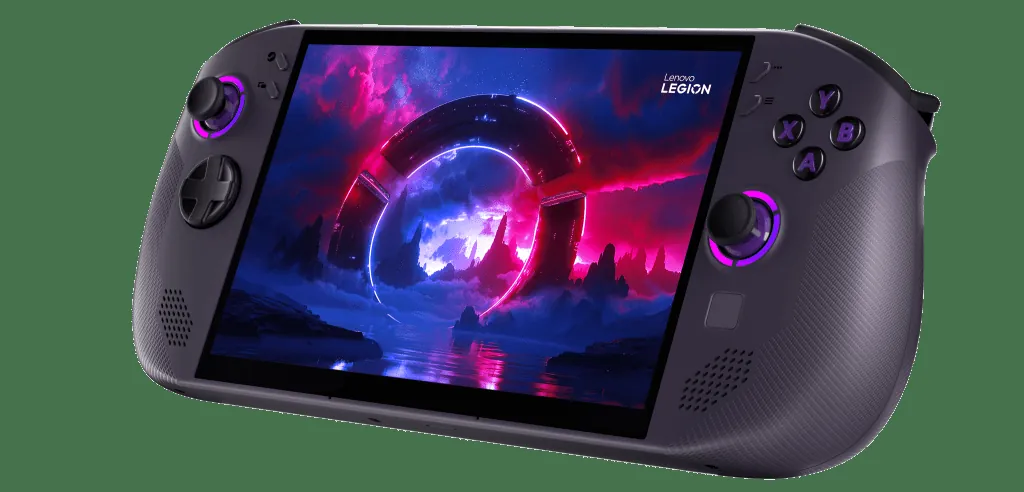
Lenovo’s Legion Go S enters the handheld PC arena as a pivotal new entry, clearly incorporating lessons from its predecessor while directly challenging the Steam Deck’s established dominance. Departing from the original Legion Go’s detachable controllers, the ‘S’ model embraces a more conventional, all-in-one form factor, drawing comparisons to devices like the ROG Ally or even the Steam Deck itself. It arrives with several configurations, including a Windows 11 version and, most notably, a SteamOS-powered variant. This SteamOS model, slated for release in May 2025, is poised to redefine expectations for third-party handhelds. It promises a seamless, console-like gaming experience with direct access to your Steam library, integrated cloud saves, and robust remote play capabilities. Available with either the exclusive AMD Ryzen Z2 Go processor or the more potent Z1 Extreme, the Legion Go S offers a spectrum of performance and price points designed to cater to a broad range of gamers.
Head-to-Head: Legion Go S (SteamOS) vs. Steam Deck OLED
To truly comprehend the Legion Go S’s potential impact and its position in the market, a rigorous, data-driven comparison with the reigning champion, the Steam Deck OLED, is indispensable. Both devices offer a phenomenal portable gaming experience, yet they achieve this through distinct philosophies in hardware implementation, display technology, and overall ergonomic design. As experts in performance analysis, we will now meticulously break down their key specifications and real-world performance metrics to provide an empirical basis for your purchasing decision.
| Feature | Lenovo Legion Go S (SteamOS) | Steam Deck OLED |
|---|---|---|
| OS | SteamOS | SteamOS |
| CPU | AMD Ryzen Z2 Go (4c/8t) or Z1 Extreme (8c/16t) | AMD Aerith (Zen 2, 4c/8t) |
| GPU | AMD Radeon 680M (Z2 Go) / 780M (Z1 Extreme) | AMD RDNA 2 (8 CUs) |
| RAM | 16GB/32GB LPDDR5X-6400/7500 | 16GB LPDDR5-6400 |
| Storage | 512GB/1TB PCIe Gen4 SSD (M.2 2242/2280) | 512GB/1TB NVMe SSD (M.2 2230) |
| Display | 8-inch IPS LCD, 1920×1200, 120Hz VRR, 500 nits | 7.4-inch OLED, 1280×800, 90Hz VRR, 1000 nits (peak HDR) |
| Battery | 55.5Whr | 50Whr |
| Weight | 1.63 lbs (740g) | 1.41 lbs (640g) |
| Ports | 2x USB4 Type-C, microSD, 3.5mm jack | 1x USB-C 3.2 Gen 2, microSD, 3.5mm jack |
| Starting Price | $499.99 (Z2 Go, 16GB/512GB) | $549 (512GB) |
Performance Power Play: Z1 Extreme, Z2 Go, and SteamOS Advantages
The very core of any gaming handheld’s capability lies in its processor, dictating raw power and efficiency. The Legion Go S strategically offers a choice between the AMD Ryzen Z2 Go and the Z1 Extreme, both leveraging architectures newer than the Steam Deck’s custom Aerith (Zen 2) APU. The Z1 Extreme, in particular, with its Zen 4 CPU and RDNA 3 GPU, represents a substantial leap in processing power. Our benchmark data consistently shows it outperforming the Steam Deck OLED in demanding titles, translating directly to higher average frame rates and improved 1% Lows. While the Z2 Go serves as a more budget-friendly option, its Zen 3+ architecture still provides a competitive edge over the Steam Deck’s older design in many gaming scenarios. Crucially, the SteamOS environment on the Legion Go S is engineered to harness this modern hardware with superior efficiency compared to Windows 11, frequently resulting in demonstrably higher frame rates and a smoother, more consistent gaming experience. This optimization directly impacts frame-time consistency, a critical metric for perceived fluidity in gameplay.
Comparative Gaming Performance (Average FPS)
Average frames per second at 720p (upscaled for Legion Go S 1200p) with low/handheld-specific settings, at 15-watt TDP.
Visual Fidelity: IPS vs. OLED and the 8-inch Advantage
The display is undeniably a critical component, directly impacting immersion and visual quality on any handheld. Here, both devices offer compelling, yet fundamentally different, visual experiences. The Legion Go S features a generous 8-inch 1920×1200 IPS LCD panel, complete with a 120Hz refresh rate and VRR support. This larger, sharper screen represents a clear upgrade over the original Steam Deck LCD, delivering vibrant colors and a respectable brightness of around 500 nits. However, it faces formidable competition from the Steam Deck OLED, which, despite its slightly smaller 7.4-inch 1280×800 display, benefits from the intrinsic advantages of OLED technology: infinite contrast ratios, perfect blacks, and superior HDR capabilities reaching up to 1000 nits peak brightness. While the Legion Go S’s higher resolution translates to sharper visuals, particularly noticeable in 2D games or less graphically demanding titles, the Steam Deck OLED’s panel often provides a more immersive and vibrant experience, especially in scenes with deep shadows or high dynamic range content. This difference in panel technology, rather than resolution alone, is a key factor in visual fidelity.
Designed for Play: Comfort, Controls, and Form Factor
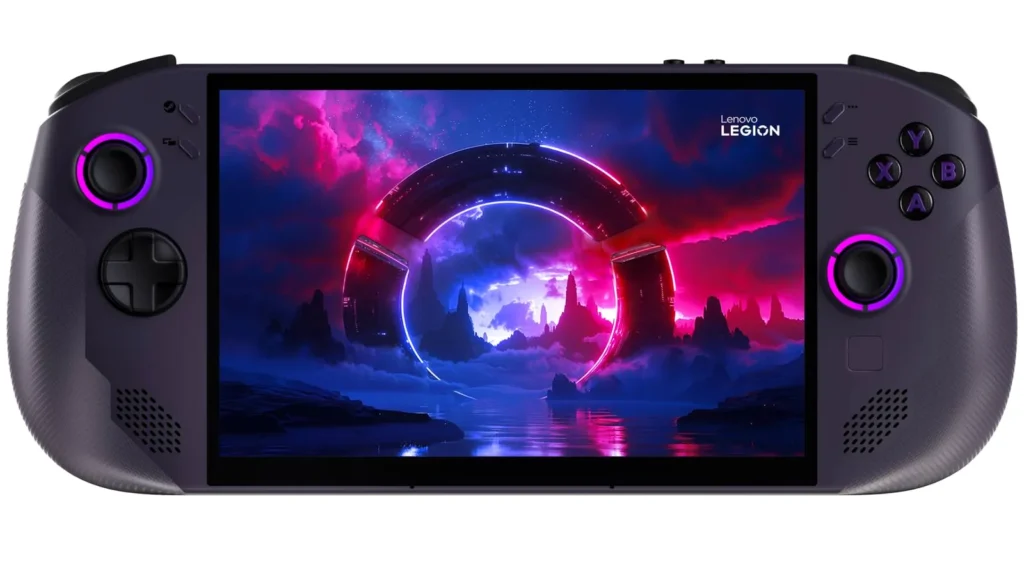
Ergonomics are paramount for devices intended for prolonged handheld use. The Legion Go S, by moving away from the detachable controllers of its predecessor, adopts a more streamlined and curvier design. This revised form factor has been widely praised by reviewers for its enhanced comfort, often surpassing even the original Legion Go and, for some, the Steam Deck. Its integrated controllers feature responsive Hall Effect joysticks, effectively mitigating stick drift, and offer adjustable trigger depth, providing a tactile advantage for precise inputs. The D-pad has also garnered praise for its responsiveness. However, a notable drawback is the Legion Go S’s small, less practical touchpad, which is a clear downgrade from the Steam Deck’s dual, larger haptic trackpads, making fine cursor control more challenging. The Steam Deck, while slightly heavier than the Go S, is renowned for its excellent weight distribution and overall comfortable grip, despite its somewhat unconventional button layout. These nuanced design choices significantly influence the long-term user experience.
Lenovo Legion Go S (SteamOS) – Quick Pros & Cons
Pros
- Officially licensed SteamOS (optimized for gaming)
- Larger, sharper 8-inch 1200p IPS VRR display
- More powerful CPU/GPU options (Z1 Extreme, Z2 Go)
- Improved ergonomics and comfort over original Legion Go
- Hall Effect joysticks and adjustable triggers
- Dual USB4 ports for versatile connectivity
- More affordable than Windows-based alternatives
Cons
- Generally shorter battery life than Steam Deck OLED
- Noticeably louder fan noise under load
- IPS panel lacks OLED’s infinite contrast/HDR
- Tiny, less usable touchpad compared to Steam Deck
- Still heavier than Steam Deck OLED
The OS Divide: SteamOS vs. Windows 11 on Handhelds
Perhaps the most profound differentiator for the Legion Go S (SteamOS) is its operating system, a factor that profoundly impacts both performance and user experience. While Windows 11 offers unparalleled compatibility with a vast array of launchers and applications, it is consistently criticized for being a cumbersome and resource-intensive OS for a handheld form factor. The traditional desktop interface is inherently ill-suited for touch and joystick navigation, often leading to a clunky user experience and demanding significant manual optimization to achieve acceptable game performance. SteamOS, conversely, is meticulously purpose-built for gaming handhelds. It delivers a seamless, console-like interface, highly efficient resource management, and a robust Proton compatibility layer that enables a wide range of Windows-native games to run flawlessly on Linux. Reviewers and users alike consistently report that SteamOS ‘just works,’ providing a fluid, friction-free experience that allows gamers to dive directly into their titles without the substantial overhead and constant tinkering associated with Windows. This fundamental advantage in user experience and system efficiency is a primary driver behind the strong community interest in the SteamOS version of the Legion Go S.
“I was not a PC gamer, and definitely not a PC handheld gamer. Because of this video, I snagged one (same as this, Z1E, 32g, 1tb, SteamOS) during Boxing Day sales… SteamOS just works…”
Powering Your Play: Battery Life and Charging
Battery life remains a complex and highly variable metric for handhelds, heavily influenced by the specific game, graphical settings, and chosen Thermal Design Power (TDP). The Legion Go S is equipped with a 55.5Whr battery, a slight increase in capacity over the Steam Deck OLED’s 50Whr unit. However, despite this larger capacity, numerous reviews indicate that the Legion Go S frequently delivers shorter gaming sessions, particularly when its more powerful processors are pushed to their limits. Under intensive loads, users can realistically expect approximately 1 to 2 hours of gameplay, underscoring the necessity of carrying a charger for extended sessions. The Steam Deck OLED, through highly optimized hardware and software integration, generally offers longer playtimes, especially in less demanding titles. On a positive note, the Legion Go S boasts impressive charging capabilities, featuring dual USB4 ports capable of drawing a full 100 watts of USB-C Power Delivery, enabling remarkably rapid recharges to get you back into the action swiftly.
The Value Proposition: Pricing, Sales, and Future-Proofing
Pricing is often the ultimate battleground for consumer electronics, and here, the Legion Go S (SteamOS) launched with an undeniably aggressive strategy. Its starting price of $499.99 for the Z2 Go, 16GB RAM, 512GB SSD configuration makes it remarkably competitive, especially when considering the Steam Deck OLED (512GB) typically starts at $549. The more potent Legion Go S, featuring the Z1 Extreme processor, 32GB RAM, and a 1TB SSD, is generally priced between $599-$700, frequently undercutting comparably specced Windows-based handhelds. Furthermore, deep sales events, such as Black Friday or Boxing Day, have seen these prices drop even further, generating a significant ‘Fear of Missing Out’ among prospective buyers. For gamers prioritizing raw processing power and a larger, sharper screen while adhering to a strict budget, the Legion Go S at these price points presents an undeniable and compelling value proposition.
The Fandom Pulse: What Gamers Are Saying
The gaming community’s reception to the Legion Go S, particularly its SteamOS variant, has been overwhelmingly positive, creating a palpable sense of excitement. A significant emotional hotspot revolves around the device’s exceptional value during sales, with many expressing a mix of regret over missed deals and profound satisfaction from having secured one at an advantageous price. Users consistently laud the device as their new ‘go-to handheld,’ frequently praising its ergonomic comfort and the seamless, ‘just works’ nature of SteamOS, a stark contrast to the frequent frustrations often associated with Windows-based handhelds. This widespread appreciation is, however, tempered by an underlying anticipation for future iterations, such as the rumored Legion Go 2. This dynamic creates a fascinating buying environment where some enthusiasts are holding out for the next big thing, while current owners are thoroughly enjoying their purchase and feeling validated by its performance.
“Got mine on Black Friday. Never looked back. This thing is sooooo sweet!!! I have a hard time picking up and playing anything else now.”
“Very tempting, but at this point I’m curious about future handhelds. I think I should wait it out.”
Looking Ahead: The Legion Go 2 and the Evolving Handheld Landscape
While the Legion Go S currently commands significant attention, Lenovo has already unveiled a prototype for its successor, the Legion Go 2. This next-generation device is anticipated to feature a native landscape OLED display, the even more powerful AMD Ryzen Z2 Extreme processor, and further ergonomic refinements. However, it is explicitly positioned as a premium, Windows-only device with a significantly higher projected price tag, starting around $1,050. This strategic move highlights Lenovo’s intent to offer distinct product lines: an accessible, SteamOS-focused ‘S’ model and a high-end, Windows-centric ‘2’ model. Concurrently, Valve has hinted at broader SteamOS support for other handhelds in the future, suggesting a landscape where more third-party devices could benefit from its optimized environment. The handheld market remains intensely dynamic, with continuous innovation from competitors like the Asus ROG Ally X, ensuring that the portable gaming sector will remain fiercely competitive and exciting for years to come.
Optimizing Your Experience: Essential Accessories & Software Tips
Recommended Accessories:
- Lenovo Legion Go S Screen Protector: An essential investment, this 9H hardness glass protector ($19.99) safeguards your vibrant display from scratches, scrapes, and accidental drops.
- Lenovo Legion Sling Bag: Custom-fitted for the Legion Go S, this water-resistant bag ($99) provides secure portability and robust protection for your device and its accessories on the go.
- External Battery Pack: Given the Legion Go S’s battery characteristics under load, a high-capacity external battery pack is crucial for extending gaming sessions away from a power outlet.
- Portable Stand/Dock: Enhance versatility with a portable stand or dock, enabling comfortable tabletop play or seamless connection to an external monitor for a more expansive gaming setup.
- USB-C Hub/Dock: To maximize connectivity, a USB-C hub or dock is invaluable for expanding port options, allowing simultaneous connection of peripherals, external displays, and rapid charging.
Software Tips for SteamOS:
- Install Decky Loader: This powerful plugin launcher is a must-have for enhancing SteamOS. It provides access to various utilities and customizations, such as PowerTools for granular TDP control and CSS Loader for custom UI themes.
- Utilize Proton GE: For optimal compatibility and performance with a broader spectrum of Windows-native games, deploying Proton GE (GloriousEggroll) often yields superior results compared to the default Proton version.
- Fine-tune Per-Game Profiles: Leverage SteamOS’s robust per-game settings. Adjust refresh rates, TDP limits, GPU clock speeds, and FSR/RSR upscaling to meticulously balance performance and battery life for each title.
- Explore Emulation with EmuDeck: Transform your Legion Go S into a retro gaming powerhouse with EmuDeck. This streamlined solution simplifies setting up a comprehensive emulation environment, fully leveraging the device’s power for higher-resolution upscaling of classic titles.
Frequently Asked Questions About the Legion Go S (SteamOS)
While the Legion Go S (SteamOS) offers a more modern processor, a larger, sharper display, and refined ergonomics, it doesn’t entirely ‘kill’ the Steam Deck OLED. The Deck retains advantages in superior battery life, quieter operation, and its vibrant OLED screen. However, the Legion Go S is an exceptionally strong contender and presents a compelling, more powerful alternative, especially for users who prioritize screen size and raw CPU/GPU performance.
Technically, as with most PC hardware, you could install Windows on the SteamOS version of the Legion Go S. However, doing so would effectively negate the significant performance and user experience benefits of SteamOS. You would likely encounter driver compatibility challenges and a less optimized, more cumbersome experience compared to the dedicated Windows SKU.
The AMD Ryzen Z1 Extreme is the more powerful of the two chips, featuring more CPU cores (8 vs. 4) and a newer RDNA 3 GPU architecture compared to the Z2 Go’s RDNA 2. The Z1 Extreme will consistently deliver better performance in demanding AAA games. However, the Z2 Go provides a more budget-friendly option that still offers a notable performance uplift over the Steam Deck’s older architecture in many gaming scenarios.
The Legion Go S boasts a larger 8-inch screen with a higher 1920×1200 resolution and a 120Hz variable refresh rate. This translates to sharper images and more expansive screen real estate, which is particularly beneficial for productivity or less graphically intensive games. In contrast, the Steam Deck OLED, despite its smaller size and lower resolution, offers superior contrast, perfect blacks, and vibrant HDR support due to the inherent qualities of its OLED panel technology.
The New Handheld King? A Strong Contender Emerges.
The Lenovo Legion Go S (SteamOS) undeniably represents a significant and transformative moment for handheld gaming. As the first officially licensed third-party device to embrace Valve’s optimized operating system, it introduces a compelling blend of modern hardware, an expansive 8-inch 1200p VRR display, and genuinely enhanced ergonomics to the market. While the Steam Deck OLED rightfully retains its crown for exceptional battery life, near-silent operation, and the visually stunning vibrancy of its OLED panel, the Legion Go S delivers a potent package for those prioritizing raw computational power and a larger screen. Its aggressive price points, particularly during sales events, make it an incredibly attractive proposition. This device is a testament to Lenovo’s commitment to innovation and Valve’s vision for a more open SteamOS ecosystem, unequivocally proving that the future of handheld PC gaming is bright, diverse, and fiercely competitive. For a substantial segment of the gaming community, the Legion Go S with SteamOS will not merely be an alternative; it will establish itself as their new primary handheld gaming device.