
The air in the enthusiast PC space is thick with anticipation. AMD has once again raised the bar, unleashing its formidable Ryzen 9000 series processors, spearheaded by the hybrid powerhouse Ryzen 9 9950X3D. Complementing this silicon marvel are the new Radeon RX 9000 series GPUs, built on the RDNA 4 architecture, promising a potent synergy for next-generation gaming and creative workloads. Yet, beneath the gleaming promise of raw performance lies a critical, ever-present challenge: managing the significant thermal output these cutting-edge components generate. As LoadSyn’s resident expert on power and thermal physics, I’ve seen firsthand how crucial this balance is. This release also lands amidst a community grappling with what many are calling ‘upgrade fatigue,’ questioning the true value proposition of each new generation, especially when paired with the ever-present financial anxiety surrounding component pricing. It’s a complex landscape, and our mission at LoadSyn is to navigate it with clarity and precision.
Key Takeaways
- AMD’s Ryzen 9 9950X3D is a hybrid powerhouse, excelling in both gaming and multi-threaded productivity, but its 170W TDP demands top-tier cooling.
- High-end air coolers like the Noctua NH-D15 G2 and Arctic Freezer 36 remain viable, cost-effective alternatives to AIO liquid coolers for taming Zen 5’s heat.
- Optimizing your cooling solution, including thermal paste application, contact frames, and fan curves, is crucial for sustained boost clocks and long-term system stability.
- Despite community upgrade fatigue, the 9950X3D offers a significant leap for users seeking a definitive, long-term AM5 platform investment, provided cooling is prioritized.
AMD’s Zen 5 & RDNA 4: Powering the Next-Gen Gaming Rig
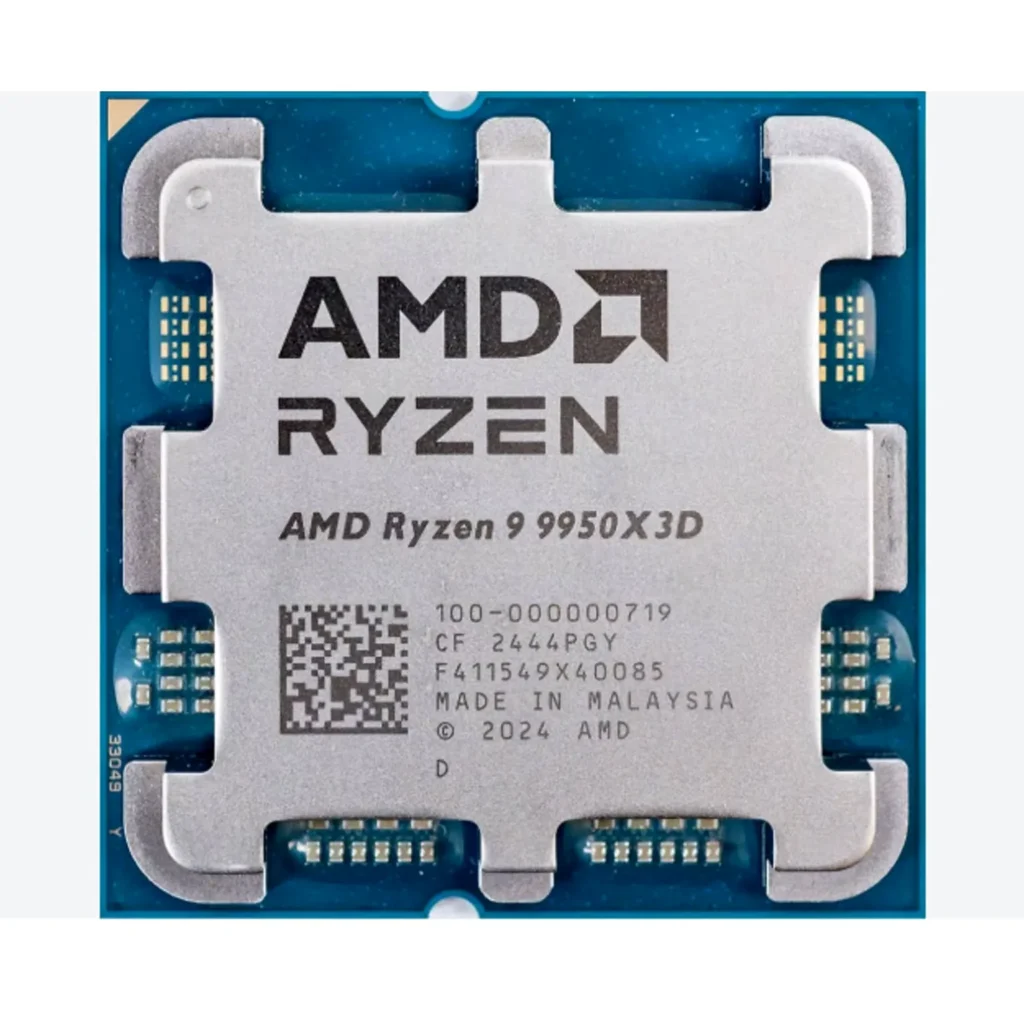
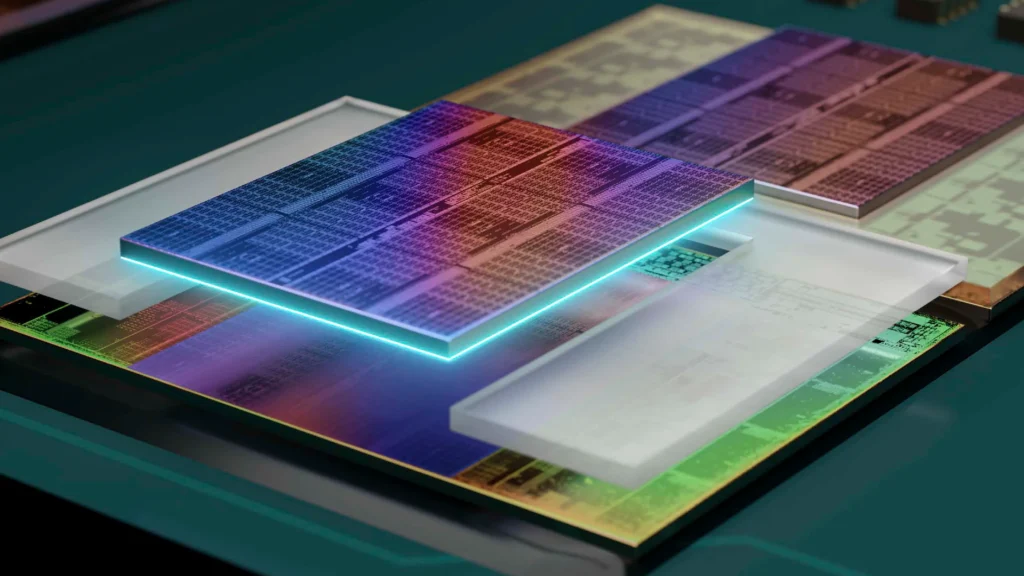
At the heart of AMD’s latest desktop assault is the Ryzen 9 9950X3D, a processor built on the cutting-edge Zen 5 ‘Granite Ridge’ architecture. This formidable chip boasts a 16-core, 32-thread configuration, engineered to dominate both the most demanding games and intensive creative workloads. Its secret weapon is the second-generation 3D V-Cache technology, which stacks an impressive 128MB of L3 cache directly onto one of its core complex dies (CCDs). This asymmetric design strategically optimizes for cache-sensitive gaming performance while allowing the other CCD to push boost clocks up to a blistering 5.7GHz for raw computational power. This innovative approach ensures that whether you’re compiling code, rendering 3D scenes, or diving into the latest AAA titles, the 9950X3D delivers unparalleled responsiveness and throughput. To complete the next-gen ecosystem, AMD also launched its Radeon RX 9000 series graphics cards, powered by the new RDNA 4 architecture. Models like the RX 9070 XT and RX 9070 feature 16GB of VRAM, re-vamped raytracing accelerators, and powerful second-generation AI accelerators. These GPUs are designed to complement the 9950X3D perfectly, offering a potent combination that promises enthusiast-level gaming experiences, supercharged by new technologies like ML-powered FSR 4 upscaling, and accelerated performance for content creation.
AMD Ryzen 9 9950X3D Key Specifications
The Thermal Imperative: Why Robust Cooling is Non-Negotiable
The sheer power of the Ryzen 9 9950X3D, while exhilarating, introduces a significant engineering challenge: heat management. With a substantial Thermal Design Power (TDP) of 170W, capable of spiking to 230W under peak load, this processor runs hot. However, the thermal imperative extends beyond mere wattage. The 9950X3D’s innovative 3D V-Cache design, which physically stacks cache layers directly onto the CPU die, creates a unique and intense thermal density. This means a concentrated hotspot of heat that must be efficiently wicked away from the chip. As detailed in the ‘Limitations’ section of its Wikipedia overview and echoed in the ‘Productivity Analysis’ on pcbuildquiz.com, this high thermal density makes consistent and robust heat dissipation absolutely non-negotiable. Without a top-tier cooling solution, the 9950X3D will inevitably hit its TJ Max of 95°C and begin to throttle, preventing it from maintaining its impressive 5.7GHz boost clocks. For gamers, this means inconsistent frame rates and micro-stutters. For creators, it translates to longer render times and reduced productivity during sustained, demanding workloads. To truly unlock and sustain the hybrid beast’s full potential, cooling must be at the forefront of your build strategy.
Pro Tip: Cooling the Cache Beast
The Ryzen 9 9950X3D’s integrated 3D V-Cache results in unique thermal density. To truly unlock and sustain its 5.7 GHz boost clocks, especially under heavy loads, investing in a high-performance 360mm AIO liquid cooler or a top-tier dual-tower air cooler is not just recommended – it’s essential.
Air vs. AIO: The Cooling Ecosystem Battleground
When confronting the thermal demands of a chip like the Ryzen 9 9950X3D, builders are typically faced with two primary cooling methodologies: high-end air cooling and All-in-One (AIO) liquid cooling. Both have their dedicated proponents and distinct trade-offs, making the choice a critical one for system stability and longevity. High-end air coolers, often characterized by massive dual-tower heatsinks and multiple large fans, have seen incredible advancements in recent years. They offer a compelling blend of cost-effectiveness and reliability, often delivering thermal performance that rivals entry-to-mid-tier AIOs without the added complexity of pumps and coolant. Installation can be simpler for many, as there’s no radiator to mount or tubing to route, and the absence of mechanical pumps means fewer points of failure and zero risk of leaks. However, their sheer size can impede RAM clearance on some motherboards and might not appeal to all aesthetic preferences. AIO liquid coolers, on the other hand, typically offer superior peak thermal capacity, especially with larger 360mm or 420mm radiators, allowing for more aggressive overclocking and sustained high boost clocks. Their compact CPU block design often provides better RAM clearance and a cleaner, more modern aesthetic. Yet, they come with a higher price tag, introduce more potential points of failure (pump, tubing, seals), and can be more complex to install, particularly in smaller cases. Evaluating these factors is essential to choosing the right cooling partner for your 9950X3D.
Air Cooling vs. AIO Liquid Cooling for High-TDP CPUs
Pros
- Lower cost of entry for comparable performance (high-end air)
- Greater reliability (no pump failures, less leak risk)
- Simpler installation for many users
- No risk of coolant evaporation or contamination
- Often quieter at lower loads
Cons
- Can impede RAM clearance on some motherboards
- Larger physical footprint inside the case
- Aesthetics might be less appealing for some builds
- Peak thermal capacity often lower than premium AIOs
- Less effective in very small form factor (SFF) cases
Top-Tier Air Coolers: Taming Zen 5 Without Liquid
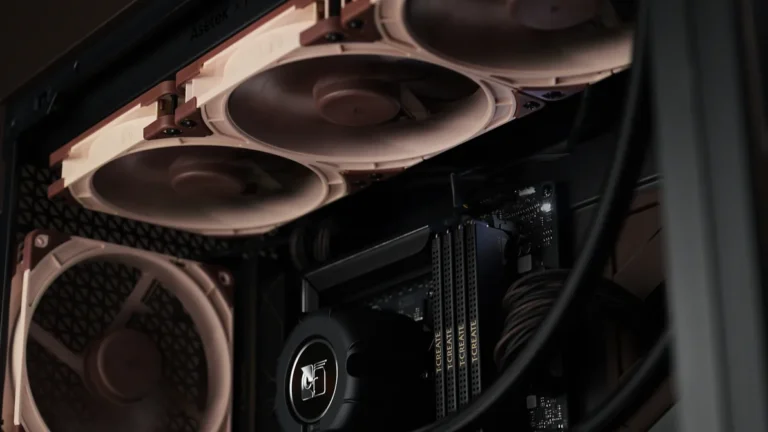
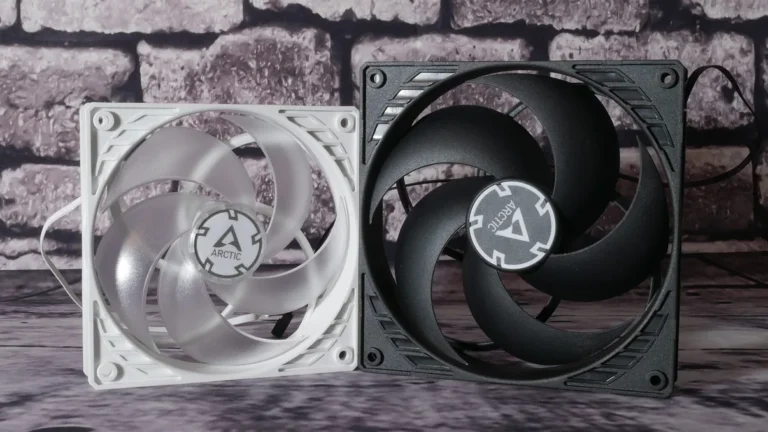
For those who prefer the robust simplicity and proven reliability of air cooling, several flagship models are more than capable of taming the Ryzen 9 9950X3D’s thermal output. These aren’t your average stock coolers; they are meticulously engineered solutions featuring massive dual-tower heatsinks, often paired with multiple high static pressure fans. The sheer surface area of these fin stacks, combined with efficient heat pipe designs, allows for rapid heat transfer away from the CPU Integrated Heat Spreader (IHS). High static pressure fans are crucial here, as they effectively push air through the dense fin arrays, ensuring consistent heat dissipation even under strenuous workloads. Models that stand out in this demanding category include the venerable Noctua NH-D15 G2, a perennial favorite renowned for its exceptional thermal performance and quiet operation. The Arctic Freezer 36 has also emerged as a strong contender, often delivering performance that punches above its price point, making it a fantastic value. For those seeking a balance of performance and acoustics with a sleek aesthetic, the Cooler Master Hyper 612 Apex and the Be Quiet! Dark Rock 5 offer compelling alternatives, all capable of maintaining the 9950X3D’s boost clocks under load.
Recommended Air Coolers for Ryzen 9 9950X3D
- Noctua NH-D15 G2: The undisputed king of air cooling, offering exceptional thermal performance.
- Arctic Freezer 36: A strong contender for value and performance, often outperforming more expensive options.
- Cooler Master Hyper 612 Apex: A robust option known for its balance of performance and acoustics.
- Be Quiet! Dark Rock 5: Delivers premium silent cooling with an elegant aesthetic.
Performance Deep Dive: Gaming, Productivity, and Overclocking
The Ryzen 9 9950X3D truly shines in its ability to master hybrid workloads, deftly balancing its second-generation 3D V-Cache for gaming prowess with its formidable 16 cores and 32 threads for content creation. In gaming benchmarks, the 9950X3D delivers exceptional results, often rivaling and even surpassing the previous-generation Ryzen 7 7800X3D, which has long held the crown as the pure gaming king. While the margin over dedicated gaming X3D chips might be slimmer than previous generational leaps, as AMD’s Donny Woligroski noted, ‘X3D is still the king of the hill, but by a much smaller margin than typically between X3D and non-X3D,’ the 9950X3D’s Zen 5 architecture, with its impressive 16% IPC gain and improved boost residency, closes that gap significantly. Where the 9950X3D truly pulls ahead is in its multi-threaded application performance. For creators, developers, and power users, this chip is a high-torque engine. Its 32 threads remain active and responsive under sustained pressure, making light work of video editing, 3D rendering, and complex compilations. The massive 128MB L3 cache isn’t just for games; it drastically reduces wait times for shader compilation and code processing, ensuring a fluid workflow even when the CPU is fully saturated. Compared to competitor chips like the Intel Core i9-14900K, the 9950X3D often emerges as the superior overall performer, combining top-tier application performance with leading gaming frames. Crucially, achieving and sustaining these high boost clocks and impressive benchmark results hinges entirely on the quality of your cooling solution. Without it, even this powerhouse will be forced to dial back its ambitions.
Ryzen 9 9950X3D vs. Ryzen 5 5600: A Generational Leap
| Feature | AMD Ryzen 9 9950X3D | AMD Ryzen 5 5600 |
|---|---|---|
| Cores / Threads | 16 / 32 | 6 / 12 |
| Boost Clock | 5.7 GHz | 4.4 GHz |
| L3 Cache | 128 MB | 32 MB |
| TDP | 170 W | 65 W |
| Socket | AM5 | AM4 |
| Memory Support | DDR5-5600 | DDR4-3200 |
| Gaming Score (out of 100) | 99 | 46.7 |
| Productivity Score (out of 100) | 100 | 31.1 |
“X3D is still the king of the hill, but by a much smaller margin than typically between X3D and non-X3D.” — Donny Woligroski, AMD Senior Technical Marketing Manager
Beyond the Box: Optimization & The AM5 Ecosystem
Unlocking the full, uncompromising potential of your Zen 5 system, particularly with a demanding chip like the 9950X3D, extends beyond simply installing the hardware. True optimization involves meticulous attention to detail. First, the choice and application of thermal paste are paramount; a high-quality paste applied correctly can shave crucial degrees off your operating temperatures. For enthusiasts, considering a CPU contact frame can further optimize IHS contact with the cooler, ensuring every watt of heat is efficiently transferred. Fine-tuning fan curves in your motherboard’s BIOS or through software is also critical for balancing aggressive cooling with acceptable acoustics, preventing your powerful rig from sounding like a jet engine during a gaming session. For those seeking maximum efficiency without sacrificing too much performance, exploring undervolting strategies can yield impressive results in terms of power consumption and heat generation. Beyond these immediate optimizations, the AM5 platform itself represents a significant investment in long-term viability. Its exclusive support for DDR5 memory, with speeds up to DDR5-5600 natively, provides the high-bandwidth backbone essential for feeding the 9950X3D’s numerous cores. Furthermore, PCIe Gen 5 connectivity for both graphics cards and NVMe storage ensures your system is future-proofed for the next generation of ultra-fast components. As AMD has committed to extended support for the AM5 socket through 2027, users can expect a clear upgrade path for future CPU generations without needing a complete platform overhaul. The complementary Radeon RX 9000 series GPUs further enhance this ecosystem with their second-generation AI accelerators and the innovative FSR 4 upscaling technology, all contributing to a more immersive and efficient computing experience.
The Fandom’s Pulse: Navigating Upgrade Fatigue and Value
It’s impossible to discuss a flagship launch like the Ryzen 9 9950X3D without acknowledging the current pulse of the PC gaming community. There’s a palpable sense of ‘upgrade fatigue’ pervading the market, coupled with significant ‘financial anxiety.’ Many gamers express frustration and even resentment that incremental performance gains, while technically present, often don’t justify the substantial cost of a complete platform upgrade. This sentiment is exacerbated by the price of essential components like DDR5 RAM, which can sometimes rival the CPU itself. As one community member aptly put it, ‘it’s been several years now that every time I think about upgrading I have to go, “I’ll wait until prices stabilize” and some bullshit always happens that makes that but a dream.’ In this context, the Ryzen 9 9950X3D, despite its undisputed performance, isn’t a casual purchase. Its value proposition must be carefully weighed against individual upgrade cycles, existing hardware capabilities, and strict budget constraints. For many, sticking with a capable older system that still delivers a great gaming experience remains a perfectly valid, indeed often prudent, choice. The 9950X3D is a premium product for those seeking the bleeding edge, but it’s vital to recognize that not every gamer needs, or can afford, that level of investment in today’s volatile market.
“It’s been several years now that every time I think about upgrading I have to go, ‘I’ll wait until prices stabilize’ and some bullshit always happens that makes that but a dream.”
Zen 5: A Demanding Powerhouse for the Discerning Enthusiast
AMD’s Ryzen 9 9950X3D stands as a formidable processor, undeniably a top-tier choice for enthusiasts who demand the absolute best in both gaming and multi-threaded productivity. Its Zen 5 architecture, coupled with second-generation 3D V-Cache, delivers a potent blend of speed and efficiency. However, this power comes with a critical caveat: its high thermal output (170W TDP) necessitates a robust, well-planned cooling solution – whether a high-end air cooler or a premium AIO liquid cooler – to ensure consistent, peak performance. For users navigating market instability and upgrade fatigue, the 9950X3D represents a significant investment, but one that firmly plants you on the long-lived AM5 platform with future-proof DDR5 and PCIe 5.0 support. It’s not a casual upgrade, but for those building a no-compromise, future-ready rig, and who are prepared to invest in the entire ecosystem, the 9950X3D delivers on its promise.
Frequently Asked Questions About Ryzen 9 9950X3D & Cooling
Is the Ryzen 9 9950X3D worth upgrading from a Ryzen 7 7800X3D for gaming?
While the 9950X3D offers significant IPC gains and stronger multi-threaded performance, its gaming uplift over a 7800X3D is often marginal, as the 7800X3D remains a gaming king. The 9950X3D’s true value shines for users who also require top-tier productivity performance.
What kind of cooler do I absolutely need for the Ryzen 9 9950X3D?
Due to its 170W TDP and high thermal density from 3D V-Cache, a high-performance 360mm AIO liquid cooler or a flagship dual-tower air cooler (like the Noctua NH-D15 G2 or Arctic Freezer 36) is highly recommended to prevent throttling and maintain boost clocks.
How does the 9950X3D perform in productivity tasks compared to gaming?
The 9950X3D excels in productivity, with its 16 cores and 32 threads delivering exceptional performance in tasks like video editing, 3D rendering, and AI workloads, often surpassing gaming-focused X3D chips and direct competitors.
What is AMD’s future plan for 3D V-Cache technology?
AMD is ‘super committed’ to 3D V-Cache, with ‘really, really cool updates’ planned. Future iterations may feature improved thermal characteristics, potentially allowing for L3 cache on both CCDs in higher-core count chips, and further bandwidth improvements.
Are there integrated graphics on the Ryzen 9 9950X3D?
Yes, the Ryzen 9 9950X3D includes integrated Radeon Graphics. While not for serious gaming, they serve as a useful fallback for troubleshooting or basic display needs without a discrete GPU.