
Key Takeaways
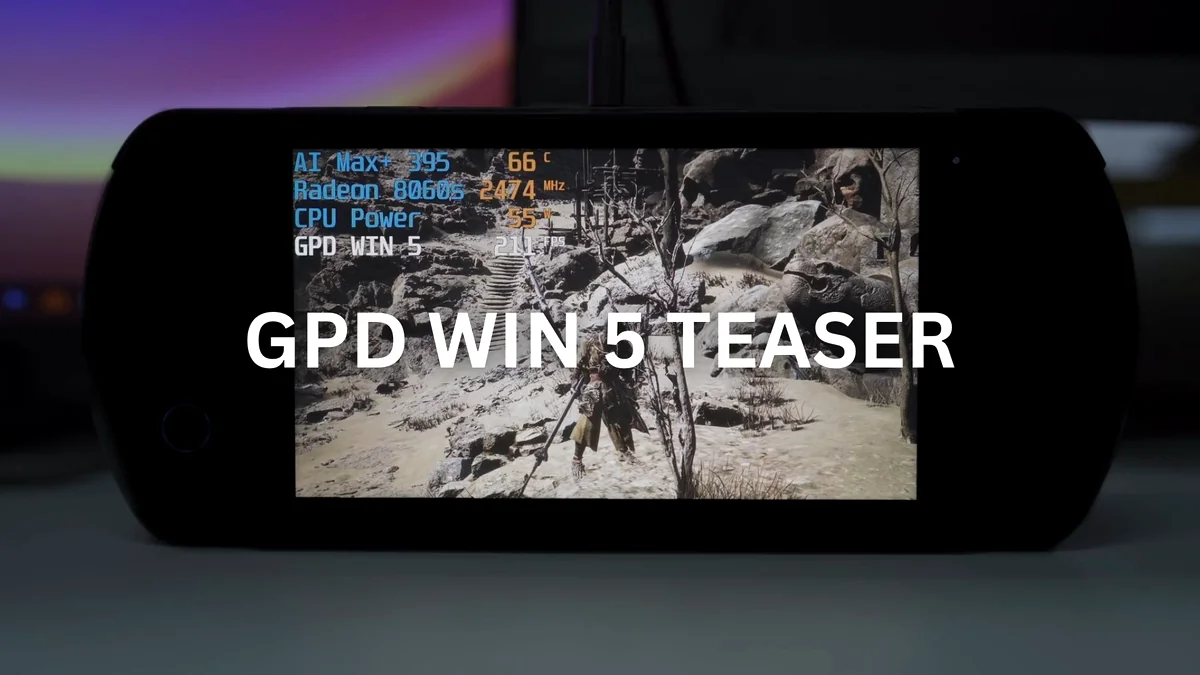
- The GPD Win 5 is powered by the AMD Ryzen AI Max+ 395 (Strix Halo), featuring 16 Zen 5 cores and the Radeon 8060S (40 CUs), delivering performance approaching an RTX 4070 laptop GPU.
- The device has no internal battery; it relies on a proprietary, clip-on 80Wh external ‘backpack’ battery, a controversial choice made to maximize space for the 120W Frostwind cooling system.
- Initial performance benchmarks show desktop-class results (e.g., 9,680 in 3DMark Time Spy), but the 75W TDP limits battery life to roughly one hour under heavy load.
- The estimated global price point ($1,800 – $2,300) positions it as a niche, ultra-enthusiast device, facing strong community rejection over value compared to integrated competitors.
The 75W Paradox: Unpacking the Strix Halo Engine
The GPD Win 5 is not just an incremental update; it is a full architectural pivot built around AMD’s flagship mobile APU, the ‘Strix Halo.’ We are looking at the first handheld to truly aim for desktop-class graphics performance, integrating the 16-core/32-thread Ryzen AI Max+ 395 and the 40 CU Radeon 8060S. This hardware foundation is what allows GPD to push the Thermal Design Power (TDP) up to an unprecedented 75W in a handheld form factor. For context, this is more than double the power envelope of most competitors. This section breaks down the raw specifications—the Zen 5 cores and RDNA 3.5 architecture—that make the Win 5 a technical marvel capable of rivaling an RTX 4070 laptop GPU in synthetic benchmarks.
GPD Win 5: Flagship Technical Specifications
- APU (Flagship)
- AMD Ryzen AI Max+ 395 (16C/32T, Zen 5)
- iGPU
- Radeon 8060S (40 CUs, RDNA 3.5, up to 2.9 GHz)
- Max TDP (Configurable)
- 45W – 75W (Peak 85W)
- Memory
- Up to 128GB LPDDR5x-8000 (Quad-Channel)
- Display
- 7-inch, 1920×1080, 120Hz VRR, 6ms Response, FreeSync Premium
- Storage
- M.2 2280 PCIe Gen4 (up to 4TB) + Mini SSD Slot + MicroSD
- Cooling System
- Frostwind Architecture: Dual Fans, Quad Heat Pipes (120W capacity)
- Connectivity
- USB4 (40Gbps, 100W PD), Wi-Fi 6E, Bluetooth 5.3
Simulated Performance: GPD Win 5 (75W) vs. Competition (30W)
Compare the GPD Win 5 (Ryzen AI Max+ 395) against the ROG Ally X (Z1 Extreme) and Steam Deck OLED (Custom APU) using 3DMark Time Spy Graphics Score and estimated ‘Black Myth: Wukong’ 1080p High FPS.
The Engineering Compromise: Why GPD Ditched the Internal Battery
The single most polarizing design choice in the GPD Win 5 is the complete omission of an internal battery. This wasn’t an oversight; it was a calculated sacrifice rooted in the physics of managing 75W of sustained thermal load. The substantial volume saved by removing the integrated power pack was dedicated entirely to the Frostwind Cooling Architecture—a massive dual-fan, quad-heatpipe system designed to manage thermal loads up to 120W. For GPD, the mandate was thermal stability at 75W and above, and the only way to achieve that was to prioritize heat dissipation space over integrated portability. The result is a device that is essentially a tethered mini-PC, requiring either the 180W DC adapter or the proprietary, clip-on 80Wh external battery ‘backpack’ via FlexPower technology for any mobile use.
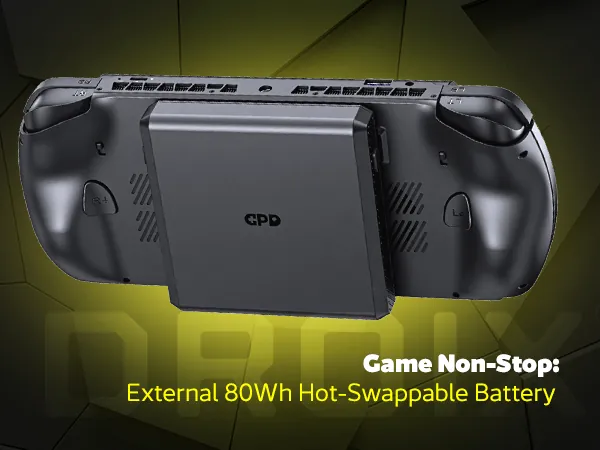
This device is the reincarnation of the Sega Game Gear. Strong performance, high power drain, and ultimately, it can only live next to a wall socket. The battery design is a major problem; even ignoring the weight, it covers at least half of the fan vents.
The Usability Crisis: Weight, Noise, and Value Proposition
The High-End Handheld Trade-Off: Win 5 vs. Integrated Competitors
| Metric | GPD Win 5 (w/ Battery) | ROG Ally X | Steam Deck OLED |
|---|---|---|---|
| Max TDP (W) | 75W | 30W | 15W |
| Total Weight (g) | 1135g | 678g | 640g |
| Battery Capacity (Wh) | 80Wh (External) | 80Wh (Internal) | 50Wh (Internal) |
| Battery Life @ Max Load (Est.) | ~1.1 Hours | ~2.5 Hours | ~3.5 Hours |
| Est. Global Price (Base) | $1800+ | $799 – $999 | $549 – $649 |
Pros: Engineering Excellence
- Unmatched Handheld Performance: Desktop-class frame rates (RTX 4070 territory) thanks to 75W Strix Halo.
- Exceptional Cooling: 120W thermal capacity ensures minimal throttling at high TDPs.
- Massive Memory/Storage: Up to 128GB RAM and triple storage options (M.2, Mini SSD, MicroSD).
- Premium Controls: Hall effect triggers/joysticks and 120Hz VRR display.
Cons: Practicality Failure
- Prohibitive Cost: Global pricing places it far outside the mainstream handheld market.
- Extreme Weight: Weighs 1.135 kg with the necessary external battery attached.
- Fundamental Portability Loss: Design necessitates being plugged in for optimal use; mobile use is severely limited.
- High Noise/Heat: Pushing 75W+ will inevitably lead to substantial fan noise.
Final Verdict: A Niche Masterpiece for Frame Rate Absolutists
The GPD Win 5 is a monumental achievement in power engineering, successfully cramming a desktop-class APU into a portable chassis. However, GPD’s singular pursuit of maximum frame rates has come at the expense of every core tenet of handheld gaming: integrated portability, reasonable weight, and affordability. The Win 5 is not designed for the average user or even the average enthusiast; it is a hyper-specialized instrument built for the frame rate absolutist—the user who demands 160 FPS in Black Myth: Wukong and is willing to pay a premium price while tethered to a wall socket. It’s a technical showcase that proves what’s possible when thermal limits are ignored, but ultimately fails to deliver a practical, integrated handheld experience.
Frequently Asked Questions
Does the GPD Win 5 have an internal keyboard?
No. Unlike previous GPD Win models, the Win 5 completely omits the physical QWERTY keyboard in favor of enhanced gaming controls and internal space dedicated to the powerful Frostwind cooling system.
When is the GPD Win 5 release date?
The official global release is anticipated for October 17, 2025, following its official showcase at ChinaJoy 2025.
How much does the GPD Win 5 cost?
Chinese pricing starts around $1,221 for the base model, but high-end configurations are estimated to sell globally between $1,800 and $2,300, depending on RAM and storage.