
Key Takeaways for the Budget Buyer
- The Intel Arc B580 ($249) is the hardware king of the budget segment, providing an unmatched 12GB of VRAM and superior raw raster performance over the RTX 5050. However, this performance hinges on disabling Ray Tracing entirely.
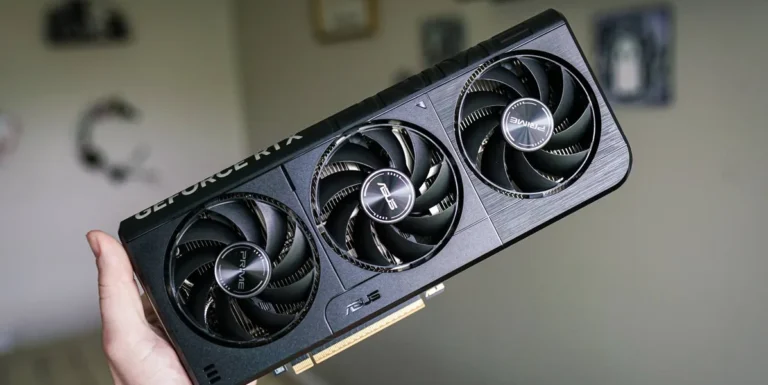
- The NVIDIA RTX 5050 ($249) remains the safest, most mature ecosystem choice. Its reliance on DLSS 4 Multi Frame Generation (MFG) is crucial for achieving viable 1440p frame rates, compensating for its lower native power.
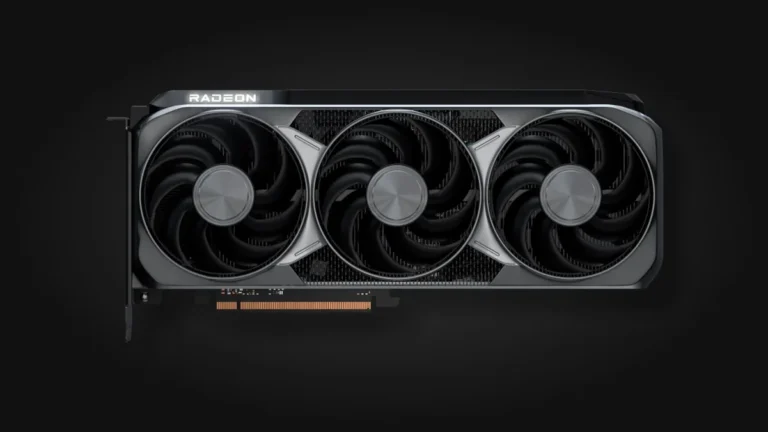
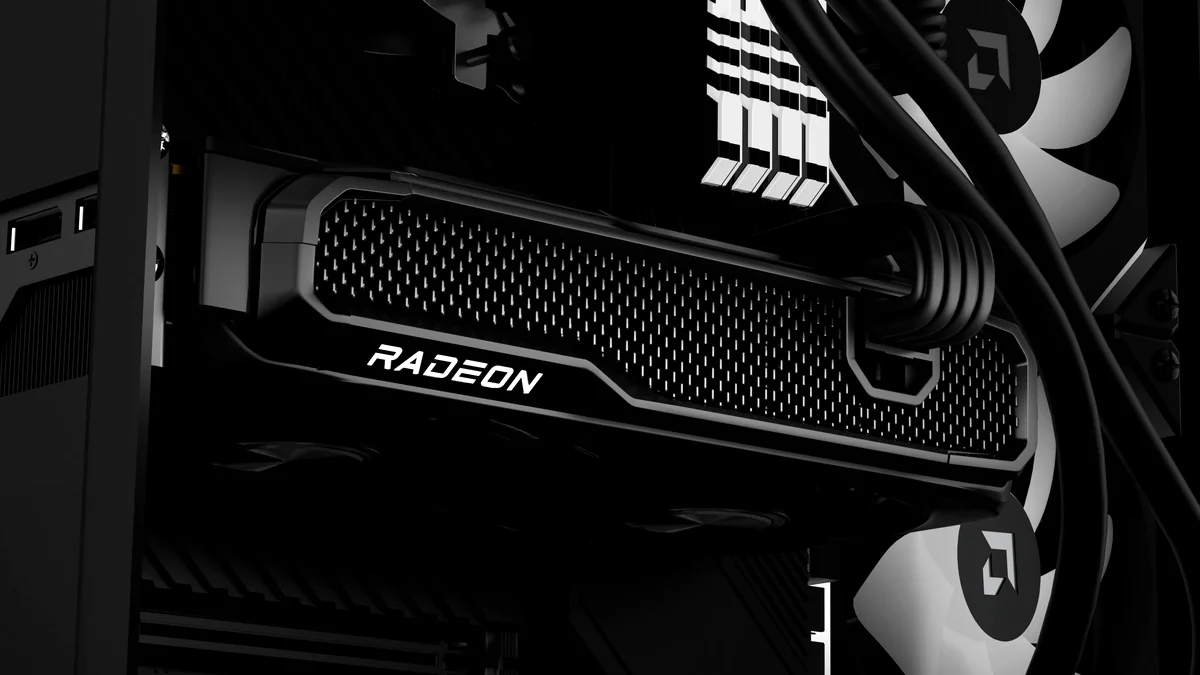
- If your budget stretches to $349, the AMD RX 9060 XT (16GB) is the definitive performance spoiler. Built on the efficient RDNA 4 architecture, it delivers the best native rasterization and VRAM longevity in the sub-$350 class.
- Critical Alert: The Arc B580 currently suffers from a known power reporting anomaly where its 190W Total Board Power (TBP) limit is misinterpreted by software, often capping performance around 170W. Intel is actively deploying driver fixes to unlock the card’s full potential.
The Contenders: Specifications Deconstructed
Budget GPU Spec Sheet: RTX 5050 vs. Arc B580 vs. RX 9060 XT (16GB)
| Feature | NVIDIA RTX 5050 | Intel Arc B580 | AMD RX 9060 XT (16GB) |
|---|---|---|---|
| MSRP | $249 | $249 | $349 |
| Architecture | Blackwell (GB207) | Battlemage (BMG-G21) | RDNA 4 (Navi 44) |
| VRAM / Bus | 8GB GDDR6 / 128-bit | 12GB GDDR6 / 192-bit | 16GB GDDR6 / 128-bit |
| CUDA/Shaders/CUs | 2,560 CUDA Cores | 2,560 Shading Units | 2,048 Shaders (32 CUs) |
| TDP / TBP | 130W TDP | 190W TBP (Current 170W Cap) | 160W TBP |
| Upscaling Tech | DLSS 4 (MFG) | XeSS (Xe Low Latency) | FSR 4 (Redstone Update Pending) |
The Performance Reality: 1080p and 1440p Benchmarks
Native Rasterization Performance (Average FPS)
1080p Ultra (Average of 40 Titles)
1440p High (VRAM Stress Test)
The raw performance data confirms that for native 1080p and 1440p rasterization, the $249 RTX 5050 is the weakest link. This is especially true at 1440p, where its 8GB VRAM buffer becomes a significant liability under high-texture loads. The Intel Arc B580, leveraging its generous 12GB of VRAM and higher bandwidth, delivers a crucial performance uplift, averaging 61 FPS at 1440p—a necessary edge for budget 60 FPS gaming. However, the true raster champion is the $349 AMD RX 9060 XT 16GB, which consistently outperforms both rivals by 15-20% at 1440p, solidifying its position as the best pure-performance card in the sub-$350 segment. This stark performance hierarchy means that the RTX 5050 user is effectively forced into relying on Nvidia’s proprietary software suite just to achieve playable frame rates, shifting the value calculation entirely away from raw hardware.
The Ecosystem Divide: Ray Tracing and Frame Generation
Cyberpunk 2077 Performance (1440p, RT Ultra, Upscaling to Quality)
Native RT Performance (Without Upscaling)
Upscaling + Frame Generation (DLSS 4 MFG/FSR 4/XeSS)
Ecosystem Maturity: DLSS 4 vs. FSR 4 vs. XeSS
✔ Strengths & Pros
- NVIDIA DLSS 4: This is the core strength of the Blackwell architecture. DLSS 4 Multi Frame Generation (MFG) offers unmatched visual fidelity and can generate up to three extra frames per rendered frame on 50-series hardware, resulting in massive FPS gains. It also benefits from the industry’s best driver stability.
- AMD FSR 4: FSR’s greatest asset is its open-source nature and wide compatibility across various hardware. The promised ‘Redstone’ update later this year is critical, bringing advanced machine learning features such as neural radiance caching, signaling AMD’s commitment to closing the AI gap.
- Intel XeSS: XeSS has seen rapid, consistent driver improvements. Leveraging its XMX cores, XeSS provides a surprisingly strong performance uplift in supported titles, making the Arc B580 a highly competent upscaling card—as long as Ray Tracing is off.
✘ Weaknesses & Cons
- NVIDIA DLSS 4: The proprietary nature of DLSS means it is locked exclusively to RTX hardware, contributing to the price premium that frustrates many budget-conscious gamers.
- AMD FSR 4: Despite the FSR 4 launch, deep community anxiety persists regarding long-term driver support, often citing RDNA 2 abandonment concerns. Furthermore, achieving optimal performance often relies on third-party tools (like Optiscaler) for broader compatibility, indicating a gap in native ecosystem maturity.
- Intel XeSS: Game adoption for XeSS still lags significantly behind the industry leaders (DLSS and FSR). Crucially, the Arc B580’s dedicated Ray Tracing cores are markedly weaker than both competitors, making RT gaming nearly unplayable without heavy sacrifices.
Critical Deep Dive: The Intel Arc B580’s Power Anomaly
A complex and pervasive technical issue currently impacts the Intel Arc B580: the card often fails to utilize its advertised 190W Total Board Power (TBP) limit, frequently stalling around 170W even during high-demand stress tests or aggressive overclocking attempts. This phenomenon is not attributable to a weak power supply but stems from a critical software reporting discrepancy. Intel’s monitoring tools report Total Graphics Power (TGP), which specifically excludes the power drawn through the PCIe slot, whereas the true 190W limit is the TBP (TGP + PCIe slot power). Consequently, when third-party monitoring tools report a low power draw, the card is actually hitting a rigid, internal software-enforced ceiling that limits its maximum utilization. While Intel’s development team is actively working on driver optimizations to unlock this latent power, this existing ceiling significantly restricts the B580’s out-of-the-box performance potential.
CRITICAL WARNING: Arc B580 Power Draw
If you purchase the Intel Arc B580 expecting 190W performance out of the box, be aware that current drivers limit utilization, often capping performance at 170W TBP. This is a known, non-game-specific issue that affects every B580 unit. While Intel is addressing this through ongoing driver updates, this temporary ceiling means the Arc B580’s benchmark lead over the RTX 5050 might be slightly smaller in real-world, high-stress gaming until the necessary optimizations are deployed.
The Cornerstone Verdict: Who Should Buy What?
Choosing Your $250–$350 Champion
The budget GPU market is fiercely competitive, forcing buyers to prioritize one feature above all others. There is no single winner. The RTX 5050 is the ‘Ecosystem Choice,’ the Arc B580 is the ‘Value Choice,’ and the RX 9060 XT is the ‘Performance Choice.’ Your decision hinges entirely on your tolerance for software risk, your willingness to pay a premium for features, and your reliance on AI upscaling.
- If you are the ‘Ecosystem Loyalist’ ($249): Buy the NVIDIA RTX 5050. You sacrifice raw power and VRAM for the best-in-class upscaling (DLSS 4 MFG), guaranteed driver maturity, and superior Ray Tracing performance. This is the safest long-term bet, especially if competitive gaming latency (Reflex) is a priority.
- If you are the ‘Value Hunter’ ($249): Buy the Intel Arc B580. You get the best VRAM (12GB) and superior raw raster performance over the 5050 for the same price. You must accept the current power throttling issues and weak RT performance, but the card offers the best raw hardware for the money and the highest potential upside once driver fixes land.
- If you are the ‘Pure Raster Gamer’ ($349): Buy the AMD Radeon RX 9060 XT 16GB. Its superior RDNA 4 architecture, massive 16GB VRAM, and efficient 160W TDP make it the clear winner for native 1440p gaming, provided you are willing to pay the $100 premium and trust AMD’s FSR roadmap and future driver commitment.
Frequently Asked Questions
Is 8GB of VRAM (on the RTX 5050) enough for 1440p gaming in 2025?
No, not without heavy reliance on DLSS 4. While DLSS 4’s Multi Frame Generation can boost FPS significantly, 8GB is proving to be a bottleneck in demanding 1440p titles, forcing texture quality compromises. For future-proofing against texture memory pressure, the 12GB Arc B580 or 16GB RX 9060 XT provides a much safer buffer.
How concerned should I be about AMD’s driver longevity?
The Fandom Pulse shows high anxiety. While current RDNA 4 drivers are strong and efficient, the community distrusts AMD’s long-term commitment, citing RDNA 2 support concerns that suggest performance may not scale consistently over the card’s lifespan. If longevity and consistent performance scaling are your primary priority, Nvidia’s ecosystem remains the most trusted choice due to its proprietary, highly optimized driver pipeline.
Does the RTX 5050’s PCIe 5.0 x8 interface bottleneck performance?
While the RX 9060 XT utilizes a full PCIe 5.0 x16 interface, the RTX 5050’s x8 interface is generally not a bottleneck on modern PCIe 5.0 motherboards. However, performance can be severely impacted—potentially halved—if the card is installed on an older PCIe 4.0 x16 slot that is forced to run at x8 speeds, making motherboard compatibility a crucial factor for budget builders.