
Key Takeaways
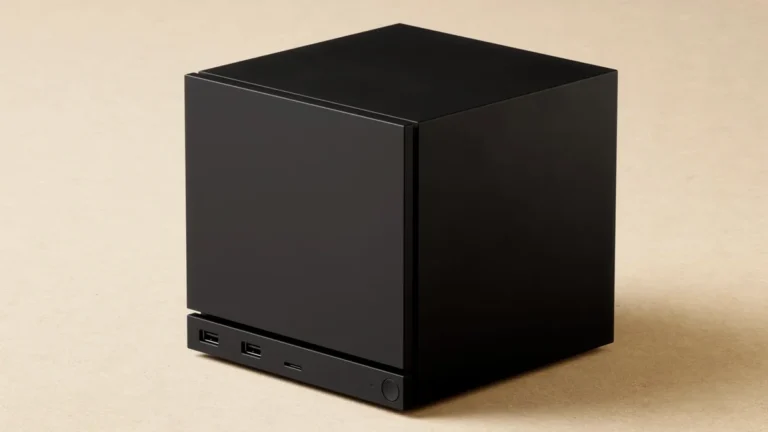
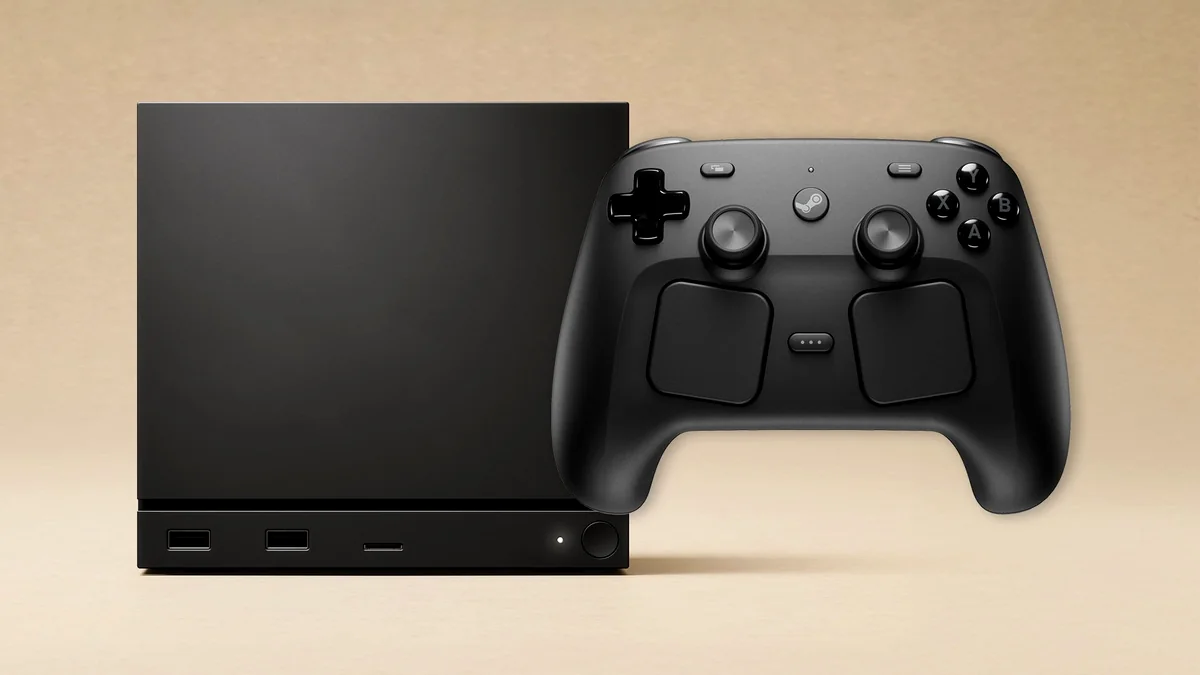
- The Steam Machine is a fixed-spec HTPC targeting 4K/60fps (via FSR), positioned between the Xbox Series S and PS5, but constrained by 8GB of GDDR6 VRAM.
- The Steam Frame is a lightweight, dual-function VR headset (PC streaming and standalone Arm gaming) utilizing cutting-edge foveated streaming via Wi-Fi 7.
- Valve’s core technical breakthrough is the seamless integration of Proton and the Fex emulator, allowing Windows x86 games to run on Arm-based hardware (like the Steam Frame) with minimal overhead.
- The new Steam Controller (codenamed ‘Triton’) features next-gen TMR (Hall Effect alternative) joysticks and ‘Grip Sense’ motion control.
The Architecture of Interoperability: Valve’s Unified Gaming Ecosystem
Valve has simultaneously launched three pieces of hardware—the Steam Frame, the Steam Machine, and a new Steam Controller—signaling a major push into the living room and VR space. But this launch is less about the hardware itself and more about the software philosophy underpinning it. By leveraging SteamOS, Proton, and a sophisticated x86-to-Arm translation layer, Valve is attempting to create a truly unified, open-source gaming platform where game libraries are fully interoperable via simple tools like microSD card transfer. This foundational engineering effort is being hailed by the community as a major victory for openness, directly contrasting the restrictive ‘walled garden’ approaches of competitors like Meta and Apple.
The Living Room PC Reborn: Analyzing the New Steam Machine
Steam Machine (2026) Core Specifications
- CPU
- AMD Zen 4 (6 Cores/12 Threads, up to 4.8GHz)
- GPU
- AMD RDNA 3 (28 Compute Units, up to 2.45GHz, likely Navi 33 derivative)
- System RAM
- 16GB DDR5 (User Replaceable SODIMM)
- VRAM
- 8GB GDDR6
- Storage
- 512GB or 2TB NVMe (User Upgradable M.2 2230/2280)
- Target Performance
- 4K/60 FPS (Utilizing AMD FSR)
Engineering Constraint: The 8GB VRAM Wall
While the Steam Machine targets 4K/60 FPS, the 8GB GDDR6 VRAM limit is a significant constraint noted by Valve engineers, attributed to ‘affordability.’ For modern AAA titles, this will necessitate texture quality reductions and the avoidance of high-fidelity ray tracing. This constraint places a high burden on SteamOS driver-level optimizations and FSR implementation to justify the final MSRP against its console competitors.
Steam Machine vs. Console Competitors
| Feature | Steam Machine | PlayStation 5 | Xbox Series S |
|---|---|---|---|
| CPU Architecture | Zen 4 (6C) | Zen 2 (8C) | Zen 2 (8C) |
| GPU Compute Units | 28 CUs | 36 CUs | 20 CUs |
| Total System Memory | 16GB DDR5 | 16GB GDDR6 | 10GB GDDR6 |
| VRAM (Dedicated) | 8GB GDDR6 | 16GB GDDR6 (Shared) | 8GB (Fast) / 2GB (Slow) |
| Target Resolution/Framerate | 4K/60 (FSR) | 4K/60-120 | 1440p/60-120 |
The VR Trojan Horse: Steam Frame’s Foveated Future

Used for highly precise foveated rendering and streaming.
Enables ultra-low latency foveated streaming from a connected PC.
Designed for long-term comfort, weighing only 185g.
‘allows you to play windows based x86 games on your linux based arm vr headset’ is a great way of putting how absurd this achievement is.
The Engineering Core: x86 on Arm via Proton and Fex
The true genius of this launch lies in Valve’s software stack. To achieve standalone gaming on the Arm-based Steam Frame while maintaining access to the massive x86 Windows library, Valve is leveraging years of quiet investment in open-source tools. The process involves Proton (compiled for Arm) handling the API translation (DirectX to Vulkan), while the Fex emulator handles the actual x86 instruction translation. Crucially, the system minimizes emulation overhead by only translating the core game logic, allowing API calls and SteamOS functions to run natively on Arm. This architectural finesse ensures performance remains high enough to make this cross-architecture dream viable, positioning the Steam Frame as a Trojan horse for Valve’s unified software philosophy.
The Input Layer: TMR Sensors and the ‘Triton’ Controller
New Steam Controller (Triton) Features
- TMR (Tunneling Magnetoresistance) Joysticks: A next-generation Hall Effect alternative promising superior longevity and responsiveness compared to traditional potentiometers. This effectively eliminates stick drift issues.
- ‘Grip Sense’ Function: Enables gyroscopic motion control only when the grips are actively held, solving accidental input issues that plagued prior gyro implementations.
- Integrated 2.4GHz Receiver Puck: Allows instant, dedicated, low-latency pairing with the Steam Machine (and other devices), ensuring a stable connection crucial for competitive play.
- System Wake Functionality: The controller can instantly wake the Steam Machine from a sleep state, resuming frozen games mid-session, mirroring the seamless experience of the Steam Deck.
Ecosystem Assessment: Strengths and Weaknesses
Strengths (Pros)
- Cross-Architecture Compatibility (seamlessly running x86 games on Arm VR).
- Unified SteamOS UI/UX across all devices (Deck, Machine, Frame).
- Open, non-proprietary platform philosophy, winning community support.
- Innovative VR tech (Foveated Streaming, ultra-light 185g weight).
- User-serviceable components (RAM, Storage) on the Steam Machine.
Weaknesses (Cons)
- Steam Machine’s 8GB VRAM limit for high-fidelity 4K AAA gaming.
- Reliance on Linux browsers for streaming services DRM (a potential usability hurdle for non-gaming media).
- Pricing remains unannounced, raising concerns due to component cost increases in 2025.
- Internal storage upgrades on Deck/Machine are technically complex (requiring cloning of 2230 SSDs).
Final Verdict
Valve’s 2026 hardware push is fundamentally different from their fragmented 2015 Steam Machine attempt. This time, the hardware is merely a vehicle for a remarkably mature software ecosystem. The true victory is the seamless x86-to-Arm translation layer, which guarantees the longevity and interoperability of the Steam library across any future form factor—be it a dedicated HTPC, a handheld, or a lightweight VR headset. While the Steam Machine’s 8GB VRAM is a clear compromise made for affordability, the overall strategy confirms Valve’s position as the ethical and engineering leader in PC gaming, delivering boundary-pushing technology without sacrificing user freedom.
Frequently Asked Questions
How does the microSD card interoperability work across the Steam Deck, Machine, and Frame?
Valve engineers confirmed that the entire game catalog is fully interoperable. Users can install games onto a microSD card and physically move that card between the Steam Deck, Steam Machine, and Steam Frame, making the library instantly available on the new device without re-downloading.
Is the internal NVMe storage much faster than running games from a microSD card?
Yes, the internal NVMe drive is significantly faster. However, Valve engineers stated that the load times from high-speed SDXC cards (up to 2TB supported) are still ‘very good’ and acceptable for gaming, making the external card the recommended method for storage expansion and library portability.
What is the ‘Steam Machine Verified’ tag?
This tag will denote software that has been formally tested for compatibility with the Steam Machine’s specific hardware profile (including the Proton translation layer) and full support for the new Steam Controller. This ensures a consistent, high-quality living room experience.