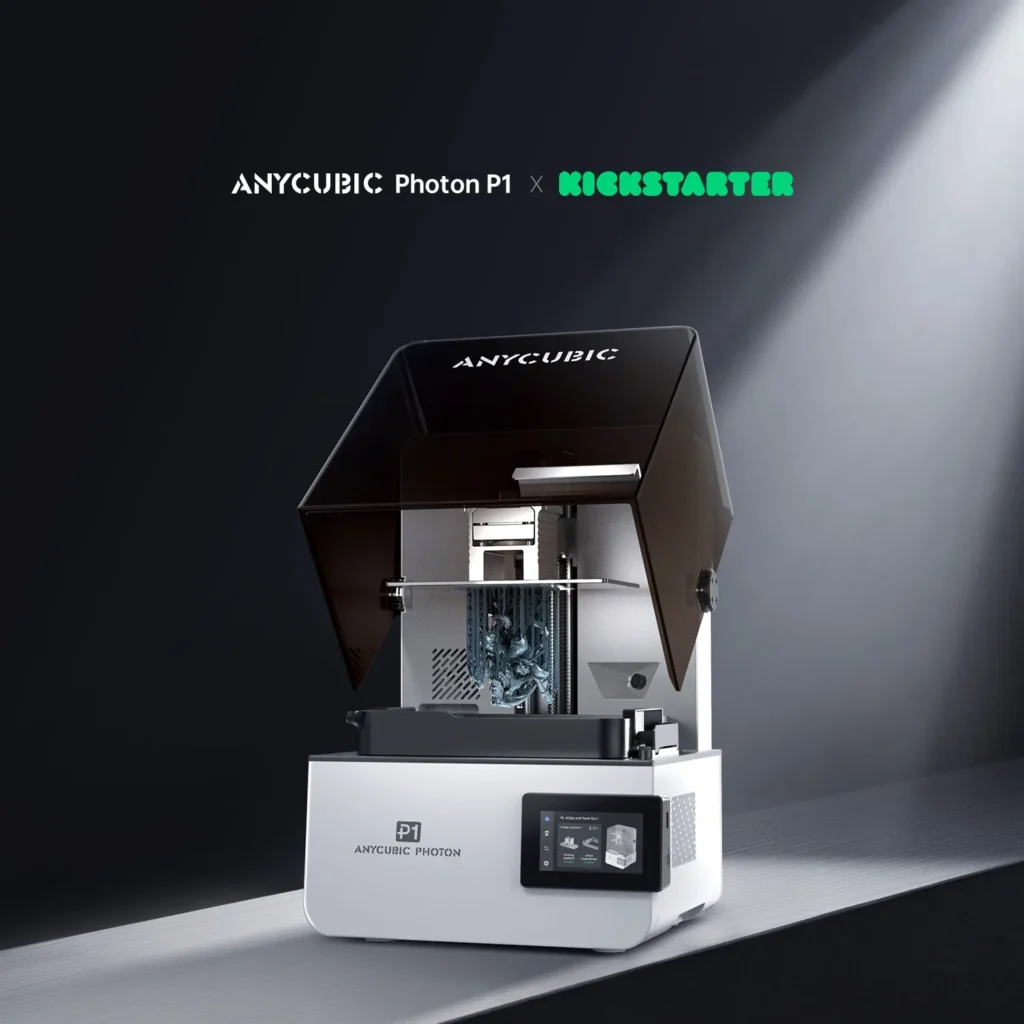
The recent unveiling of the Anycubic Photon P1 has sent a ripple of both excitement and apprehension through the 3D printing community. Touted as a significant leap forward, its headline feature – an optional dual-resin printing capability – promises to redefine workflow for prosumers and small studios alike. Yet, beneath the initial buzz, a palpable undercurrent of skepticism has emerged. Long-time enthusiasts and professionals, accustomed to Anycubic’s previous offerings, are questioning whether the P1 truly delivers on its ambitious claims or if it represents another instance where innovative features are layered upon potentially compromised fundamental engineering. At LoadSyn, where we dissect hardware to its core, this article aims to provide a definitive analysis: is the Photon P1 a genuine game-changer, or a calculated risk burdened by design oversights?
Key Takeaways
- Groundbreaking Innovation: The Photon P1 introduces an optional dual-material/dual-color printing system, a rare and potentially transformative feature in MSLA technology.
- Industrial-Grade Specifications: On paper, it boasts impressive hardware, including a 14K monochrome LCD, a robust industrial-grade Z-axis with ball screw and linear rails, and a temperature-controlled resin vat.
- Community Distrust: Despite the advanced features, a significant portion of the community expresses frustration and distrust, primarily due to reported fundamental design flaws such as UV light leakage from the lid and concerns over the build plate design.
- Calculated Prosumer Risk: The Anycubic Photon P1 emerges as a high-innovation product with inherent reliability trade-offs, positioning it as a calculated risk for prosumers and studios willing to navigate potential engineering shortcomings for cutting-edge functionality.
The Dual-Resin Promise: A New Era for Makers?
Central to the Photon P1’s allure is its optional dual-material and dual-color printing capability, realized through an add-on Dual-Material Print Kit and an ingeniously designed dual-vat configuration. This is not merely an incremental upgrade; it represents a fundamental paradigm shift for MSLA resin printers, a technology where such multi-material functionality has historically been elusive. The architecture, featuring two distinct resin vats alongside a forked build plate, allows for the simultaneous processing of two different resins or colors within a single print job. This fundamentally alters the workflow for designers and creators, offering efficiencies previously unattainable. Consider the implications: product designers can now prototype multi-material components like a rigid electronic casing with integrated flexible buttons, achieving a more accurate representation of the final product in a single run. Artists and miniature sculptors can bring their visions to life with opaque figures complemented by translucent magical effects, significantly reducing post-processing and painting time. Beyond creative applications, the dual-vat system transforms the P1 into a potent productivity engine for small-batch manufacturing or fulfilling multiple custom orders concurrently, effectively doubling throughput within the same footprint.
“Central to this new approach is a cleverly engineered dual‑vat system, a feature so rare in the consumer space that it feels like a genuine novelty.” and “This fundamentally changes the workflow – it effectively gives you the power of two printers, but with the synchronized precision and footprint of one.”
Deconstructing the P1: Industrial-Grade Claims
To understand the Photon P1’s purported “industrial-grade” capabilities, a deeper inspection of its core hardware is essential. At its visual heart lies a 10.1-inch 14K monochrome LCD, boasting an impressive resolution of 13,312 × 5,120 pixels. This translates directly to an XY pixel size of 16.8 × 24.8 µm, promising exceptional micro-detail reproduction and razor-sharp edges crucial for high-fidelity models. Driving the curing process is Anycubic’s LightTurbo 4.0 optical engine, engineered to deliver highly collimated illumination with over 92% uniformity across the build area, a critical factor in minimizing dimensional drift over large prints or extended production runs. Mechanical stability, often a bottleneck in desktop resin printers, is addressed by an industrial-grade Z-axis assembly, featuring a robust ball screw and precision linear rails. This configuration is designed to ensure repeatable vertical positioning within ±0.01 mm, drastically reducing Z-wobble and enhancing layer consistency. For handling advanced materials, a temperature-controlled 1000 ml resin vat is integrated, capable of maintaining optimal flow for high-viscosity engineering resins up to 8000 cps. Further enhancing print reliability is the innovative Wave Release Technology, which reportedly reduces peel force by 60%, alleviating stress on the FEP film and improving print success rates. Complementing these hardware advancements, the Intelligent Assistant 3.0 suite provides automated features like factory calibration, smart-assisted checks, and dynamic release adjustment, aiming to streamline workflow and minimize manual intervention for consistent results.
- 14K Ultra-High Resolution (13,312 × 5,120 px)
- LightTurbo 4.0 Optical Engine (uniformity, collimation)
- Industrial-Grade Z-Axis (dual linear rails + ball screw)
- Heated 1000ml Resin Vat (supports up to 8000 cps resins)
- Wave Release Technology (60% peel force reduction)
- Intelligent Assistant 3.0 (auto-leveling, AI inspection, dynamic release adjustment)
| Parameter | Details |
|---|---|
| Printing Technology | LCD Resin 3D Printing |
| Display Screen | 10.1” Monochrome LCD |
| Resolution | 14K (13,312 × 5,120 pixels) |
| XY Pixel Size | 16.8 × 24.8 µm |
| Build Volume | 223 × 126 × 230 mm |
| Print Speed | 25–35 mm/h (0.05 mm layer), up to 170mm/h with high-speed resin |
| Resin Vat Capacity | 1000 ml (Thermal Controlled) |
| Supported Resin Viscosity | Up to 8000 cps |
| Z-Axis | Dual Linear Rails + Ball Screw |
| Leveling System | Leveling-Free 3.0 with Feedback |
| Noise Level | ≤45 dB |
| Connectivity | USB-A, Wi-Fi, LAN (2.4 GHz) |
| Power Consumption | 215 W |
| Machine Weight | 13.5 kg |
Community Crossroads: Innovation Meets Skepticism
While Anycubic’s marketing emphasizes innovation and industrial-grade features, the pulse of the 3D printing community reveals a starkly different narrative. Initial intrigue surrounding the P1’s launch quickly gave way to a rapid onset of distrust and frustration. Our Fandom Pulse analysis indicates a recurring theme: users are increasingly prioritizing fundamental reliability and robust engineering over ambitious, potentially buggy, new features. There’s a palpable sense of disappointment that core issues seem to persist, overshadowing the P1’s more compelling advancements. This sentiment underscores a critical conflict for Anycubic: the community’s desire for foundational stability often trumps the allure of cutting-edge, yet unproven, technology.
Critical Design Flaw: The UV Leakage Issue
The most egregious and frequently cited design flaw, causing widespread alarm within the community, is the reported UV light leakage from the Photon P1’s lid. This isn’t merely a minor inconvenience; it’s a significant safety and operational concern. Uncontained UV light necessitates operating the printer in a completely dark environment, posing potential health risks to users from prolonged exposure and undermining print consistency by exposing resin prematurely. Such a fundamental oversight in a printer marketed as “industrial-grade” directly fuels community distrust and frustration, as it compromises both user safety and the integrity of the printing process itself.
“The fact that it needs to be operated in a dark room because their hood leaks UV is enough for me to pass on this thing. Ridiculous.” Also include: “All I want is an updated M3 premium; all the new printers have too much crap to go wrong!!” and “I’ll stick to the m7 pro for now and safe money.”
Beyond the critical UV leakage, other perceived design regressions have further fueled community skepticism. Concerns have been raised regarding the Photon P1’s flat build plate, with many users expressing a preference for the perforated designs found on previous models, which often aid in adhesion and easier print removal. This, coupled with the fundamental reliability concerns, contributes to a ‘gimmick’ perception surrounding some of the P1’s otherwise ambitious features. There’s a clear ‘Nostalgia/Loyalty’ among long-time Anycubic users who yearn for the proven, hassle-free reliability of older models, such as an updated M3 Premium. The prevailing sentiment is that while innovation is welcome, it should not come at the expense of core engineering principles and user experience, leading many to cautiously stick with established, reliable alternatives.
P1 in the Ecosystem: How Does it Stack Up?
To truly gauge the Anycubic Photon P1’s standing, we must contextualize it within the fiercely competitive resin 3D printer market. With a retail price of $799, reduced to a compelling $499 during its Kickstarter campaign, the P1 attempts to carve out a niche for prosumers. However, it faces formidable competition, both from within Anycubic’s own lineage and from rival manufacturers. Anycubic’s Photon Mono M7 Pro, for instance, offers impressive speed with its 170mm/h capability and a 14K optical system, often available at a lower price point. Meanwhile, the Elegoo Saturn 4 Ultra 16K presents a robust challenge with its even higher 16K resolution, a larger build volume, integrated heated vat, and AI camera monitoring, establishing itself as a strong contender for those prioritizing sheer detail and smart features. The P1’s unique dual-vat system undeniably offers a distinct value proposition for specific multi-material or batch production workflows. Yet, this innovative capability must be weighed against the established reliability and performance of other high-end single-vat printers that, while lacking dual-material support, deliver consistent, high-quality results without the community-reported fundamental engineering compromises.
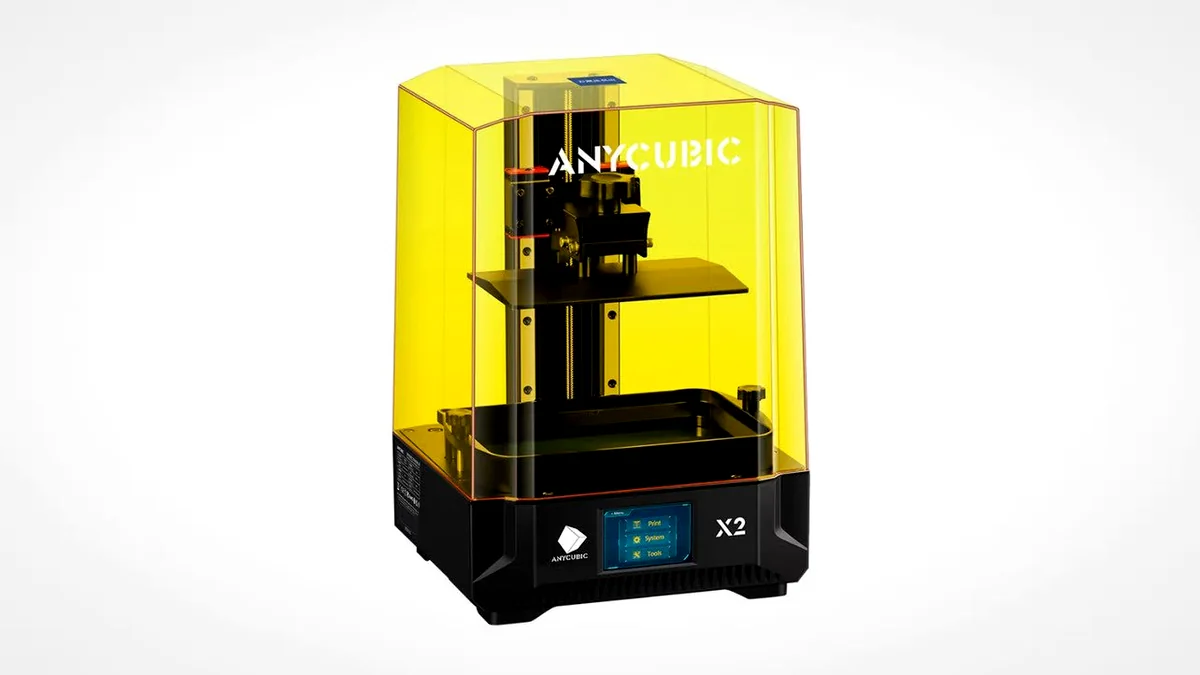
| Feature | Anycubic Photon P1 | Anycubic Mono M7 Pro | Elegoo Saturn 4 Ultra | Anycubic Mono X2 |
|---|---|---|---|---|
| Resolution | 14K | 14K | 16K | 4K |
| XY Pixel | 16.8 × 24.8 µm | 16.8 × 24.8 µm | Not Specified | 48 µm |
| Build Volume | 223x126x230 | 223x126x230 | 220x118x220 | 196x122x200 |
| Dual-Material | Optional Kit | No | No | No |
| Z-Axis | Ball Screw + Rails | Standard | Robust | Standard |
| Heated Vat | Yes (Controlled) | No | Yes (Fixed) | No |
| MSRP | $799 ($499 KS) | $669 | Premium | $429 |
The Good, The Bad, and The Unresolved
Pros
- Groundbreaking optional dual-material/dual-color printing capability.
- Exceptional 14K resolution for ultra-fine detail and surface quality.
- Industrial-grade Z-axis with ball screw and linear rails.
- Temperature-controlled resin vat supports high-viscosity resins.
- Wave Release Technology reduces peel force by 60%.
- Intelligent Assistant 3.0 offers automation and monitoring features.
- Quiet operation (≤45 dB) for professional workspaces.
Cons
- Significant community concern over reported UV light leakage from the lid.
- Perceived lack of focus on fundamental reliability.
- Flat build plate design questioned over perforated alternatives.
- Dual-material kit is an optional add-on, increasing overall cost.
- Complexity of dual-vat workflow might be daunting for hobbyists.
Final Verdict: A Calculated Risk for Prosumers?
The Anycubic Photon P1 stands as a compelling, yet conflicted, piece of engineering. Its optional dual-resin printing capability is genuinely groundbreaking, offering a glimpse into a future where multi-material prototyping and efficient batch production are seamlessly integrated into a single desktop unit. Coupled with its impressive 14K resolution and industrial-grade Z-axis, the P1, on paper, promises to push the boundaries of prosumer resin printing. However, this ambition is significantly undermined by the pervasive community concerns regarding fundamental design flaws, most notably the reported UV light leakage from the lid. This isn’t a minor aesthetic issue; it’s a critical safety and operational oversight that casts a long shadow over its advanced features. Ultimately, the Photon P1 does not represent a universally true leap forward. Instead, it embodies a calculated risk. It is best suited for adventurous prosumers, specialized studios, or those deeply invested in multi-material workflows who are willing to troubleshoot and potentially mitigate basic reliability issues for the sake of cutting-edge functionality. For users prioritizing hassle-free operation, foundational stability, and proven reliability above all else, the P1’s innovative features may not yet outweigh its unresolved engineering challenges.
Frequently Asked Questions
The Photon P1, with an optional Dual-Material Print Kit, allows for dual-material or dual-color printing. This means you can print two different resins or colors simultaneously using its dual-vat system and a forked build plate, enabling multi-material prototypes or increased batch production efficiency.
The Photon P1 features a 10.1-inch monochrome 14K LCD screen with a resolution of 13,312 × 5,120 pixels, resulting in an XY pixel size of 16.8 × 24.8 µm for exceptional detail.
The primary concern is the widely reported UV light leakage from the printer’s lid, which necessitates operating the machine in a dark room. There’s also skepticism about the overall reliability and perceived design regressions.
While it includes automation features, the potential for complex dual-material workflows and reported reliability concerns (like UV leakage) might make it a more challenging choice for absolute beginners compared to simpler printers.
Estimated ship dates for the Anycubic Photon P1 from its Kickstarter campaign are stated to start in Q1 2026.