
For AMD AM5 builders, the arrival of the ASUS ROG Strix B850-G Gaming Wi-Fi microATX motherboard marks a significant moment. This board is poised to deliver premium features in a compact form factor, a combination increasingly sought after in today’s market. However, any discussion of new PC hardware in 2025 must immediately confront the elephant in the room: the unprecedented volatility in PC component prices, particularly the staggering surge in DDR5 RAM costs. Our analysis at LoadSyn indicates that understanding these market dynamics is as crucial as evaluating raw specifications, making this review a practical guide for informed decision-making.
Key Takeaways
- AM5’s Compact Future: The ASUS ROG Strix B850-G brings premium AM5 features to the microATX form factor, ideal for space-saving, high-performance builds.
- B850: The New Standard: This chipset officially replaces B650, mandating PCIe 5.0 for M.2 storage and offering optional PCIe 5.0 for graphics, alongside Wi-Fi 7 and enhanced connectivity.
- RAM Price Shock: Extreme DDR5 RAM price volatility in 2025 is a major factor impacting build decisions; strategic buying is crucial.
- ASUS Innovation: Features like AI Cache Boost, DIY-friendly Q-Design (Q-Release, Q-Latch, Q-Antenna), and robust power delivery make this board stand out.
- Value Proposition: Despite market challenges, the B850-G offers a feature-rich, future-proof platform, but careful component selection is key to balancing cost and performance.
The MicroATX Advantage: Why Compact AM5 Builds Are Surging in 2025
In a market grappling with economic shifts and evolving user preferences, the microATX form factor has emerged as a dominant force in PC building. Gone are the days when smaller meant significant compromises in power or features. Today, a growing segment of builders prioritizes compact, yet potent, systems that fit seamlessly into diverse living spaces without sacrificing performance. This trend is particularly evident in 2025, as builders seek to optimize every dollar spent, making efficient use of space and resources. Motherboards like the ASUS ROG Strix B850-G Gaming Wi-Fi perfectly embody this shift, packing high-end AM5 features, robust power delivery, and advanced connectivity into a footprint significantly smaller than traditional ATX boards. This allows for powerful gaming and productivity machines that are both aesthetically pleasing and practical, directly addressing the latent demand for feature-rich, compact builds that our data indicates is a key driver in the current market.
ASUS ROG Strix B850-G: A Deep Dive into Features & Design
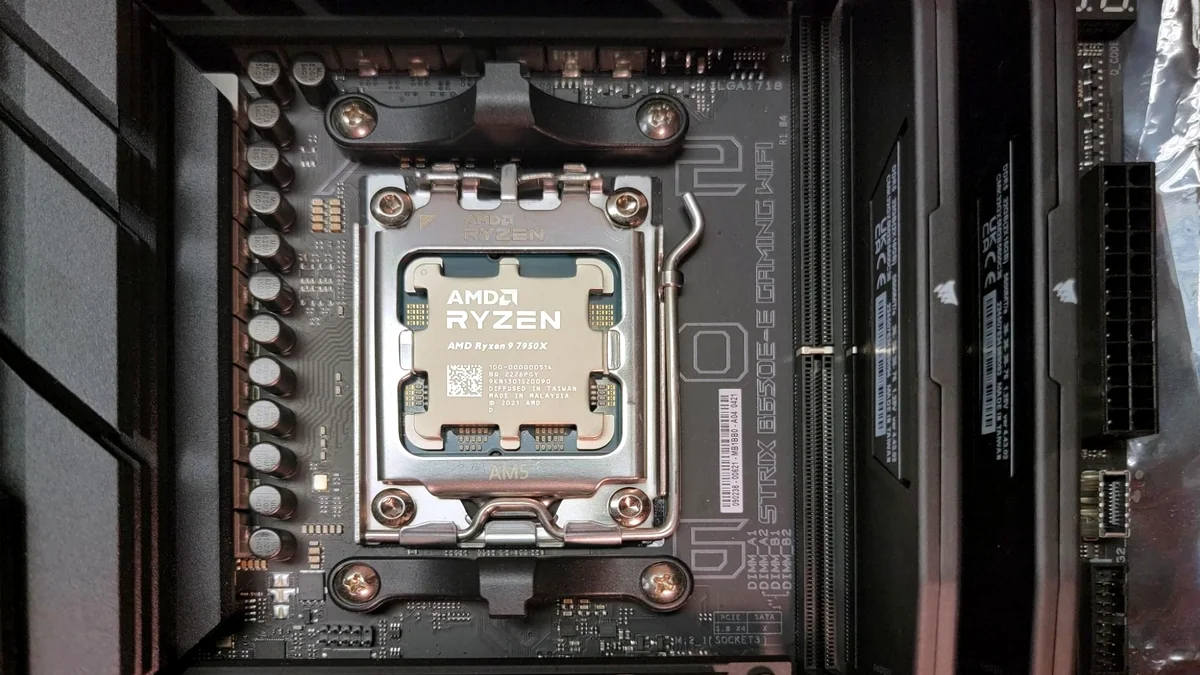
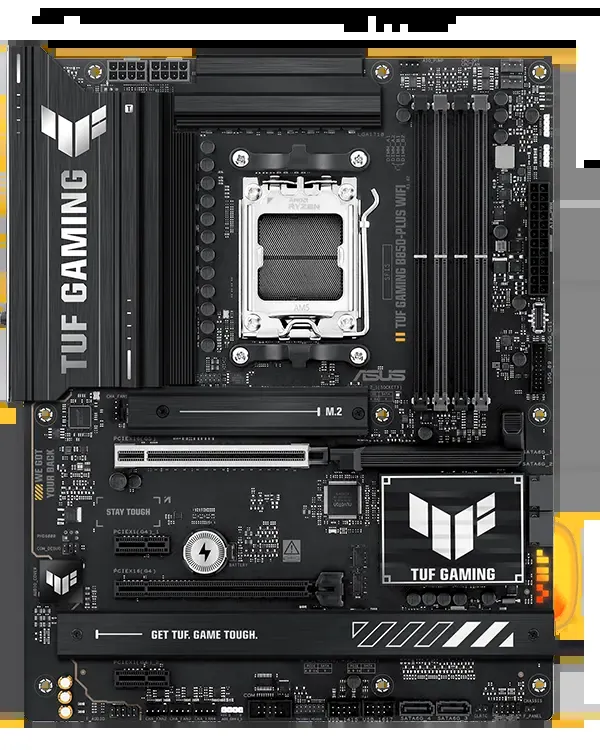
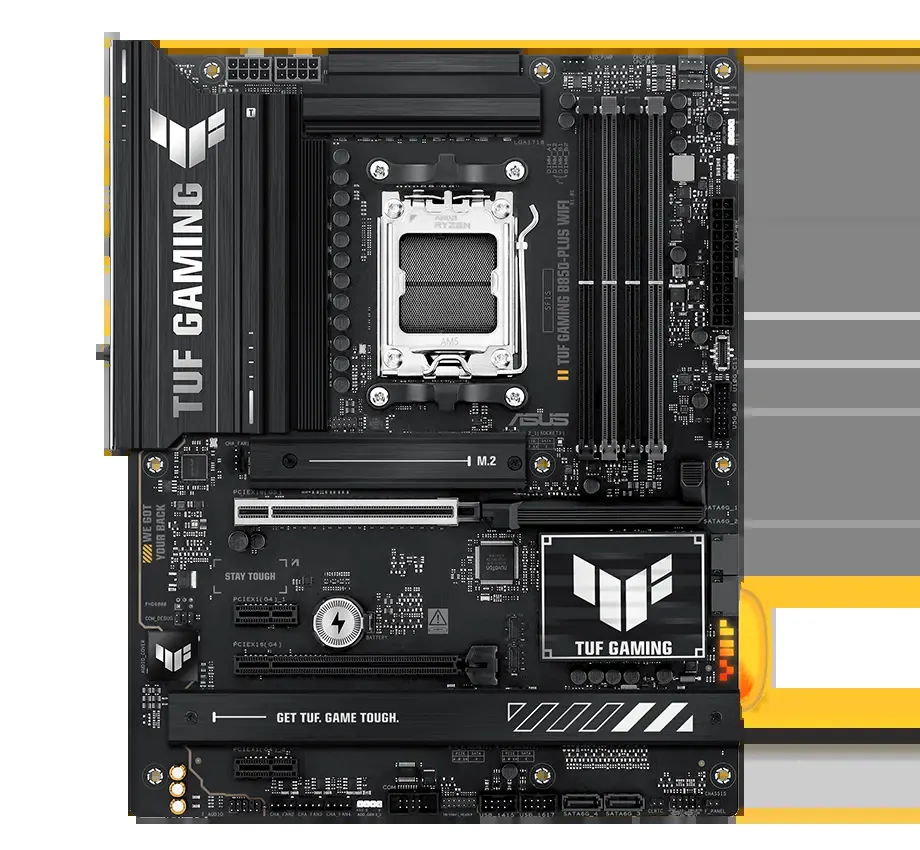
The ASUS ROG Strix B850-G Gaming Wi-Fi microATX motherboard is a testament to ASUS’s commitment to delivering uncompromised performance in a smaller package. Drawing from the acclaimed ROG Strix lineage, including its ATX and Mini-ITX siblings (B850-F, B850-E, B850-I) and the robust TUF Gaming B850M-Plus WiFi, the B850-G is engineered for the latest AMD AM5 processors. Builders can anticipate a premium feature set, characterized by an exceptionally robust power delivery system designed to handle the most demanding Ryzen CPUs. Its aesthetic aligns with the signature Strix design language: a sleek, often dark PCB with angular lines and subtle RGB accents, making it a visually striking centerpiece for any compact build. Crucially, its microATX form factor does not dilute its capabilities, offering cutting-edge connectivity, ample expansion for storage, and advanced cooling solutions, all carefully integrated to maximize performance within space-constrained enclosures.
| Feature | Details |
|---|---|
| Form Factor | microATX |
| CPU Socket | AMD Socket AM5 (Ryzen 7000/8000/9000 Series) |
| Chipset | AMD B850 |
| Memory | 4 x DIMM slots, max 192GB DDR5 (Up to 8000+ MT/s OC) |
| Power Stages | Likely 14+2+1 or 16+2+2 (80A DrMOS, based on other B850 Strix/TUF) |
| PCIe x16 Slots | 1 x PCIe 5.0 x16 (CPU), 1 x PCIe 4.0 x16 (@x4) (Chipset) |
| M.2 Slots | At least 1 x PCIe 5.0 x4 M.2, 1-2 x PCIe 4.0 x4 M.2 |
| Networking | Wi-Fi 7, 2.5Gb Ethernet |
| USB Ports (Rear) | USB 20Gbps Type-C, USB 10Gbps, USB 5Gbps, USB 2.0 |
| Display Outputs | HDMI 2.1, DisplayPort 1.4 |
| Audio | ROG SupremeFX 7.1 Surround Sound (ALC4080 Codec, Savitech Amp) |
| DIY Features | PCIe Slot Q-Release, M.2 Q-Latch, Q-Antenna, Q-LED, BIOS FlashBack |

Key Innovations: Power, Cooling, and ASUS Q-Design
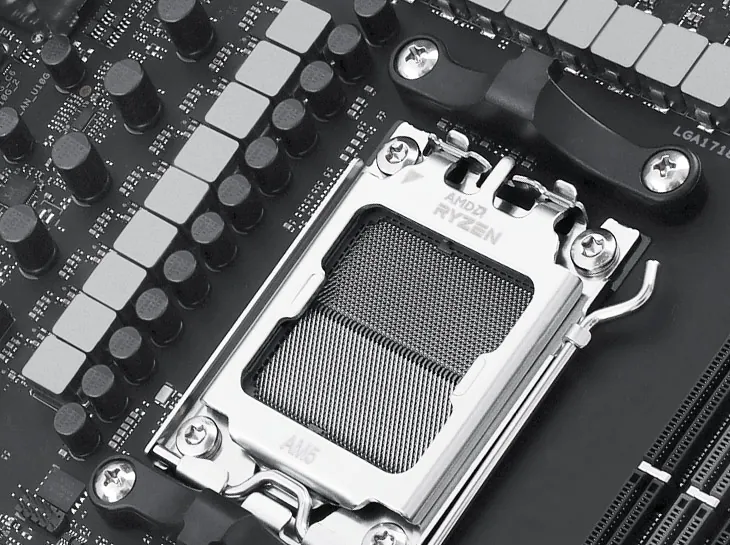
- Robust Power Solution: The B850-G is built with an advanced VRM architecture, likely featuring 14+2+1 or 16+2+2 power stages rated for 80A DrMOS. This ensures rock-solid, stable power delivery for AMD’s demanding Ryzen processors. Features like ProCool power connectors and an 8-layer PCB further enhance efficiency and thermal dissipation.
- Advanced Cooling: Effective thermal management is paramount in compact builds. The B850-G incorporates enlarged VRM heatsinks and dedicated M.2 heatsinks to prevent thermal throttling of high-speed PCIe 5.0 SSDs.
- DIY-Friendly Q-Design: ASUS’s Q-Design features include the PCIe Slot Q-Release for tool-free graphics card removal, M.2 Q-Latch for easy SSD installation, and the snap-on Q-Antenna for Wi-Fi 7 setup.
- Intelligent Control: AI Cache Boost optimizes CPU cache pathways for up to 29% faster LLM performance. AI Advisor and AI Networking II offer intelligent system optimization and network traffic management.

B850 vs. B650: The AMD Chipset Transition Explained
AMD’s AM5 platform is undergoing a strategic evolution, with the B850 chipset officially succeeding the B650. The key differentiator lies in PCIe 5.0 support: B850 mandates at least one PCIe 5.0 M.2 slot for ultra-fast storage, while PCIe 5.0 x16 for graphics becomes an optional, vendor-dependent feature. This means B850 offers a more modern, future-proof foundation, particularly for those looking to leverage the fastest NVMe SSDs.
| Feature | AMD B850 Chipset | AMD B650 Chipset |
|---|---|---|
| Release Date | Early 2025 | 2022 (EOL by Oct 2025) |
| CPU Support | Ryzen 7000/8000/9000 | Ryzen 7000/8000/9000 |
| PCIe 5.0 x16 (GPU) | Optional (vendor dependent) | Non-existent |
| PCIe 5.0 M.2 (NVMe) | Mandatory | Optional |
| DDR5 Overclocking | Yes (EXPO) | Yes (EXPO) |
| USB 20Gbps (Max) | 1 | 1 |
The Upgrade Takeaway:
While B650 boards remain capable for Ryzen 7000/9000, the B850 chipset offers a more future-proof foundation, particularly with mandated PCIe 5.0 M.2 support and the option for PCIe 5.0 graphics.
The RAM Reality Check: Navigating DDR5 Prices in 2025
The most significant challenge facing any AM5 builder in 2025 is undoubtedly the unprecedented and volatile pricing of DDR5 RAM. A severe price surge has gripped the market throughout the year, driven by insatiable demand from AI data centers siphoning off manufacturing capacity for HBM and enterprise DDR5 modules. Contract prices for 16Gb DDR5 chips soared by an astonishing 300% in late 2025. This scarcity has pushed even legacy DDR4 prices up, creating a scenario where what was once a $30 kit now commands nearly triple that price.
“Whats crazy is the 32gb DDR5 corsair ram I bought in January for 100 bucks is now $450”
DDR4 vs. DDR5: Cost-Per-GB Trend (2025)
This chart illustrates the dramatic shift in cost-per-gigabyte for DDR4 and DDR5 memory throughout 2025, showing DDR4’s rapid price increase eventually surpassing DDR5’s value proposition.
DDR5 Buying Strategy: Pros
- Superior bandwidth for AI, video editing, and gaming.
- Essential for future-proofing on the AM5 platform.
- Avoiding potentially higher price hikes in the next 12 months.
- Optimal pairing for Ryzen 9000 performance.
DDR5 Buying Strategy: Cons
- Significant upfront investment due to inflation.
- Diminishing returns for gaming-only builds at ultra-high speeds.
- Budget strain affecting other component choices.
Building Smart: Optimizing Your B850-G MicroATX Rig in 2025
Building a high-performance PC with the ASUS ROG Strix B850-G in 2025 demands a strategic approach, particularly when it comes to memory. For gamers, our analysis suggests starting with a minimum viable configuration, such as a 16GB DDR5-5200 kit. This provides ample performance for most modern titles, allowing you to allocate budget towards a more impactful component like the GPU. The foresight here is to plan for a future upgrade to 32GB when RAM prices normalize. Content creators, however, should consider 64GB of DDR5-5600 for video editing or AI training, as the productivity gains justify the current investment.
- Strategic RAM Procurement: Consider purchasing only immediately necessary capacity to get your system operational.
- Component Synergy: Pair the B850-G with commensurate Ryzen CPUs to prevent bottlenecks.
- Case Compatibility: Prioritize cases with excellent airflow to support the board’s thermal solutions.
- Leverage AI Features: Activate AI Cache Boost in the BIOS for tangible performance gains in LLM workloads.
Frequently Asked Questions
Is the ASUS ROG Strix B850-G worth it given current RAM prices?
The B850-G offers a highly future-proof and feature-rich platform. Its value depends on your budget; if you can strategically manage RAM costs, it’s an excellent foundation.
When will DDR5 RAM prices drop?
Forecasts suggest the shortage could extend 12-24 months. A return to early 2025 prices is unlikely before late 2026.
Can I use my old DDR4 RAM with the B850-G?
No. The AM5 platform and B850-G exclusively support DDR5 memory.
What are the advantages of microATX over ATX?
Smaller footprint without sacrificing significant features. Ideal for space-saving setups.
The ASUS ROG Strix B850-G: A Smart Bet for a Shifting Market
The ASUS ROG Strix B850-G Gaming Wi-Fi microATX motherboard emerges as a highly compelling, feature-rich option for anyone embarking on an AMD AM5 build in 2025. It deftly combines cutting-edge connectivity (PCIe 5.0, Wi-Fi 7) with user-friendly DIY features. While volatile RAM pricing presents a challenge, the B850-G provides a solid, future-proof foundation for gaming and productivity rigs that truly stands the test of 2025’s economic realities.