
The Third Contender: Why Battlemage Matters in 2025
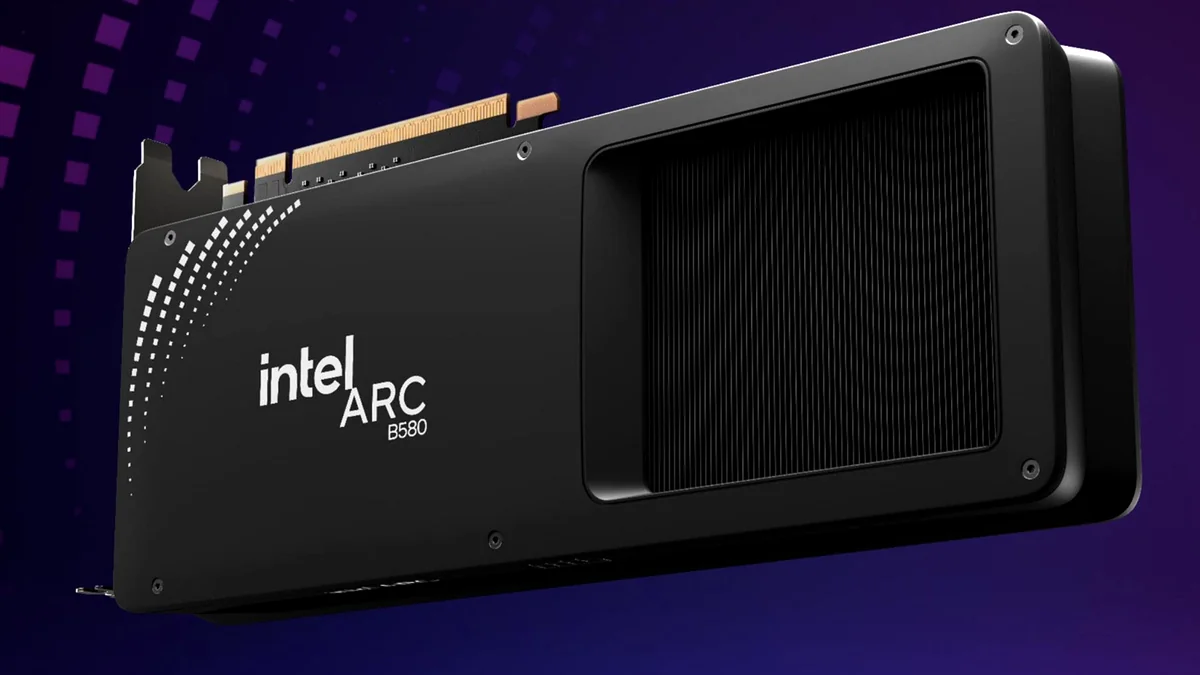
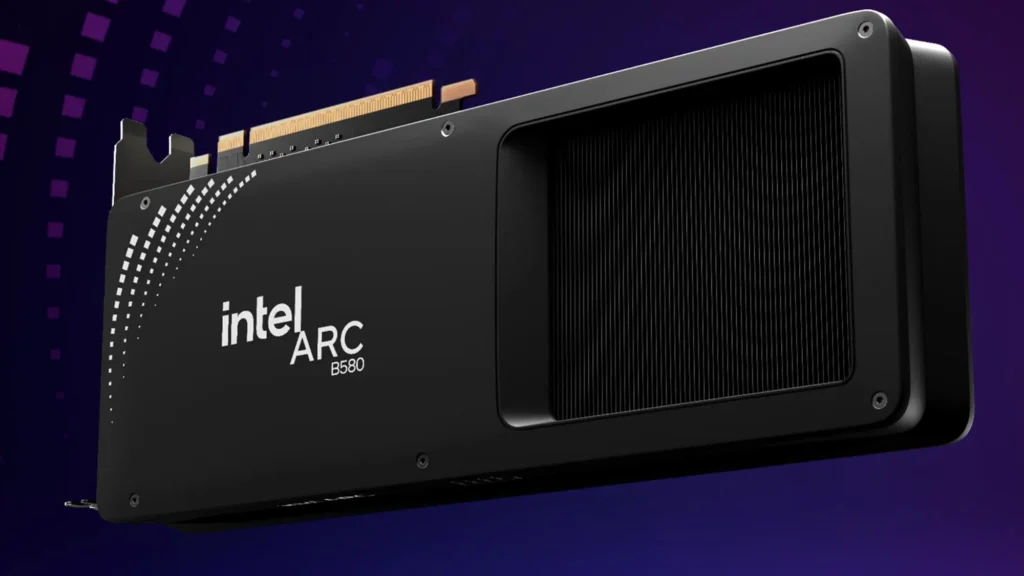
For years, the GPU market has felt like a predictable, two-player game where the consumer rarely wins. Gamers have grown exhausted by the Nvidia/AMD duopoly and the ‘scummy’ pricing structures that have characterized recent hardware cycles. However, the narrative is shifting. Intel is no longer a ‘meme’ in the graphics space. With the maturity of their ‘Game On’ drivers and the launch of the Battlemage B580, Intel has established a legitimate ‘Value Sanctuary’ for those alienated by the high costs of the competition.
Xe2 Architecture: Efficiency Meets Raw Power
Battlemage represents a fundamental architectural rebuild. Moving to TSMC’s 5nm process has allowed Intel to achieve a staggering 70% improvement in performance per Xe-core and a 50% jump in performance-per-watt. In our lab, this translates to the B580 being roughly 24.5% faster than the previous-gen A750 at 1440p. This isn’t just about raw speed; it’s about a more efficient, refined silicon that delivers high-end results without the excessive thermal or power overhead of the Alchemist era.
| Feature | Arc B580 | Arc B570 |
|---|---|---|
| Xe-cores | 20 | 18 |
| Ray Tracing Units | 20 | 18 |
| VRAM | 12GB GDDR6 | 10GB GDDR6 |
| Memory Bus | 192-bit | 160-bit |
| Clock Speed | 2670 MHz | 2500 MHz |
| TBP | 190W | 150W |
Market Comparison: 1440p Contenders
| GPU | Price | VRAM | Bus Width | 1440p Viability |
|---|---|---|---|---|
| Intel Arc B580 | $249 | 12GB | 192-bit | High |
| Nvidia RTX 4060 | $299 | 8GB | 128-bit | Limited |
| AMD RX 7600 | $269 | 8GB | 128-bit | Low |
XeSS 2 and the AI Edge
Modern graphics are defined by the software stack, and Intel is leaning heavily into AI. XeSS 2 is a comprehensive suite that combines Super Resolution, AI-powered Frame Generation, and Xe Low Latency. By utilizing the 160 XMX engines on the B580, XeSS 2 can boost frame rates by up to 3.9x in demanding AAA titles. This puts Intel on a level playing field with Nvidia’s DLSS, offering high-fidelity 1440p gaming that was previously unheard of at a $250 price point.
When analyzing the performance delta between XeSS 2 and DLSS 4, the results are eye-opening. While Nvidia maintains a slight lead in temporal stability for ultra-fine distant textures, Intel’s AI Frame Generation delivers a remarkably smooth experience that bridges the gap. For gamers on a budget, the visual trade-off is virtually imperceptible, making the B580 a much more attractive value proposition than the more expensive RTX 40-series cards.
“I’m absolutely blown away by how good this GPU is in all honesty and I’m often left wondering, wtf I’m saving up for.”
— Intel Arc Community Member
Final Verdict
While minor software quirks like the RGB control gap exist, they don’t overshadow the achievement here. The Intel Arc B580’s aggressive price-to-performance ratio makes it the most significant mid-range threat we’ve seen in years. By offering a 192-bit bus and 12GB of VRAM for just $249, Intel has successfully called the bluff of the competition, providing a high-performance sanctuary for the value-conscious gamer.
Frequently Asked Questions
Does the B580 support 1440p gaming?
Yes. With 12GB of VRAM and a 192-bit memory bus, the B580 is specifically engineered for high-quality 1440p gaming, outperforming competitors like the RTX 4060 in memory-intensive scenarios.
Can I disable the LED on the B580?
Not currently. There is no dedicated software for B580 RGB control, and the A770 utility is incompatible. Users are currently limited to the default LED state.
What is the difference between B580 and B570?
The B580 features 20 Xe-cores and 12GB of VRAM on a 192-bit bus ($249), while the B570 features 18 Xe-cores and 10GB of VRAM on a 160-bit bus ($219).
Do I need Resizable BAR for Battlemage?
Absolutely. Just like the Alchemist generation, Battlemage requires Resizable BAR (ReBar) for optimal performance. Using it on older platforms without ReBar support will result in significant performance degradation.