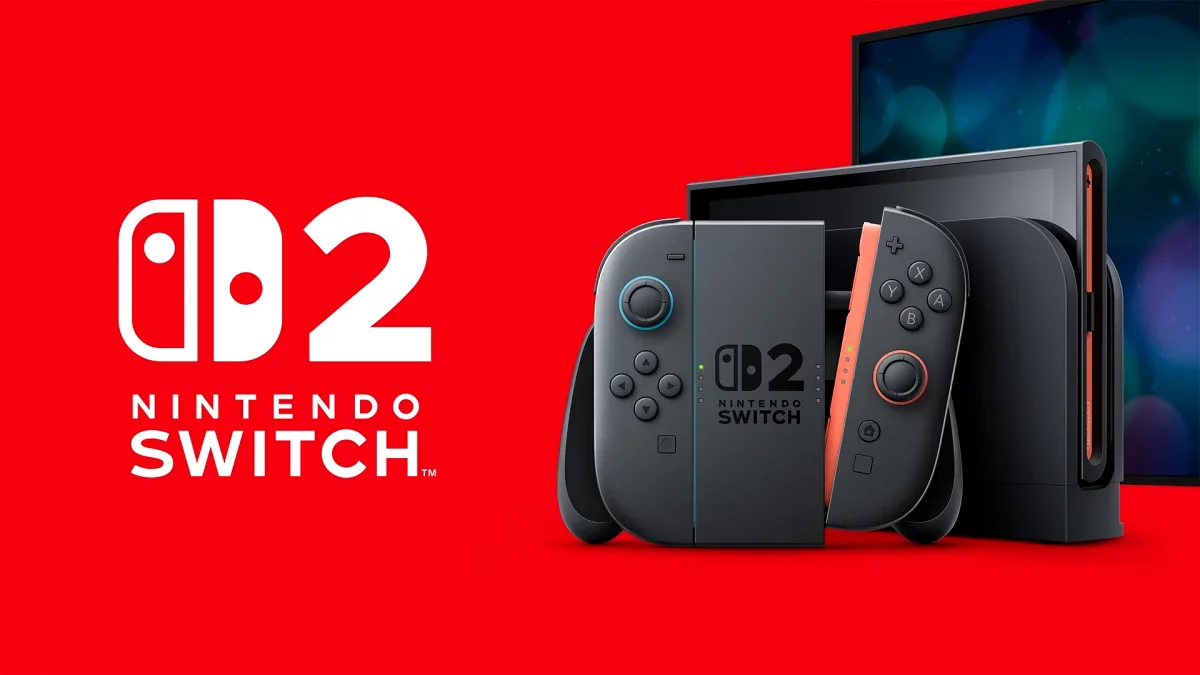

The Nintendo Switch 2 arrived on June 5, 2025, amidst considerable anticipation, promising a substantial leap in Nintendo’s hybrid console technology. Yet, its launch was immediately shadowed by a persistent and critical question: Does its value proposition align with its price? As LoadSyn, we delve into a comprehensive analysis to dissect the console’s advanced hardware, innovative features, and the controversial pricing decisions that have fueled extensive debate among consumers. This guide aims to provide a data-driven perspective on whether the Switch 2 truly justifies its position in a challenging market.
Key Takeaways
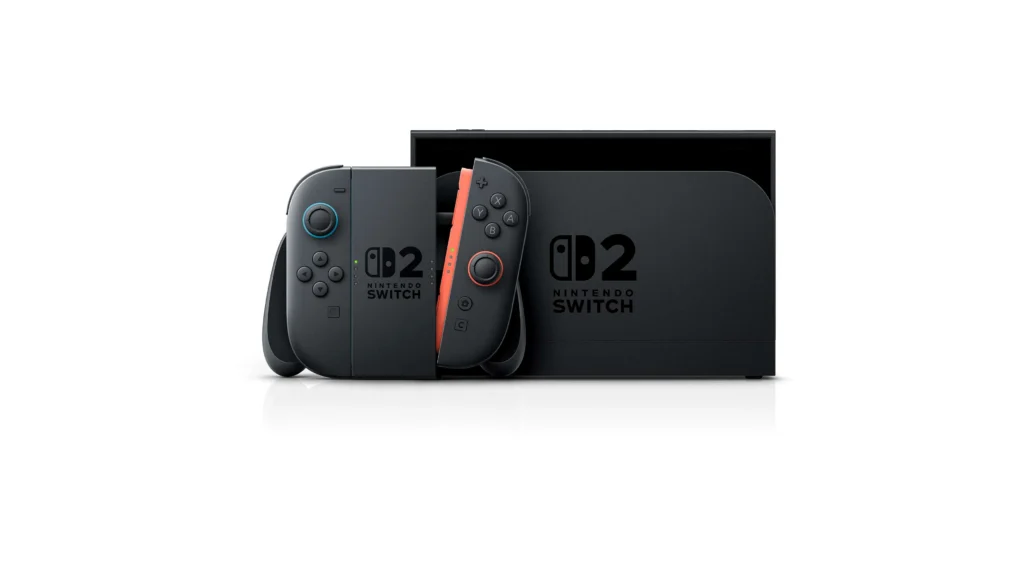
- The Nintendo Switch 2 offers significant technological upgrades, including a custom Nvidia T239 SoC, Ampere GPU with DLSS, 12GB LPDDR5X RAM, and a larger 1080p 120Hz VRR LCD display.
- New features like magnetic Joy-Con controllers with mouse capabilities and integrated GameChat enhance the user experience.
- Despite these advancements, the console carries a high price tag ($449.99), alongside expensive first-party games ($80 for flagship titles) and costly proprietary storage expansion (microSD Express).
- Notable compromises include a shorter battery life compared to the Switch OLED, a lack of an OLED display, and the persistence of Joy-Con stick drift.
- Prevailing consumer sentiment reflects skepticism and financial anxiety, with many questioning the overall value for money in light of perceived anti-consumer practices and incremental upgrades.
Chapter 1: Hardware Evolution – A Deep Dive into the Switch 2’s Engine Room
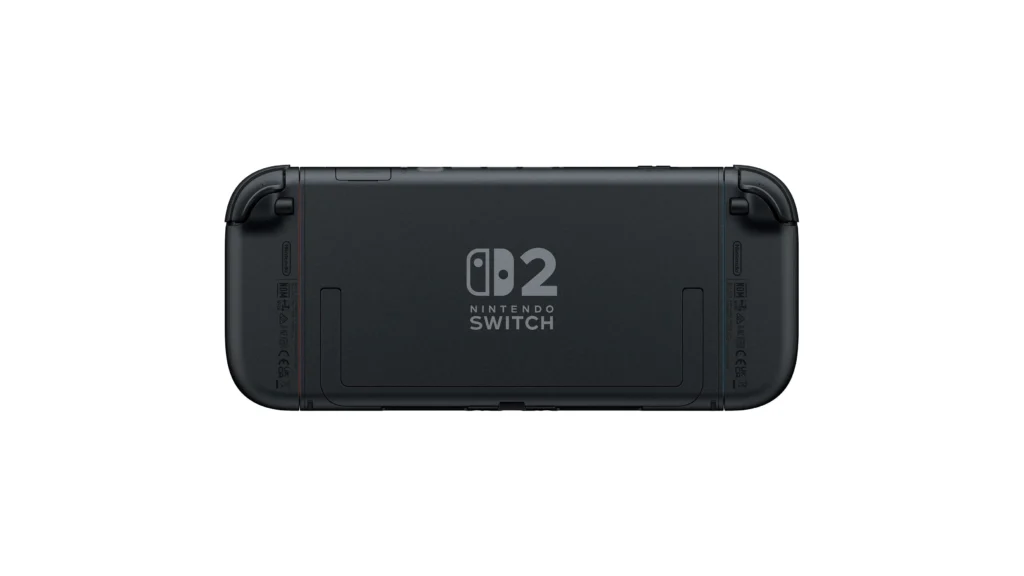
At the core of the Nintendo Switch 2’s technological evolution lies its custom Nvidia Tegra T239 system-on-a-chip (SoC). This bespoke silicon represents a significant generational leap from the original Switch’s Tegra X1, integrating an octa-core ARM Cortex-A78C CPU architecture—a substantial upgrade from the Cortex-A57 cores of its predecessor. The graphical prowess is equally transformed, moving from the Maxwell architecture to a modern Ampere-based GPU featuring 1536 CUDA cores. This architectural shift provides the foundational power for next-generation visuals and performance. Beyond raw processing, the Switch 2 enhances memory and storage capabilities with 12GB of LPDDR5X RAM (9GB accessible to developers) and 256GB of faster UFS internal storage, expandable via microSD Express. Furthermore, the inclusion of a dedicated File Decompression Engine (FDE) offloads asset decompression from the CPU, a critical enhancement for reducing loading times and improving overall system responsiveness.
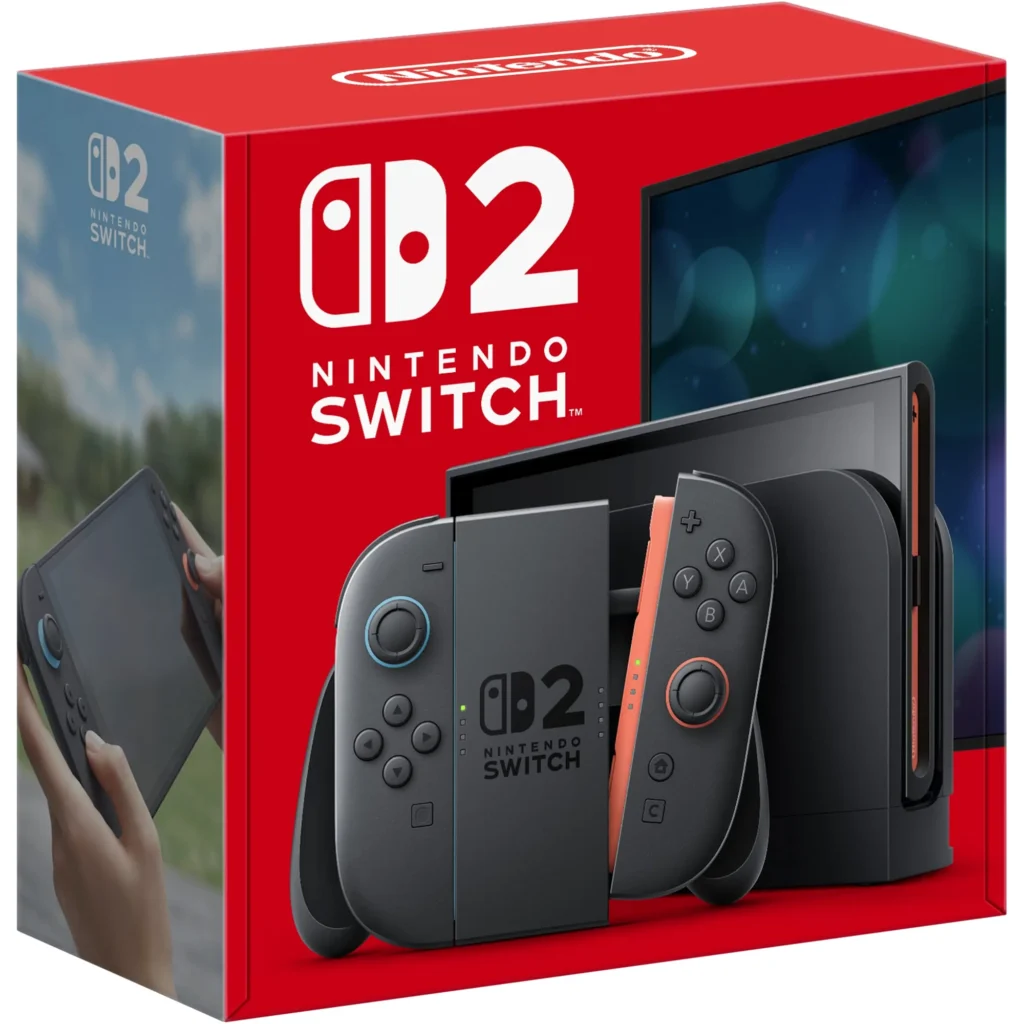
Nintendo Switch 2 Core Specifications

Chapter 2: Performance & Innovation – What 10x Graphics Really Means
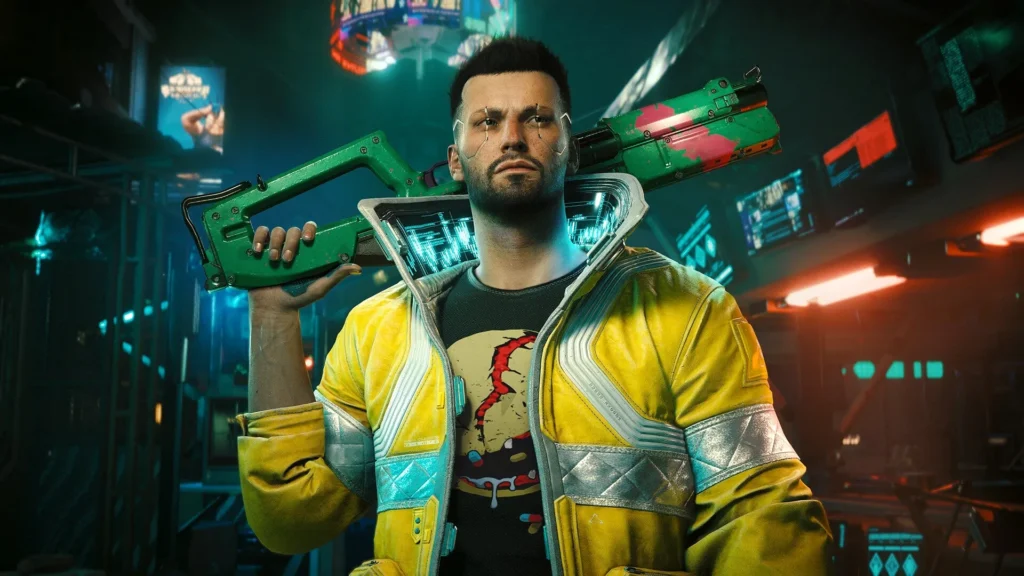
The transition to Nvidia’s Ampere GPU architecture is the bedrock of the Nintendo Switch 2’s substantial performance uplift, delivering what Nvidia touts as “10x the graphics performance” over its predecessor. This isn’t merely a theoretical increase; it translates directly into enhanced visual fidelity and smoother frame rates, critically supported by integrated Deep Learning Super Sampling (DLSS) and hardware-accelerated ray tracing. DLSS, for instance, dynamically upscales lower-resolution renders to crisp 1080p or even 4K when docked, leveraging AI to maintain image quality while significantly boosting frame rates. This is evident in demanding titles like Cyberpunk 2077, which, through DLSS, achieves playable frame rates at 1080p, offering a choice between 30 FPS in “Quality” mode or a smoother 40 FPS in “Performance” mode on compatible 120Hz displays. Similarly, the enhanced The Legend of Zelda: Breath of the Wild (Switch 2 Edition) now runs at a near-constant 60 FPS, fundamentally altering the gameplay experience, while Fortnite targets a consistent 60 FPS, far surpassing the original Switch’s capabilities. The handheld experience is further refined by the console’s 7.9-inch 1080p LCD display, which supports a variable refresh rate (VRR) up to 120Hz, ensuring buttery-smooth visuals and reduced input lag in compatible titles. While ray tracing capabilities are present, their practical application in mobile gaming’s constrained power envelope remains to be fully explored, though the potential for enhanced lighting and reflections is undeniable.
“The Switch 2 warmed my stony PC-purist heart, with AAA experiences at 20 W or less.”
Chapter 3: The Elephant in the Room – Pricing, Tariffs, and the BOM Battle
The Nintendo Switch 2’s launch, priced at $449.99 for the standalone console and $499.99 bundled with Mario Kart World, immediately ignited debate over its cost. This pricing strategy emerges within a volatile global market characterized by escalating component costs, a trend significantly exacerbated by the insatiable demand from AI data centers. Specifically, LPDDR5X DRAM, crucial for the Switch 2’s enhanced memory, has seen price surges of up to 41%, while NAND flash, vital for its UFS storage, has climbed by 8%. These macro-economic pressures directly inflate the console’s bill of materials (BOM). Compounding this, the specter of US tariffs has played a tangible role; Nintendo strategically delayed US pre-orders to “assess the potential impact” and had already stockpiled hundreds of thousands of units and diversified production to Southeast Asia to mitigate these financial headwinds. While the console’s initial price held steady, some accessories saw immediate increases, reflecting Nintendo’s acknowledgment that tariffs could impact their financial outlook and, consequently, consumer prices.
“Hardware profitability depends on factors like component procurement conditions, cost reductions through mass production, and the impact of exchange rates and tariffs. Components are procured from suppliers based on Nintendo’s medium to long term business plan. The current memory price has no immediate impact on their financial performance. However, we must monitor the situation closely.”
When pressed on potential future price increases, Furukawa maintained a firm stance: “I cannot comment on hypotheticals.” Meanwhile, Nintendo of America President Doug Bowser clarified the company’s approach to software pricing, stating, “What you see right there is variable pricing. We’ll look at each game, really look at the development that’s gone into the game, the breadth and depth of the gameplay, if you will, the durability over time and the repeatability of gameplay experiences. Those are all factors, and there’s many more that go into consideration of what is the right price point for the game.”
— Shuntaro Furukawa, Nintendo President and Doug Bowser, Nintendo of America President
The $80 Game Dilemma
One of the most contentious aspects of the Nintendo Switch 2’s launch is the controversial $80 price point for flagship titles such as Mario Kart World. This represents a significant escalation from Nintendo’s previous first-party pricing, where even ambitious titles like The Legend of Zelda: Tears of the Kingdom launched at $70. Nintendo of America President Doug Bowser justified this with a “variable pricing” philosophy, asserting that game costs are determined by “the development that’s gone into the game, the breadth and depth of the gameplay, if you will, the durability over time and the repeatability of gameplay experiences.” While this rationale attempts to align price with perceived value, it has undeniably fueled consumer skepticism and financial anxiety, with many gamers feeling “nickel-and-dimed” by the rising cost of entry into the Switch 2 ecosystem.
Chapter 4: The Competitive Arena – Switch 2 vs. The Handheld Landscape
To accurately gauge the Nintendo Switch 2’s value, it is imperative to position it within the broader handheld gaming ecosystem. This new console does not operate in a vacuum; it directly contends with its acclaimed predecessor, the Switch OLED, and a formidable rival in the PC handheld space, the Steam Deck. Each device carves out a distinct niche, defined by unique hardware philosophies, performance capabilities, and, crucially, pricing strategies. The Switch 2 aims to balance Nintendo’s signature portability and exclusive IP with a significant power upgrade, while the Switch OLED offers a premium display experience at a lower cost, and the Steam Deck champions an open PC gaming library in a portable form factor. Understanding these fundamental distinctions is key to evaluating where the Switch 2 truly stands in terms of competitive value.
| Feature | Nintendo Switch 2 | Nintendo Switch OLED | Steam Deck (LCD) |
|---|---|---|---|
| Price (Base) | $449.99 | $349.99 | $399.99 |
| Screen Size | 7.9-inch LCD | 7.0-inch OLED | 7.0-inch LCD |
| Handheld Resolution | 1080p | 720p | 1280×800 |
| Max Refresh Rate | 120Hz (VRR) | 60Hz | 60Hz |
| Docked Output | Up to 4K/60Hz | Up to 1080p/60Hz | Up to 4K/60Hz |
| CPU Architecture | ARM Cortex-A78C | ARM Cortex-A57 | AMD Zen 2 |
| GPU Architecture | Nvidia Ampere (DLSS, RT) | Nvidia Maxwell | AMD RDNA 2 (FSR) |
| RAM | 12GB LPDDR5X | 4GB LPDDR4 | 16GB LPDDR5 |
| Internal Storage | 256GB UFS | 64GB eMMC | 256GB SSD |
| Expandable Storage | microSD Express | microSDXC | microSDXC |
| Battery Life (Est.) | 2-6.5 hours | 4.5-9 hours | 2-8 hours |
| Repairability Score | 30% | N/A | 70% |
Nintendo Switch 2: The Upsides and Downsides
Pros
- Significantly more powerful hardware (CPU, GPU, RAM).
- 1080p 7.9-inch display with 120Hz VRR.
- 4K output docked with DLSS and Ray Tracing.
- Magnetic Joy-Con 2 with mouse controls.
- Integrated GameChat and built-in microphone.
- 256GB internal UFS storage.
- Extensive backward compatibility.
- Second USB-C port for flexibility.
Cons
- High launch price ($449.99) and $80 games.
- Shorter battery life (2-6.5 hours).
- LCD display instead of OLED.
- Persistent Joy-Con stick drift.
- Expensive proprietary microSD Express.
- No HDMI VRR support when docked.
- Pokey wireless data transfer speeds.
- Strict user agreement and third-party dock bans.
Chapter 5: User Experience – Innovations, Frustrations, and the Fandom Pulse
The Nintendo Switch 2 introduces several compelling innovations aimed at enhancing the user experience, most notably its redesigned magnetic Joy-Cons with integrated mouse controls—a feature praised for its potential to offer greater precision in compatible titles. The dedicated GameChat button, providing seamless voice and screen sharing capabilities with a built-in microphone, addresses a long-standing demand for integrated social features. However, these advancements are set against a backdrop of significant user frustrations that underscore the ongoing value debate.
Paramount among these concerns is the console’s notably shorter battery life, officially estimated at 2 to 6.5 hours, but frequently reported by users as less than two hours when playing demanding titles like Mario Kart World. Compounding this, widespread reports detail alarming standby drain, with some consoles losing over 60% charge overnight, rendering true portability questionable for many. The unaddressed Joy-Con stick drift issue, a persistent flaw from the original Switch due to the absence of Hall effect sensors, further exacerbates user discontent, signaling a missed opportunity for a critical hardware fix. Beyond technical shortcomings, Nintendo’s perceived anti-consumer policies, such as the reliance on expensive and proprietary microSD Express cards for storage expansion and strict user agreements leading to console bans for using third-party docks or even pre-owned “Game-Key Cards,” have fostered a pervasive sense of distrust and financial anxiety within the community.
The Fandom’s Emotional Landscape (Post-Launch)
Many perceive the Switch 2 as merely a ‘Switch Pro,’ failing to deliver a truly next-gen experience that justifies its high price over existing hardware.
Gamers are actively delaying purchases because they perceive Nintendo’s ecosystem as anti-consumer, particularly regarding high game pricing.
There is a pervasive feeling that Nintendo is leveraging its installed base by forcing high prices or nickel-and-diming consumers.
Chapter 6: The Long Game – Ecosystem, Backward Compatibility, and Future Outlook
Nintendo’s long-term strategy for the Switch 2 significantly hinges on its robust ecosystem, with backward compatibility serving as a critical bridge for its vast existing user base. The console supports most physical and digital Switch 1 games, easing the transition and ensuring that players’ investments in their libraries remain relevant. Many older titles can even receive free performance updates or paid “Switch 2 Edition” upgrades, breathing new life into cherished experiences. However, the introduction of “Game-Key Cards”—physical cards containing only a digital license—has sparked debate, raising questions about true game ownership and digital preservation, despite Nintendo’s assertion that they are not account-locked.
The Nintendo Switch Online service continues its role as the gateway to multiplayer and cloud saves, now enhanced with exclusive access to a growing library of GameCube titles for Expansion Pack subscribers, a significant draw for long-time Nintendo fans. The software pipeline is robust, with Nintendo promising “popular series titles” and “completely new software,” alongside an impressive first-year lineup of 46 third-party titles, including demanding AAA ports like Cyberpunk 2077 Ultimate Edition and Elden Ring – Tarnished Edition. This strong third-party commitment, bolstered by explicit support from platforms like Xbox, aims to broaden the console’s appeal beyond Nintendo’s iconic exclusives.
The LoadSyn.com Recommendation: Is the Switch 2 Worth the Investment?
The Nintendo Switch 2 presents a complex value proposition, a dichotomy of impressive technological advancement and contentious market positioning. On one hand, its custom Nvidia T239 SoC, Ampere GPU with DLSS and ray tracing, 12GB LPDDR5X RAM, and a vibrant 1080p 120Hz VRR LCD display deliver a substantial performance upgrade, enabling AAA experiences previously unattainable on a Nintendo handheld.
However, the console’s high entry price of $449.99, coupled with the controversial $80 price tag for first-party games like Mario Kart World, casts a long shadow. Battery life concerns, the absence of an OLED display, the unaddressed Joy-Con stick drift, and the necessity for expensive microSD Express storage all contribute to a feeling of compromise.
For Early Adopters: If you prioritize playing Nintendo’s latest exclusives with enhanced visuals and performance, the Switch 2 is a compelling upgrade.
For Switch OLED Owners: The decision is tougher. Sacrificing the OLED display and battery life for an additional $100+ might not feel like a clear win.
For Budget Gamers: The value proposition is challenging. The Steam Deck offers a different kind of portability and power at a competitive price with often cheaper games.
In conclusion, the Nintendo Switch 2 is a technically impressive device that delivers a much-needed performance injection, but one that demands careful consideration from consumers grappling with its cost and perceived anti-consumer practices.
Frequently Asked Questions
The high price is attributed to advanced custom hardware (Nvidia T239 SoC, LPDDR5X RAM), rising component costs due to AI demand, and Nintendo’s strategic pricing decisions, including tariffs.
No, the Nintendo Switch 2 features a 7.9-inch 1080p LCD screen. Nintendo opted for LCD due to advancements in the technology, including HDR support.
Nintendo officially estimates 2 to 6.5 hours, depending on the game. However, numerous user reports indicate shorter battery life with demanding titles (often less than 2 hours).