
The Pimax Paradox: Core Insights
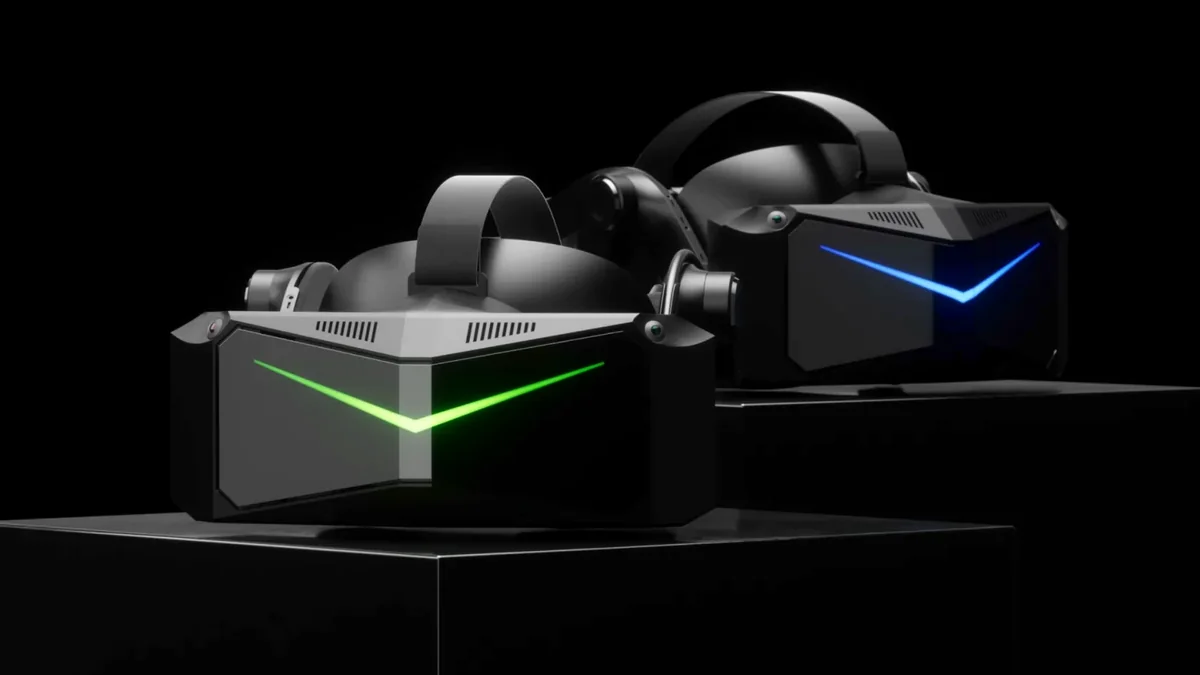
- The Pimax Crystal Super Micro-OLED is positioned as the highest fidelity VR display ever released, featuring Sony Micro-OLED panels and proprietary ConcaveView pancake optics.
- The biggest hurdle is performance: Achieving stable framerates at 57 PPD requires an RTX 4090 minimum, with many enthusiasts believing the unreleased RTX 5090 is necessary for demanding titles like DCS World.
- Pimax has introduced two lighter, high-res models (Dream Air SE, Dream Air) to broaden the Micro-OLED market, weighing less than 170g.
- Buyer Beware: The community remains highly skeptical due to Pimax’s history of product delays, quality assurance issues, and confusing launch logistics.
The Micro-OLED Revolution: Why Pimax’s New Panels Matter
Micro-OLED (or OLEDoS—OLED on Silicon) represents the next fundamental leap in display technology, moving beyond traditional QLED and LCD architectures. This shift is critical for VR because it solves the two greatest immersion killers: poor contrast and the screen-door effect. By manufacturing the displays directly on silicon wafers, Micro-OLED achieves virtually infinite contrast and perfect black levels. This is non-negotiable for cockpit simulators like DCS World or Elite Dangerous where night operations and deep space visuals are paramount. Furthermore, the technology enables pixel densities exceeding 4,000 PPI, paired with nanosecond response times that utterly eliminate motion blur and the distracting screen-door effect, pushing clarity to the limit. This advanced panel technology is paired with Pancake lenses, which drastically reduce the distance between the display and the eye, enabling much smaller, lighter headsets. However, Pancake optics inherently suffer from low light transmittance (often just 15% to 20%). Pimax claims to have mitigated this major engineering challenge using their proprietary ConcaveView pancake optics, enabling them to deliver the necessary brightness while maintaining a wide field of view.
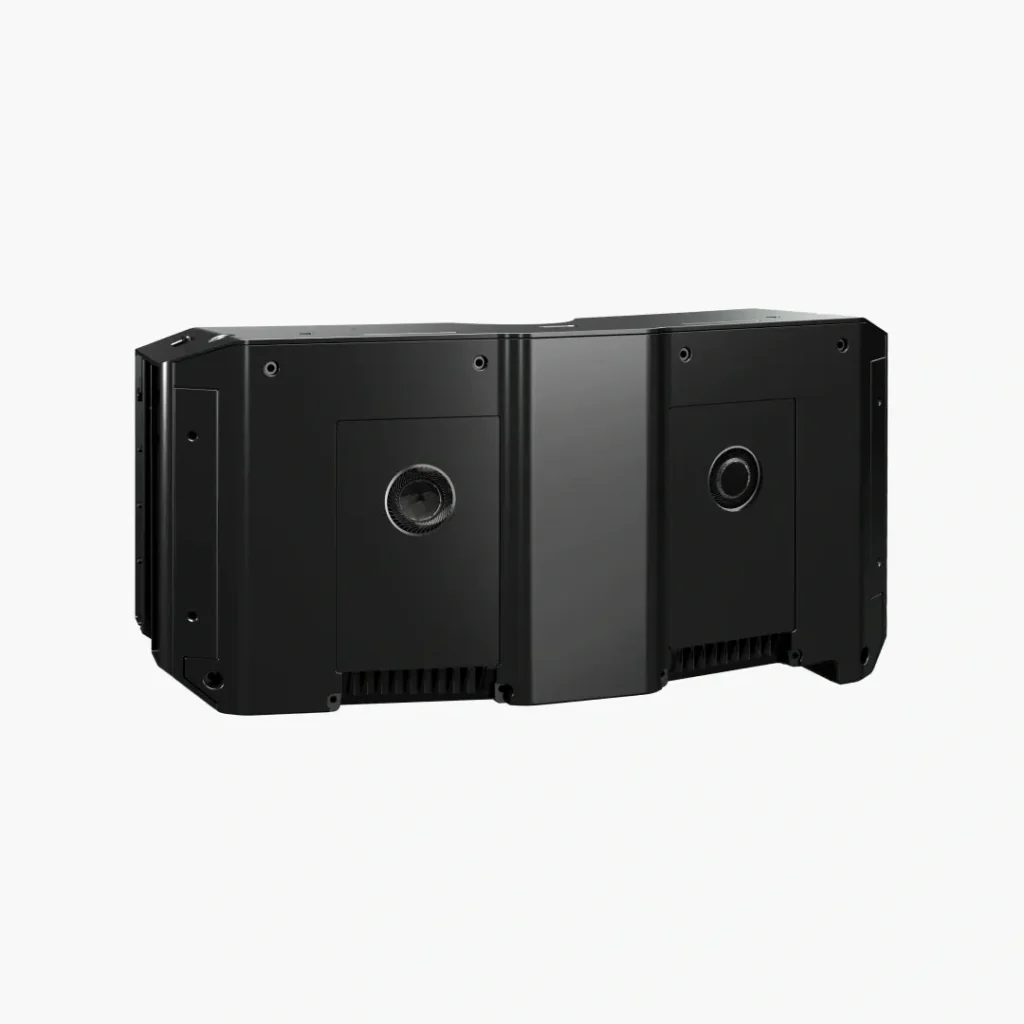
Achieves 3840×3552 resolution per eye with infinite contrast.
Proprietary lens system allowing for a wide FOV (up to 128°) in a compact form factor.
The Super Micro-OLED engine can be swapped with QLED or Ultrawide FOV modules.
Pimax’s 2025 Micro-OLED Lineup: Specs at a Glance
Pimax Micro-OLED Headsets: Dream Air vs. Crystal Super
| Feature | Dream Air SE | Dream Air | Crystal Super Micro-OLED |
|---|---|---|---|
| Price (USD Start) | $899 | $1,999 | $2,199 |
| Resolution (Per Eye) | 2560×2560 | 3840×3552 | 3840×3552 |
| PPD (Clarity) | N/A (5K) | N/A (8K) | Up to 57 PPD (Interchangeable) |
| Horizontal FOV | 100° | 110° | 116° |
| Weight | <140g | <170g | Heavier (Modular) |
| Key Feature | All-in-One, Lightweight | Smallest 8K PC VR | Widest FOV Micro-OLED, Modular |
The Performance Paradox: Why Sim Enthusiasts Fear the Clarity
The technical specifications of the Crystal Super—particularly the 57 PPD module—translate directly into crippling GPU demands. The sheer pixel count required to render this level of fidelity is staggering. For perspective, the Crystal Light already demands a rendering throughput of 3.17 Gpix/s just to maintain a minimum 72Hz refresh rate. When you factor in the additional resolution and clarity of the Super, achieving stable, playable framerates in notoriously heavy sim titles like DCS World or Automobilista 2 becomes a monumental task. While Pimax integrates Dynamic Foveated Rendering (DFR) via Tobii eye tracking to reduce GPU load by 30-60%, the community consensus remains anxious. Many high-end sim enthusiasts, already running RTX 4090s, fear they will only achieve native resolution stability by waiting for the next generation of silicon, specifically the unreleased RTX 5090. This creates a genuine performance paradox: Pimax offers unmatched visual clarity, but the hardware required to drive it consistently may not yet exist for the most demanding applications.
Meine grösste Sorge ist die FPS. Habe eine Bigscreen Beyond 1 + rtx 5090… Wenn ich die extra pixel der neuen pimax super module dazu rechne, glaube ich vor allem bei IL-2 in hektischen dogfights nicht an eine stabile 72 hz framerate bei voller nativer auflösung.
Crystal Super Micro-OLED: The Trade-Offs
Pros
- Unmatched Visual Fidelity: Micro-OLED delivers perfect blacks and eliminates the screen-door effect.
- Industry-Leading Clarity: Up to 57 PPD and superior glass aspheric lenses maximize the visual sweet spot.
- Modular Ecosystem: Interchangeable lenses (Micro-OLED/QLED/Ultrawide) and tracking systems (Inside-out/Lighthouse).
- Depth Perception: Provides superior 3D depth perception compared to triple-screen setups, enhancing immersion.
Cons
- Extreme GPU Demand: Requires RTX 4090/5090 for optimal performance in demanding sims.
- Pimax QA/Reliability: Historical issues with software stability (PiTool), tracking, and customer service persist.
- High Price Point: Starting at $2,199 for the Micro-OLED module alone.
- Comfort & Heat: Still a bulky design with reports of significant heat emission, limiting long-session comfort.
Pre-Order Logistics and Upgrade Paths: A Complex Guide
Critical Pre-Order Cutoff Date: September 19, 2025
Pimax has tiered its pre-order benefits around a specific cutoff date. If you placed your pre-order before September 19, 2025, you are eligible for the comprehensive package: Free DMAS (Deluxe Modular Audio Strap), two facial foams, and a comfort headstrap. If you pre-order after this critical date, the incentives shift to a free lens frame, a complimentary copy of Le Mans Ultimate, and free shipping. Critically, even with the ‘free shipping’ offer, US customers must contend with a mandatory regional surcharge of $95 USD applied exclusively to US-only orders. Always verify your specific order details against the date of purchase.
Pimax Crystal Super Upgrade and Trade-In Benefits
- Pimax OG Crystal Owners: Eligible for a $399 USD upgrade benefit towards the Crystal Super.
- Pimax Crystal Light Owners: Eligible for a $200 USD upgrade discount.
- Pimax 8K or 5K Owners: Can apply up to 50% of their device’s value toward the Crystal Super, capped at $399 USD, provided the device is eligible for the 12K trade-in program.
Competitive Context: Niche King vs. The Ecosystems
The Pimax Crystal Super exists in a specialized corner of the VR market, deliberately eschewing the mass-market appeal of its rivals. Unlike the Meta Quest Pro, which offers a superior user experience, open-bottom design (great for viewing physical cockpit controls), and robust standalone capability, the Crystal Super is a dedicated, wired PCVR beast. It is built solely to maximize raw visual metrics. Similarly, compared to the Apple Vision Pro—a headset currently facing sharp declines in US demand and constrained by a closed ecosystem—the Crystal Super is priced aggressively for its technology and is aimed squarely at the high-end enthusiast. Pimax is not chasing comfort or standalone utility; it is targeting the niche user who prioritizes industry-leading PPD (up to 57), superior FOV (128°+), and the perfect blacks of Micro-OLED panels above all else. This is a headset for the sim racer or flight enthusiast willing to sacrifice general ease-of-use for raw, uncompromising fidelity.
Our Final Verdict
The Pimax Crystal Super Micro-OLED is a technological marvel that delivers on the promise of next-generation VR clarity. Its 57 PPD Micro-OLED module offers a visual experience currently unmatched in the consumer space, making it the undisputed choice for simulation enthusiasts who demand the highest fidelity. However, this fidelity comes at a steep cost: a high price tag, extreme GPU requirements (RTX 4090 minimum), and the necessity of navigating Pimax’s historically chaotic software and logistical ecosystem. This is not a product for the faint of heart or the casual user—it is a high-stakes investment for the dedicated PCVR enthusiast willing to accept the ‘Pimax Paradox’ for the sake of visual perfection.
Frequently Asked Questions
What is Dynamic Foveated Rendering (DFR)?
Dynamic Foveated Rendering (DFR) is a performance optimization technique utilizing integrated Tobii eye tracking. It renders only the small central area of the display where the user is actively looking at full resolution, while rendering the peripheral vision at a significantly lower quality. This process dramatically reduces GPU load, often by 30-60%, allowing demanding applications to run at stable framerates.
How does the Crystal Super compare to the original Crystal QLED?
The Crystal Super is a major upgrade. Key enhancements include higher PPD (up to 57 vs 42), superior aspheric glass lenses, integrated eye tracking, and the modular option for true Micro-OLED panels. Crucially, the new model transitions to offering inside-out tracking capability, eliminating the need for external base stations required by the older QLED model.
Is the Pimax Portal related to the Crystal Super?
The Pimax Portal is a modular VR hybrid console that faced significant delays, missing several delivery targets after its Kickstarter campaign. While technically a separate product line, the Portal’s chaotic launch history reinforces community anxiety regarding Pimax’s ability to execute complex product releases on time, which inevitably affects the perceived reliability of the Crystal Super timeline.