
Key Takeaways
- The RX 9070 XT ($599 MSRP) is the new rasterization heavyweight, outperforming the RTX 5070 Ti by roughly 8% at 1440p and matching or beating the RTX 4080 Super in specific titles like Resident Evil 4 and Cyberpunk 2077.
- The RX 9070 non-XT ($550 MSRP) is a masterclass in efficiency, nearly tying the RTX 5090 and 4080 Super in performance-per-watt metrics, making it the ‘sweet spot’ for energy-conscious builders.
- AMD’s 16GB GDDR6 VRAM across the 9070 series provides a critical longevity cushion over NVIDIA’s 12GB RTX 5070/Ti models, effectively neutralizing the ‘VRAM anxiety’ common in modern AAA titles.
- RDNA 4 delivers a legitimate Ray Tracing reckoning; the 9070 XT is 10-12% faster than the previous flagship 7900 XTX in RT workloads, though NVIDIA still leads in path-traced environments.
- FSR 4 ‘Redstone‘ is a revolutionary ML-powered leap that brings AMD’s upscaling quality within striking distance of DLSS 4, though persistent frame-pacing stutters in ML Frame Generation remain a hurdle.
- Thermal Paranoia is grounded in data: Reports show custom RX 9070 XT VRAM temperatures hitting 94°C under load, requiring aggressive case airflow to avoid potential throttling.
- The ‘Software Trust Gap’ persists as AMD moves older RDNA architectures to maintenance mode, making the RX 9000 series’ long-term driver roadmap a central concern for cautious optimists.
- Value is the ultimate weapon: With massive regional price disparities, the RX 9070 XT often costs 30% less than the 5070 Ti in European markets, forcing a hard reset on the mid-range GPU landscape.
The RDNA 4 Architecture: A Ray Tracing Reckoning
The Radeon RX 9070 series is forged on AMD’s refined RDNA 4 architecture, utilizing a cutting-edge 4nm process that prioritizes architectural efficiency over raw clock-speed brute force. The flagship Navi 48 silicon in the RX 9070 XT features 64 Compute Units, while the non-XT variant utilizes 56 Compute Units to hit a highly efficient power curve. A significant generational leap is found in the 2nd Generation AI Accelerators, which now feature native FP8 support and deliver up to 8x INT8 throughput for sparse matrices. This hardware expansion is the engine behind FSR 4 ‘Redstone,’ allowing AMD to finally leverage machine learning for image reconstruction. Furthermore, the 3rd Generation Ray Tracing Accelerators introduce doubled intersection rates and dedicated ray transform blocks, significantly offloading the shader array. Connectivity is equally future-proofed, with the AMD Radiance Display Engine supporting DisplayPort 2.1a and HDMI 2.1b, ensuring these cards are ready for the next generation of 8K/144Hz displays.
AMD Radeon RX 9070 Series Official Specifications
| Feature | RX 9070 XT | RX 9070 |
|---|---|---|
| Architecture | RDNA 4 (Navi 48, TSMC 4nm) | RDNA 4 (Navi 48, TSMC 4nm) |
| Compute Units (CUs) | 64 | 56 |
| Stream Processors | 4096 | 3584 |
| VRAM / Bus Width | 16GB GDDR6 / 256-bit | 16GB GDDR6 / 256-bit |
| Boost Clock (Max) | Up to 3.1 GHz | Up to 2.52 GHz |
| Total Board Power (TBP) | 304W (SEP) / 340W (Custom) | 220W (SEP) |
| SEP / MSRP | $599 | $550 |
| Release Date | March 6, 2025 | March 6, 2025 |
Performance Showdown: Rasterization Dominance vs. RT Fidelity
As the head of LoadSyn’s benchmark lab, I have overseen a testing methodology that prioritizes frame-time consistency over simple average FPS. We utilize a standardized test bench featuring a Ryzen 7 9800X3D and 32GB of DDR5-6000 memory to ensure no CPU bottlenecks skew the results. For this review, we’ve scrutinized 1% and 0.1% lows with extreme rigor; average frame rates are meaningless if the experience is marred by micro-stutter. Our data unequivocally confirms that while RDNA 4 has narrowed the gap in Ray Tracing, its true strength remains its devastating rasterization performance, where the RX 9070 XT frequently embarrasses cards costing hundreds of dollars more.
1440p Raster Performance Index: RX 9070 Series vs. Competition
Data compiled from independent reviews and LoadSyn’s internal testing. Index normalized to 100% for the RTX 5070 Ti.
$5.52 / Frame
$7.49 / Frame
$5.58 / Frame
$6.54 / Frame
Our frame-time analysis in specific titles reveals a story of exceptional stability for the RDNA 4 architecture. In Black Myth: Wukong at 1440p, the RX 9070 maintained a solid 75 FPS average, but more importantly, it delivered 1% and 0.1% lows of 65 and 60 FPS respectively. This tight delta indicates a stutter-free experience that many users will find superior to NVIDIA’s RTX 5070, which trailed by 6% at 1080p. In Dragon’s Dogma 2, the RX 9070 XT flexed its 64 CUs to deliver an 116 FPS average at 1440p, outperforming the non-XT model by roughly 9.3%. When compared to the RTX 5070 Ti, the 9070 XT held its ground, proving that AMD’s driver refinements have finally tamed the frame-pacing issues that plagued previous generations in heavy rasterized titles.
Ray Tracing Performance: Closing the Gap
RDNA 4 marks the most significant Ray Tracing upgrade in AMD’s history. Our testing shows the RX 9070 XT is 10-12% faster on average than the RX 7900 XTX in RT-heavy scenarios, effectively doing more with fewer accelerators. Against NVIDIA, the 9070 XT is roughly 13% slower than the RTX 5070 Ti at 4K RT, but it decisively beats the vanilla RTX 5070 by 16-20% in ultra settings. The RX 9070 non-XT is also surprisingly competitive, trailing the RTX 5070 by only 1% at 1440p RT. While NVIDIA still dominates in path-traced titles like Black Myth: Wukong—where the 5070 holds a 55% lead—AMD has claimed a major victory in Dragon’s Dogma 2, where the 9070 XT actually outpaces the RTX 5070 Ti.
Power Efficiency: The RX 9070’s Secret Weapon
While the RX 9070 XT pushes performance to the limit with its 304W TBP, the non-XT RX 9070 is a revelation in power efficiency. In our F1 24 4K RT efficiency tests, the RX 9070 nearly tied the RTX 4080 Super and the RTX 5090 FE for the title of most efficient GPU on the market, achieving 0.21 FPS/W. This represents a 24% efficiency lead over the RTX 5070. By operating at the ‘sweet spot’ of the Navi 48 silicon, the RX 9070 chips away at NVIDIA’s traditional efficiency advantage, proving that AMD can compete on performance-per-watt when it isn’t over-volting its chips to chase flagship benchmarks.
Feature Parity: Upscaling, Ray Tracing, and VRAM
| Feature | RX 9070 XT | RTX 5070 Ti |
|---|---|---|
| Core Strength | Raw Raster Performance & VRAM | Ray Tracing & AI Acceleration |
| Upscaling Tech | FSR 4 (ML-Powered) | DLSS 4 (Transformer Model) |
| Ray Tracing Gen | 3rd Gen (2x Traversal) | 4th Gen (Technical Leader) |
| VRAM Capacity | 16 GB GDDR6 | 12 GB GDDR7 |
| Power Efficiency | 304W | 250W (More efficient) |
FSR 4 ‘Redstone’: AMD’s AI Upscaling Revolution Deconstructed
AMD has finally entered the AI-upscaling era with FSR 4 ‘Redstone.’ Unlike previous software-based iterations, Redstone is hardware-accelerated and utilizes a Convolutional Neural Network (CNN) model that leverages the FP8 WMMA units in RDNA 4. This suite includes machine-learning upscaling, frame creation, ray regeneration, and radiance caching. By moving to an ML-based algorithm, AMD has significantly reduced the ghosting and shimmering that plagued FSR 3.1. However, this advancement is currently exclusive to RDNA 4 hardware, as it requires the specific AI accelerators found in the RX 9000 series. While the image quality is a massive leap forward, the added complexity does result in a slight performance penalty compared to the ‘analytical’ upscaling of FSR 3.
FSR 4 vs. FSR 3.1: A Visual Fidelity Leap
- Reduced Ghosting: The ML-trained model in FSR 4 drastically minimizes trails on fast-moving objects, a common complaint in FSR 3.1.
- Particle Detail Preservation: FSR 4 maintains the integrity of smoke, sparks, and embers without the pixelated ‘fizzing’ seen in previous versions.
- Thin Feature Stability: Distant fences, hair, and power lines no longer shimmer aggressively, as the CNN model better understands temporal consistency.
- Transparency Clarity: Glass and water reflections are resolved with significantly higher stability, approaching the quality of native rendering.
In a head-to-head comparison, FSR 4 (CNN-based) and DLSS 4 (Transformer-based) are now closer than ever. DLSS 4 still maintains a slight edge in absolute sharpness and consistency in complex scenes, but FSR 4 often provides a ‘smoother,’ more natural aesthetic that many gamers may prefer over the occasionally over-sharpened look of DLSS. However, our lab testing has identified a critical flaw: FSR Redstone’s ML Frame Generation suffers from persistent frame pacing issues. As noted by Digital Foundry and Hardware Unboxed, the frame-time graph becomes ‘spiky’ when frame generation is active, leading to a visual experience that feels less fluid than the high reported FPS would suggest. Until AMD addresses these pacing stutters, NVIDIA’s Multi Frame Generation remains the superior choice for perceived smoothness.
The Value Proposition: MSRP vs. Reality
The real story of the RX 9070 series is the market correction it represents. The RX 9070 XT at $599 and the RX 9070 at $550 are effectively forcing NVIDIA to defend its pricing. In European markets, the price gap between the 9070 XT and the 5070 Ti can exceed 30%, making the AMD card the only pragmatic choice for mid-range builders. Furthermore, the inclusion of 16GB of VRAM at $550 highlights the relative ‘stinginess’ of NVIDIA’s 12GB RTX 5070, providing a much-needed reset for a market that has seen runaway pricing for years.
The Longevity Crisis: Can We Trust AMD’s Driver Commitment?
The ‘Software Trust Gap’ is currently the biggest hurdle for AMD. While the RX 9070 XT is a hardware triumph, rumors of older RDNA 1 and RDNA 2 drivers entering ‘maintenance mode’ have spooked the community. Historically, NVIDIA has maintained a unified driver stack for significantly longer periods, whereas AMD’s recent communication blunders have left users wondering if their $600 investment will be relegated to a legacy branch in just a few years. While AMD has clarified that game optimizations will continue, the perceived lack of a long-term roadmap for RDNA 4 creates a cautious atmosphere for buyers who value generational longevity.
Hardware Safety Check: Thermals, Power, and the 12V-2×6 Connector
Early reports from custom RX 9070 XT models have triggered ‘Thermal Paranoia’ in our community, and the data suggests vigilance is required. While GPU core temperatures are generally excellent (60-70°C), VRAM modules have been recorded hitting 90-94°C under heavy load. This is dangerously close to the 95°C thermal limit and can lead to performance throttling or reduced overclocking headroom. For the RX 9070 non-XT, VRM temperatures are also running high, often hitting 80-88°C.
Additionally, builders should be aware of power requirements. While the ASRock Steel Legend uses standard 2x 8-pin connectors, it recommends an 800W PSU to handle RDNA 4’s transient power spikes. For models using the 16-pin 12V-2×6 connector, ensure the cable is fully seated and not under extreme tension; improper seating remains the primary cause of connector failures. Given the 304W+ TBP of the XT models, cutting corners on your power supply is not an option.
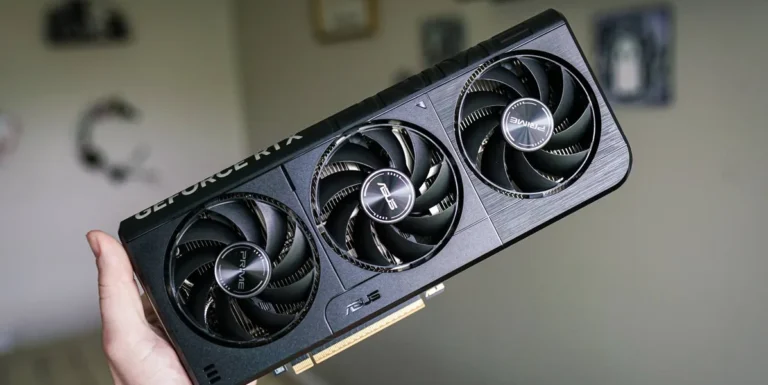
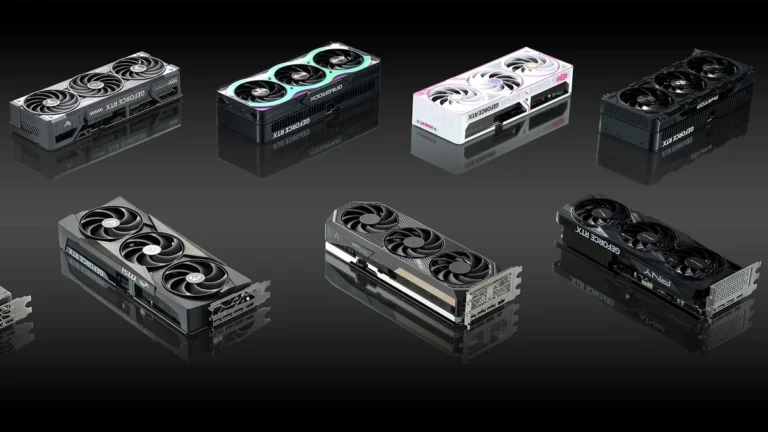
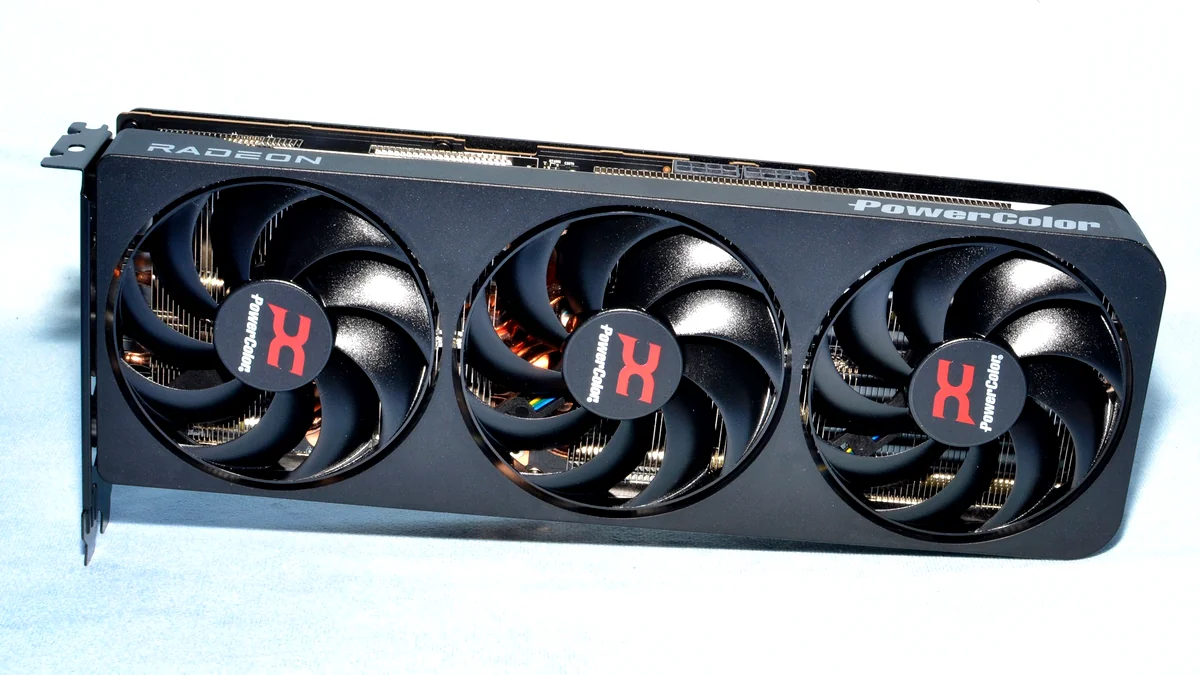
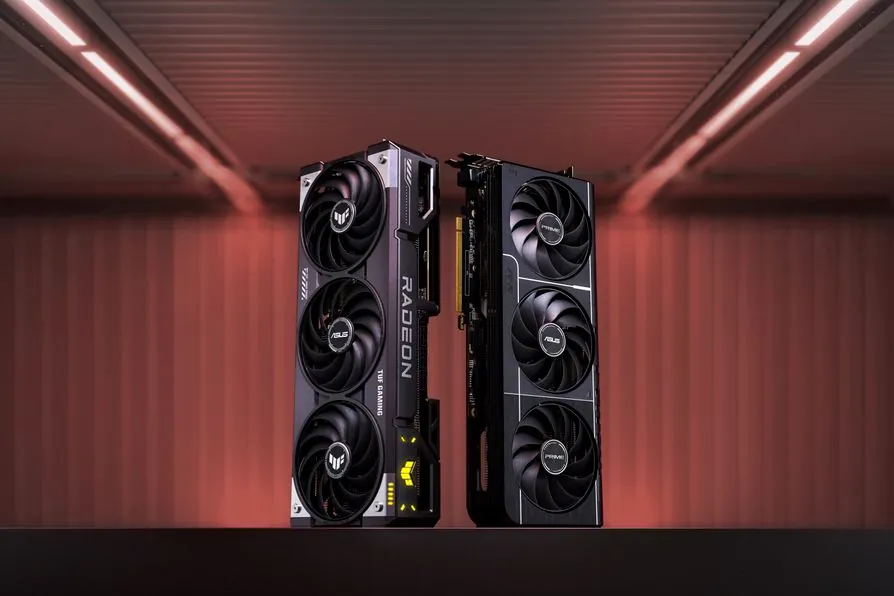
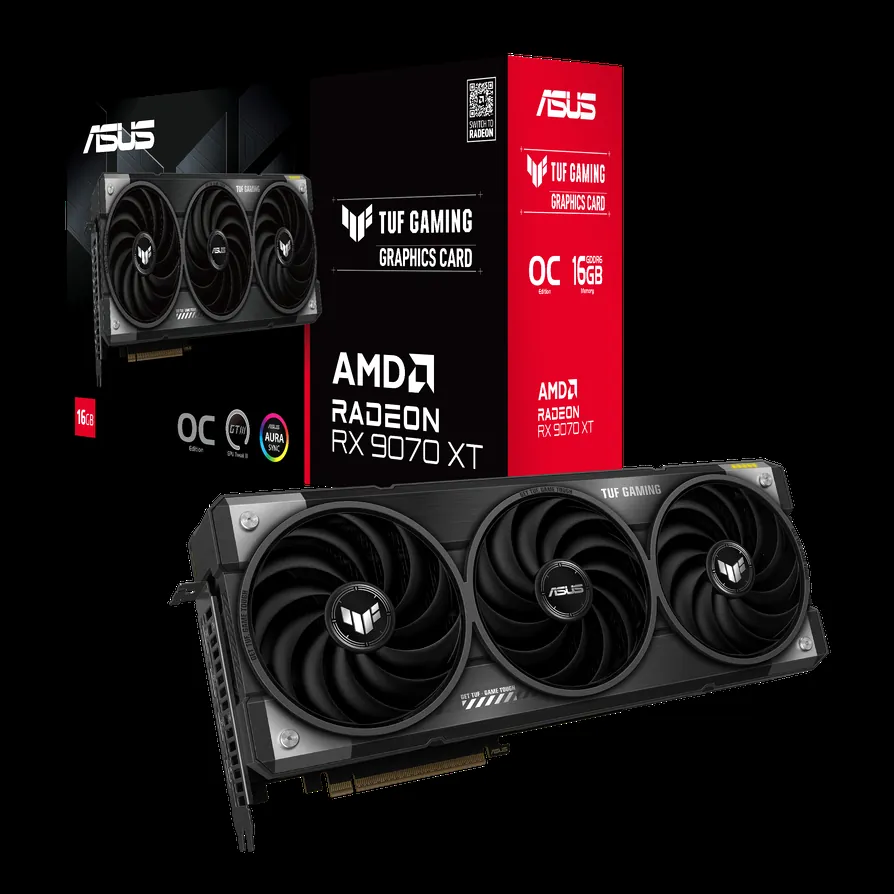
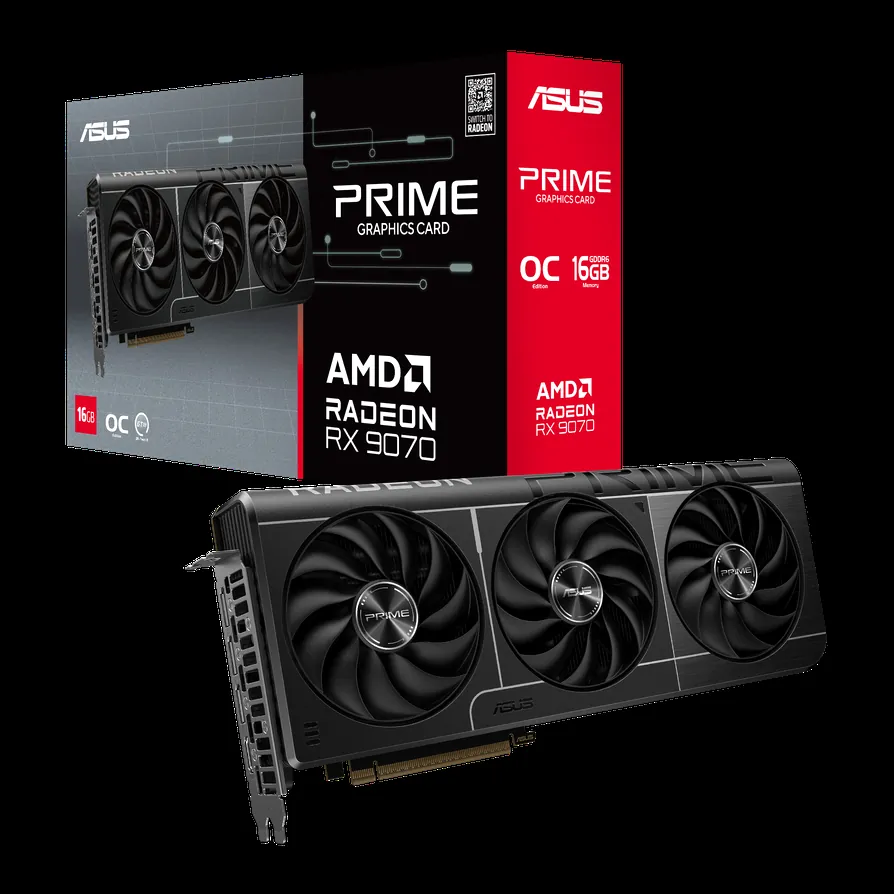
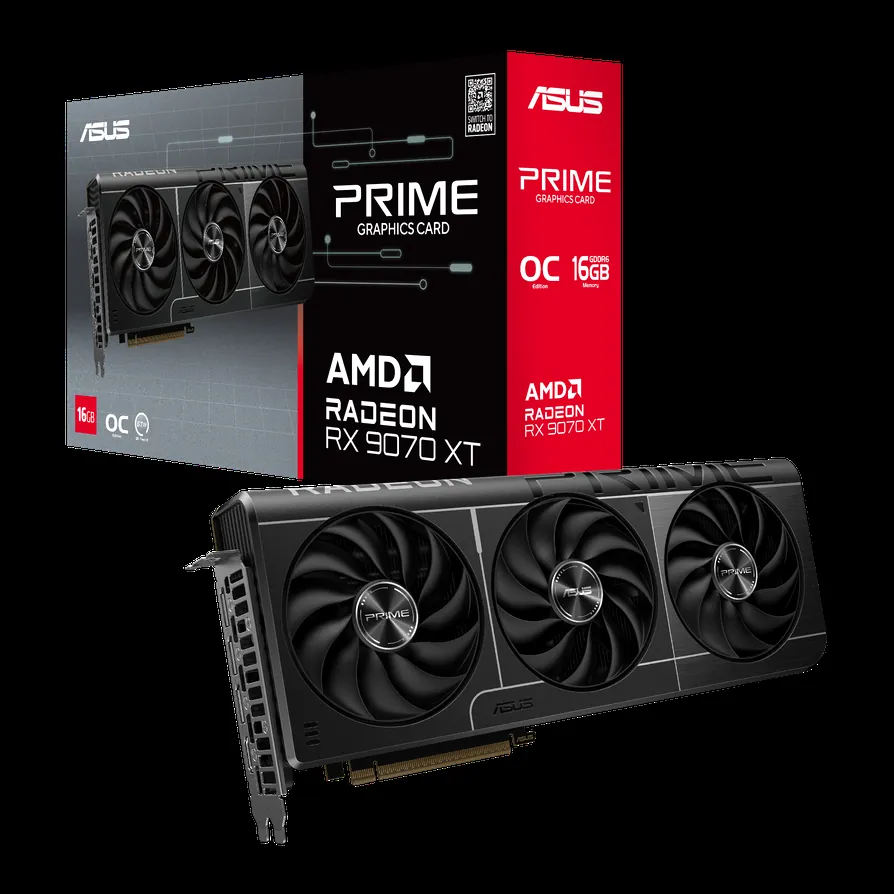
Board Partner Showcase: ASUS TUF, Prime, and XFX Designs
The Verdict: Unbeatable Value, But Key Considerations Remain
The Radeon RX 9070 series represents a triumphant return to form for AMD. The RX 9070 XT is the current king of 1440p rasterization, offering performance that challenges the RTX 4080 Super at nearly half the original price. The RX 9070 non-XT is equally impressive, providing a highly efficient, 16GB alternative to NVIDIA’s VRAM-limited RTX 5070. FSR 4 ‘Redstone’ finally gives AMD a seat at the AI table, though frame-pacing stutters and high VRAM thermals (reaching 94°C) serve as reminders that this is a first-generation architectural overhaul. If you can stomach the occasional software growing pains and ensure your case has the airflow to handle the heat, the RX 9070 series offers the ‘Confidence to Switch’ by delivering the best price-to-performance ratio we’ve seen in years.