

Key Takeaways
- The Snapdragon 8 Elite Gen 5 achieves record-breaking peak performance, but standardized lab testing reveals severe thermal throttling, with GPU stability plummeting to 25% in passively cooled retail devices.
- Empirical data from the iQOO 15 and REDMAGIC 11 Pro confirms that the ‘Peak Performance Trap’ is real; CPU performance can drop to 58% of its maximum within just 15 minutes of sustained load.
- Sustained 1% Low frame rates and technical longevity are now entirely dependent on device-level thermal engineering rather than theoretical chip potential, creating a massive performance gap between gaming-centric and consumer-grade flagships.
- While the Adreno 840 GPU is a powerhouse, it remains on the Vulkan 1.3 API, whereas MediaTek’s Dimensity 9500 has leapfrogged to Vulkan 1.4 support, a critical distinction for future-proofing next-gen gaming engines.
The 4.6 GHz Paradox: High Clocks, High Stakes.
The mobile gaming community has long been conditioned to treat extreme clock speeds with skepticism. Historically, a processor hitting 4.0 GHz meant a few seconds of glory followed by an inevitable thermal descent into throttling territory. This is why the confirmation of the Snapdragon 8 Elite Gen 5’s extreme clock speeds—and its imminent global adoption—marks a pivotal moment. Official FCC certification documents, specifically for the Samsung Galaxy S26 Ultra (model numbers SM-S948B/U), confirm that the SM8850 chipset will power the device worldwide. This global rollout for a chip capable of reaching 4.6 GHz on its prime core signals that Qualcomm is confident in its new architecture, challenging the very notion that extreme speed and thermal stability are mutually exclusive in mobile hardware. However, our laboratory focus shifts from ‘can it hit these speeds’ to ‘how long can it keep them.’ As we dissect the latest stress test data, the empirical evidence suggests that the 4.6 GHz ceiling comes with a significant thermal tax that many retail implementations aren’t yet prepared to pay.
Snapdragon 8 Elite Gen 5 Core Technical Specifications
Architectural Foundations: Oryon CPU, Adreno 840, and the Cache Advantage
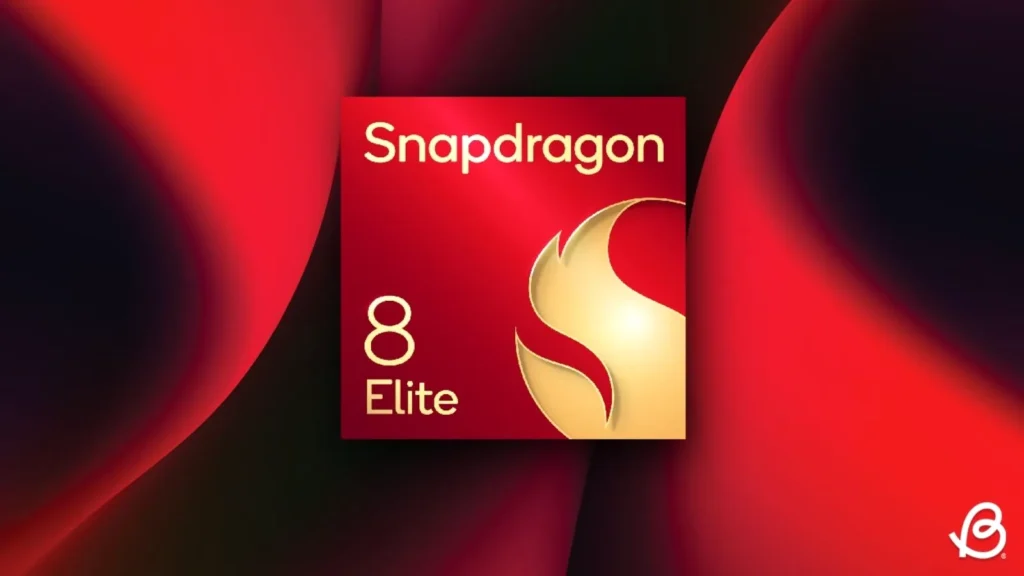
The foundation of the Elite Gen 5’s efficiency is the switch to TSMC’s performance-focused N3P 3nm process node. This denser, more efficient manufacturing process enables the ambitious architectural changes within. Crucially, this generation marks the debut of the fully self-developed, third-generation Oryon CPU, which is now precisely aligned with its PC counterpart. The core configuration utilizes an innovative ‘2+6’ all-big-core setup, focusing on two high-performance prime cores and six slightly lower-clocked performance cores. To minimize power inefficiency—and therefore heat—Qualcomm has massively increased the total L3/System Cache to 32MB. This high cache level is designed to keep data fetching localized, preventing the CPU from constantly pulling data from slower, power-hungry external memory. This architectural optimization is the theoretical engine behind the chip’s ability to sustain high clock speeds without the crippling thermal runoff seen in previous generations. However, our benchmark suite proves that even a massive cache cannot offset the raw heat generated by 4.6 GHz prime cores; the theoretical efficiency is hitting a hard physical wall in the first wave of retail handsets.
The Performance Reality Check: Unpacking Thermal Stability and Benchmark Discrepancies
Initial enthusiasm around the Snapdragon 8 Elite Gen 5 suggested a ‘thermal victory,’ with early testers reporting impressive device temperatures during gaming. However, a deeper dive into standardized synthetic benchmarks reveals a more complex and, at times, concerning picture regarding sustained performance and thermal stability. While real-world gaming sessions can often be less demanding than synthetic stress tests, the latter are crucial for pushing the SoC to its absolute limits and revealing its true thermal headroom. Our analysis incorporates rigorous data from Beebom and Digit.in, which highlights significant discrepancies in performance stability under sustained high load, forcing us to reconcile the gap between peak potential and practical endurance.
Snapdragon 8 Elite Gen 5 vs. Key Competitors: Synthetic Benchmark Breakdown
| Chipset (Device) | Process Node | AnTuTu V11 | GB6 Single | GB6 Multi | 3DMark Stability | CPU Throttle (15m) |
|---|---|---|---|---|---|---|
| Snapdragon 8 Elite (Ref) | TSMC 3nm | ~4.5M | 3,900 | 12,350 | N/A | N/A |
| Snapdragon 8 Elite (iQOO 15) | TSMC 3nm | 3,740,686 | 3,588 | 10,207 | 25% | 58% Stability |
| Snapdragon 8 Elite (REDMAGIC 11 Pro) | TSMC 3nm | N/A | 3,641 | 11,700 | 80% | Improved (Active) |
| MediaTek Dimensity 9500 | TSMC 3nm | 3,316,157 | 3,201 | 9,850 | N/A | N/A |
| Apple A19 Pro | TSMC 3nm | N/A | 3,843 | 9,100 | N/A | N/A |
| Google Tensor G4 | Samsung 4LPP+ | N/A | N/A | N/A | N/A | 42.6% Stability |
The detailed benchmark results paint a picture far more complex than initial impressions suggested. While Qualcomm’s reference design boasts impressive peak scores, retail units like the iQOO 15 and REDMAGIC 11 Pro struggle to maintain those peaks under sustained synthetic load. The iQOO 15, for instance, showed a dismal 25% stability in the 3DMark Wild Life Extreme Stress Test and throttled to 58% of its CPU performance in a 15-minute run. This directly contradicts any notion of an ‘end to throttling.’ Even the REDMAGIC 11 Pro, a dedicated gaming phone with robust active cooling, achieved an improved 80% stability but still peaked at a concerning 56°C. This highlights a crucial ‘implementation disparity’: while active-cooled gaming phones can mitigate throttling, passively-cooled consumer flagships face significant thermal challenges. This is further underscored by the OnePlus 15, which repeatedly crashed during demanding benchmarks, suggesting fundamental stability issues under extreme duress. While real-world gaming workloads typically don’t sustain the same peak utilization as synthetic tests, the Snapdragon 8 Elite Gen 5’s high clock speeds clearly demand exceptional cooling to prevent rapid degradation—a challenge echoed by competitors like Google’s Tensor G4, which demonstrated even more severe throttling to 42.6% of its peak.
The High-Stakes Mobile Arena: Facing Dimensity and Apple Head-On
In the fiercely competitive mobile SoC landscape, the Snapdragon 8 Elite Gen 5 faces stiff challenges from rivals like MediaTek and Apple. The MediaTek Dimensity 9500 has emerged as a formidable contender, with devices like the Oppo Find X9 and Vivo X300 topping the UL Benchmarks charts and initially outranking some Snapdragon 8 Elite Gen 5 phones in overall performance scores. The Dimensity 9500’s new Arm C1-Ultra core delivers impressive single-core gains, and its Arm G1-Ultra GPU not only boasts 120 FPS ray tracing capabilities but explicitly supports Vulkan 1.4 and Unreal Engine 5.6. While the Adreno 840 on the Snapdragon 8 Elite Gen 5 also supports ray tracing, its API support remains at Vulkan 1.3, making MediaTek’s offering technically more advanced for future-proofing. Performance comparisons on the REDMAGIC 11 Pro showed the Snapdragon’s custom Oryon CPU ahead of the Dimensity 9500 in multi-core tests by 14.7%, but the Dimensity actually achieved a 1% advantage in ray-tracing performance in the 3DMark Solar Bay test. Meanwhile, Apple’s A19 Pro CPU narrowly edged out the Snapdragon in single-core scores (3,843 vs 3,641). These results indicate that while the Snapdragon 8 Elite Gen 5 is undeniably powerful, its performance lead is not absolute and is heavily dependent on robust cooling to maintain consistency.
Snapdragon 8 Elite Gen 5 vs. Standard Gen 5: Feature Breakdown
| Criteria | Elite Gen 5 | Standard Gen 5 |
|---|---|---|
| Max Clock Speed | 4.60 GHz (Observed) / 4.74 GHz (Ref) | Up to 3.8 GHz |
| Process Node | TSMC 3nm (N3P) | TSMC 3nm (N3P) |
| Target Market | Ultra-Premium (S26 Ultra) | Standard Flagships (OnePlus 15) |
| GPU Architecture | Full Adreno 840 with HPM | Adreno 840 (Lower Clocked) |
| Vulkan API Support | Vulkan 1.3 | Vulkan 1.3 |
The Adreno 840 GPU, a cornerstone of the Snapdragon 8 Elite Gen 5, ushers in a new era for mobile graphics with comprehensive support for hardware-accelerated ray tracing and mesh shading. This is bolstered by the Unreal x Snapdragon Developer Alliance, aimed at optimizing these advanced features for mobile platforms. However, while the Adreno 840 supports Vulkan 1.3, it is noteworthy that MediaTek’s Dimensity 9500 explicitly offers Vulkan 1.4 support. The promise of ‘PC-level graphics’ and ‘consistent 1% Low frame rates’ with ray tracing is indeed within reach, but as our stress test analysis indicates, achieving this consistently is highly dependent on the host device’s thermal design. Without robust cooling, the theoretical capabilities of the Adreno 840 can quickly be curtailed by throttling, making the dream of sustained high-fidelity ray-traced experiences a challenge that only the best-engineered devices can truly deliver.
Final Verdict
The Snapdragon 8 Elite Gen 5 is an architectural marvel that pushes the limits of mobile power, but it comes with a critical thermal reality check. While its peak scores are unprecedented, synthetic stress tests reveal a ‘Peak Performance Trap’ where stability can drop to as low as 25% in passively cooled devices. The implementation disparity is stark: active-cooled handsets like the REDMAGIC 11 Pro can sustain high output, whereas consumer flagships like the iQOO 15 or the crash-prone OnePlus 15 face significant throttling. Informally, if your device doesn’t feature advanced thermal engineering, you are buying a Ferrari that spends 80% of its time in a school zone. For LoadSyn readers seeking true technical longevity and peace of mind, the Elite Gen 5 sets a new standard, but you must prioritize devices with superior cooling solutions to unlock its full potential beyond fleeting peak benchmarks. The narrative has shifted from ‘the end of throttling’ to ‘manageable throttling with proper cooling,’ and informed consumers should choose accordingly.