
The New Era of NAND: Beyond the Layer Race
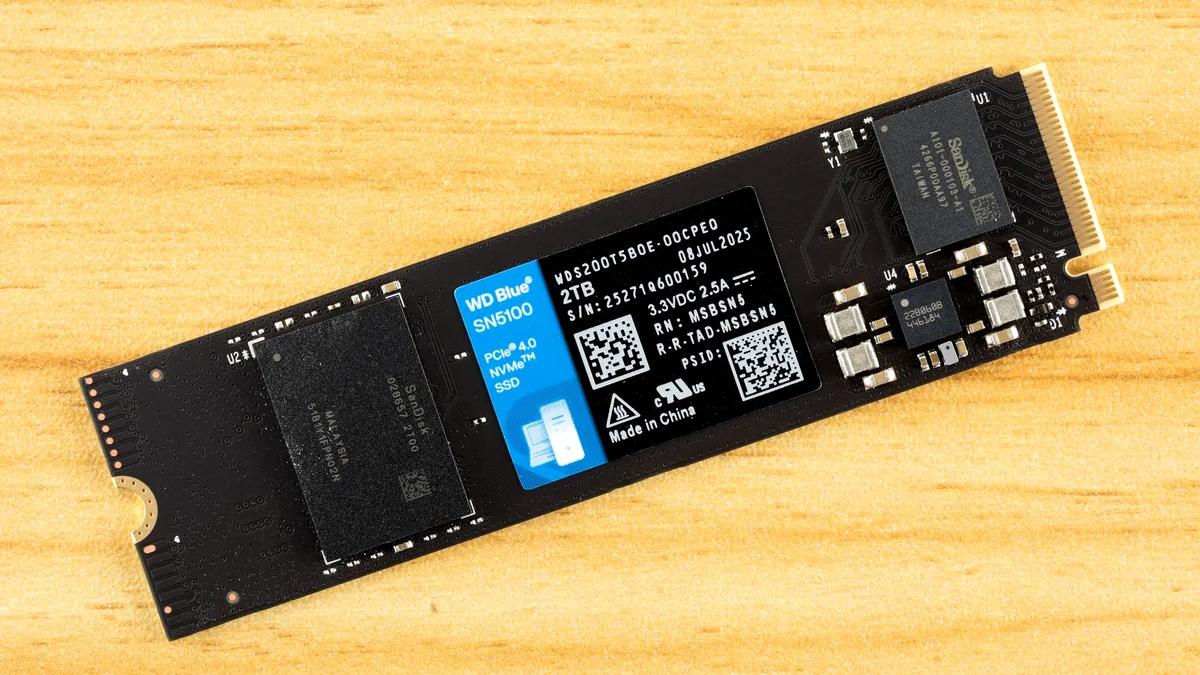
For years, the storage industry was locked in a vertical arms race—a relentless pursuit of stacking more NAND layers as if height alone guaranteed superiority. However, as Western Digital’s Rob Soderbery articulated at FMS 2024, we have entered a “New Era of NAND.” The industry is moving past the simplistic “layers race” because manufacturing complexity has reached a point of diminishing returns. Instead, the focus has shifted to a critical triad: performance, capacity, and power efficiency. The SanDisk WD Blue SN5100 is the physical manifestation of this philosophy, proving that refined architecture and the strategic application of BiCS8 QLC can outperform the brute force of yesterday’s TLC drives.
Key Takeaways
- Sequential read speeds up to 7,100 MB/s—a 30% jump over the SN5000.
- Utilizes next-gen BiCS8 218-layer QLC NAND with CBA technology.
- Exceptional power efficiency (3.8W-4.3W active) making it ideal for laptops.
- Includes nCache 4.0 for sustained high-speed transfers of large game folders.
- Full PS5 compatibility (requires a separate heatsink).
Under the Hood: The Polaris 3 & BiCS8 Synergy
At the heart of the SN5100 lies the SanDisk Polaris 3 controller, an in-house silicon masterpiece built on a 16nm process utilizing ARM Cortex-R architecture. This four-channel controller is paired with eighth-generation BiCS8 QLC NAND, featuring a staggering 218 layers and CMOS Bonded to Array (CBA) technology. While the “DRAM-less” label often triggers skepticism among enthusiasts, the SN5100 leverages Host Memory Buffer (HMB) technology to allocate 64MB of system RAM for its mapping tables. By utilizing the ultra-fast PCIe Gen 4.0 x4 interface and 2,400 MT/s flash channels, the Polaris 3 effectively masks the absence of dedicated DRAM, delivering responsiveness that challenges even high-end legacy drives.
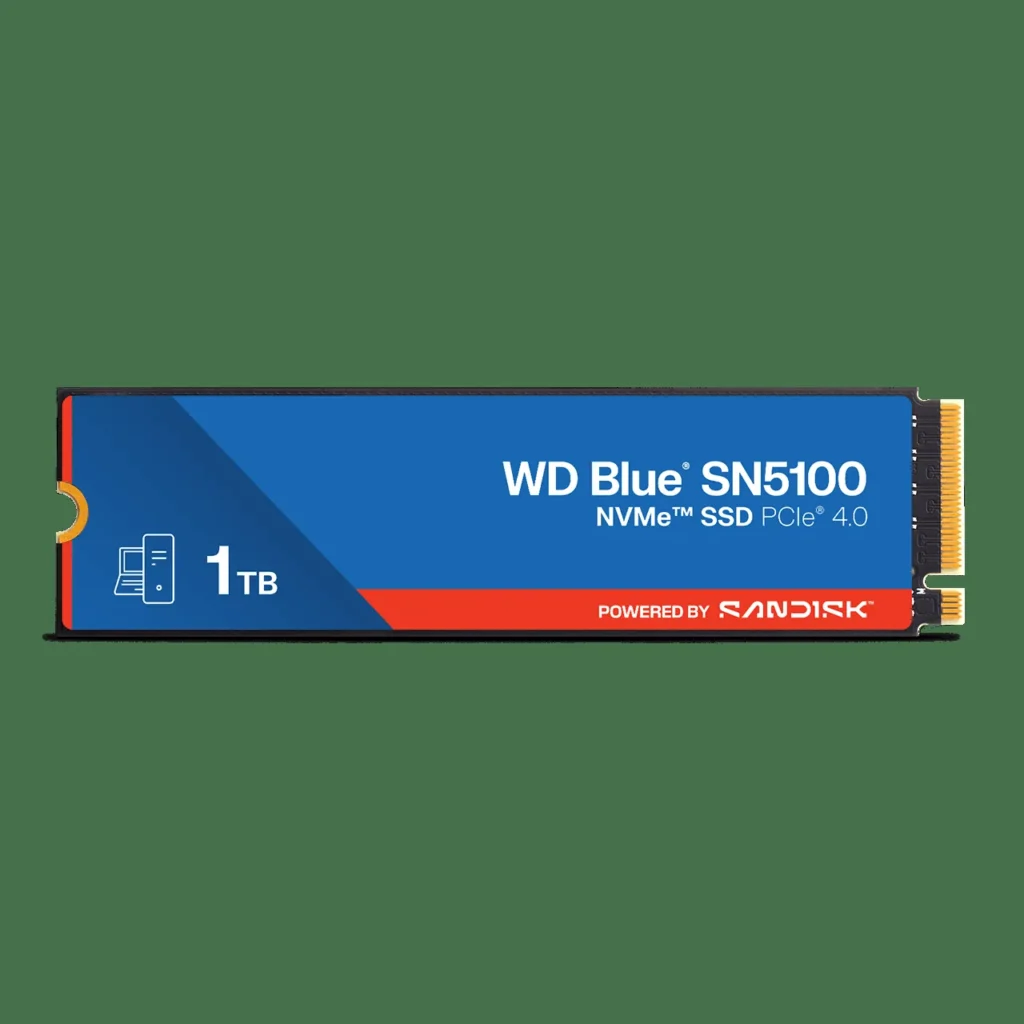
| Technical Specifications | |
|---|---|
| Interface | PCIe Gen 4.0 x4 / NVMe 2.0 |
| Form Factor | M.2 2280 (Single-Sided) |
| NAND Type | SanDisk BiCS8 218-Layer QLC 3D CBA |
| Controller | SanDisk Polaris 3 (DRAM-less) |
| Peak Read Speed | Up to 7,100 MB/s |
| Peak Write Speed | Up to 6,700 MB/s |
| Endurance (2TB) | 900 TBW |
| Warranty | 5-Year Limited |

Gaming Performance: 3DMark & Real-World Loading
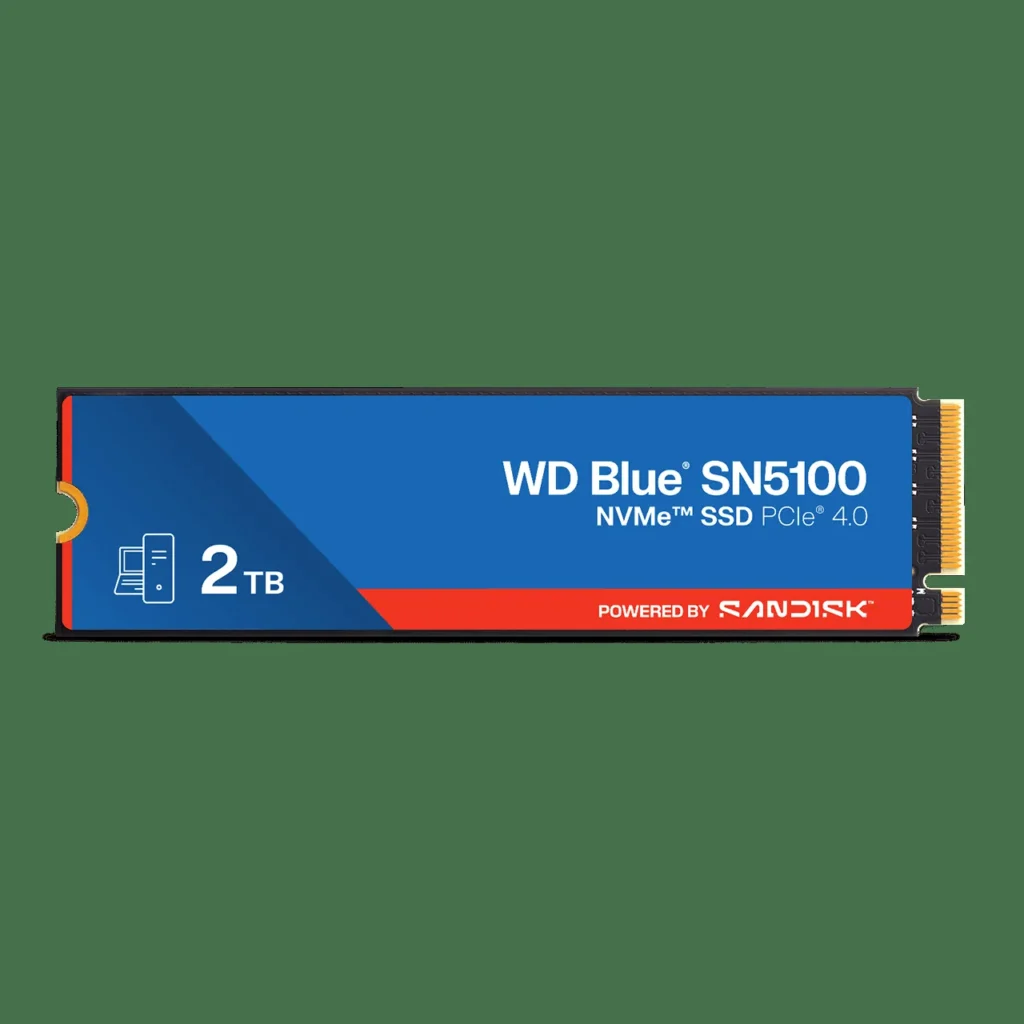
Raw sequential numbers are impressive, but gaming thrives on bursty, random I/O. In our analysis of 3DMark Storage benchmarks, the SN5100 demonstrated remarkable prowess, occasionally leapfrogging DRAM-equipped competitors like the Crucial T500. This is largely credited to nCache 4.0—a hybrid pseudo-SLC (pSLC) caching system. On the 2TB model, this cache extends up to 500GB, allowing the drive to ingest massive game installs at over 6 GB/s. For the modern gamer, this means that even during the most asset-heavy streaming sequences in open-world titles, the SN5100 maintains the low latency required to prevent stuttering, effectively neutralizing the traditional “QLC penalty.”
The QLC Compromise: Endurance vs. Value
Let’s address the elephant in the room: the “Fandom Pulse” of anxiety regarding QLC longevity. With the 2TB SN5100 rated at 900 TBW (Terabytes Written), it sits lower on the endurance spectrum than its TLC-based siblings like the SN850X. However, we must apply a lens of pragmatism. For the average gamer writing 50GB of data daily, it would take nearly 50 years to exhaust this drive’s lifespan. While “purists” may scoff at the 0.2 Drive Writes Per Day (DWPD) rating, the reality is that the SN5100’s static caching mechanism significantly reduces wear by intelligently managing how data is folded into the QLC blocks. For 90% of users, the capacity-to-cost ratio far outweighs the theoretical concerns of cell degradation.
Pros
- Top-tier PCIe 4.0 sequential speeds
- Incredible thermal management (runs cool at 53°C)
- Large pSLC cache (up to 500GB on 2TB model)
- Aggressive launch pricing for budget builds
Cons
- QLC endurance is lower than TLC competitors
- Sustained write speeds drop significantly once cache is full
- DRAM-less design relies on System RAM (HMB)
Final Verdict
9/10
10/10
8/10
6/10
Frequently Asked Questions
Does the WD Blue SN5100 work in a PS5?
Yes, it meets the 5,500 MB/s requirement easily, hitting up to 7,100 MB/s. However, you must add an aftermarket heatsink as it ships without one.
What is the difference between nCache 4.0 and older versions?
nCache 4.0 uses a hybrid static/dynamic pSLC cache that is larger and more efficient at folding data to QLC blocks during idle time.
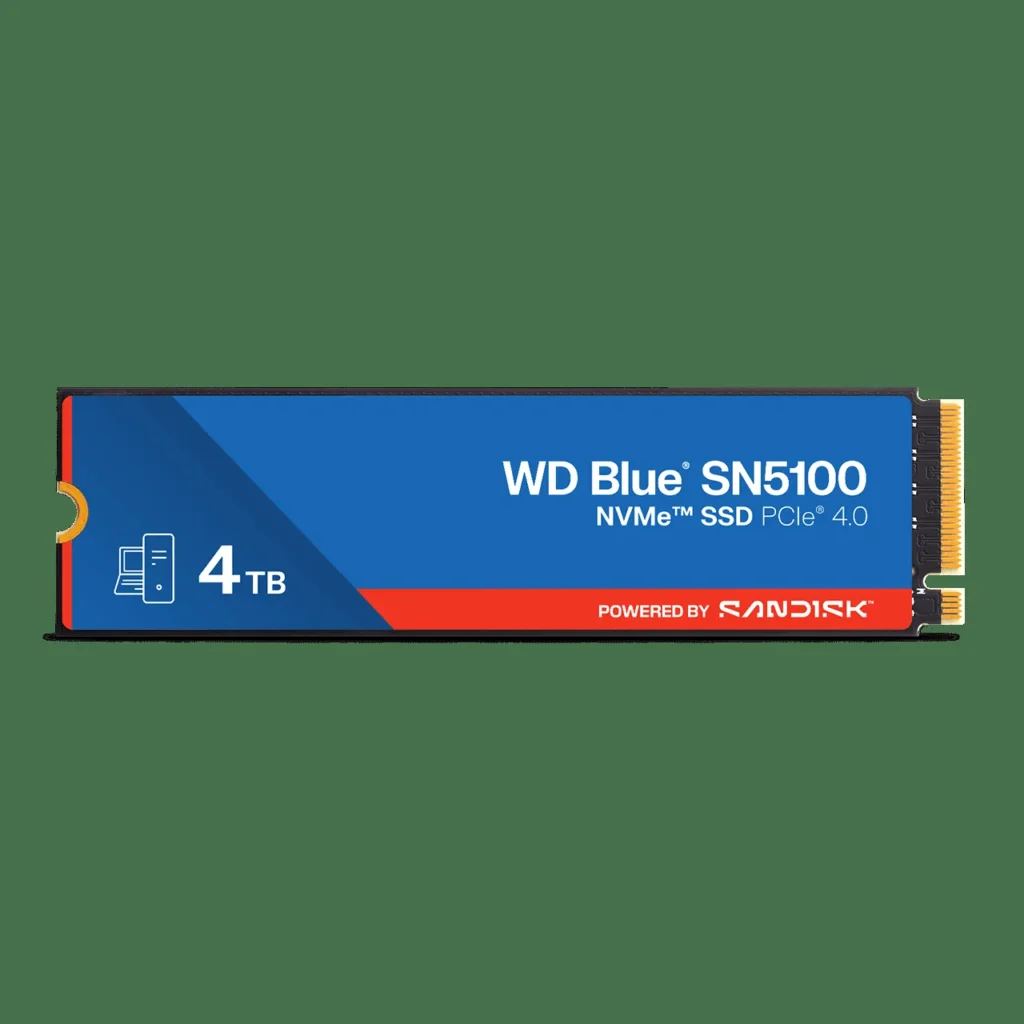
Is the 4TB version available now?
The 500GB, 1TB, and 2TB models are available immediately, with the 4TB model scheduled for release in late 2025.