

Samsung’s latest engineering marvel, the Galaxy Z TriFold, has officially been unveiled, heralding a new era in mobile computing. This isn’t just another foldable; it’s a revolutionary tri-folding device designed to fundamentally shift our expectations of what a smartphone can be. By seamlessly bridging the functionality of a premium smartphone, a versatile tablet, and even a desktop-class PC, the TriFold aims to redefine mobile productivity. Join us as we dissect the groundbreaking design, ambitious features, and the intricate engineering principles that underpin this audacious leap into the future.
A Canvas Unfolds: The TriFold’s Revolutionary Display
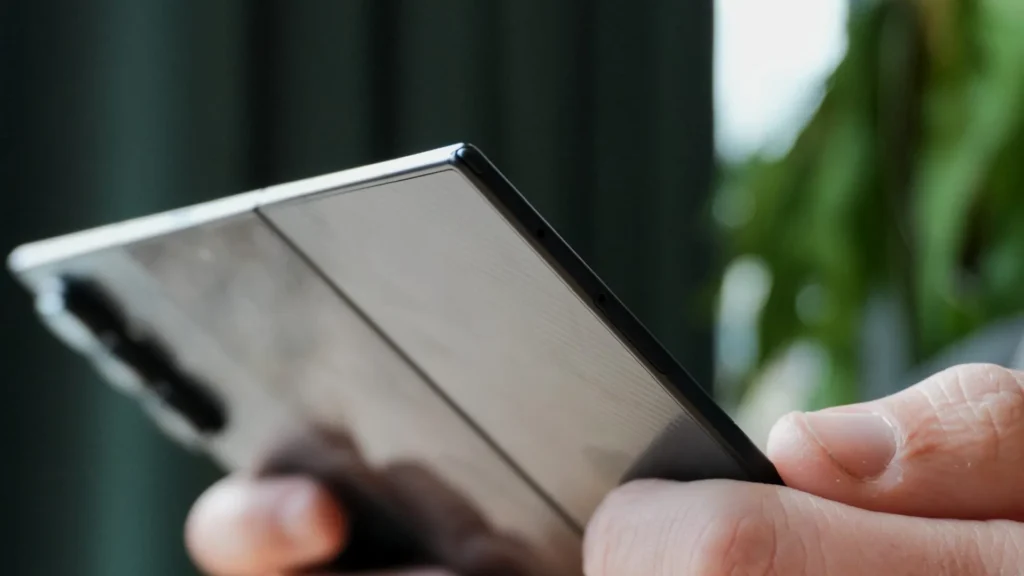
At the heart of the Galaxy Z TriFold’s innovation lies its unique dual-hinge, inward-folding design. This sophisticated mechanism allows the device to transform from a remarkably portable 12.9mm thick smartphone into an expansive 10-inch QXGA+ Dynamic AMOLED 2X display. When fully unfurled, this cinematic canvas achieves an astonishing thinness of just 3.9mm at its slimmest point. More than just a larger screen, this generous form factor is meticulously engineered to run three portrait-sized applications side-by-side, effectively positioning the TriFold as a true mobile workstation and blurring the lines between traditional device categories.
Your Pocket-Sized Powerhouse: Productivity Unleashed with DeX and AI
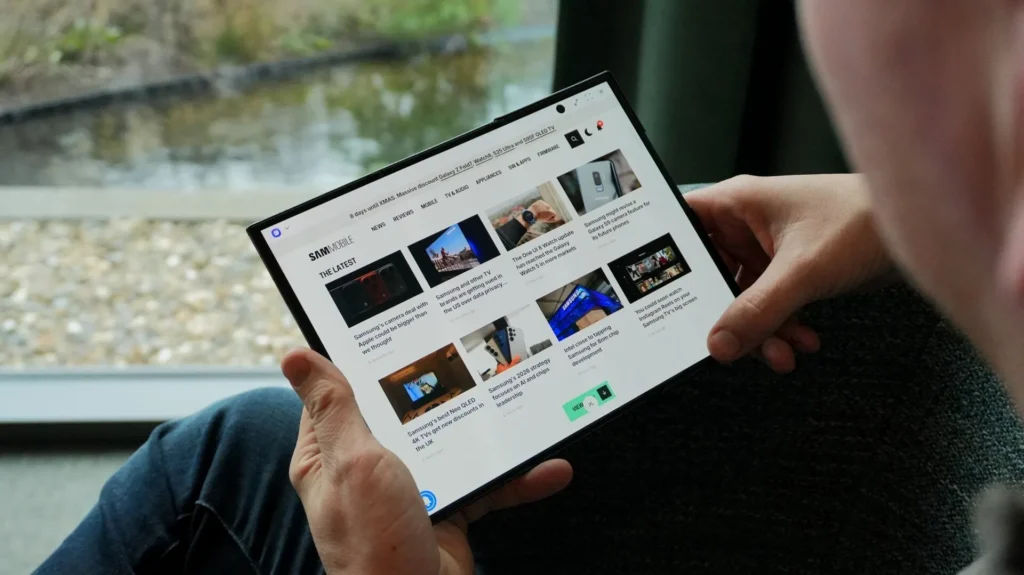
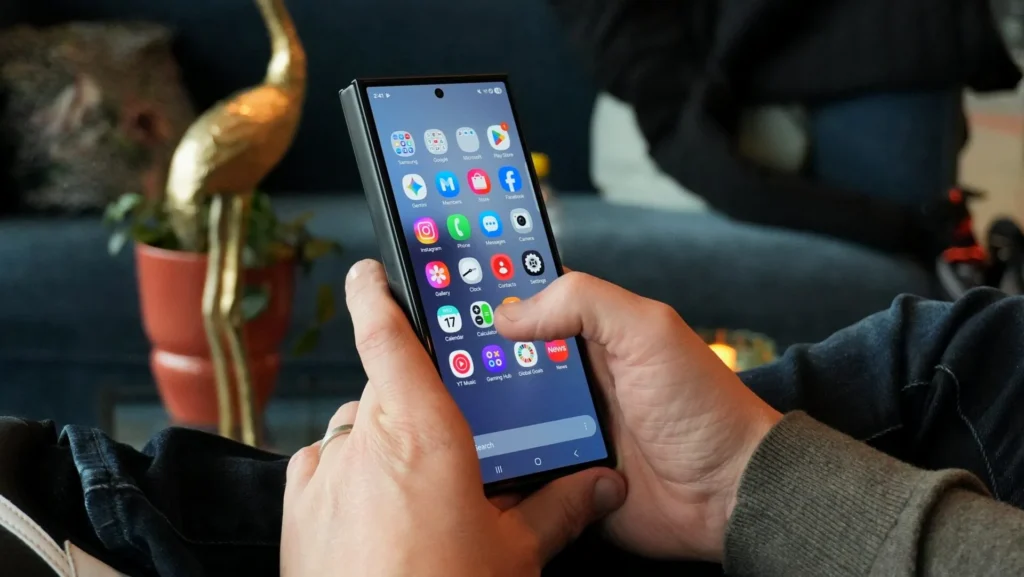
Experience the TriFold’s unparalleled multitasking: from a full DeX desktop environment to running multiple apps side-by-side on its massive internal display.
The Galaxy Z TriFold elevates mobile productivity to unprecedented levels, not least through its standalone Samsung DeX experience. This feature transforms the device into a complete working environment, supporting up to four distinct workspaces, each capable of running five applications simultaneously. For those needing an even broader canvas, DeX extends its capabilities to external displays, seamlessly integrating with Bluetooth keyboards and mice for a true desktop-like efficiency. Complementing this, the integrated Galaxy AI features, enhanced by a strategic partnership with Google, provide intelligent assistance. Tools like Writing Assist can summarize lengthy websites or draft emails, while Transcript Assist accurately transcribes and summarizes recordings, even suggesting reminders based on their content. With Generative Edit, photo manipulation becomes intuitive, allowing users to effortlessly adjust objects within images. The inclusion of a 6-month trial of Google AI Pro further enhances this ecosystem, offering 2TB of secure cloud storage and access to advanced Gemini app features, including video generation via Veo3. This powerful fusion of hardware and AI positions the TriFold as Samsung’s most versatile AI phone to date.
The phone acting like a monitor for Dex is so mind-blowing. It’s like a pocket-able foldable PC. Especially if you get one of those foldable keyboards.
Engineering Marvel or Durability Dilemma?

The complexity of the TriFold’s multi-panel design naturally raises questions about real-world durability, a common concern in the foldable space. Samsung has addressed this with advanced engineering, integrating an Armor FlexHinge featuring a robust titanium housing and a dual-rail structure. The device’s structural integrity is further bolstered by strengthened glass, an Advanced Armor Aluminum frame, and a ceramic-glass fiber-reinforced polymer back panel. This meticulous construction contributes to its IP48 water resistance rating, signifying protection against water immersion up to 1.5 meters for 30 minutes. However, it’s crucial to note the absence of a dust resistance rating and the lack of support for traditional FlexMode, meaning the device primarily operates in either fully open or fully closed states. Furthermore, manufacturing innovations were paramount for such a complex device; Goodix Technology played a pivotal role, contributing both the main and sub touchscreen controller solutions, engineered with proprietary hardware sampling architecture and noise-suppression algorithms for exceptional resistance to display noise. Their ultra-narrow side-key capacitive fingerprint sensor, measuring just 1.65mm wide, seamlessly integrates into the TriFold’s slim frame, ensuring fast and reliable biometric authentication across all folding states.
Rigorous Testing: Built to Endure?
Samsung subjected the Galaxy Z TriFold’s main display to a demanding 200,000-cycle multi-folding test, simulating five years of heavy daily use. This, alongside high-speed CT scanning and 3D laser scanning during manufacturing, underscores the immense efforts to ensure reliability, despite the lingering concerns from the community.
If THIS survives the Jerryrig bend test, those engineers need a raise 😂
Under the Hood: Performance, Camera, and Power
Samsung Galaxy Z TriFold Key Specifications
| Processor | Snapdragon 8 Elite Mobile Platform for Galaxy (3nm) |
|---|---|
| RAM | 16GB |
| Storage | 512GB / 1TB (UFS 4.1) |
| Main Display | 10-inch QXGA+ Dynamic AMOLED 2X (2160 x 1584), 120Hz, 1600 nits peak |
| Cover Display | 6.5-inch FHD+ Dynamic AMOLED 2X, 120Hz, 2600 nits peak |
| Main Camera | 200 MP Wide (OIS, Quad Pixel AF), 12 MP Ultra-Wide, 10 MP Telephoto (3x optical) |
| Front Cameras | 10 MP (Main Screen), 10 MP (Cover Screen) |
| Battery | 5600 mAh (three-cell system) |
| Charging | 45W Wired (50% in 30 min), 15W Wireless, 4.5W Reverse Wireless |
| Operating System | Android 16 with One UI 8 (7 years OS updates) |
| Durability | IP48 Water Resistance (no dust resistance) |
| Dimensions (Folded) | 159.2 x 75 x 12.9 mm |
| Dimensions (Unfolded) | 159.2 x 214.1 x 3.9-4.2 mm |
| Weight | 309g |
Powering the Galaxy Z TriFold is the customized Snapdragon 8 Elite Mobile Platform for Galaxy, a 3nm processor delivering flagship performance with enhanced CPU, GPU, and NPU capabilities. This robust chipset, paired with 16GB of RAM and UFS 4.1 storage options up to 1TB, ensures seamless multitasking and fluid operation of even the most demanding applications. The device’s photographic prowess is anchored by an Ultra 200 MP camera system, featuring a 200 MP wide camera with OIS and Quad Pixel AF, a 12 MP ultra-wide, and a 10 MP telephoto lens with 3x optical zoom. This professional-grade array captures stunning detail and clarity, even in challenging low-light conditions. Furthermore, the TriFold houses the largest battery ever in a Samsung foldable: a 5,600 mAh three-cell system, meticulously distributed across the panels for balanced delivery. This substantial power source supports 45W Super-Fast Charging 2.0, capable of reaching 50% charge in approximately 30 minutes, alongside 15W wireless and 4.5W reverse wireless charging, ensuring the device keeps pace with its users’ high demands.
The Price of Progress: TriFold vs. The Fold Legacy
Galaxy Z TriFold vs. Galaxy Z Fold 7: Key Differences
| Feature | Galaxy Z TriFold | Galaxy Z Fold 7 |
|---|---|---|
| Main Display Size | 10-inch | 8-inch |
| Folded Thickness | 12.9 mm | 8.9 mm |
| Weight | 309g | 215g |
| Battery Capacity | 5600 mAh | 4400 mAh |
| Wired Charging | 45W Super-Fast | 25W Fast |
| Creases | Two (minimal) | One |
| S Pen Support | No | Yes |
| Price (Approx. KRW) | 3,594,000 (~$2,449) | ~$2,000 |
The Galaxy Z TriFold is unequivocally positioned as a premium device, reflected in its initial South Korean price of approximately 3,594,000 KRW (around $2,449 USD). This places it significantly above the traditional Galaxy Z Fold series, underscoring its role as a pioneering, high-end offering. Its global rollout is phased, launching first in Korea, China, Taiwan, Singapore, and the UAE, with a U.S. release scheduled for the first quarter of 2026. This strategic launch cadence allows Samsung to gauge market reception while addressing the intricate supply chain demands of such a complex device. The intensifying competition in the foldable market, with Chinese manufacturers like Huawei and Honor aggressively expanding their portfolios, further emphasizes the TriFold’s significance. By introducing this novel form factor, Samsung aims to not only maintain but expand its leadership in the mobile AI era, demonstrating its commitment to pushing the boundaries of what’s possible in portable computing, even if it comes at a premium price and with a slightly bulkier footprint compared to its predecessors.
Galaxy Z TriFold: The Verdict in Brief
Pros
- Revolutionary 10-inch Tri-Foldable Display for ultimate multitasking.
- Standalone Samsung DeX for a full desktop experience on the go.
- Most advanced Snapdragon 8 Elite processor for Galaxy, optimized for AI.
- Largest battery in a Samsung foldable (5600 mAh) with 45W fast charging.
- Comprehensive Galaxy AI features for enhanced productivity and creativity.
- Advanced engineering and rigorous testing for durability (Armor FlexHinge, IP48).
Cons
- Significantly heavier (309g) and thicker (12.9mm folded) than other foldables.
- High premium price point (approx. $2,449 USD).
- Lacks S Pen support, a staple for productivity on other Galaxy Fold devices.
- No dust resistance, only water resistance (IP48).
- Does not support traditional Flex Mode, limiting intermediate folding states.
- Specific folding sequence required with on-screen warnings.
Final Verdict
The Samsung Galaxy Z TriFold stands as a monumental achievement in mobile engineering, a pioneering device that boldly pushes the boundaries of form factor innovation. It represents a significant stride towards blurring the lines between smartphones, tablets, and even personal computers, offering an unparalleled canvas for productivity and multitasking on the go. While its ambitious design and powerful feature set, including standalone DeX and comprehensive Galaxy AI, promise a truly versatile mobile computing future, it’s important to acknowledge that this is a first-generation product in its class. The trade-offs in weight, folded thickness, and its premium price point, coupled with the lingering community concerns about multi-fold durability, suggest that widespread mainstream adoption may still require further refinements. Nevertheless, the TriFold is an undeniable testament to Samsung’s innovative spirit, setting a new benchmark for what’s possible and offering a tantalizing glimpse into the evolving landscape of mobile technology.