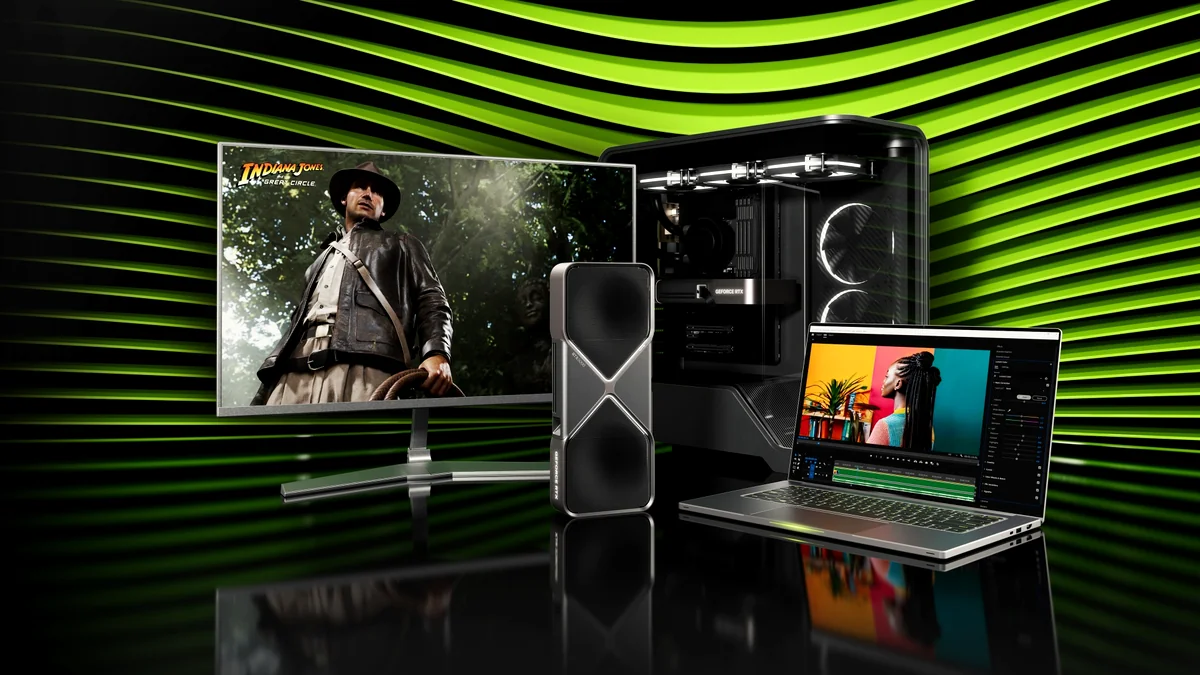

The $749 Sweet Spot: Blackwell’s Mid-Range Powerhouse
On February 20th, the GPU landscape shifts as NVIDIA officially unleashes the GeForce RTX 5070 Ti. Arriving with a strategic $749 MSRP—a refreshing $50 price cut compared to the previous generation’s Ti models—this Blackwell-powered beast promises to double the performance of its predecessor. It is a calculated move to capture the heart of the mid-range market, offering enthusiasts a path to flagship-tier frames without the four-figure price tag. As we prepare our benchmark rigs, the value proposition here is clear: NVIDIA is finally bringing high-bandwidth GDDR7 and next-gen AI architecture to the segment that actually drives the PC gaming economy.
Key Takeaways
- Official Launch: February 20th at 6 AM Pacific.
- Architecture: NVIDIA Blackwell with DLSS 4 Multi Frame Generation.
- Specs: 16GB GDDR7 on a 256-bit bus, 8,960 CUDA cores.
- Price: $749 MSRP (AIB partner cards only, no Founders Edition).
- Performance: Up to 191 FPS in Alan Wake 2 at 1440p with full ray tracing.
Architecture Deep Dive: DLSS 4 and the Transformer Leap
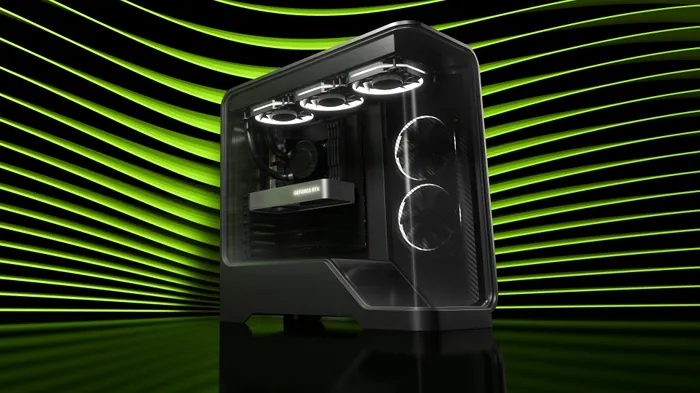
The true wizardry of the Blackwell architecture lies in its departure from traditional rendering logic. DLSS 4 introduces Multi Frame Generation, marking the industry’s first real-time implementation of the transformer model architecture. By utilizing models with 4x more compute and 2x more parameters, Blackwell can generate up to three synthetic frames for every one rendered frame. This isn’t just interpolation; it’s a fundamental shift in stability and detail that virtually eliminates ghosting. For the creative crowd, the story is just as compelling: the 5070 Ti delivers a 2x boost in AI generation speeds, turning local LLMs and image models like FLUX from a waiting game into an instantaneous workflow.
RTX 5070 Ti vs. RTX 5080: The Blackwell Gap
| Feature | RTX 5070 Ti | RTX 5080 |
|---|---|---|
| CUDA Cores | 8,960 | 10,752 (Estimated) |
| Memory | 16GB GDDR7 | 16GB GDDR7 |
| Memory Bus | 256-bit | 256-bit |
| TBP (Power) | 300W | 400W |
| MSRP | $749 | $999 |
Technically, the RTX 5070 Ti is a surgical strike on the high-end. Utilizing the same GB205 die as the RTX 5080, it retains the crucial 256-bit memory bus and 16GB GDDR7 capacity while only seeing a 20% reduction in core count. At $250 less than its bigger sibling, the 5070 Ti offers a significantly higher performance-per-dollar ratio, making it the empirical choice for 1440p and entry-level 4K gaming.
The Great Linux Migration: Reclaiming the Hardware
In our lab, we’re tracking a cultural shift as potent as any hardware launch: the ‘Fandom Pulse’ is beating for Linux. Frustrated by the perceived ‘enshittification’ of Windows—from privacy intrusions to bloat—enthusiasts are migrating to gaming-centric distros like Bazzite and TUXEDO OS. The RTX 5070 Ti stands at the center of this movement. With 16GB of VRAM and standard-setting efficiency, it is the ideal engine for a high-performance Linux workstation. However, the burden remains on NVIDIA; for this migration to succeed, the community demands that Blackwell’s proprietary drivers finally match the stability and transparency found on the Windows side of the fence.
For anyone considering the jump to a post-Windows environment, this benchmark deep dive is essential viewing. It highlights the real-world performance delta when running high-end Blackwell hardware on Bazzite, proving that the Linux gaming ecosystem is no longer a compromise, but a liberation.
“Microsoft, title sponsor of enshittification. … Bazzite has been a shockingly seamless transition for me. I haven’t looked back.”
— Community Member, LoadSyn Fandom Pulse
Creative Workflows: Beyond Gaming
While the 5070 Ti is a gaming titan, its impact on professional pipelines is transformative. The 16GB VRAM buffer is the new baseline for serious 3D rendering in software like Chaos Vantage and Redshift, where memory bottlenecks used to be the primary enemy. Creative professionals can expect video export speeds to accelerate by up to 60%, and AI image generation speeds to effectively double for high-parameter models. Whether you are training local AI agents or rendering complex architectural visualizations, the Blackwell architecture ensures that your hardware is no longer the limiting factor in your creative output.
Final Verdict
The RTX 5070 Ti is the most strategically significant card in the Blackwell launch. At $749, it offers the VRAM and AI throughput needed for a professional Linux workstation while delivering 1440p gaming performance that makes Windows feel like a legacy bottleneck.
Pros
- Aggressive $749 pricing
- 16GB GDDR7 is the new standard for mid-range longevity
- DLSS 4 Multi Frame Gen is a massive leap for high-refresh gaming
- Highly efficient 300W TBP
Cons
- No Founders Edition (AIB only)
- NVIDIA Linux driver support remains a point of community friction
- PCIe Gen 5 requirements may necessitate PSU upgrades