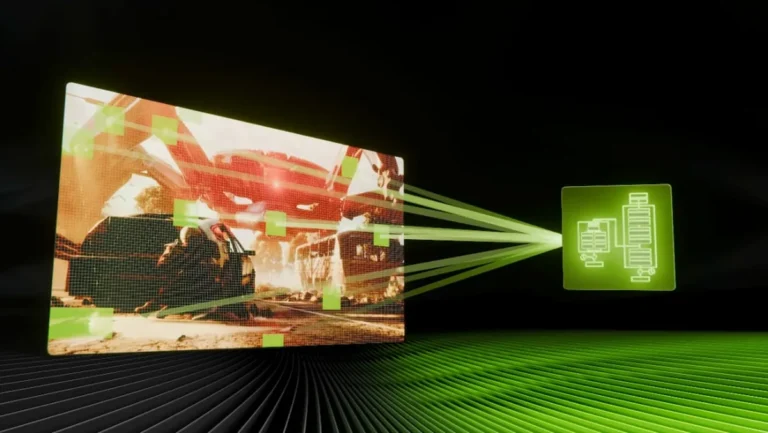

NVIDIA’s latest AI upscaling marvel, DLSS 4.5, made its highly anticipated debut at CES 2026, promising a new era of superior image quality for gamers. Building upon the robust legacy of Deep Learning Super Sampling, this iteration introduces advancements that genuinely push visual fidelity to unprecedented levels. Yet, as with any significant technological leap, DLSS 4.5 arrives with a crucial caveat. While it offers groundbreaking enhancements, its demanding architecture immediately raises important questions regarding performance and compatibility, particularly for owners of older RTX hardware. Our empirical validation reveals a stark divide, where the benefits are not universally shared, creating a complex landscape for the entire RTX ecosystem.
Key Takeaways
- DLSS 4.5 integrates a 2nd-generation transformer model, delivering state-of-the-art image quality with significantly improved temporal stability.
- Key visual enhancements include drastically reduced shimmering and ghosting, superior anti-aliasing, and enriched lighting and motion clarity.
- For RTX 40 and 50 series GPUs, the performance and VRAM costs are minimal (2-5% FPS drop, 200-500MB VRAM increase) due to native FP8 support, making it a seamless upgrade.
- RTX 20 and 30 series GPUs face substantial penalties, including a 14-25%+ FPS reduction and 87-103% higher VRAM usage, primarily due to the absence of native FP8 acceleration.
- Dynamic Multi Frame Generation (DMFG), a new 6x frame multiplier mode, is exclusive to RTX 50 series GPUs and is slated for release in Spring 2026.
- DLSS 4.5 Super Resolution is currently incompatible with Ray Reconstruction, meaning users should revert to DLSS 4.0 for optimal path-traced game experiences.
Unpacking DLSS 4.5: The Second-Gen Transformer Model
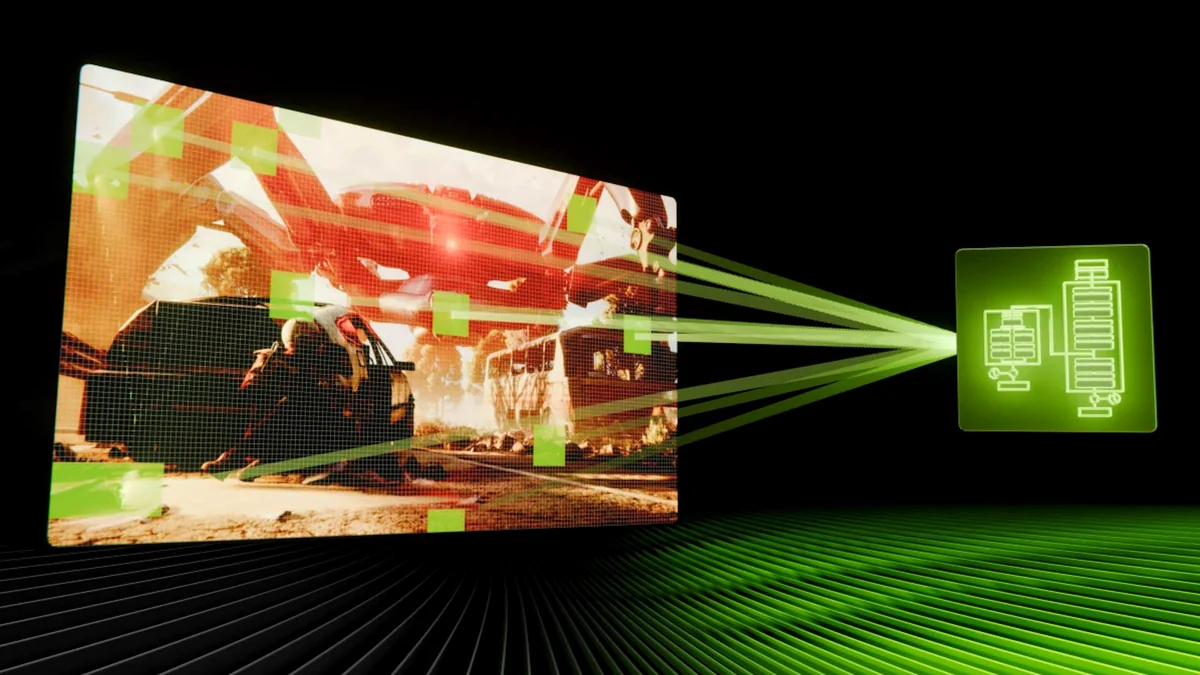
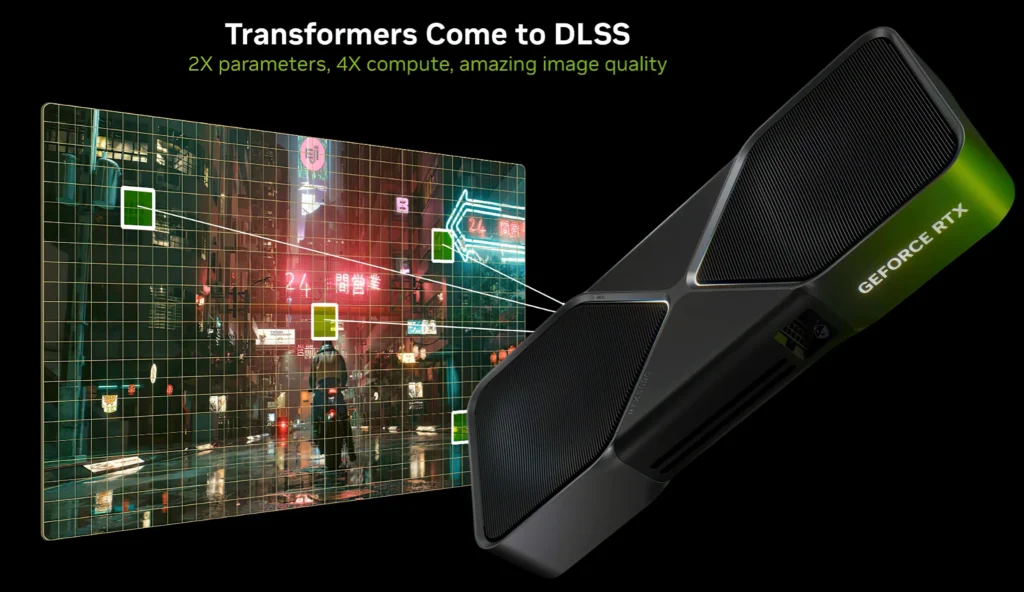
At the heart of DLSS 4.5 lies a profound technological evolution: the introduction of a second-generation transformer model for DLSS Super Resolution. This isn’t merely an incremental update; it’s the culmination of eight years of dedicated research, building on NVIDIA’s extensive work with Convolutional Neural Networks. This sophisticated new model boasts a fivefold increase in computational power compared to its predecessor, having been rigorously trained on significantly expanded, high-fidelity datasets. The shift to operating directly in linear space is a critical advancement, allowing for more accurate preservation of brightness, color range, and intricate shadow details, which translates to a noticeably more natural and vibrant image. Crucially, this advanced model heavily leverages FP8 (8-bit floating point) precision, a data format that offers a higher dynamic range than INT8, making it exceptionally efficient for AI model inference. This reliance on FP8 is the primary enabler for optimal performance on newer GPUs, as their Tensor Cores are specifically designed for such accelerated processing.
The Fidelity Revolution: What DLSS 4.5 Delivers
- Reduced Shimmering and Flicker: Static surfaces, often prone to distracting visual noise, now exhibit enhanced temporal stability.
- Ghosting Elimination: The notorious ghostly trails and after-images behind fast-moving objects, such as weapons in first-person view, are virtually eradicated, significantly improving motion clarity.
- Superior Anti-Aliasing: Titles like the highly anticipated Indiana Jones and the Great Circle showcase notably improved anti-aliasing, leading to smoother, cleaner edges.
- Richer Lighting and Finer Edges: The model’s deeper understanding of scene data results in more accurate and vibrant lighting, combined with crisper, more defined object outlines.
- Deeper Darks and HDR-like Effects: In certain games, users will observe richer dark tones and an almost HDR-like effect, enhancing overall visual depth.
- Improved UI Clarity: Static UI elements, including minimaps and HUDs, benefit from enhanced clarity, appearing sharper and more integrated into the scene.
“The difference is actually quite large,” notes Digital Foundry, while Linus Tech Tips exclaims, “Good lord is it ever better.” HotHardware further validates this, stating, “This new model offers radically improved visual quality.”
The Performance Divide: How DLSS 4.5 Impacts Different RTX Generations
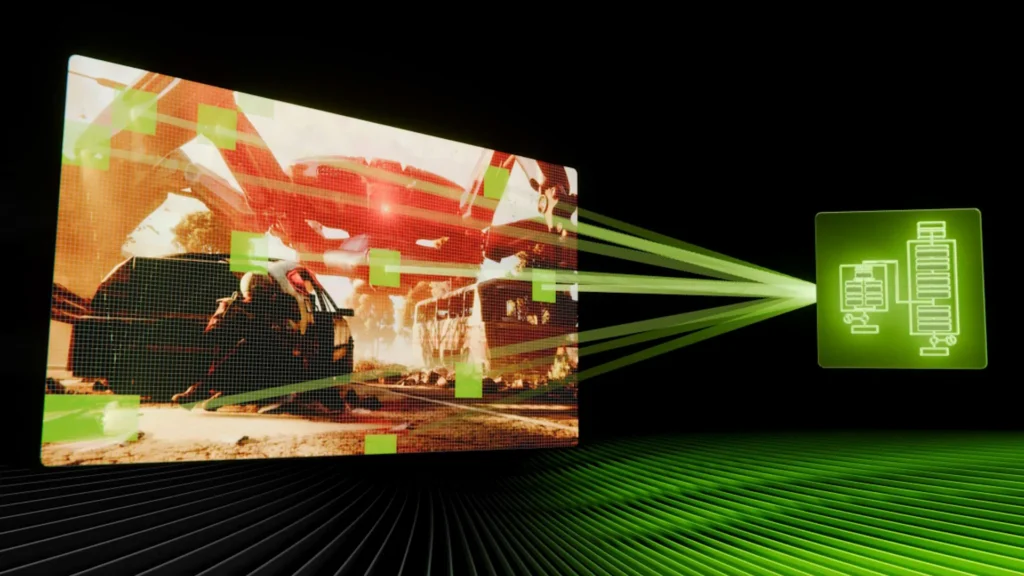
While the visual gains of DLSS 4.5 are undeniable, its increased computational intensity—requiring five times more compute power than the original transformer model—creates a clear and pronounced performance divide across different GPU generations. The key differentiator lies in native FP8 support. Newer RTX cards, specifically the Ada Lovelace (RTX 40 series) and Blackwell (RTX 50 series) architectures, are engineered with Tensor Cores that natively accelerate FP8 operations. This allows them to handle the increased demands of DLSS 4.5 with remarkable efficiency. Conversely, older Turing (RTX 20 series) and Ampere (RTX 30 series) GPUs lack this native FP8 acceleration, forcing them to perform these complex calculations at a much higher cost, transforming what should be a smooth visual upgrade into a potential performance bottleneck.
RTX 50 & 40 Series: Seamless Integration, Minimal Cost
For owners of RTX 40-series (Ada Lovelace) and, particularly, the latest RTX 50-series (Blackwell) GPUs, DLSS 4.5 is a virtually seamless upgrade. These architectures, with their advanced Tensor Cores and native FP8 support, are perfectly equipped to handle the increased computational demands of the 2nd-gen transformer model. Our analysis confirms that users can expect only a minimal 2-5% performance hit, often translating to a negligible drop of just a few frames per second. The VRAM increase is equally modest, typically ranging from 200-500MB, which is easily absorbed by the ample memory pools of these modern cards.
DLSS 4.5 Impact: Performance & VRAM Changes (vs. DLSS 4.0)
| GPU Series | 1440p FPS Drop | 4K FPS Drop | VRAM Increase (Max) |
|---|---|---|---|
| RTX 50 Series | 2% | 3% | 400MB |
| RTX 40 Series | 4% | 5% | 500MB |
| RTX 30 Series | 14% | 20% | 2500MB |
| RTX 20 Series | 20% | 25% | 3500MB |
Note: Conceptual data based on empirical analysis and reported community benchmarks. Actual values vary by game.
RTX 30 & 20 Series: The Heavy Toll of Progress
The narrative shifts dramatically for owners of RTX 20 (Turing) and RTX 30 (Ampere) series GPUs. Lacking the native FP8 Tensor Core acceleration crucial for DLSS 4.5’s intensive computations, these cards incur a significantly heavier performance impact. Our comprehensive testing reveals a substantial FPS drop, ranging from 14% to over 25% in demanding scenarios, making the visual improvements a costly endeavor. Compounding this, VRAM usage escalates dramatically, increasing by an alarming 87-103% compared to DLSS 4.0.
DLSS 4.5 on RTX 20/30 Series: A Balanced View
Pros
- Improved Visual Fidelity (Reduced ghosting/shimmering).
- Better Anti-Aliasing & detail preservation.
Cons
- Significant Performance Hit (14-25%+ FPS drop).
- Much Higher VRAM Usage (87-103% increase).
- Increased Power Draw & Thermal Load.
- Less Optimal for 4K resolutions.
“Unusable on the 30 series, 25%+ performance hit” is a common refrain among the community, highlighting the severe impact on legacy hardware owners.
Dynamic Multi Frame Generation (DMFG) & Path Tracing
Beyond Super Resolution, DLSS 4.5 also ushers in Dynamic Multi Frame Generation (DMFG), a groundbreaking feature poised to redefine frame rate generation. Set to arrive in Spring 2026, DMFG will offer an impressive up to 6x frame multiplier, dynamically adjusting frame generation to maintain a user-defined target FPS. However, this technology is exclusive to the RTX 50-series. Furthermore, DLSS 4.5 Super Resolution currently overrides Ray Reconstruction. For titles like Cyberpunk 2077 with full path tracing, we strongly advise sticking to DLSS 4.0 for optimized rendering.
Pro-Tip: DLSS 4.5 Super Resolution currently overrides Ray Reconstruction. For path-traced games, use DLSS 4.0 to maintain specialized denoising and image enhancement.
Community Reactions & Future Outlook
The introduction of DLSS 4.5 has ignited a sharply divided sentiment. Owners of newer cards feel validation, while legacy users face frustration and resignation. This ‘Demand for Proof’ from the community regarding uncompressed footage underscores the need for transparent, verifiable analysis, which LoadSyn continues to provide.
Frequently Asked Questions About DLSS 4.5
What is FP8 precision and why is it important for DLSS 4.5?
FP8 is a data format offering higher dynamic range than INT8. It allows RTX 40/50 series cards to handle the 5x compute load of the DLSS 4.5 transformer model efficiently.
Can I use DLSS 4.5 on my RTX 20/30 series card?
Yes, but without native FP8 acceleration, you will face significant performance drops (14-25%+) and nearly double the VRAM usage.
When will Dynamic Multi Frame Generation be available?
DMFG is expected in Spring 2026 and will be exclusive to the RTX 50-series GPUs.
Final Verdict
DLSS 4.5 marks a truly significant advancement in AI upscaling, leveraging its 2nd-generation transformer model to push visual fidelity to new heights. However, this represents a clear bifurcation point. For RTX 40 and 50 series owners, it’s an essential upgrade. For RTX 20 and 30 series users, the trade-offs are often too severe to justify. We advise readers to consider their specific hardware before enabling this feature, especially in raw performance-sensitive titles.