

The AI Paradox: Innovation at What Cost to the Planet?
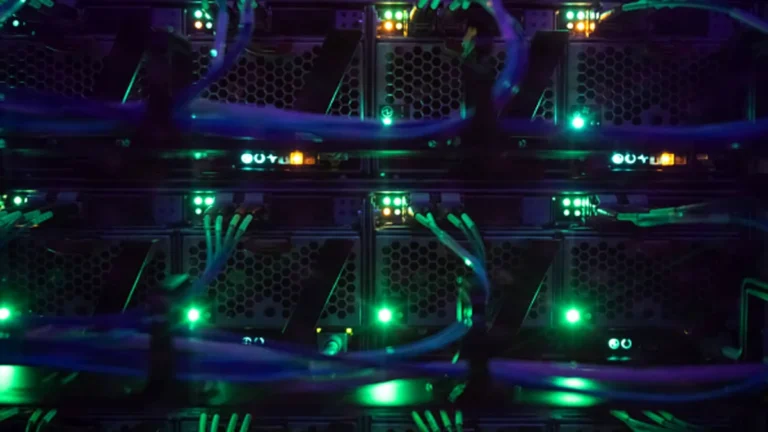
Artificial intelligence is rapidly redefining what’s possible, promising transformative advancements across every sector, from game development to scientific research. Yet, beneath this veneer of limitless innovation lies a staggering, and often deliberately undisclosed, environmental footprint. The relentless proliferation of AI, particularly the massive data centers required to power it, is silently devouring vast quantities of energy, water, and land. As we push the boundaries of digital capability, it’s becoming critically urgent to confront the very real, physical cost of this technological revolution.
The Unseen Drain: Quantifying AI’s Resource Consumption
The insatiable appetite of modern AI, particularly the exponential growth of large language models (LLMs), has created an unprecedented surge in demand for fundamental resources. This isn’t just about abstract computing power; it translates directly into a massive increase in the consumption of electricity to run processors, fresh water for critical cooling systems, and physical land to house ever-expanding data centers.
- Energy Explosion: Data centers doubled electricity consumption by 2023, now accounting for 4.4% of US energy. Projections suggest AI alone could consume as much electricity as 22% of all US households by 2028.
- Water Scarcity: Even a mid-sized data center uses as much water as a small town, with larger ones requiring up to 5 million gallons daily (equivalent to a city of 50,000).
- Land Grab: Hyperscale data centers cover hundreds of acres, consuming land for facilities and new transmission line corridors, often incentivized by local governments.
Powering the Beast: AI’s Soaring Energy Appetite
While training a colossal model like GPT-4 once consumed an estimated 50 gigawatt-hours, it is inference that now dominates, accounting for a staggering 80-90% of AI’s total computing power. Every interaction, every generated image, and every video clip contributes to an ongoing energy draw that fluctuates wildly depending on the model’s complexity.
| AI Model (Source) | Estimated Energy Per Query (Watt-hours / Joules) | Notes |
|---|---|---|
| OpenAI ChatGPT (mid-2023) | ~2 Wh | Initial estimates for earlier versions. |
| Google Gemini Apps (May 2025) | 0.24 Wh (864 Joules) | 33x reduction in 12 months; comprehensive methodology. |
| Meta Llama 3.1 8B | ~114 Joules | Smallest open-source; simple text generation. |
| Meta Llama 3.1 405B | ~6,706 Joules | 50x more parameters than 8B; 8s of microwave use. |
| OpenAI GPT-5 (Estimate) | 18-40 Wh | Potential for 5-10x more in reasoning mode. |
| AI-generated 5s Video | ~1 kWh | Equivalent to running a microwave for over an hour. |
Compounding the volume is the source of power. Data centers often rely on “dirtier” grids where fossil fuels dominate. A Harvard study found data center electricity to be 48% more carbon-intensive than the US average. This gap necessitates controversial solutions, like Elon Musk’s X supercomputing center reportedly using methane gas generators to supplement grid power.
Sasha Luccioni, AI sustainability expert, exposes how massive data centers are burning through energy.
The Invisible Tap: AI’s Water Footprint
Beyond electricity, the often-overlooked cost is water. Data centers generate immense heat, requiring millions of gallons daily for cooling. Furthermore, microchip manufacturing demands thousands of gallons of “ultrapure” water per chip, with a typical factory using 10 million gallons daily.
- Cooling Systems: Evaporative cooling results in water loss through evaporation, meaning water doesn’t return to the local basin.
- Power Generation: Fossil fuel plants providing data center power consume large amounts of water for steam turbines.
- Local Impact: Two-thirds of data centers built since 2022 are in water-stressed regions. A single Meta data center in Georgia uses 10% of the entire county’s water.
Water is Local: The ‘Giant Soda Straw’ Effect
Experts emphasize that all water is local. When data centers draw water, it acts like a giant soda straw sucking water out of that basin, impacting local ecosystems and communities concentrated in one area.
A Cloud of Secrecy: Big Tech’s Lack of Disclosure
Despite mounting concerns, a pervasive lack of transparency shrouds the true resource consumption of major AI companies. This intentional lack of disclosure creates a significant hurdle for independent researchers and policymakers.
“It blows my mind that you can buy a car and know how many miles per gallon it consumes, yet we use all these AI tools every day and we have absolutely no efficiency metrics…”
— Sasha Luccioni, Climate Lead at Hugging Face
- OpenAI’s Silence: No official energy usage data released since GPT-3 (2020).
- General Lack of Data: As of May 2025, 84% of all LLM traffic was on models with zero environmental disclosures.
- Proprietary Secrets: Companies often employ non-disclosure agreements with local governments to guard operational details.
Corporate Conundrum: Diverse Approaches to Sustainability
Google’s Green Narrative: Efficiency & Innovation
Google has positioned itself as a leader in AI sustainability, highlighting commitments to decoupling energy emissions from growth and investing in clean energy procurement.
- Energy Decoupling: Reduced data center energy emissions by 12% in 2024 despite increased demand.
- Clean Energy: Procured over 8 GW of clean energy in 2024, pushing carbon-free energy use to 66% hourly.
- AI Efficiency: Gemini Apps text prompts showed a 33x reduction in energy impact over 12 months.

Google’s Sustainability Pros
- Detailed environmental reports and methodologies.
- Significant gains in TPU efficiency (PUE 1.09 fleet average).
- Record procurement of renewable energy.
Google’s Sustainability Cons
- Data often excludes training and third-party facilities.
- Total emissions increased by 11% due to massive growth.
- Uses market-based carbon accounting which can hide local grid intensity.
OpenAI & Meta: The Scaling Imperative
OpenAI maintains a veil of secrecy, declining to disclose figures for GPT-5. Meta, while championing open-source with Llama 3.1, showcases the immense cost of scale. Llama 3.1 (405B) was trained using over 16,000 Nvidia H100 GPUs, with training costs estimated upwards of $640 million.
- GPT-5’s Hidden Cost: Estimated up to 20x more energy per query than initial ChatGPT versions.
- Industry Scaling: Initiatives like ‘Stargate’ ($500 billion, 50 GW total) indicate a belief that scale is necessary for AGI regardless of cost.
The Core Dilemma: Is Bigger Always Better for AI?
One side champions continuous scaling as the route to AGI, while a growing chorus advocates for an “efficiency-first” approach. Techniques like “knowledge distillation” offer a bridge, allowing smaller models to learn from resource-intensive counterparts.
“What really stands out here is the reminder that scale isn’t the same thing as progress… scaling up models currently seems necessary to unlock novel capabilities which then could be distilled down.”
— Fandom Pulse Analysis
Beyond the Data Center: Real-World Consequences
Immense energy demands translate into rising electricity bills for residential ratepayers. The scale of these facilities creates conflicts over finite land and water resources, often displacing agricultural land.
- Rising Bills: Discounts to tech giants shift infrastructure costs to residential consumers.
- Land Conflicts: Data centers consume vast tracts of farmland and require extensive new transmission lines.
- Air Quality: On-site diesel generators for backup can spew significant particulate matter and NOx.
Forging a Sustainable Future: Transparency and Innovation
Addressing this footprint demands a multi-pronged approach: radical transparency, robust regulation, and technological innovation across energy and hardware design.
- Mandatory Transparency: Regulations requiring disclosure of energy, water, and emissions data.
- AI Energy Score: Standardized metrics similar to car fuel economy ratings.
- Location Planning: Prioritizing regions with abundant clean energy and low water stress.
The Community’s Demand for Accountability
The gaming community demands actionable accountability. There’s a strong call for an ‘AI energy score’ to force the hand of tech giants for genuine change.
Key Takeaways
- AI resource consumption (energy, water, land) is escalating rapidly.
- Transparency is critically low across major AI developers.
- Scale vs. Efficiency remains the industry’s central debate.
- Societal impacts include higher utility costs and local environmental strain.
Your Questions, Answered
How much energy does a single AI query use?
Estimates range from 0.24 Wh (Google Gemini) to 40 Wh (GPT-5 estimate). AI video generation can use ~1 kWh, equivalent to an hour of microwave use.
Why do AI data centers use so much water?
Primarily for cooling hardware. Water is also used in microchip manufacturing and indirectly by the power plants generating the data center’s electricity.
Will AI’s energy demands impact my electricity bill?
Yes. Infrastructure costs for massive data centers are often spread across all ratepayers, potentially leading to higher residential rates.
The Unavoidable Truth: AI’s Path Demands Conscious Choices
The rapid ascent of AI presents humanity with a powerful tool, but also an undeniable environmental reckoning. For the gaming community, understanding and demanding accountability for AI’s footprint is foundational to a sustainable digital future. The choice is clear: opaque scaling or a pivot toward transparency and efficiency.