

Key Takeaways
- The ‘RAMpocalypse’ has severely impacted DIY PC build affordability, making pre-builts surprisingly competitive under $1000 for 1080p gaming in 2026. This represents a significant shift in the value landscape, as traditional DIY advantages have eroded.
- NVIDIA’s new RTX 5060 and 5060 Ti GPUs offer significant performance and advanced AI features like DLSS 4 with Multi Frame Generation. These technologies are crucial for modern 1080p gaming, ensuring high frame rates and superior visual fidelity.
- Careful vetting of pre-built systems is essential; prioritize known brands, robust cooling, and transparent component quality over flashy aesthetics or vague specifications. A meticulous approach to ‘hidden’ components like the PSU and motherboard is key to long-term reliability.
- While custom builds still offer unparalleled control and potential long-term value, current market volatility, particularly in memory and storage, often pushes budget-conscious gamers towards pre-built solutions for immediate, cost-effective performance.
- Future-proofing remains a challenge in the budget segment. However, selecting a pre-built with decent upgrade potential—such as adequate PSU headroom, a standard form factor motherboard, and accessible drive bays—can mitigate risks and extend the system’s useful life.
Introduction: The Unavoidable Truth for Budget Gamers in 2026
The landscape of budget PC gaming has shifted dramatically in 2026. For years, the mantra was simple: build your own. It was cheaper, offered more control, and guaranteed better component quality. But a seismic shift, dubbed the ‘RAMpocalypse’ by frustrated enthusiasts, combined with the arrival of NVIDIA’s new Blackwell-architecture-based RTX 50 series, has thrown the rulebook out the window. Suddenly, the allure of pre-built gaming PCs under $1000, particularly those featuring the new RTX 5060, is undeniable. This guide will navigate this complex new reality, leveraging data-backed insights to help you decide whether to brave the volatile component market or embrace the surprising value of a carefully selected pre-built system.
The ‘RAMpocalypse’: Why Building Your Own Just Got Harder
The biggest elephant in the room for anyone considering a DIY build in 2026 is the astronomical cost of RAM and, to a lesser extent, SSDs. Driven by factors like surging AI datacenter demand and persistent supply chain pressures, memory prices have skyrocketed, often doubling or tripling in recent months. This inflation fundamentally alters the cost-effectiveness of custom builds, transforming what was once a budget-friendly component into a significant expense. Where 16GB of DDR4 or DDR5 RAM might have cost $60-80 last year, comparable kits now command upwards of $150-200, as noted by industry analyses from PC Gamer and Tom’s Hardware. This dramatic increase severely eats into the sub-$1000 budget, making it exceedingly difficult to pair a decent CPU and GPU without exceeding the target price.
“I’m thinking of getting a prebuilt this time due to ram, gpus and cpus being so goddam expensive rn.”
Budget Alert: The Hidden Cost of Memory
Historically, RAM and SSDs were predictable budget lines. Now, they’re the wildcards. A significant portion of your sub-$1000 budget will be consumed by these components, making it incredibly difficult to pair a decent CPU and GPU in a custom build without exceeding your target price. This shifts the value proposition dramatically.
Enter the Blackwell Era: RTX 5060 and 5060 Ti for 1080p Gaming
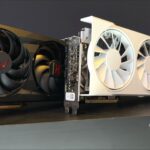
Amidst the component chaos, NVIDIA has launched its Blackwell-architecture-based GeForce RTX 50 series, with the RTX 5060 and RTX 5060 Ti positioned as the new champions for 1080p gaming. These GPUs bring next-generation features like DLSS 4 with Multi Frame Generation and enhanced ray tracing capabilities, significantly boosting performance and visual fidelity. The Blackwell architecture itself introduces fifth-gen Tensor Cores for maximum AI performance and fourth-gen Ray Tracing Cores built for complex geometry, fundamentally enhancing graphical realism. For budget gamers, the RTX 5060 is specifically designed to deliver over 100 FPS at 1080p with high settings in many modern titles, making it a compelling option, especially when integrated into aggressively priced pre-built systems that can leverage these new technologies effectively.

NVIDIA GeForce RTX 5060 & RTX 5060 Ti (Key 1080p Gaming Specs)
| Feature | RTX 5060 | RTX 5060 Ti |
|---|---|---|
| Architecture | Blackwell | Blackwell |
| VRAM | 8GB GDDR7 | 8GB / 16GB GDDR7 |
| DLSS Support | DLSS 4 with Multi Frame Generation | DLSS 4 with Multi Frame Generation |
| Ray Tracing Cores | 4th Gen RT Cores | 4th Gen RT Cores |
| Tensor Cores | 5th Gen Tensor Cores | 5th Gen Tensor Cores |
| Target Resolution | High-FPS 1080p | High-FPS 1080p, Entry 1440p |
Pre-Built vs. Custom: The 2026 Paradigm Shift
The long-standing debate between building your own PC and buying a pre-built has always leaned heavily towards DIY for budget segments. Custom builds offered superior component choice, often a better quality-to-price ratio, and unmatched upgradeability. However, the ‘RAMpocalypse’ and fluctuating GPU prices have severely eroded these advantages for the sub-$1000 market. Many pre-built manufacturers, leveraging immense bulk purchasing power, are now able to offer systems with new RTX 50-series GPUs and decent core components at prices that DIY builders struggle to match, especially when factoring in the inflated cost of memory. This forces a re-evaluation for the pragmatic gamer, where the immediate ‘Cost-Per-Frame’ often favors pre-built solutions.
Pre-Built vs. Custom Builds in the 2026 Budget Landscape
Pre-Built PCs
- Often cheaper for immediate performance in the sub-$1000 segment due to bulk component pricing.
- Convenience: ready to play out of the box, no assembly required.
- Single warranty for the entire system, simplifying support.
- Can feature new RTX 50-series GPUs at competitive price points.
- Avoids the headache of sourcing individual, inflated components.
- Potential for lower-tier components (e.g., generic PSU, basic motherboard) not explicitly listed.
- Limited upgradeability due to proprietary parts or restricted space.
- Bloatware and OEM software can impact performance.
- Less transparency on specific component models.
- May come with basic cooling solutions that limit long-term performance.
Custom Builds
- Total control over every component, ensuring brand and quality preference.
- Greater potential for optimization (e.g., airflow, cable management).
- Clear upgrade path with known component compatibility.
- Often uses higher-quality, non-OEM specific parts.
- Satisfaction of building your own machine.
- Significantly higher cost for RAM and SSDs in 2026, making sub-$1000 builds challenging.
- Requires time, knowledge, and patience for assembly and troubleshooting.
- Individual component warranties can complicate support issues.
- Risk of component incompatibility or installation errors.
- Finding stock for desirable components at fair prices is difficult.
“I see so many people talk about how you can custom build your own PC for half the price of a pre-build.. but I priced out the components on a couple *black friday* pre-built PCs and they were actually cheaper than a custom build.. that being said, most of them did not share specific details on certain parts..”
Anatomy of a Value 1080p Gaming PC: Components Under the Hood
Regardless of whether you build or buy, understanding the core components that drive a solid 1080p gaming experience under $1000 is paramount. While compromises are inevitable at this price point, smart choices can ensure a smooth, enjoyable gaming experience. Here’s what to prioritize, based on our latest ‘Cost-Per-Frame’ analysis:
- GPU (Graphics Card): The single most important component for gaming performance. For 1080p, aim for an NVIDIA GeForce RTX 5060 or, ideally, an RTX 5060 Ti. These offer the best balance of price and performance, especially with DLSS 4 and Multi Frame Generation enabled, which are critical for maintaining high frame rates in demanding titles. AMD’s RX 9060 XT is also a strong contender in this segment.
- CPU (Processor): An Intel Core i5-14400F or an AMD Ryzen 5 7600X (or equivalent from the 7000/8000 series) provides sufficient processing power without bottlenecking the GPU at 1080p. While Ryzen’s X3D chips offer exceptional gaming performance, their higher cost often pushes them past the strict $1000 budget.
- RAM (Memory): A minimum of 16GB is essential for modern gaming, preferably DDR5 at 5600-6000MHz. While 32GB is ideal, current prices often make it prohibitive under $1000. Ensure dual-channel configuration (2x8GB modules) for optimal performance, as single-stick configurations can significantly reduce frame rates.
- SSD (Storage): A 1TB NVMe PCIe Gen4 SSD is the sweet spot. It offers fast loading times for games and the OS, which directly impacts the user experience. While 2TB is better for a growing game library, 1TB is a good starting point for budget builds, offering a strong performance-to-cost ratio.
- Motherboard: For pre-builts, this is often a basic model. Look for one with essential ports, decent VRMs (Voltage Regulator Modules) if possible to ensure CPU stability, and support for future CPU upgrades within the same socket generation. This is crucial for maintaining a viable upgrade path.
- PSU (Power Supply Unit): Don’t overlook this critical component. A reliable 550W-650W 80+ Bronze/Gold certified PSU is vital for system stability and future upgrades. Generic, unrated PSUs are a major red flag in pre-builts and can compromise the entire system’s longevity and performance.
- Cooling: For non-K CPUs, a good air cooler or a basic 120mm AIO (All-in-One) liquid cooler is usually sufficient. For pre-builts, ensure adequate case fans for proper airflow to prevent thermal throttling, which can degrade performance over time.
Top Pre-Built RTX 50-Series Gaming PCs Under $1000 (The Smart Buys)
Given the current market, finding a truly balanced RTX 50-series pre-built under $1000 requires vigilance. We’ve scoured the market for systems that offer the best bang-for-your-buck, balancing a new NVIDIA 50-series GPU with respectable supporting components. These are not always easy to find, and prices can fluctuate, but these examples represent the kind of value you should be looking for to achieve solid 1080p gaming performance without overspending.
| Model | GPU | CPU | RAM | Storage | Price (approx.) | Key Highlight |
|---|---|---|---|---|---|---|
| Acer Nitro 60 N60-640-UR21 | RTX 5060 8GB | Intel Core i5-14400F | 16GB DDR5 | 1TB NVMe SSD | $799.99 | Exceptional value with modern DDR5 memory and a 14th Gen Intel CPU. |
| AOACE Gaming PC | RTX 5060 8GB | AMD Ryzen 7 5700X | 16GB DDR4 | 1TB NVMe M.2 SSD | $959.99 | Strong AMD CPU, but uses older DDR4 memory; good for raw core count. |
| ABS Flux II Aqua | RTX 5060 8GB | Intel Core i5-14400F | 32GB DDR4 | 1TB M.2 NVMe SSD | $999.99 | Generous 32GB RAM (DDR4), solid Intel CPU, good for multitasking alongside gaming. |


Beyond the Spec Sheet: Vetting Your Pre-Built Purchase
While pre-built systems offer compelling value, especially in the current market, it’s crucial to look beyond the headline CPU and GPU. Many manufacturers cut corners on less visible components to hit aggressive price points. This can significantly impact performance, longevity, and future upgrade potential. Addressing community skepticism about hidden component quality, here’s a checklist of often-overlooked aspects you must scrutinize:
- Power Supply Unit (PSU) Quality: A non-80+ certified or unknown-brand PSU is a major risk. It can lead to system instability, potential component damage, and offers no upgrade headroom. Look for at least an 80+ Bronze rating from a reputable brand (e.g., Corsair, Seasonic, MSI, EVGA). A high-quality PSU is the foundation of a stable system, and skimping here is a false economy.
- Motherboard Tier: Budget pre-builts often use the cheapest possible motherboard. This can mean fewer USB ports, limited M.2 slots for storage expansion, weaker VRMs (Voltage Regulator Modules) affecting CPU stability and longevity, and poor BIOS support. Research the specific motherboard model if possible; a basic but reliable B-series or H-series board from a known manufacturer is preferable to an unbranded OEM solution.
- Cooling Solution: Generic CPU coolers and minimal case fans can lead to thermal throttling, reducing performance during extended gaming sessions. Look for systems with at least one exhaust fan and a decent CPU cooler (e.g., a tower air cooler over a rudimentary stock Intel/AMD heatsink). Effective cooling is vital for consistent performance and component lifespan.
- Case Airflow & Cable Management: A restrictive case design or poor cable management can severely hinder airflow, leading to higher temperatures and making future upgrades difficult. While aesthetics are subjective, prioritize functionality; a case with good mesh panels and organized cabling will serve you better.
- RAM Configuration & Speed: Ensure RAM is in dual-channel (e.g., 2x8GB, not 1x16GB) and running at its advertised speed via XMP/EXPO in the BIOS. Slower speeds or single-stick RAM can significantly impact gaming performance, sometimes by as much as 10-15% in CPU-bound scenarios.
- SSD Type: Confirm it’s an NVMe SSD (PCIe Gen3 or Gen4). Some budget systems might use slower SATA SSDs or, in rare cases, traditional HDDs for the main drive, which will noticeably degrade loading times and overall system responsiveness.
- Manufacturer Reputation & Support: Research the system builder’s reputation for customer service, warranty, and overall build quality. Look for reviews that specifically mention post-purchase experience and how issues were handled. A strong warranty and responsive support are invaluable safety nets for pre-built systems.
The DIY Counter-Argument: When to Still Build Your Own
Despite the current ‘RAMpocalypse’ making budget DIY builds challenging, there are still valid reasons to consider piecing together your own system. If you already own some components (e.g., a case, PSU, or older storage), the cost savings can become more significant, offsetting some of the current memory inflation. DIY also offers unparalleled satisfaction, a valuable learning experience, and the absolute freedom to choose every single component, ensuring no compromises on quality or brand preference. Furthermore, for those targeting specific aesthetic goals or planning a very staggered upgrade path, DIY retains its appeal. The market for used GPUs, in particular, can offer significant savings that pre-builts can’t match, though it comes with its own set of risks regarding warranty and component history.
Cost-Per-Frame Trends: DIY vs. Pre-Built (2025-2026)
This visualization illustrates the shifting ‘Cost-Per-Frame’ over time. While pre-builts remain stable due to bulk purchasing, DIY costs spiked in 2026 due to the ‘RAMpocalypse’.
Your Ultimate 1080p Gaming PC Buying Checklist for 2026
- Define Your Absolute Budget: Be firm. Remember to factor in peripherals (monitor, keyboard, mouse) if you don’t have them, as these can quickly push you over the edge.
- Prioritize the GPU: For 1080p, the RTX 5060/5060 Ti is your target. Don’t compromise here if gaming is your primary goal, as it’s the single most impactful component. Use price alerts and deal trackers.
- Check RAM & SSD Prices (DIY Only): If considering DIY, get real-time quotes for 16GB DDR5 RAM and a 1TB NVMe SSD. This will quickly reveal if DIY is still feasible within your budget given the current ‘RAMpocalypse’.
- Scour Pre-Built Deals: Keep a vigilant eye on major retailers (Newegg, Amazon, Best Buy, OEM sites) for sales and promotions. Pay close attention to the listed components, especially the CPU, RAM (speed & configuration), and storage type.
- Vet the ‘Hidden’ Components: For any promising pre-built, try to identify the specific motherboard model, PSU brand/model, and cooling solution. Read reviews specifically for that pre-built model, not just generic reviews for the GPU or CPU. This is where quality corners are often cut.
- Assess Upgradeability: Consider the long game. Does the motherboard have extra M.2 slots or accessible RAM slots? Is the PSU strong enough for a future GPU upgrade? Is the case roomy enough for a better cooler? Plan for tomorrow’s needs today.
- Read the Fine Print: Understand the warranty, return policy, and technical support options for pre-built systems. This is your safety net if hidden issues arise.
- Don’t Rush: The market is volatile, but hasty decisions can lead to buyer’s remorse. Compare options, wait for deals, and consult communities like r/pcmasterrace for feedback on specific configurations before committing.
Frequently Asked Questions
Why are RAM and SSD prices so high right now?
Increased demand from AI data centers, along with ongoing supply chain challenges and manufacturing costs, have led to significant price hikes for both DDR5 RAM and NVMe SSDs, making them less affordable for consumer builds.
Is the RTX 5060 really good enough for 1080p gaming?
Yes, the NVIDIA GeForce RTX 5060, especially with DLSS 4 and Multi Frame Generation, is designed to deliver excellent performance at 1080p, often exceeding 100 FPS in many modern titles with high settings. The RTX 5060 Ti offers even more headroom.
What’s the biggest risk with buying a budget pre-built PC?
The biggest risk is often the use of generic or low-quality components that aren’t explicitly listed, such as the power supply unit (PSU), motherboard, or cooling system. These can lead to instability, limited upgrade options, and shorter system lifespan.
Can I upgrade a pre-built gaming PC later?
Yes, but upgradeability varies significantly. Some pre-builts use proprietary components or have limited space/power, making upgrades difficult. Look for standard ATX/Micro-ATX motherboards, adequate PSU wattage, and accessible drive bays/RAM slots.
Should I wait for prices to drop?
Market trends are unpredictable. While prices might fluctuate, a significant drop in RAM/SSD costs isn’t guaranteed in the short term. If you need a PC now, focus on finding the best value currently available, whether pre-built or DIY, rather than waiting indefinitely.
The Final Verdict
The 2026 budget 1080p gaming PC market is a challenging battlefield, but not an insurmountable one. The ‘RAMpocalypse’ has undeniably made the traditional DIY path a financial tightrope walk, often pushing it beyond the reach of a true sub-$1000 budget. In this new reality, pre-built gaming PCs featuring the NVIDIA RTX 5060 or 5060 Ti have emerged as surprisingly viable, and often superior, value propositions. While skepticism regarding component quality in pre-builts is valid and warrants diligent research, the sheer cost efficiency of these systems often outweighs the DIY alternative. For the pragmatic gamer seeking high-performance 1080p gaming without breaking the bank, a carefully chosen pre-built system is no longer a compromise, but potentially your smartest play. Do your homework, prioritize core components, and enter the RTX 50 era with confidence.