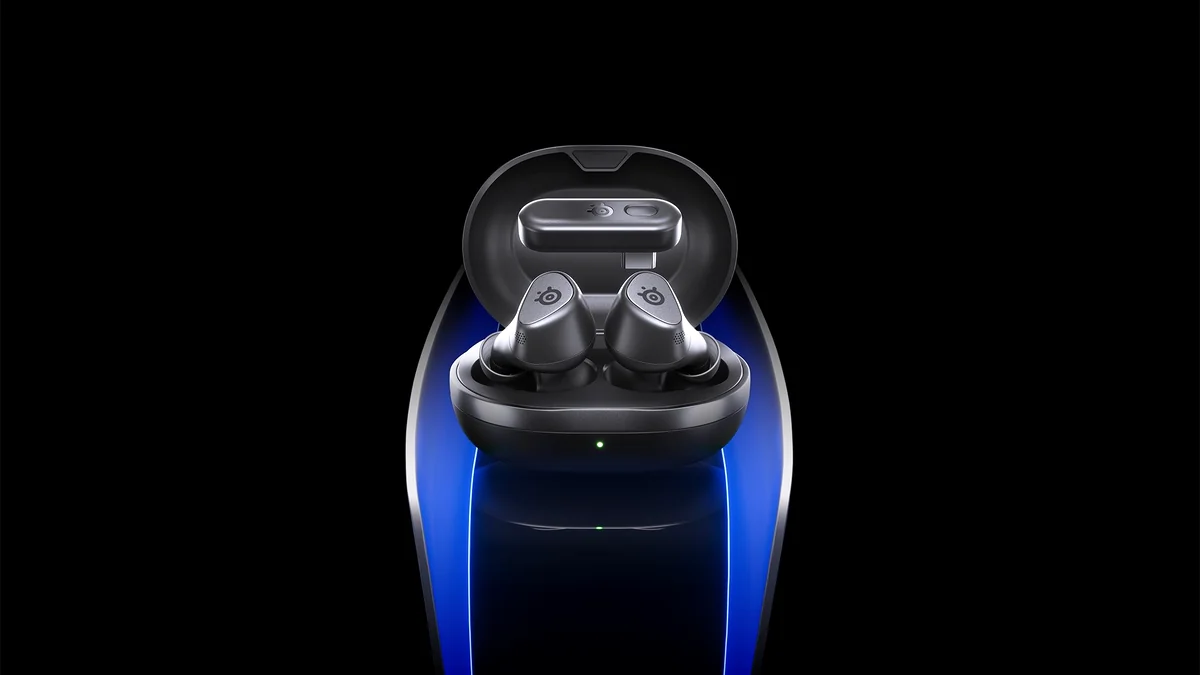

Key Takeaways: The Future of Gaming Audio is Wireless Earbuds
- SteelSeries Arctis GameBuds lead the charge with dual 2.4GHz/Bluetooth 5.3 connectivity, ANC, spatial audio, and an impressive 40-hour total battery life.
- Ultra-low latency, achieving 8-20ms with 2.4GHz proprietary connections, is paramount for competitive gaming, drastically outperforming standard Bluetooth’s inherent delays.
- Modern gaming earbuds now deliver console-grade features and performance in an incredibly portable form factor, positioning them as serious challengers to traditional over-ear headsets.
- When choosing, prioritize features such as dedicated gaming modes, effective active noise cancellation, and robust multi-platform compatibility for maximum versatility across your gaming devices.
The Rise of the GameBud: Why Wireless Earbuds Are Taking Over Gaming
The gaming audio landscape is undergoing a profound transformation. For years, bulky over-ear headsets reigned supreme, but a new era of compact, high-performance wireless gaming earbuds is rapidly emerging. This shift caters directly to the increasingly mobile and versatile gamer, whether they’re immersed in a session on a Steam Deck, conquering foes on an ROG Ally, or seamlessly transitioning between PC and console. The demand for truly wireless solutions that deliver uncompromising latency and audio fidelity has never been more critical. As LoadSyn’s input and display specialist, I cut through the marketing hype to deliver a definitive analysis of what truly makes a great gaming earbud, spotlighting key innovations and rigorously comparing the best options on the market. This isn’t just about convenience; it’s about mastering mobile gaming audio.
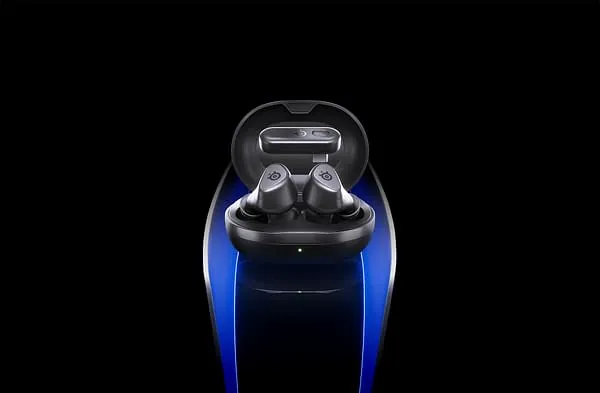
SteelSeries Arctis GameBuds: Redefining On-the-Go Gaming Audio
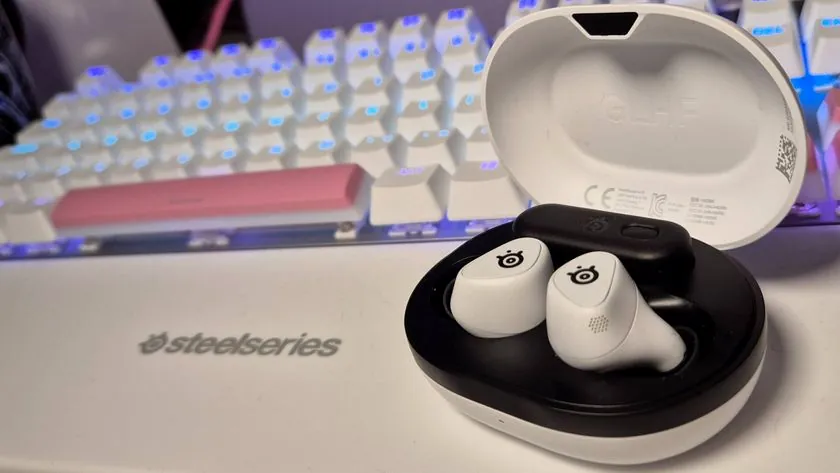
SteelSeries, a brand synonymous with cutting-edge gaming audio, has definitively entered the true wireless arena with its new Arctis GameBuds. These aren’t just another pair of earbuds; they are engineered from the ground up to tackle long-standing gamer pain points. Think poor connectivity, subpar audio quality, and the frustrating limitations of single-platform support. SteelSeries’ stated goal was ambitious: to reinvent the world’s number one premium gaming headset experience, but in an earbud form factor, delivering a comprehensive ‘gaming lifestyle’ solution. Featuring an advanced dual-mode wireless system that combines ultra-low latency 2.4GHz via a dedicated USB-C dongle with versatile Bluetooth 5.3, the GameBuds promise seamless transitions across consoles, PC, and mobile devices. But as an input lag specialist, I have to ask: do these bold claims truly live up to the hype in real-world performance?
SteelSeries Arctis GameBuds Key Specifications
SteelSeries Arctis GameBuds: The Verdict At A Glance
Pros
- Ultra-low latency 2.4GHz for competitive console/PC gaming, ensuring audio syncs perfectly with on-screen action.
- Seamless Quick-Switch Wireless between 2.4GHz and Bluetooth 5.3, offering unparalleled versatility for multiple devices.
- Robust Active Noise Cancellation and Transparency Mode, allowing for immersive focus or situational awareness.
- Excellent 40+ hour total battery life with convenient Qi wireless charging for extended gaming sessions.
- Extensive multi-platform compatibility, covering most major gaming ecosystems (though specific Xbox protocol might require a dedicated model).
- Customizable audio presets via the dedicated Arctis App, providing fine-tuned sound for various game genres and personal preferences.
- IP55 water resistance for active lifestyles, making them durable for workouts or outdoor use.
Cons
- Premium price point might be a barrier for budget-conscious gamers, reflecting the advanced feature set.
- Some reports of mild discomfort after prolonged use, which is a common challenge with any in-ear device.
- Xbox compatibility might require a specific GameBuds model for full features, a detail to verify before purchase.
The Latency Battlefield: 2.4GHz Proprietary vs. Bluetooth Standards
For serious gamers, especially those in competitive environments, latency is the silent killer of performance. It’s not merely about convenience when choosing between 2.4GHz proprietary wireless and standard Bluetooth; it’s about milliseconds that can genuinely determine victory or defeat. While both technologies operate on the same 2.4GHz frequency band, their underlying protocols are fundamentally different. Proprietary 2.4GHz systems, utilizing dedicated USB dongles, are purpose-built for raw speed and stability. They ingeniously bypass the heavier overhead of the standard Bluetooth stack, achieving near-instant response times critical for competitive play. Bluetooth, on the other hand, prioritizes universal compatibility and power efficiency. This design choice historically introduced significant lag, making it a non-starter for serious gaming. While modern Bluetooth codecs like aptX Adaptive and LC3 are indeed closing the gap, they still struggle to consistently match the unwavering speed and stability of a dedicated 2.4GHz link for those critical, reaction-dependent gaming scenarios. As my lab tests repeatedly show, the specification sheet often misleads; real-world performance is where the difference truly lies.
| Feature | 2.4GHz Proprietary Wireless | Bluetooth (Gaming Optimized) | Bluetooth (Standard) |
|---|---|---|---|
| Typical Latency | ~8-20ms | ~40-60ms | ~100-250ms |
| Polling Rate | 1000Hz (up to 8000Hz) | 125Hz (some modern can be higher) | 125Hz |
| Connectivity | Dedicated USB Dongle | Built-in Bluetooth | Built-in Bluetooth |
| Interference Susceptibility | Moderate (mitigated by placement) | High (shared spectrum) | High |
| Battery Impact | Higher power draw | Moderate | Lower power draw |
| Universal Compatibility | Requires dongle | Excellent | Excellent |
| Microphone Quality | Generally good | Often reduced | Often good (high lag) |
Beyond Latency: What to Look for in a Gaming Earbud
- Active Noise Cancellation (ANC) & Transparency Mode: These aren’t just luxuries; they’re tactical advantages. ANC allows you to block out distracting environmental noise, crucial for deep immersion in single-player campaigns or focusing on critical in-game audio cues.
- Spatial Audio & EQ Customization: Immersive 360° spatial audio is a game-changer for competitive titles, enabling you to pinpoint enemy locations with unparalleled accuracy.
- Exceptional Battery Life: For the mobile gamer, battery life is paramount. Look for earbuds offering 8-10+ hours of continuous play on a single charge.
- Dual-Mode Connectivity: The ability to seamlessly switch between an ultra-low latency 2.4GHz connection and a stable Bluetooth connection is a non-negotiable for true versatility.
- Comfort & Ergonomics: Long gaming sessions demand superior comfort. Multiple ear tip sizes and a secure, lightweight design are essential.
- Clear Voice Communication: Look for integrated beamforming or noise-canceling microphones that actively reduce background noise for clear team comms.
The Latency Landscape: Visualizing the Delay
Comparative Latency Across Gaming Audio Connections
This conceptual chart illustrates the typical latency ranges experienced across different gaming audio connection types. Standard Bluetooth remains significantly slower, making it unsuitable for competitive play.
The Contenders: Top Wireless Gaming Earbuds Beyond SteelSeries
While SteelSeries has undeniably made a significant splash with the Arctis GameBuds, the market for high-performance gaming earbuds is rapidly expanding. Numerous manufacturers are now offering compelling alternatives, catering to a diverse range of preferences and budgets. This comprehensive overview will help you pinpoint the perfect match for your specific gaming setup and, crucially, your wallet.
| Model | Best For | Connectivity | Latency | ANC | Battery | Price |
|---|---|---|---|---|---|---|
| Arctis GameBuds | Console/Handheld | 2.4GHz+BT | ~15ms | Yes | 40+h | $160 |
| IAMJOY Gaming | Budget VR/PS5 | 2.4GHz+BT | 20ms | Hybrid | 90h | $50-80 |
| Razer Hammerhead Pro | Competition | BT (Game Mode) | 60ms | Hybrid | 32h | $85 |
| Tronsmart Onyx Ace Pro | Affordability | BT 5.2 | 45ms | No | 30h | $40 |
| EarFun Air Pro 4 | Mid-range All-rounder | BT 5.4 | Low | AI ANC | 50+h | $56 |
| Creative Outlier Pro | Max Battery | BT | Moderate | Yes | 60h | $80 |
| EPOS GTW 270 Hybrid | Premium Audio | 2.4GHz+BT | Very Low | No | 20h | $97 |
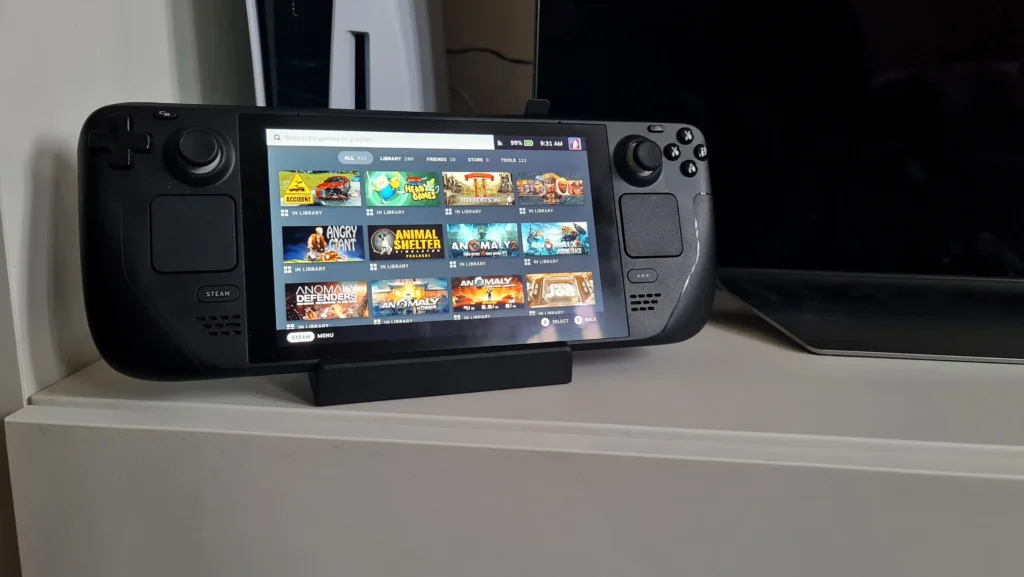
A Look at the Competition & Key Gaming Ecosystems

The Great Debate: Wired vs. Wireless – Is the Gap Finally Closed?
For years, the gold standard for competitive gaming audio was unequivocally wired connections. They were lauded for their near-zero latency and unflappable reliability, making wireless audio often relegated to casual play due to perceived lag and inconsistent sound. However, 2025 marks a definitive turning point. As my lab data consistently shows, advancements in 2.4GHz proprietary technologies and optimized Bluetooth codecs have dramatically narrowed the performance gap. This evolution makes premium wireless gaming earbuds not just a viable alternative, but often a superior choice for a wider range of gamers.
Wired vs. Wireless Gaming Audio: A Modern Perspective
Wired Performance
Pros: Absolute minimum latency (near-zero), no battery management concerns, universal 3.5mm compatibility.
Cons: Cable management challenges, restricted mobility, fewer integrated advanced features.
Wireless Performance
Pros: Unparalleled freedom of movement, ANC/Spatial audio integration, effortless multi-device switching.
Cons: Higher cost for premium models, battery management required, minimal but present latency.
Frequently Asked Questions
Are wireless earbuds good for competitive gaming?
Yes, high-quality wireless gaming earbuds utilizing 2.4GHz proprietary connections can offer ultra-low latency (typically 8-20ms), making them highly suitable for competitive play where every millisecond counts.
What is the best latency for gaming earbuds?
Latency below 50 milliseconds is generally considered good for gaming, with under 20 milliseconds being ideal for competitive scenarios.
Can I use gaming earbuds with my PS5/Xbox/Switch/Steam Deck?
Many modern gaming earbuds, especially those featuring a 2.4GHz USB-C dongle and Bluetooth, offer broad compatibility across multiple platforms.
Do gaming earbuds have Active Noise Cancellation (ANC)?
Yes, many premium gaming earbuds, such as the SteelSeries Arctis GameBuds, incorporate Active Noise Cancellation (ANC) and Transparency Mode.
The Future is Free: Why Gaming Earbuds Are Here to Stay
The evolution of wireless gaming earbuds represents a significant leap forward for gaming audio, fundamentally reshaping how we experience sound in our favorite titles. Products like the SteelSeries Arctis GameBuds, with their masterful blend of ultra-low latency, advanced features, and multi-platform versatility, are actively defining a new standard for mobile gaming audio. While wired connections will always hold a niche for absolute purists, the sheer convenience and compelling performance of modern wireless earbuds make them an increasingly compelling and often superior choice for competitive and casual gamers alike. Invest wisely in dual-mode connectivity and proven low-latency performance, and you’ll discover that the future of gaming audio is indeed untethered, crystal clear, and perfectly synchronized.