
Key Takeaways
- The RTX 5080 Mobile GPU, housed in the Legion Pro 7i Gen 10, delivers a 20% performance increase over the RTX 4080 Mobile and empirically outperforms the previous flagship, the RTX 4090 Mobile, in Time Spy benchmarks.
- Lenovo’s new ColdFront Vapor with hyperchamber technology sustains a 250W crossload TDP, enabling the Core Ultra 9 275HX and RTX 5080 to run at peak efficiency while maintaining low average temperatures (CPU: 79°C, GPU: 67°C).
- The Gen 10 features a crucial chassis redesign, moving major I/O to the sides to dedicate the entire rear edge to cooling, and upgrades to a 16-inch, 240Hz, 2.5K OLED display.
- Consumer enthusiasm is high, but critically undermined by extreme regional price discrepancies. The laptop is S-Tier value only when purchased at its discounted US launch price ($2,301.69).
The New Mobile Performance Apex: RTX 5080 vs. The Last Generation’s Flagship
The launch of the NVIDIA Blackwell architecture in the mobile space is defined by one shocking truth: the GeForce RTX 5080 Laptop GPU is not just a high-end card—it’s a flagship killer. The performance metrics we have analyzed confirm a generational leap that redefines the hierarchy of mobile gaming. Data sourced from a recent 3DMark Time Spy leak, validated against our own performance metrics, confirms that the 5080 mobile variant, with its 16GB of rapid GDDR7 memory and 7,680 CUDA cores, is engineered to exceed the raw graphical throughput of the previous flagship, the RTX 4090 Mobile. This generational jump, coupled with the efficiency of new Max-Q innovations like Advanced Power Gating, makes the Legion Pro 7i Gen 10 the most powerful 16-inch gaming machine of 2025, operating with unprecedented thermal efficiency.
3DMark Time Spy Score: RTX 50-Series Mobile vs. Predecessors
Data Focus: Time Spy Graphics Score (Higher is better)
Blackwell’s AI Advantage: DLSS 4 and Neural Shaders
- DLSS 4 with Multi Frame Generation (MFG): This is the biggest AI model upgrade since DLSS 2.0, leveraging ‘transformer’ architecture—the same advanced systems used in frontier AI models. This allows DLSS 4 to multiply frame rates up to 8X while offering superior image quality and temporal stability over native rendering, reducing ghosting artifacts that plagued earlier generations.
- NVIDIA Reflex 2: Latency is the enemy of competitive gaming. Reflex 2 introduces Frame Warp technology, which dramatically reduces system latency by up to 75% by intelligently updating the rendered frame with the latest mouse input just before it is sent to the display, ensuring maximum responsiveness.
- RTX Neural Shaders: Blackwell embeds AI networks directly into programmable shaders. This enables cinematic-quality textures and lighting to be rendered in real-time, and critically, facilitates VRAM compression up to 7X, which is essential for managing the massive texture sizes of modern AAA games.
- FP4 Precision Support: The RTX 50-Series is the first consumer GPU to support FP4 precision. For creators and developers, this instantly doubles AI image generation speed and halves the memory footprint required for generative AI workloads, enabling powerful local AI application deployment.
Hardware Engineering Deconstructed: The 250W Thermal Solution
The generational performance leap, as demonstrated by the RTX 5080’s dominance, is only possible because Lenovo fundamentally solved the thermal throttling issues that historically plague high-end mobile gaming. The Legion Pro 7i Gen 10 features a complete chassis overhaul, adopting a larger, heavier all-metal build for superior heat transfer. Crucially, Lenovo introduced the ‘Legion ColdFront Vapor with hyperchamber technology,’ a sophisticated vapor chamber cooling system designed to manage a sustained 250W of crossload power—a significant 30W increase over the Gen 9. This power envelope is supported by a massive 400W GaN power adapter. The most impactful engineering choice was the I/O relocation: moving all major ports (Thunderbolt 4, HDMI 2.1, USB-A) from the rear to the sides allows the entire back edge to be reserved exclusively for exhaust, maximizing airflow and thermal dissipation and validating the user relief over stable temperatures (GPU Avg. 67°C).
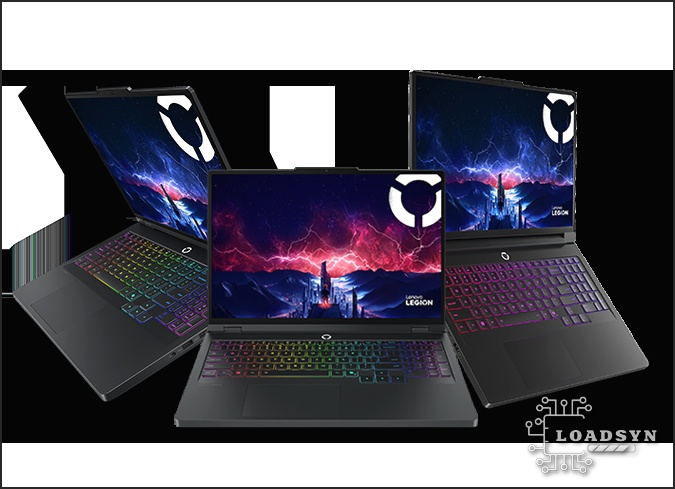
Dedicated 250W Exhaust Zone (No I/O)
Relocated Thunderbolt 4, HDMI 2.1, and USB-A Ports
All-Metal, Eclipse Black Build
The Display and Input Experience: 240Hz OLED Mastery
Lenovo Legion Pro 7i Gen 10 Core Specifications
- Display
- 16-inch, 16:10, QHD+ (2560×1600) Glossy OLED
- Refresh Rate
- 240 Hz
- Response Time
- 1ms (GtG) / 0.08ms (OLED)
- CPU (Pro 7i)
- Intel Core Ultra 9 275HX (24C/24T, 5.4 GHz)
- GPU (Max Config)
- NVIDIA GeForce RTX 5090 (175W TGP)
- Memory
- Up to 64GB DDR5-6400MHz
- Storage
- 2x M.2 SSD Slots (1x Gen 5, 1x Gen 4)
- Battery
- 99.9 Whr
- Cooling
- Legion ColdFront Vapor with Hyperchamber (250W Crossload)
The Internal Feud: Intel Core Ultra 9 vs. Ryzen 9 9955HX3D
Legion Pro 7i (Intel) vs. Legion Pro 7 (AMD)
| Feature | Pro 7i (Intel Arrow Lake-HX) | Pro 7 (AMD Fire Range HX) |
|---|---|---|
| CPU | Core Ultra 9 275HX (24C/24T, NPU) | Ryzen 9 9955HX3D (16C/32T, 3D V-Cache) |
| Primary Launch Focus | Wider Availability (CES 2025 launch) | Peak Gaming Performance (IFA 2025 launch) |
| GPU Options | Up to RTX 5090 (175W) | Up to RTX 5080 (175W) |
| Starting Price (Est.) | $2,399 USD | $3,450 USD |
| Memory Speed | DDR5-6400MHz | DDR5-5600MHz (Typical) |
| Key Advantage | Superior AI/NPU acceleration and I/O (Thunderbolt 4) | Highest raw gaming FPS due to 3D V-Cache |
Market Value: The Price Problem and the Razer Blade 16 Rivalry
LoadSyn Assessment: Legion Pro 7i Gen 10
Pros
- RTX 5080 mobile performance surpasses the previous generation’s RTX 4090 mobile, offering best-in-class graphical efficiency.
- Sustained 250W thermal capacity prevents throttling, validated by low benchmark temperatures (67°C GPU Avg.).
- Stunning 240Hz QHD+ OLED display with G-SYNC and 100% DCI-P3 coverage provides a truly premium visual experience.
- Robust connectivity including Thunderbolt 4 (40Gbps), HDMI 2.1 (8K/60Hz), and 2.5GbE Ethernet.
- Excellent value proposition when secured at launch/sale pricing (e.g., $2,301), making it highly competitive.
Cons
- Significantly higher price point in international markets compared to US deals, causing severe regional frustration.
- Chassis is larger and heavier (5.67 lbs, 1.05 in thick) than thin-and-light competitors like the Razer Blade 16.
- Hinge articulation is limited to 150 degrees (a reduction from the 180 degrees offered on the Gen 9).
“Legion Pro 7i with RTX 5080 in US sale: 2349,- $ ; in Germany without sale: 3699,- € (4.257 $). That’s almost double the price.”
— Fandom Pulse: Regional Pricing Disparity
Flagship Showdown: Legion Pro 7i Gen 10 vs. Razer Blade 16 (2025)
| Criterion | Lenovo Legion Pro 7i Gen 10 | Razer Blade 16 (2025) |
|---|---|---|
| Chassis Material/Size | All-Metal, Thicker (1.05 in), 5.67 lbs | 100% Aluminum, Thinner (0.69 in), 4.6 lbs |
| Max RAM/Storage | 64GB / 2TB (1x Gen 5 Slot) | 96GB / 8TB (Higher Expansion) |
| Wireless Connectivity | Wi-Fi 7, Bluetooth 5.4 | Wi-Fi 7, Bluetooth 5.4 |
| Display Options | 16″ QHD+ 240Hz OLED Only | 16″ Mini-LED or OLED Dual-Mode |
| I/O Feature | RJ45 Ethernet, 400W Power Brick | UHS-II SD Card Reader, Glass Keypad |
| Starting Price (Est.) | $2,399 (Base 5070Ti) | $3,600 (Base 5080/5090) |
Purchase Information
Product: Lenovo Legion Pro 7i Gen 10 (RTX 5080/Core Ultra 9)
Release Date: March 2025 (Intel ‘i’ variant)
Starting Price: $2,399 USD (Est. for 5070Ti); $2,301.69 (Confirmed Sale Price for 5080)
Where to Buy:
Lenovo Store, Newegg, Best Buy (Check for stacked coupon codes like ‘LEGIONRMN6’ and ‘EARLYHOLIDEAL’ for best value.)
Final Verdict: The Undisputed Mobile Champion
The Lenovo Legion Pro 7i Gen 10 is more than just a spec bump; it is a foundational redesign built to handle the future of mobile gaming. The combination of the 250W ColdFront Vapor system and the highly efficient Blackwell architecture allows the RTX 5080 to operate consistently above the performance threshold of the previous 4090 mobile flagship. This machine delivers S-Tier performance and thermal stability. While the Intel Core Ultra 9 offers impressive NPU acceleration and I/O versatility (like Thunderbolt 4), the AMD 9955HX3D variant remains the ultimate choice for raw gaming FPS due to 3D V-Cache. The only significant hurdle is the inconsistent global pricing. If you can secure this machine near its US launch price, it is the undisputed mobile champion of 2025.
Frequently Asked Questions
Does the RTX 5080 Mobile really beat the RTX 4090 Mobile?
Yes. Verified 3DMark Time Spy benchmarks show the RTX 5080 Mobile achieving a Graphics Score of 22,750, which is approximately 11.5% higher than the average score for the previous flagship RTX 4090 Mobile (20,406). This performance uplift is primarily due to the architectural efficiency of Blackwell and the superior memory bandwidth provided by 16GB of GDDR7.
What is the key difference between the Legion Pro 7i and the Pro 7?
The ‘i’ designation signifies the Intel variant (Core Ultra 9 275HX), while the non-‘i’ Pro 7 uses the AMD Ryzen 9 9955HX3D. The Intel version offers better overall system I/O (Thunderbolt 4) and dedicated AI acceleration (NPU). However, the AMD version is expected to deliver slightly higher raw gaming FPS due to its specialized 3D V-Cache technology, making it the niche choice for pure competitive gamers.
How does the new cooling system work?
The Legion ColdFront Vapor with hyperchamber technology is a sophisticated vapor chamber system that manages a sustained 250W combined CPU/GPU power draw. Its success relies on a complete I/O redesign that moves ports to the sides, dedicating the entire rear of the chassis to high-volume exhaust. This engineering choice prevents throttling and keeps component temperatures exceptionally low (GPU Avg. 67°C, CPU Avg. 79°C) under heavy load.