
The MacBook Neo: Apple’s $599 Paradox Redefining the Budget Segment
The tech world collectively held its breath, then erupted, when Apple unveiled the MacBook Neo. Priced at an unprecedented $599, this machine isn’t just a new laptop; it’s a strategic gambit, an audacious foray into a budget market segment Apple has historically disdained. For years, the entry-level laptop space has been a wasteland of plastic shells, bloatware-laden Windows machines, and underpowered Chromebooks. The Neo, however, enters the fray with Apple’s hallmark aluminum build, a vibrant Liquid Retina display, and an A18 Pro chip that, despite its iPhone origins, promises surprising performance. This isn’t merely about offering an affordable Mac; it’s about fundamentally challenging the perception of what a ‘budget’ device can be, igniting a fierce debate among consumers and industry analysts alike.
The Neo Paradox: Key Takeaways
- Unprecedented Affordability: At $599 ($499 for education), the MacBook Neo shatters Apple’s traditional pricing, making the Mac ecosystem more accessible than ever.
- Surprising Single-Core Prowess: Powered by the A18 Pro chip, it delivers M3-M4 class single-core performance, ensuring snappy responsiveness for everyday tasks.
- Strategic Compromises: To hit its price point, Apple made deliberate trade-offs, including 8GB unified RAM, a slower USB 2.0 port, and the absence of a backlit keyboard or MagSafe.
- A Sprinter, Not a Marathon Runner: Its fanless design means the A18 Pro excels in short bursts but experiences significant thermal throttling under sustained heavy loads after approximately 60 seconds.
- Ecosystem Entry Point: The Neo is a strategic play to convert new users into the Apple ecosystem, especially amidst a global DRAM shortage, leveraging services revenue over initial hardware margins.
Design Philosophy: Premium Feel, Approachable Aesthetic
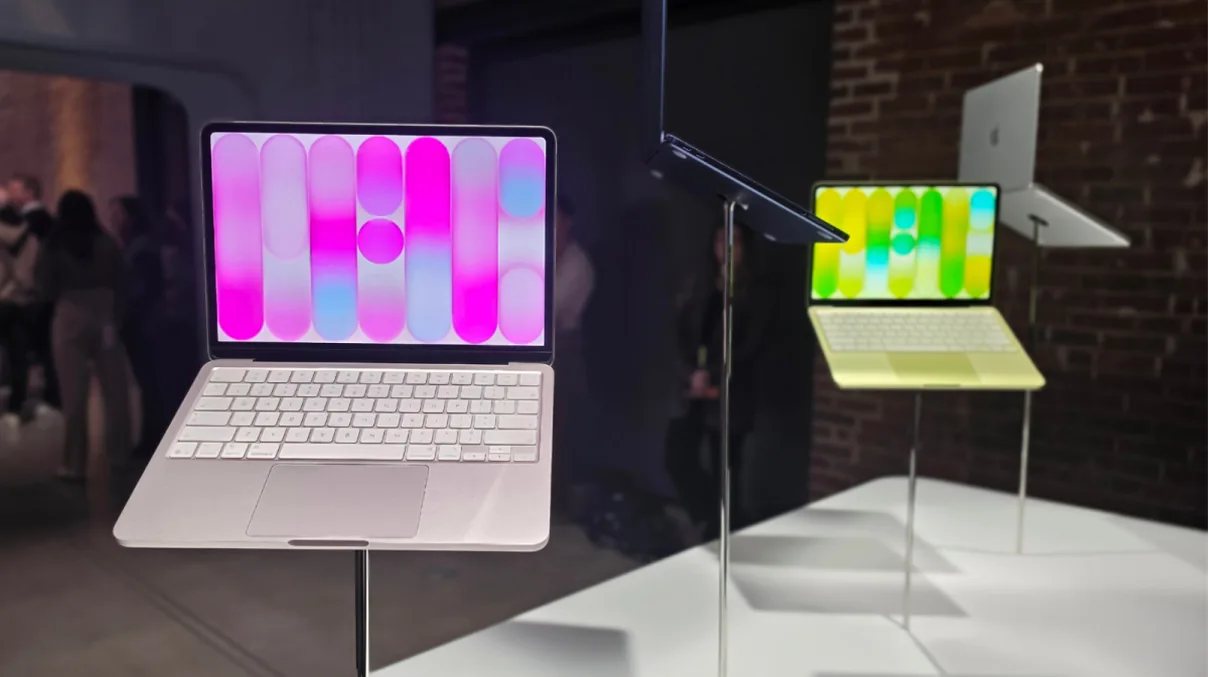
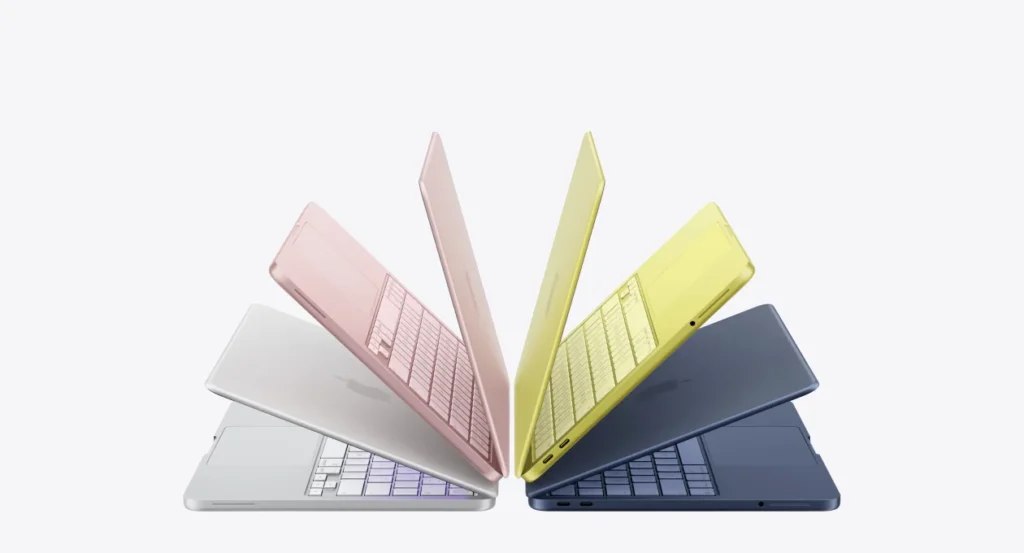
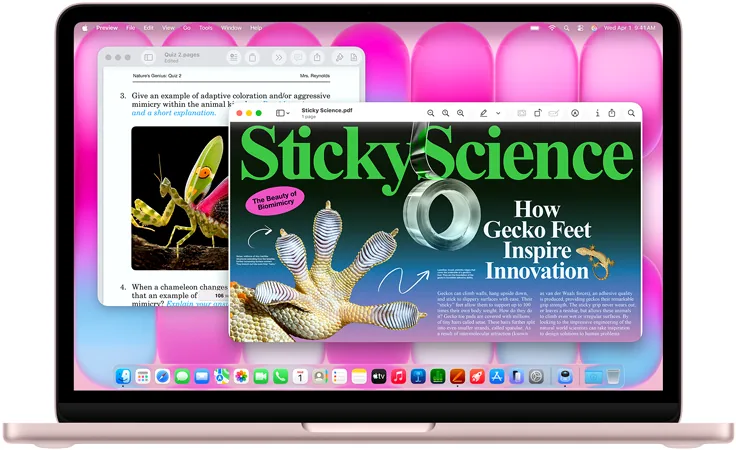
Apple’s design philosophy for the MacBook Neo was a delicate balancing act: how to deliver a premium experience at a budget price. The answer, according to Apple’s Vice President of Industrial Design, Molly Anderson, was a steadfast refusal to compromise on fundamental quality. “It’s undeniably a MacBook, we’re certainly not making any compromises on the design and that’s really important,” Anderson stated, emphasizing that the team started from the ground up, not by stripping down existing designs. The Neo maintains an all-aluminum chassis, a material choice that instantly elevates it above its plastic-clad competitors and reinforces the Mac brand identity. This commitment extends to a distinctive, ‘friendly’ color palette: Silver, Blush, Citrus, and Indigo, each with color-coordinated keyboards and feet. This vibrant approach, Anderson noted, was designed to make the laptop feel “part of the family, but with its own personality,” aiming for an approachable and joyful first impression. Furthermore, Apple innovated its manufacturing process, utilizing a combination of extrusion, flattening, and forming with heat and pressure to halve the amount of material used and significantly reduce machining time, thus cutting costs without sacrificing the iconic aluminum feel.


Under the Hood: A Deep Dive into MacBook Neo’s Technical Specifications
| CPU | Apple A18 Pro chip (6-core CPU: 2 performance, 4 efficiency; 5-core GPU; 16-core Neural Engine; 60GB/s memory bandwidth) |
|---|---|
| Memory | 8GB unified LPDDR5x (soldered) |
| Storage | 256GB SSD (base), 512GB SSD (upgrade with Touch ID) |
| Display | 13.0-inch Liquid Retina (2408 x 1506 at 219 ppi, 500 nits brightness, 1 billion colors, sRGB) |
| Battery Life | Up to 16 hours video streaming, 11 hours wireless web (36.5Wh battery) |
| Ports | 1x USB-C 3 (10 Gbps, DisplayPort, Charging), 1x USB-C 2 (480 Mbps, Charging), 3.5mm headphone jack |
| Wireless | Wi-Fi 6E (802.11ax), Bluetooth 6 |
| Camera | 1080p FaceTime HD camera |
| Audio | Dual-speaker sound system with Spatial Audio (Dolby Atmos), Dual-mic array |
| Size & Weight | Height: 0.50 in, Width: 11.71 in, Weight: 2.7 lbs |
| Notable Omissions | MagSafe, Thunderbolt, Backlit Keyboard (base), Haptic Trackpad, P3 Wide Color, True Tone |
A18 Pro Performance: iPhone Chip, Mac Capabilities
The inclusion of the A18 Pro chip, traditionally reserved for iPhones, in a Mac laptop was initially met with skepticism. However, our lab’s rigorous analysis reveals a more nuanced truth. The A18 Pro shares core architectural DNA with Apple’s M-series chips, meaning it’s far from a mere phone processor. In single-core performance, the Neo truly shines, delivering results comparable to the M3 and M4 chips. This translates into exceptional responsiveness for everyday tasks like web browsing, document editing, and light photo manipulation, allowing it to decisively outperform many budget Windows and ARM-based competitors. When it comes to multi-core workloads, however, the Neo’s 6-core CPU (2 performance, 4 efficiency) places its performance closer to the M1-class. Its 5-core GPU, while capable for casual gaming and media consumption, also shows limitations compared to higher-tier Macs. Fundamentally, the MacBook Neo is a ‘sprinter, not a marathon runner.’ Its fanless design, while ensuring silent operation, means that after approximately 60 seconds of sustained heavy load, the A18 Pro initiates aggressive thermal throttling. This is a deliberate engineering choice, prioritizing a comfortable, silent user experience over raw, sustained power, a trade-off critical for its intended audience.
MacBook Neo vs. Competition: Performance Benchmarks
Thermal Performance: The Silent Trade-Off
The MacBook Neo’s fanless design is a marvel of silent operation, but it comes with a critical caveat: thermal throttling. Our extensive thermal profiling in the LoadSyn Technical Lab confirms that while the A18 Pro chip delivers impressive burst performance, it cannot sustain heavy loads. After an initial 60 seconds of full-tilt operation, CPU utilization crashes dramatically, with observed single-core performance dropping by a staggering 87% after just five minutes of sustained stress. This is a direct consequence of the cooling system’s inability to dissipate heat fast enough. Interestingly, the external chassis remains remarkably comfortable, measuring only around 97.6°F (36.4°C) on its hottest spot. This underscores Apple’s deliberate choice: user comfort and silent operation take precedence over sustained raw power.
The 8GB RAM Conundrum: A Strategic Play Amidst Crisis
Perhaps the most contentious aspect of the MacBook Neo is its 8GB unified RAM configuration, with no upgrade path. In an era where many budget Windows and ARM competitors ship with 16GB, Apple’s decision seems, on the surface, stingy. However, this choice must be viewed through the lens of the 2026 global DRAM shortage. This isn’t a typical market fluctuation; it’s a structural reallocation of memory fabrication capacity towards High Bandwidth Memory (HBM) for AI accelerators. Major DRAM manufacturers are dedicating up to 40% of their advanced wafer output to HBM, which consumes significantly more wafer area per gigabyte and has lower yields. This has driven consumer memory prices sky-high, with TrendForce projecting a 90-95% quarter-over-quarter jump in PC DRAM contract prices for Q1 2026. By limiting the Neo to 8GB, Apple strategically minimizes its exposure to these escalating memory costs.
Ecosystem Integration: The Mac + iPhone Advantage
Beyond its hardware, the MacBook Neo’s true strength lies in its seamless integration within the expansive Apple ecosystem. Running macOS Tahoe, the Neo benefits from a user-friendly, secure, and intuitive operating system that feels instantly familiar to iPhone users. This deep integration is further amplified by Apple Intelligence features, including Writing Tools for refining text, Genmoji for custom emoji creation, and the Clean Up tool for effortlessly removing distractions from photos. The ‘better together’ philosophy truly shines with Continuity features, transforming the iPhone into an extension of the Mac.



The Deliberate Cuts: What Apple Sacrificed for the Price Tag
Pros
- Unprecedented $599 price point
- Premium all-aluminum chassis
- Excellent 13-inch Liquid Retina display
- M3-M4 class single-core performance
- Exceptional on-device AI capabilities
- 13+ hours real-world battery life
Cons
- Strict 8GB RAM limit (no upgrades)
- One USB-C port is limited to USB 2.0 speeds
- No backlit keyboard on base model
- No MagSafe or Touch ID (base model)
- Aggressive thermal throttling under load
Competitive Landscape: Neo vs. The Field
| Feature | MacBook Neo | MacBook Air (M5) | Dell 14 Plus |
|---|---|---|---|
| Price | $599 | $1099 | ~$649 |
| Chip | A18 Pro (6C) | M5 (8C) | Intel Ultra 5 |
| RAM | 8GB Unified | 8GB+ Unified | 16GB |
| Display | 13″ sRGB (500 nits) | 13.6″ P3 (500 nits) | 14″ (300 nits) |
| Build | Aluminum | Aluminum | Plastic/Alum |
Fandom Pulse: The Community’s Conflicted Embrace
The MacBook Neo has ignited a passionate, often conflicted, discourse within the community. It’s widely perceived as a ‘happy meal’ version of a Mac, sparking a contentious debate between its undeniable accessibility for budget-conscious newcomers and its frustrating compromises for those who would benefit from slightly more advanced, but unincluded, features.
“8 gigs of RAM is a deal-killer, but the additional compromises added together make this a terrible value when compared to the Air. This will be a flop, sad to say.” | “It’s great to pay bills and shop online. I’ve never ever used MagSafe charging since USB-C power was available.”
Who Is the MacBook Neo For?
Ideal For:
- Students (Education pricing)
- First-Time Mac Buyers
- Casual Web Browsers
- Budget-Conscious Families
NOT For:
- Video Editors & 3D Artists
- Hardcore Gamers
- Software Developers
- Users needing many peripherals
Final Verdict: A Strategic Masterstroke, Redefining Value
The MacBook Neo, at its core, is a strategically brilliant move for Apple. It’s not just another laptop; it’s a bold redefinition of the budget laptop segment, strategically timed to capitalize on a market in flux. By leveraging the proven, mature A18 Pro chip from its iPhone lineup, Apple achieved an unprecedented $599 price point without sacrificing its hallmark premium build quality or exceptional single-core performance. While the 8GB RAM is a bottleneck for power users, the Neo effectively establishes a new baseline for ‘value’ in portable computing.
9.5
9.0
7.5
Frequently Asked Questions
Can the MacBook Neo run Windows applications?
Yes, with software like Parallels Desktop, the MacBook Neo can run Windows and legacy Windows applications, though performance for CPU/GPU-intensive tasks is better on M-series Macs.
Is the 8GB RAM enough for most users?
For basic tasks like web browsing, document editing, streaming, and light photo editing, 8GB is sufficient. However, for heavy multitasking, it will be a limitation.
How does the A18 Pro chip compare to Apple’s M-series chips?
The A18 Pro offers M3-to-M4 class single-core performance, making it very snappy for everyday tasks. Its multi-core and GPU performance are closer to M1-class, and it throttles under sustained heavy loads due to its fanless design.