
🎯 Key Takeaways
- The 27-inch 1440p OLED category has solidified its position as the ultimate gaming sweet spot, with prices settling aggressively around the $600 mark.
- Consumers face a primary decision between two competing panel types: glossy, high-color volume QD-OLED and slightly brighter, matte WOLED.
- Crucially, buyers must exercise extreme caution regarding the AOC AG276QZD2, which suffers from a severe, unfixable HDR color clamping issue that renders bright reds as muted orange.
- Despite the buzz around next-generation displays, the 240Hz refresh rate remains the practical performance ceiling, as current high-end GPUs cannot reliably push framerates beyond this point in demanding AAA titles.
The OLED Sweet Spot: Why 27-Inch 1440p is the Perfect Convergence
The price floor for high-end OLED gaming monitors has finally dropped, bringing the 27-inch 1440p class into the realm of mainstream affordability. This resolution and size combination has long been considered the ideal balance between visual fidelity and framerate performance, but now, with OLED’s perfect contrast and instantaneous response times, the experience is transformative. However, this market is fractured between two competing panel technologies: WOLED (White OLED, typically from LG) and QD-OLED (Quantum Dot OLED, typically from Samsung), each with distinct advantages and frustrating flaws that dictate the user experience.
QD-OLED vs. WOLED: The Panel Technology Showdown
| Criteria | QD-OLED (Samsung) | WOLED (LG) |
|---|---|---|
| Panel Type | Quantum Dot OLED | White OLED + Color Filters |
| Subpixel Layout | Diamond/Triangular | Standard RGBW |
| Color Gamut (DCI-P3) | Superior (99%+) | Very High (97%~) |
| Typical Finish | Glossy (No Polarizer) | Matte/Semi-Glossy |
| Black Level in Bright Room | Raised (Blacks look gray) | Excellent (Even in bright room) |
| Common Drawbacks | Fringe/Text Clarity issues, potential HDR clamping | Potential for gradient banding/crush, lower color volume |
The Value Contenders: Acer Predator X27U vs. AOC AGON PRO AG276QZD2
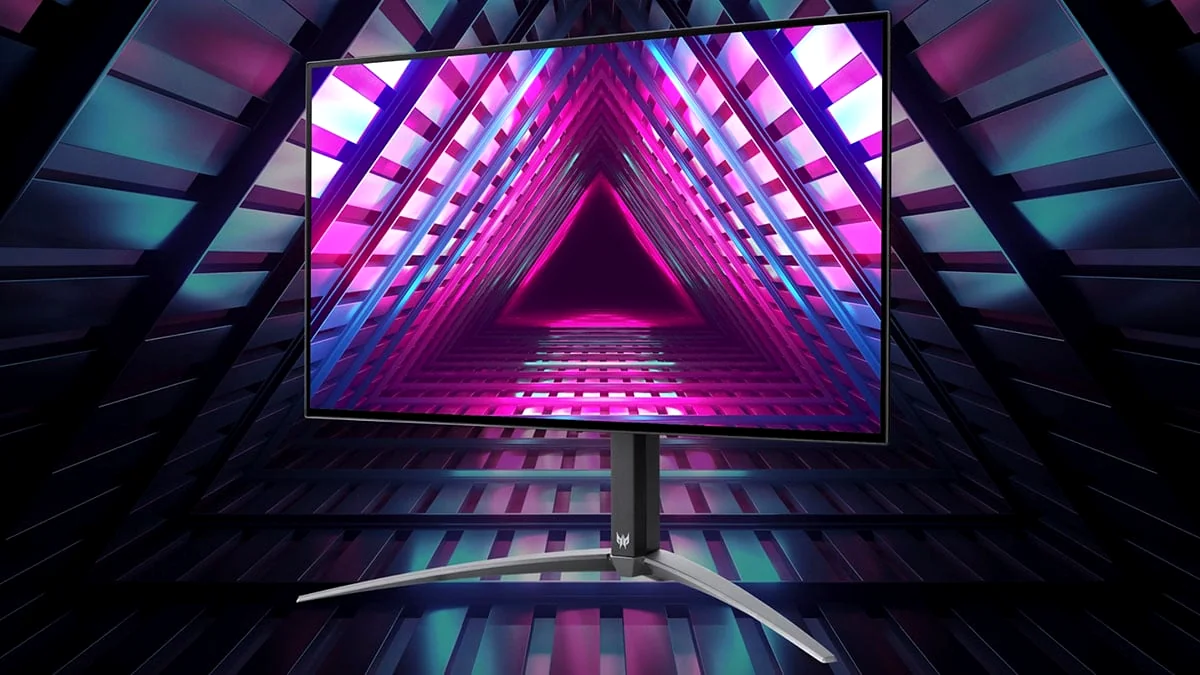
Acer Predator X27U (WOLED) Specifications
- Panel Type
- WOLED (Matte Anti-Glare)
- Resolution
- 2560 x 1440 (QHD)
- Refresh Rate
- 240 Hz
- Response Time (GtG)
- 0.01 ms
- HDR Certification
- VESA DisplayHDR 400
- Adaptive Sync
- FreeSync Premium Pro, G-Sync Compatible
- Connectivity
- 1x DP 1.4, 2x HDMI 2.0, 1x USB-C (90W PD)
- KVM Switch
- Yes
Acer X27U Pros
- Excellent connectivity, including 90W USB-C power delivery and a built-in KVM switch, making it ideal for hybrid productivity users.
- The heavy matte anti-glare coating is preferred by many for office work and reducing reflections in bright environments.
- Strong build quality, featuring a robust stand and full ergonomic adjustment (height, tilt, swivel, pivot).
- High peak brightness for small HDR highlights (up to 1000 nits at 3% APL).
Acer X27U Cons
- The matte coating reduces the ‘inky black’ effect and vibrancy that OLED is known for, dulling the contrast slightly.
- Limited to HDMI 2.0, meaning it lacks bandwidth for 4K 120Hz console support.
- Utilizes older WOLED panel technology, which may be susceptible to the documented gradient banding/crush issues seen in similar models (e.g., the ASUS XG27AQDMG).
AOC AGON PRO AG276QZD2 (QD-OLED) Specifications
- Panel Type
- QD-OLED (Glossy)
- Resolution
- 2560 x 1440 (QHD)
- Refresh Rate
- 240 Hz
- Response Time (GtG)
- 0.03 ms
- HDR Certification
- VESA DisplayHDR 400 True Black
- Adaptive Sync
- G-Sync Compatible, Adaptive Sync
- Connectivity
- 2x DP 1.4, 2x HDMI 2.0
- Burn-in Warranty
- 3 Years (Explicitly covers burn-in)
⚠️ CRITICAL WARNING: The AOC AG276QZD2 HDR Flaw
Community reports are overwhelmingly consistent: the AOC AG276QZD2 suffers from severe HDR color clamping that cannot be fixed in the On-Screen Display (OSD). Specifically, bright red tones are aggressively shifted to orange, significantly impacting HDR gaming and media consumption where color fidelity is critical. This issue, unique among its QD-OLED peers (like the Aorus FO27Q2), makes the AOC model a high-risk purchase if High Dynamic Range is a priority, despite its otherwise attractive price point.
AOC AG276QZD2 Pros
- Lowest entry price point for a 27-inch 1440p OLED, frequently available between $500 and $600.
- Superior color volume and vibrancy due to QD-OLED technology, achieving over 99% DCI-P3 coverage.
- The 3-Year Warranty explicitly covers burn-in, providing excellent longevity protection.
- Glossy finish provides the truest ‘inky black’ OLED experience, eliminating the graininess of matte coatings.
AOC AG276QZD2 Cons
- Severe HDR color clamping issue (reds turn orange) fundamentally breaks HDR content presentation.
- Lacks the advanced HDMI 2.1 and USB-C connectivity found on competitors, limiting console potential and productivity use.
- The glossy screen surface, which lacks a polarizer, raises black levels dramatically in bright rooms, making it unsuitable for sunlit environments.
The Shadow of the Future: Why 240Hz is Still the Smart Buy
Acer’s recent announcement of the Predator X27U F5 (500Hz) and the forthcoming X27U F8 (720Hz) has introduced a new level of competitive speed into the market. While these monitors are technological marvels, they come with a significant asterisk: achieving 500+ frames per second requires current-generation GPUs to run older, less demanding esports titles like Counter-Strike 2 or Valorant. For demanding AAA games like Cyberpunk 2077, even the most powerful hardware struggles to consistently hit 240 FPS, let alone 500 FPS. Investing in a 240Hz model today is financially prudent, as it maximizes the utility of modern GPUs without forcing you to pay a premium for performance you cannot yet utilize outside of a few specific titles.
OLED Longevity: Burn-In and Mitigation Concerns
Is burn-in still a major risk with these 2024/2025 panels?
While the risk is significantly lower than previous generations, it is still a factor, especially for productivity users who display static elements for hours. Most manufacturers, including AOC, now offer 3-year warranties specifically covering burn-in, providing significant peace of mind.
How annoying are the burn-in mitigation features (Pixel Shift, Uniform Brightness)?
The community reports high annoyance with constant pixel shifting and the aggressive Automatic Static Brightness Limiter (ASBL), which dims the screen during static scenes. Features like ASUS’s Uniform Brightness mode are designed to minimize the intrusive dimming, but they often reduce overall peak brightness as a trade-off.
Do I need HDMI 2.1 for 1440p gaming?
For PC gaming, DisplayPort 1.4 is sufficient for 1440p @ 240Hz. HDMI 2.1 is only critical if you need 4K @ 120Hz/144Hz support for modern consoles (PS5/Xbox Series X), which most of these value-priced monitors (AOC, older Acer X27U) lack.
🏆 The Definitive 27-Inch 1440p OLED Recommendation
The current market demands a clear trade-off between price, color fidelity, and robust connectivity. The AOC AG276QZD2’s critical, documented HDR flaw—where reds are incorrectly shifted to orange—disqualifies it for anyone serious about HDR gaming, despite its exceptional price point. For the best balance of features, the Acer Predator X27U offers superior connectivity and productivity tools (USB-C, KVM), making it the most robust choice for a hybrid user who splits time between work and play. However, if pure color volume and a true glossy finish are paramount, and you can stretch your budget slightly ($650+), look for the Aorus FO27Q2 or MSI alternatives. These models share the superior QD-OLED panel but successfully avoid the AOC’s debilitating HDR issues.
Recommendation Matrix
- Best Overall Hybrid (PC/Productivity)Acer Predator X27U
- Best Pure Color Fidelity (QD-OLED)Aorus FO27Q2 or MSI 271QPX (Avoid AOC)
- Best Budget Entry (SDR Only)AOC AG276QZD2 (Only if you never use HDR)