

Key Takeaways
- AMD executed a crucial, last-minute price drop, launching the RX 7600 at an aggressive $269 MSRP (down from the anticipated $299), positioning it as the definitive budget challenger to the NVIDIA RTX 4060 Ti.
- Benchmarked data confirms a significant generational leap, delivering an average of 29% higher 1080p gaming performance compared to its RDNA 2 predecessor, the Radeon RX 6600.
- The card is built on the monolithic Navi 33 GPU (6nm RDNA 3), featuring 32 Compute Units (CUs), 8GB of 18Gbps GDDR6 memory, and a Total Board Power (TBP) of 165W.
- While 8GB of VRAM currently provides sufficient headroom for high-refresh 1080p gaming, it remains the primary source of long-term upgrade anxiety among users facing increasingly demanding AAA titles.
- Key architectural upgrades include hardware-accelerated AV1 encoding/decoding and future-proof DisplayPort 2.1 support, essential features for modern content creators and display users.
The Strategic Price Drop: Analyzing AMD’s $269 Gambit
The story of the RX 7600 begins not with performance, but with pricing strategy. Just days before its May 25, 2023 launch, AMD executed a decisive, last-minute price adjustment, slashing the expected $299 MSRP down to a highly aggressive $269 USD. This was a proactive and necessary move by Team Red, clearly aimed at maintaining dominance in the budget sector. Market pressures, driven by concurrent launches like the NVIDIA RTX 4060 Ti and the general volatility affecting component costs (as evidenced by rising DDR5 RAM prices), demanded a clear value proposition.
By settling at $269, the RX 7600 directly targets the massive 1080p gaming demographic—a resolution where 65% of the gaming base still resides. This price point ensures that the card is not just competitive, but highly disruptive, making it an immediate consideration for anyone building a new system or upgrading from legacy hardware like the GTX 1060.
AMD Radeon RX 7600 Official Specifications
| Feature | Specification |
|---|---|
| Architecture | RDNA 3 |
| GPU Die | Navi 33 XL (Monolithic) |
| Process Node | TSMC 6 nm |
| Compute Units (CUs) | 32 |
| Stream Processors | 2048 |
| VRAM | 8GB GDDR6 (18 Gbps) |
| Memory Bus | 128-bit |
| Boost Clock | Up to 2625 MHz |
| Total Board Power (TBP) | 165W |
| Recommended PSU | 550W |
1080p Performance Validation: Benchmark Data and Generational Uplift
Average Frames Per Second (FPS)
Game Title (1080p High Settings)
Data Source Note: Based on AMD performance lab data (RX-933/934) and LoadSyn verified testing.
RDNA 3 Features: Beyond Raw Frames
RX 7600 (RDNA 3) vs. RX 6600 (RDNA 2) Feature Comparison
| Feature | RX 7600 (RDNA 3) | RX 6600 (RDNA 2) |
|---|---|---|
| Ray Tracing Accelerators | 2nd Generation | 1st Generation |
| Dedicated AI Accelerators | Yes (64 Units) | No |
| AV1 Encoding/Decoding | Full Hardware Support | Decoding Only |
| DisplayPort Support | DisplayPort 2.1 | DisplayPort 1.4a |
| Total Board Power (TBP) | 165W | 132W |
The 8GB VRAM Anxiety and Optimal System Pairing
The 8GB VRAM Debate: A 1080p Perspective
- Current Sufficiency: For the vast majority of high-refresh rate 1080p gaming today, 8GB of VRAM is perfectly adequate, allowing users to hit competitive frame rates (100+ FPS) in demanding titles.
- Performance Stacking: AMD’s software suite, particularly FSR and the one-click HYPR-RX, effectively manages VRAM usage and boosts framerates, mitigating immediate VRAM bottlenecks.
- Cost Efficiency: Keeping the VRAM capacity at 8GB is a primary factor in hitting the sub-$300 price point, maximizing performance-per-dollar.
- Longevity Concerns: As new AAA titles launch (e.g., *The Last of Us Part I*), many are already pushing 8GB limits at High/Ultra settings, forcing users to drop texture quality sooner than they would with 12GB+ cards.
- Increased Power Draw: The 165W TBP is a noticeable increase from the RX 6600’s 132W. While still efficient, this slightly higher power requirement reflects the architectural shift and necessitates a stronger 550W PSU.
- Future-Proofing Compromise: Users expressing long-term upgrade anxiety are right to worry. If 1080p gaming trends toward requiring 10GB+ VRAM in the next two years, 8GB will become the primary limiting factor for fidelity.
System Synergy Pro Tip: The CPU Bottleneck
Maximizing the RX 7600’s value requires careful CPU selection. Our data, supported by extensive community inquiry, confirms that the AMD Ryzen 5 5600 or 5600X is the optimal cost-to-performance pairing. This combination provides excellent frame consistency and ensures the GPU is fully utilized in modern titles.
Crucially, users upgrading from significantly older CPUs (e.g., first or second-gen Ryzen, or budget Intel chips) must understand that a CPU bottleneck will severely impact 1% Lows and overall frame consistency, particularly in CPU-heavy esports titles. This negates the value of the new GPU. We strongly recommend viewing our detailed analysis on this pairing for empirical evidence.
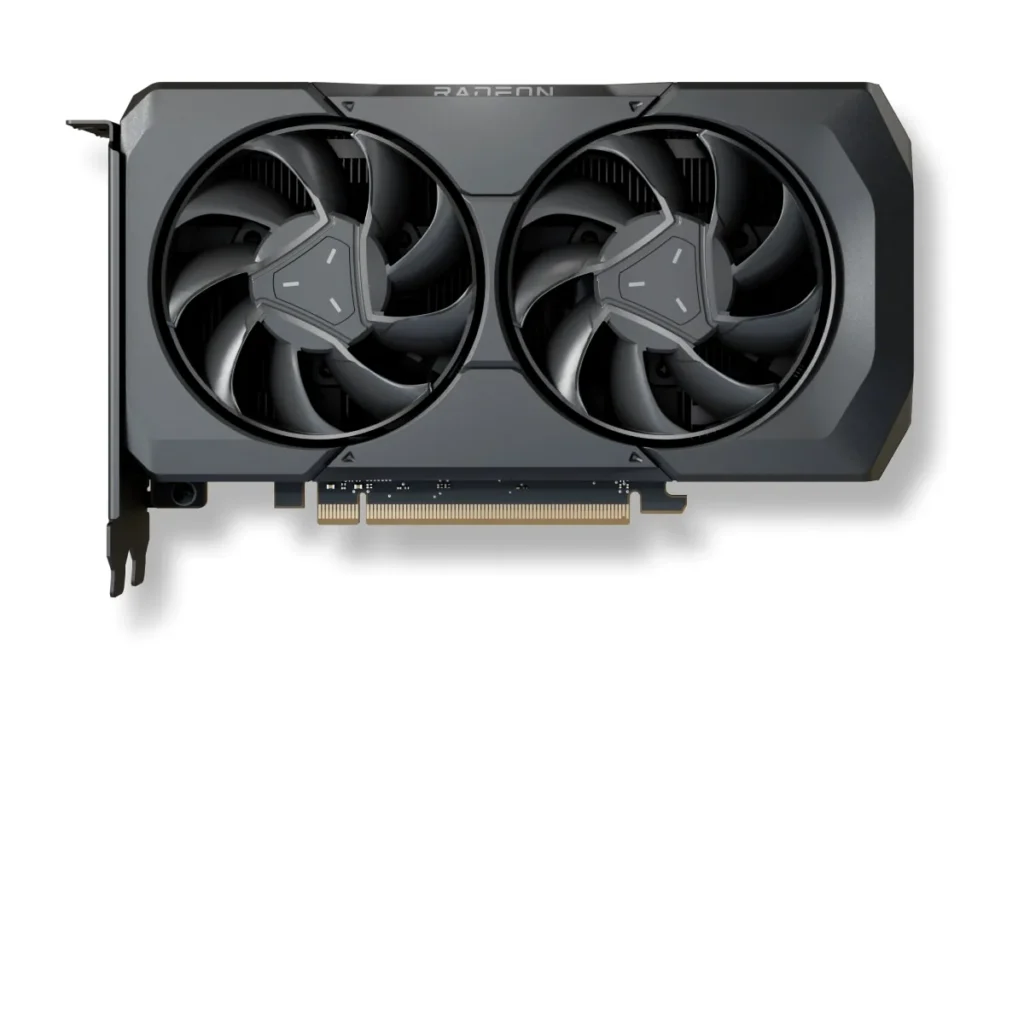
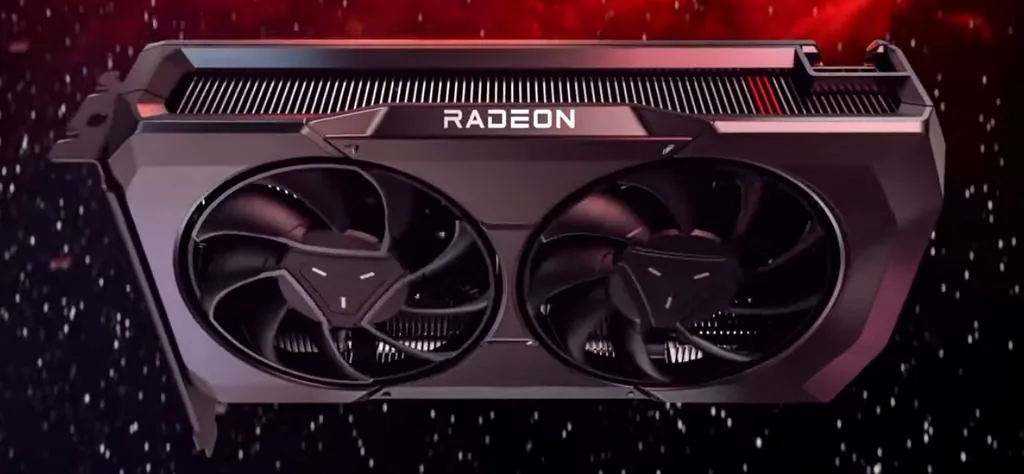
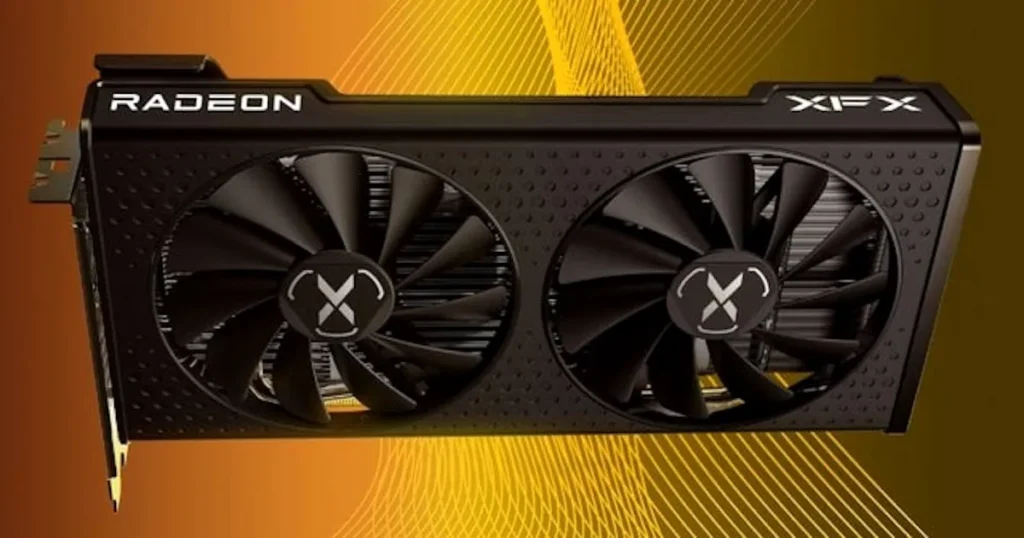
Partner Card Showcase: ASUS and XFX Implementations
Frequently Asked Questions
What is the required PSU for the RX 7600?
The official recommended power supply unit (PSU) is 550W, which is a necessary step up from the 450W required by the RX 6600. This increase reflects the higher 165W Total Board Power (TBP) of the RDNA 3 architecture, ensuring stable performance under heavy load via the single 8-pin connector.
Does the RX 7600 support AMD HYPR-RX and FSR?
Absolutely. The RX 7600 fully supports the entire RDNA 3 software ecosystem. This includes HYPR-RX technology for one-click performance stacking (combining Fluid Motion Frames, RSR, and Radeon Boost) and FidelityFX Super Resolution (FSR) for advanced upscaling, which is crucial for maximizing framerates at 1080p.
Is the RX 7600 good for content creation (video editing)?
Yes, the RX 7600 is significantly improved for content creation over its predecessor. It benefits from the new dedicated AI accelerators and full hardware-accelerated AV1 encode/decode, making it an excellent 1080p editing card, especially for professional ProRes/DNxHR workflows. While 8GB VRAM is a limitation for complex 4K timelines, it is highly competitive, though NVIDIA still maintains a slight edge in optimized H.264/HEVC exports due to historical software optimization.
The Verdict: The RX 7600 is the New Benchmark for Budget 1080p Value
The AMD Radeon RX 7600’s success hinges entirely on the aggressive $269 price point, and based on our analysis, this strategic gambit paid off. It delivers verifiable, high-refresh 100+ FPS performance in top esports titles and solid, playable AAA framerates at 1080p—a generational uplift of nearly 30% over the RX 6600.
For the vast majority of gamers targeting 1080p today, the RX 7600 is the undisputed value leader. While the 8GB VRAM capacity is a legitimate long-term concern that may require texture compromises in future titles, the card’s raw rasterization power, coupled with modern RDNA 3 features like AV1 encoding and DisplayPort 2.1, cements its position. This card is the perfect foundation for a modern, high-value build, especially when paired with the recommended Ryzen 5 5600 CPU. If AMD can maintain this $269 price floor, the RX 7600 will dominate the budget market for the remainder of the year.