
Key Takeaways
- The AMD Ryzen 7 7800X3D remains the premier choice for pure gaming performance, primarily due to its innovative 3D V-Cache technology, which significantly reduces memory latency and boosts frame rates.
- It offers exceptional value, consistently outperforming more expensive rival CPUs and even showing superior efficiency compared to newer generations, making it a smarter investment for gamers.
- Built on the AM5 platform, the 7800X3D ensures long-term upgradeability with future AMD processors, safeguarding your investment and providing a clear path for performance enhancements.
Introduction: The Enduring Reign of AMD’s Gaming Champion
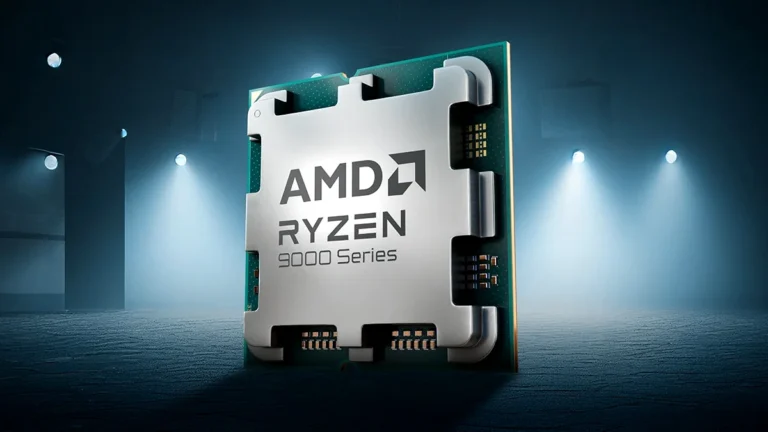
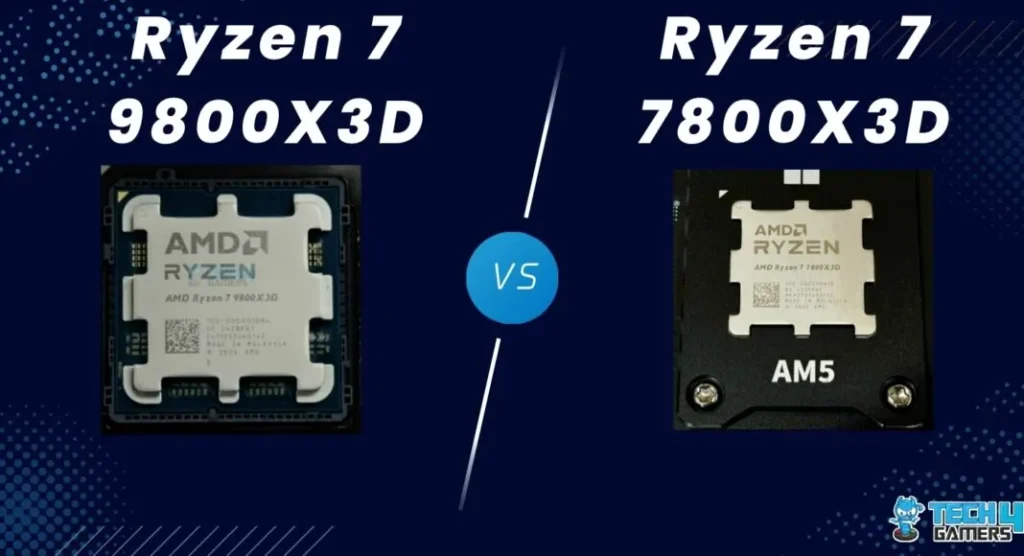
In the fast-paced world of PC hardware, few components manage to hold their ground as long and as fiercely as the AMD Ryzen 7 7800X3D. Launched as a gaming powerhouse, it quickly earned the title of ‘King of Gaming CPUs’ within our benchmark labs. Even with the recent arrival of its successor, the Ryzen 7 9800X3D, and fierce competition from Intel’s latest offerings, the 7800X3D continues to be a top contender for any serious gamer. This comprehensive guide will dissect the technology, benchmarks, market position, and future prospects of the Ryzen 7 7800X3D, proving why it remains an exceptional choice for building or upgrading your ultimate gaming rig, especially when navigating today’s volatile hardware market.
The Secret Sauce: How 3D V-Cache Transforms Gaming Performance
At the core of the Ryzen 7 7800X3D’s exceptional gaming performance is AMD’s innovative 3D V-Cache technology. This revolutionary design involves stacking an additional 64MB of L3 cache directly on top of the processor’s core complex die (CCD), effectively tripling the total L3 cache to a massive 96MB. For games, which often rely on rapid access to large datasets, this dramatically reduces memory latency. The CPU cores can fetch critical game data from this super-fast L3 cache much quicker than from slower system RAM, leading to not just higher average frame rates, but critically, improved 1% low frame rates. This translates into a noticeably smoother and more consistent gaming experience, eliminating stutters that can break immersion. This technology first made waves with the Ryzen 7 5800X3D, and the 7800X3D refined its application on the newer, more efficient Zen 4 architecture.
AMD Ryzen 7 7800X3D: Key Specifications
| Product Line | AMD Ryzen 7 Processors |
|---|---|
| # of CPU Cores | 8 |
| # of Threads | 16 |
| Max. Boost Clock | Up to 5.0GHz |
| Base Clock | 4.2GHz |
| L1 Cache | 512KB |
| L2 Cache | 8MB |
| L3 Cache | 96MB |
| Default TDP | 120W |
| Processor Technology | TSMC 5nm FinFET |
| CPU Socket | AM5 |
| Thermal Solution | Not included |
| Max. Operating Temp | 89°C |
| PCI Express Version | PCIe 5.0 |
| System Memory Type | DDR5 |
| Memory Channels | 2 |
| Graphics Model | AMD Radeon Graphics |
| Graphics Frequency | 2200 MHz |
Gaming Performance: The Uncontested Champion
Across countless hours of rigorous testing and benchmarks from leading tech publications, the Ryzen 7 7800X3D consistently demonstrates its dominance in gaming. It frequently outperforms even more expensive CPUs, including Intel’s flagship Core i9-13900K and AMD’s own higher-core-count Ryzen 9 7950X3D, particularly at 1080p and 1440p resolutions where CPU bottlenecks are more pronounced. Titles like Microsoft Flight Simulator 2021 and Far Cry 6 show massive gains, with the 7800X3D being up to 35.5% faster than the 13900K in some scenarios, and a staggering 25% faster than the 7700X in Far Cry 6. Its strength lies not just in raw average frame rates, but critically, in superior 1% and 0.1% low frame rates, ensuring a smoother, more consistent, and ultimately more enjoyable gaming experience.
The Ryzen 7 7800X3D is often 12% faster in 1080p gaming than the $580 Core i9-13900K, and in specific titles like Microsoft Flight Simulator 2021, it can be an astonishing 35.5% faster, according to Tom’s Hardware testing. This highlights its specialized prowess and exceptional performance-per-dollar.
Head-to-Head: 7800X3D Against Its Rivals
While the 7800X3D holds its own, understanding its position relative to other high-end CPUs is key. Here’s how it stacks up against its closest competitors from both AMD and Intel:
| Feature | Ryzen 7 7800X3D | Ryzen 9 7950X3D | Ryzen 7 9800X3D | Intel Core i9-13900K |
|---|---|---|---|---|
| Cores / Threads | 8C/16T | 16C/32T | 8C/16T | 24 (8P+16E)/32T |
| Max. Boost Clock | Up to 5.0GHz | Up to 5.7GHz | Up to 5.2GHz | Up to 5.8GHz |
| Total L3 Cache | 96MB | 128MB | 104MB | 36MB |
| Default TDP | 120W | 120W | 120W | 125W (PBP) |
| Gaming Perf. (Rel.) | 100% | ~99.1% | ~108.5% | ~89.0% |
The data clearly shows that while the Ryzen 9 7950X3D offers more cores for productivity, its gaming lead over the 7800X3D is negligible or non-existent in many titles, often within a mere 1%. The newer Ryzen 7 9800X3D does show an average gaming uplift of about 8.5% and better productivity scores. However, its current market availability issues and inflated pricing make the readily available 7800X3D a far more practical choice.
Efficiency & Thermals: A Cooler, Quieter Experience
Pros
- Exceptional Power Efficiency: Draws significantly less power leading to lower electricity bills.
- Lower Thermal Output: Runs cooler than most high-end CPUs, allowing for quieter cooling.
- Performance-per-Watt: Delivers top-tier gaming without massive energy consumption.
Cons
- Conservative Max Boost: 5.0GHz is lower than non-X3D Zen 4 chips.
- Limited Traditional Overclocking: Restricted manual voltage control due to 3D V-Cache sensitivity.
Overclocking & Low-Level Tuning: Maximizing Your X3D
While traditional manual overclocking is largely limited on the Ryzen 7 7800X3D due to the sensitive 3D V-Cache die, enthusiasts aren’t entirely without options. AMD’s Precision Boost Overdrive (PBO) and Curve Optimizer (CO) are powerful tools that allow users to optimize performance within safe parameters. PBO enables the CPU to boost higher within its thermal and power limits, while Curve Optimizer allows for undervolting individual cores to improve efficiency and boost clocks.
Critical Safety Note: While PBO and Curve Optimizer are generally safe, manual voltage adjustments beyond factory settings on X3D chips can lead to hardware damage and void your warranty. The official Tjmax for the 7800X3D is 89°C.
The Esports Stamp of Approval: PGL CS2 Major Copenhagen 2024
Further cementing its status as a top-tier gaming CPU, the AMD Ryzen 7 7800X3D was the processor of choice for the PGL CS2 Major Copenhagen 2024. This major esports tournament utilized PCs equipped with the 7800X3D and NVIDIA GeForce RTX 4080 GPUs, ensuring optimal, lag-free performance for professional competitors where every frame and millisecond counts.

Market Dynamics & Value: A Smart Investment
Initially launched at $449, the Ryzen 7 7800X3D has seen favorable price adjustments, often making it an even more compelling value proposition for gamers navigating current market volatility. AMD’s long-term commitment to the AM5 socket ensures a solid upgrade path, making the initial investment worthwhile.
“For pure gaming power and supreme efficiency, the Ryzen 7 7800X3D is a fantastic CPU.” — Chris Szewczyk, PC Gamer
Future-Proofing Your Rig: The AM5 Advantage
One of the most significant advantages of investing in the Ryzen 7 7800X3D is its integration into AMD’s AM5 platform. Unlike Intel, which frequently changes sockets, AMD has publicly committed to supporting AM5 for several generations. This means that a motherboard purchased today with your 7800X3D is highly likely to be compatible with future Zen 5 and even Zen 6 processors with a simple BIOS update.
Frequently Asked Questions (FAQ)
While traditional manual overclocking is limited on the 7800X3D due to its 3D V-Cache architecture, users can still fine-tune performance using AMD’s Precision Boost Overdrive (PBO) and Curve Optimizer functionality.
The Ryzen 7 7800X3D uses the AM5 socket, supporting advanced features like PCIe 5.0 and DDR5 memory.
Yes, the Ryzen 7 7800X3D is renowned for its exceptional energy efficiency, often drawing significantly less power than competing high-end CPUs.
Final Verdict
Even with newer contenders entering the arena, the AMD Ryzen 7 7800X3D stands as the undisputed champion for pure gaming performance. For those building a new AM5 rig focused purely on gaming, the 7800X3D is the standard.