Introduction: The Dawn of Zen 5 in Handhelds
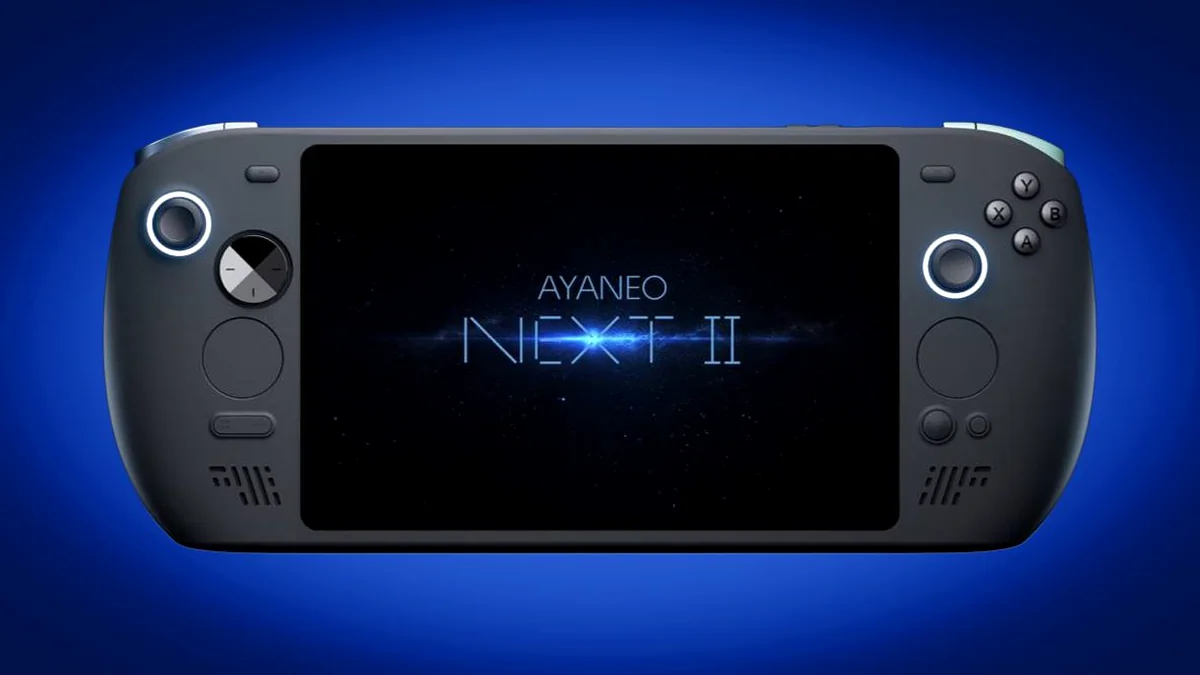
The handheld PC gaming landscape is on the cusp of a major evolution with the unveiling of the AYANEO NEXT II. This device isn’t just an iterative upgrade; it represents a bold leap forward, powered by AMD’s new Ryzen AI Max+ 395 APU. Featuring a 16-core Zen 5 CPU and RDNA 3.5 GPU, this chip promises unprecedented performance in a portable form factor. AYANEO, a brand known for pushing boundaries, has equipped the NEXT II with a robust dual-fan cooling system and a massive 115Wh battery, aiming to deliver an ‘ultimate experience’ for true gamers. But with great power comes great thermal responsibility. This analysis delves into the specifications, the cooling solutions, and the potential challenges of harnessing Zen 5’s raw fury in a handheld chassis, comparing it against key competitors and exploring what this means for the future of portable PC gaming.
Under the Hood: The Ryzen AI Max+ 395 Powerhouse
At the heart of the AYANEO NEXT II lies the AMD Ryzen AI Max+ 395 APU. This chip is a significant departure from what we’ve seen in handhelds, boasting a 16-core Zen 5 CPU and an RDNA 3.5 Radeon 8060S integrated GPU with 40 Compute Units. This architecture is designed for high performance and AI compute capabilities. Crucially, it supports a Thermal Design Power (TDP) of up to 85W, a figure that dwarfs the 35W TDP of chips found in competitors like the ASUS ROG Ally X. This increased power envelope is the key to unlocking higher clock speeds and greater processing power, but it also presents a formidable challenge for thermal management in a compact device.
AYANEO NEXT II – Key Specifications:
| Feature | Specification |
|---|---|
| Processor | AMD Ryzen™ AI Max+ 395 (Zen 5 CPU, RDNA 3.5 GPU) |
| CPU Cores | 16-core |
| GPU Compute Units | 40 CUs |
| Max TDP | Up to 85W |
| Display | 9.06-inch OLED, 2400 x 1504 |
| Refresh Rate | 60Hz – 165Hz (Variable) |
| Battery | 115Wh |
| Cooling | Dual-fan system |
| Storage | TBD |
| RAM | TBD |
| Ports | TBD |
| Dimensions | TBD |
| Weight | Estimated > 1kg |
The Cooling Crucible: Taming the 85W Beast
AYANEO’s solution to managing the heat generated by the 85W Ryzen AI Max+ 395 is an advanced dual-fan cooling system. This setup, coupled with a high-efficiency fins array and rear exhaust ports, is designed for rapid heat dissipation. The company’s history, with innovations like the 3+1 triple heat pipe cooling on the AYANEO 2S, suggests a serious commitment to thermal engineering. However, sustaining 85W TDP in a handheld form factor is an extreme challenge. The community’s ‘Curiosity’ mixed with ‘Concern’ about thermal throttling and long-term hardware degradation is well-founded. The effectiveness of this dual-fan system will be the make-or-break factor for the NEXT II’s sustained performance, especially when compared to the more conservative TDP limits of competitors.

Display and Battery: The Immersive Experience
The AYANEO NEXT II doesn’t compromise on its visual and power delivery. It features a premium 9.06-inch OLED display with a sharp 2400 x 1504 resolution and a highly versatile refresh rate that can be adjusted from 60Hz up to 165Hz. This offers a significant upgrade in visual fidelity and fluidity over many competitors. Complementing this is a substantial 115Wh battery, which is considerably larger than the 80Whr battery in the ROG Ally X and the 74Whr in the Legion Go 2. This massive battery capacity is essential for powering the high-TDP Ryzen AI Max+ 395, aiming to provide extended playtime despite the demanding hardware. The large battery also addresses the ‘Value Consciousness’ concern by providing endurance that might justify the premium price point.
Competitive Landscape: Handhelds at the High-End
AYANEO NEXT II vs. Key Competitors:
| Feature | AYANEO NEXT II | ASUS ROG Ally X | MSI Claw 8 AI+ |
|---|---|---|---|
| Processor | Ryzen AI Max+ 395 (Zen 5) | Ryzen Z1 Extreme (Zen 4) | Intel Core Ultra 7 155H (Meteor Lake) |
| Max TDP | Up to 85W | Up to 35W (Docked) | Up to 30W |
| Display Size | 9.06-inch OLED | 7-inch IPS LCD | 8-inch IPS LCD |
| Display Resolution | 2400 x 1504 | 1920 x 1080 | 1920 x 1200 |
| Display Refresh Rate | Up to 165Hz | Up to 120Hz | Up to 120Hz |
| Battery | 115Wh | 80Wh | 75Wh |
| Cooling | Dual-fan | Single-fan | Single-fan |
| Price | TBD (Expected Premium) | $699 | $700 |
The AYANEO NEXT II enters a competitive arena dominated by devices like the ASUS ROG Ally X and the MSI Claw 8 AI+. While competitors focus on optimizing existing architectures or Intel’s new integrated graphics, AYANEO is betting big on AMD’s next-generation Ryzen AI Max+ 395. The significantly higher TDP limit of 85W is AYANEO’s primary differentiator, promising raw performance far exceeding the ~35W capabilities of the ROG Ally X. However, this aggressive approach also fuels community ‘Skepticism’ about sustained performance and ‘Disappointment’ regarding the ‘high price point’ for the performance delivered, especially when native power is prioritized over upscaling technologies. The NEXT II’s larger OLED display and massive battery also set it apart, but the ultimate price and real-world performance will determine its success.
The Fandom Pulse: Power vs. Longevity
“What is the dark side of tunning it to 45W? How much stable it is until reach the thermal Throttle? I’m interested, but it is the only concern I have. Because we will b switching batteries a lot do to the heat cycles”
The sentiment from the gaming community is a critical factor in understanding the AYANEO NEXT II’s potential. There’s an undeniable ‘Curiosity’ to push these handhelds to their absolute limits, exploring maximum TDP settings and seeking raw, native performance. However, this is tempered by ‘Concern’ over thermal throttling, battery longevity, and the potential for hardware degradation. The frustration with benchmarks relying heavily on upscaling technologies like FSR3, rather than showcasing native power, further highlights a desire for transparency and genuine performance metrics. The ‘Ambition’ to leverage eGPUs is present, but so is the ‘Skepticism’ about whether handhelds can truly compete with consoles even with such additions. Ultimately, many users question the ‘Value Consciousness’ at the current high price points, making the NEXT II’s performance-to-price ratio a crucial battleground.
The AYANEO NEXT II’s success hinges on its ability to balance the raw power of the 85W Ryzen AI Max+ 395 with effective thermal management. If AYANEO can deliver sustained performance without excessive throttling or heat, it could redefine handheld gaming. If not, it risks becoming an expensive enthusiast device with limited practical appeal.
The AYASpace Ecosystem and Control
Beyond the hardware, AYANEO’s proprietary software, AYASpace, plays a crucial role in managing the NEXT II’s capabilities. This enhanced version supports controller navigation, UI customization, and features a Smart Control Center for adjusting performance modes, fan speeds, and power curves. Functions like virtual key mapping and a ‘Snowfield’ task-freezing engine aim to optimize performance and user experience. This software layer is essential for users to effectively leverage the device’s power and fine-tune settings, especially when managing the high TDP and cooling systems.
Final Verdict: A High-Stakes Gamble for the Future
The AYANEO NEXT II represents a bold, almost audacious, step into the future of high-performance handheld gaming. By embracing AMD’s powerful Ryzen AI Max+ 395 APU and its associated high TDP, AYANEO is clearly aiming for the absolute pinnacle of portable PC gaming performance. The device boasts impressive specifications, including a stunning OLED display and a colossal battery, setting it apart from many competitors. However, this pursuit of raw power is a double-edged sword. The success of the NEXT II will ultimately be determined by AYANEO’s engineering prowess in taming the 85W TDP through its dual-fan cooling system. If they can achieve sustained, high-performance gameplay without succumbing to thermal throttling or excessive noise, the NEXT II could be a game-changer. If not, it risks being an enthusiast’s dream that falls short in practical, everyday use, especially considering its likely premium price point. The community’s desire for native performance is clear, and the NEXT II is positioned to deliver it, but the crucible of heat will be its ultimate test.
Frequently Asked Questions:
Q1: What is the main advantage of the AYANEO NEXT II’s Ryzen AI Max+ 395 APU?
A1: The primary advantage is its significantly higher performance potential, stemming from a 16-core Zen 5 CPU and RDNA 3.5 GPU, capable of handling up to an 85W TDP, far exceeding most current handheld processors.
Q2: How does the AYANEO NEXT II address the thermal challenges of its powerful APU?
A2: AYANEO has equipped the NEXT II with an advanced dual-fan cooling system designed for rapid heat dissipation, aiming to sustain the high performance of the 85W TDP.
Q3: How does the battery life compare to competitors?
A3: The NEXT II features a massive 115Wh battery, which is considerably larger than those found in key competitors like the ASUS ROG Ally X (80Wh) and Legion Go 2 (74Wh), intended to provide extended playtime despite the high power draw.
Q4: Will the AYANEO NEXT II be expensive?
A4: While specific pricing is undisclosed, the use of premium components like the OLED display and the high-end APU, combined with AYANEO’s market positioning, suggests it will be a premium-priced device.
Q5: What is AYASpace and why is it important for the NEXT II?
A5: AYASpace is AYANEO’s proprietary software that helps users manage the device’s performance, customize settings, and optimize the gaming experience, which is crucial for effectively utilizing the power of the Ryzen AI Max+ 395 and its cooling system.