
Key Takeaways
- The era of stick drift is ending: Third-party manufacturers are rapidly adopting non-contact magnetic sensors (Hall Effect and TMR) to eliminate the wear inherent in traditional potentiometers.
- TMR (Tunneling Magnetoresistance) is the new high-end standard: It offers superior sensitivity, lower power draw (0.1-0.3mA), and greater precision (down to 0.01 degree) compared to Hall Effect sensors.
- Competitive performance is now affordable: Controllers like the 8BitDo Ultimate 2 combine TMR sticks, 1000Hz polling rates, and pro-level back buttons for a fraction of the cost of traditional elite gamepads.
- Latency is the new battleground: High-end controllers are achieving lab-tested 1ms latency figures via optimized 2.4G wireless connections, making them viable for serious esports competition on PC.
For years, the Achilles’ heel of competitive gaming has been controller stick drift—the frustrating, inevitable hardware failure caused by wear on potentiometer sensors. While console giants struggle with class-action lawsuits and slow adoption of modern solutions, a revolution is quietly happening in the PC peripheral space. Third-party innovators, driven by the demand for reliability, have bypassed the problem entirely by embracing non-contact magnetic technology. This definitive analysis breaks down the two technologies driving this change—Hall Effect and the newer, more precise TMR (Tunneling Magnetoresistance)—and compares the three leading next-gen controllers that are finally making stick drift obsolete.
The Physics of Precision: Potentiometer vs. Hall Effect vs. TMR
To understand the revolution, we must first understand the flaw inherent in legacy designs. Traditional controllers use potentiometers, relying on a physical wiper sliding against a carbon film. Friction and debris cause this film to wear down, leading to voltage fluctuations and, ultimately, the phantom inputs known as drift. Hall Effect technology solved this by replacing the wiper and film with magnets and sensors, measuring movement via magnetic field changes without physical contact. This provided zero mechanical wear. However, the latest innovation, Tunneling Magnetoresistance (TMR), takes this a step further, leveraging quantum mechanics to achieve even higher sensitivity and significantly lower power consumption, making it the clear technological successor.
Magnetic Sensor Showdown: Hall Effect vs. TMR
| Criteria | Traditional Potentiometer | Hall Effect Sensor | TMR Sensor (Tunneling Magnetoresistance) |
|---|---|---|---|
| Mechanism | Physical friction (Wiper/Carbon Film) | Non-contact magnetism | Non-contact quantum tunneling |
| Durability/Wear | High wear, prone to drift | Zero mechanical wear | Zero mechanical wear |
| Precision Claim | Acceptable below 10% error rate | High, reliable input | Ultra-high (down to 0.01 degree) |
| Power Draw (Approx.) | Low | Medium (0.5mA to 2mA) | Ultra-low (0.1mA to 0.3mA) |
| Adoption Rate | Standard (Sony, Microsoft, Nintendo) | Third-Party Standard | Emerging Third-Party Flagship |
The New Elite: Next-Gen Controllers That Eliminate Drift
The market is now split between controllers leveraging Hall Effect for foundational reliability and those adopting the cutting-edge TMR for maximum precision. We analyze three of the most advanced offerings, focusing not just on the sticks, but also on crucial competitive features like polling rate, back buttons, and trigger technology—metrics that truly define competitive readiness.
8BitDo Ultimate 2 Wireless: The TMR Flagship
8BitDo Ultimate 2 Key Specifications
- Joystick Technology
- TMR (Tunneling Magnetoresistance)
- Polling Rate
- 1000Hz (2.4G/Wired)
- Connectivity
- 2.4G Wireless, Bluetooth, Wired (USB-C)
- Latency Claim
- Ultra-low (as low as 1ms in lab conditions)
- Compatibility
- Windows, Android, iOS, macOS, SteamOS
- Key Features
- Pro back paddles, Charging Dock, Ultimate Software V2, 6-axis motion control
Thrustmaster REVOLUTION 5 PRO: Hall Effect Engineering
Thrustmaster REVOLUTION 5 PRO Analysis
✓ Pros
- H.E.A.R.T. Hall Effect technology ensures zero stick drift and 0.01 degree precision.
- Extensive physical modularity (weights, stick sizes, trigger blockers).
- Mechanical buttons with 0.3mm activation distance (64% faster than standard).
- Dedicated PC/PS4/PS5 mode switch.
✕ Cons
- Vibration and Haptic feedback explicitly unsupported for PS5 games.
- Cannot wake the PlayStation console.
- Bluetooth is limited to audio peripherals, not console connection.
HEXGAMING PHANTOM: Modularity and Dual Drift Solutions
PHANTOM’s Core Innovations
- HEX Hall Effect Joystick: Features fan-shaped magnets for improved linear magnetic field and reduced circularity error.
- HEX DRIFIX Module: Optional module for standard potentiometer sticks to manually adjust and correct minor stick deviations (drift).
- Toggleable Triggers: Instant switch between adaptive haptic feedback (for adventure) and ultra-short 1.5–2mm digital pulls (for FPS).
- Six customizable profiles and four remappable rear buttons.
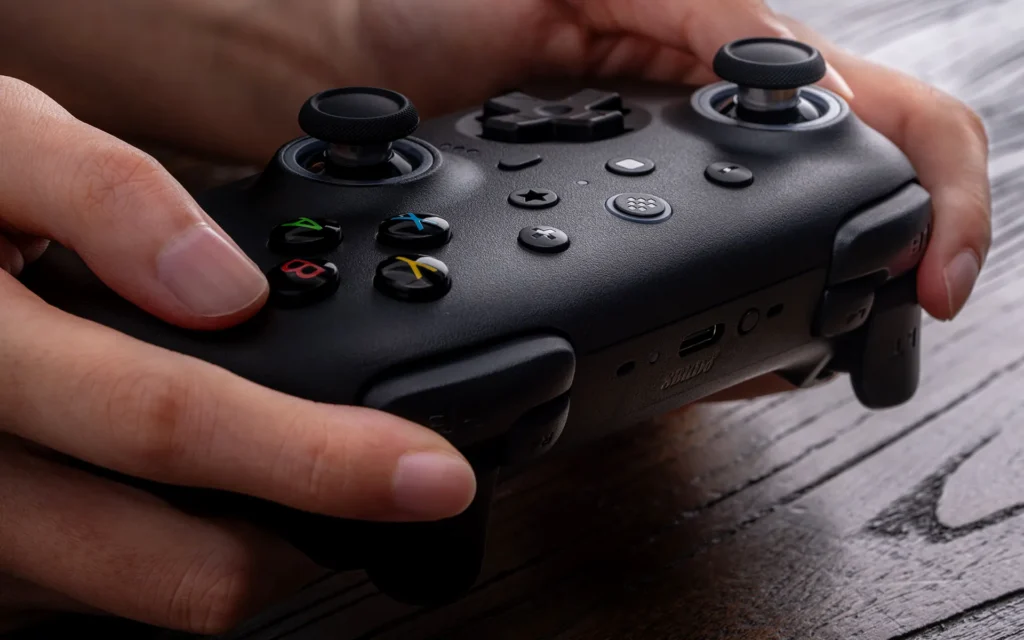
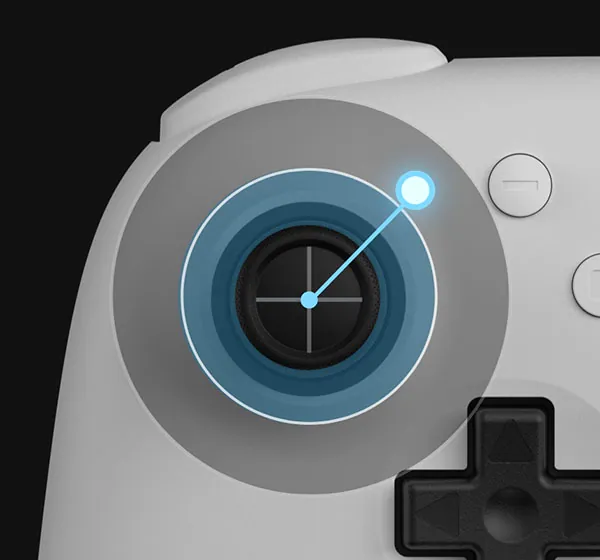
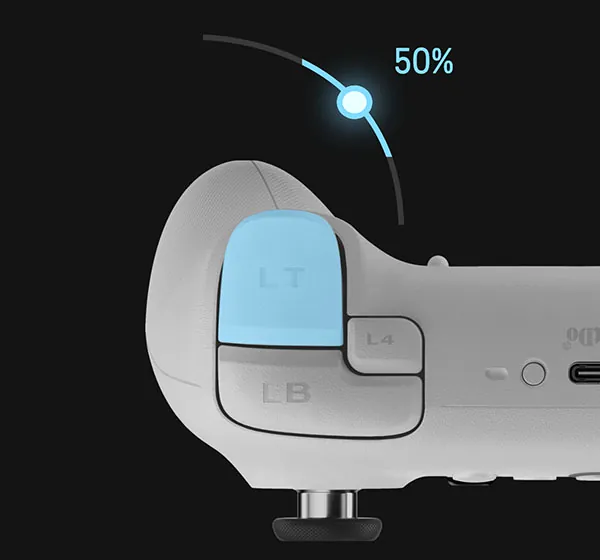
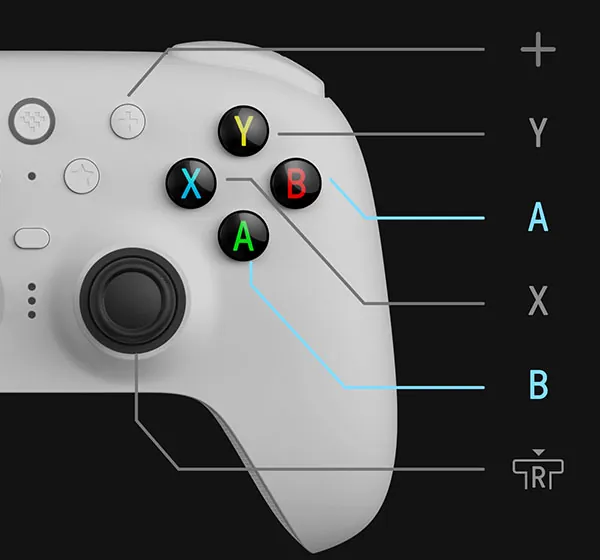
A look at the next-generation components: Non-contact magnetic sticks, mechanical buttons, and customizable trigger mechanisms.
The Competitive Edge: Latency and Tuning
In competitive gaming, reliability is only half the battle; latency is the other. The 8BitDo Ultimate 2 and other new models are leveraging optimized 2.4G wireless technology (often with a dedicated dongle) to achieve reported 1000Hz polling rates and ultra-low latency, sometimes matching or even beating wired connections. This stability, combined with the extreme precision of magnetic sensors, allows competitive players to shrink their dead zones dramatically. By eliminating the fear of mechanical drift, these controllers grant users faster reaction times and smoother micro-adjustments, translating directly into better competitive performance.
The Dead Zone Advantage
Because Hall Effect and TMR sticks eliminate drift, competitive players can set their joystick dead zones to near-zero (0.01-0.03) without experiencing ghost movement. This is a massive competitive advantage, enabling instantaneous input registration that is simply impossible with traditional potentiometer controllers, which require larger dead zones to mask inherent hardware flaws.
“The 8bitdo Ultimate 2 is like the perfect pc controller for me, familiar Xbox shape, Hall effect/TMR sticks, back buttons, programmable, no hassle connection and a dock to make sure it’s never not charged.”
The Definitive Verdict on the Magnetic Revolution
The shift away from potentiometers marks the most significant advancement in controller technology in a decade. TMR sensors, led by the 8BitDo Ultimate 2, currently offer the best blend of precision, low power draw, and high polling rate, making it the definitive choice for PC gamers prioritizing reliability and competitive edge. The Thrustmaster REVOLUTION 5 PRO is an excellent, highly modular choice for those who need physical customization, provided they can overlook the lack of PS5 haptics. Ultimately, the new standard for any gaming controller is clear: if it doesn’t use non-contact magnetic sensors, it’s already obsolete.
Frequently Asked Questions
Will Sony, Microsoft, or Nintendo adopt TMR sticks soon?
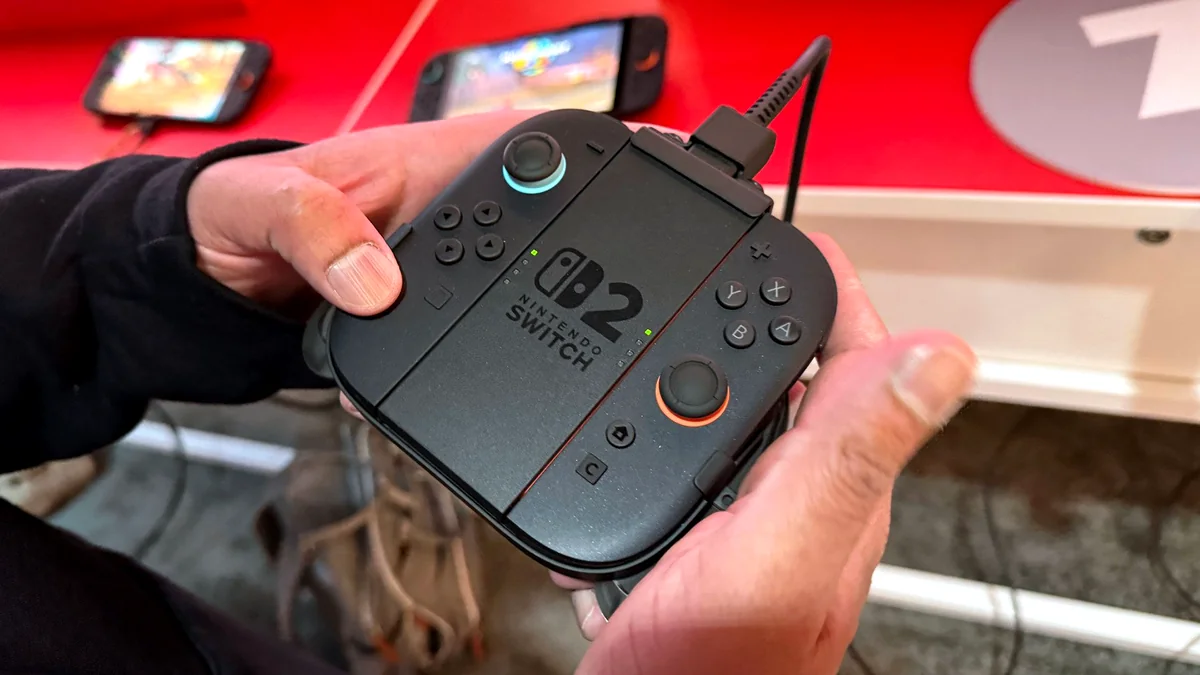
While third-party adoption is rapid, major console manufacturers have been slow. Nintendo confirmed the Switch 2 will not use Hall Effect, focusing instead on proprietary durability improvements. Industry experts believe TMR cost must decrease before it becomes mainstream for console first-party controllers, but upgrade kits are already available.
Is Hall Effect or TMR better for battery life?
TMR is significantly better for power efficiency. TMR sensors typically draw 0.1mA to 0.3mA, whereas Hall Effect sensors draw 0.5mA to 2mA. This lower power draw is a key advantage for TMR in wireless controllers.
Does a 1000Hz polling rate actually matter for controller input?
Yes. Polling rate defines how often the controller reports its position to the PC. A 1000Hz rate means the controller updates every 1ms, drastically reducing the transmission latency and ensuring the highest possible responsiveness, which is essential for competitive esports titles.