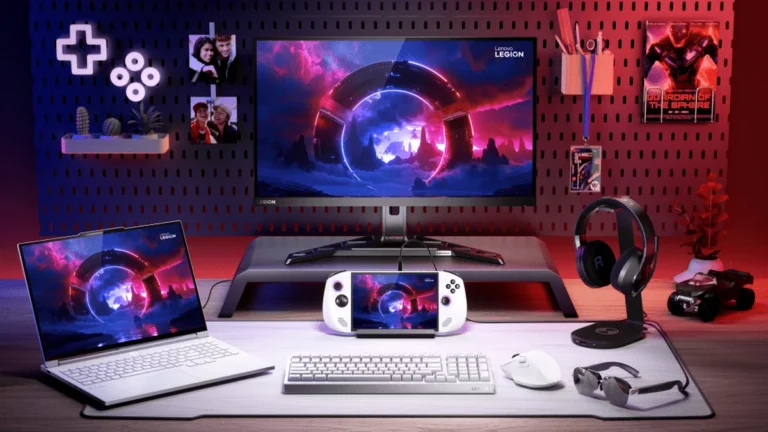

The handheld gaming PC market is experiencing an unprecedented boom, transforming how and where we play. With sales projected to soar from 19.3 million units in 2023 to 29.3 million by 2028, innovation is rampant, and choices abound. Amidst this exciting, yet crowded, landscape, Lenovo’s Legion Go series has emerged as a significant, albeit sometimes contentious, contender. It stands alongside established powerhouses like Valve’s Steam Deck and the Asus ROG Ally, carving its own niche with ambitious design and a commitment to versatility. This guide delves into the Legion Go’s journey, from its initial bold entry to its strategic evolution, providing the data-driven analysis essential for informed purchasing decisions.
Key Takeaways
- The original Lenovo Legion Go introduced unique features like a large screen and detachable controllers but faced initial criticisms regarding software optimization and battery life on Windows.
- The iterative Legion Go S, particularly when paired with SteamOS, demonstrates strong performance and enhanced value, especially when available on sale, offering a compelling alternative to rivals.
- The highly anticipated Legion Go 2 promises substantial upgrades, including an OLED display, AMD Zen 5 architecture, and a larger battery, directly addressing feedback from earlier models.
- The choice of operating system (Windows vs. SteamOS) remains a critical differentiator, profoundly impacting user experience, performance, and battery efficiency.
- Community feedback, while largely positive for discounted ‘S’ models, consistently highlights underlying concerns about the series’ long-term durability and overall build quality.
The Genesis of a Giant: Unpacking the Original Legion Go
Pros
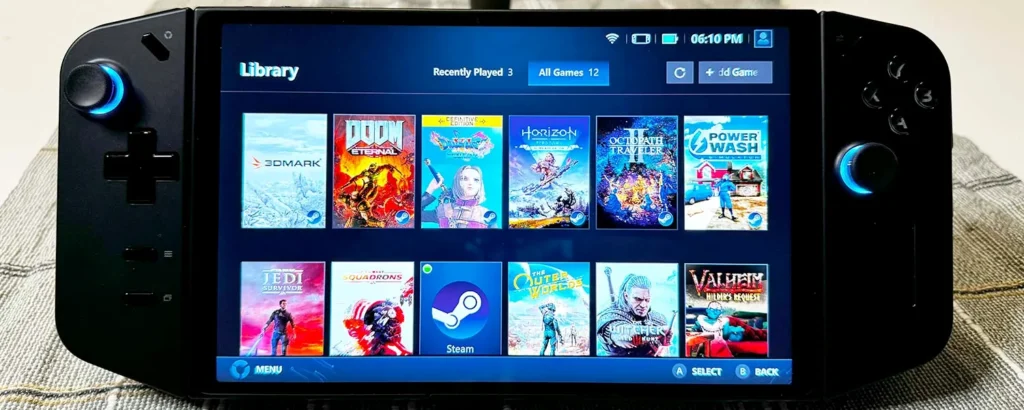
- Innovative detachable TrueStrike controllers offer versatile play modes, including wireless use.
- Large 8.8-inch QHD+ (2560×1600) IPS 144Hz display provided a visually immersive experience unmatched at launch.
- Unique FPS Mode transforms the right controller into a vertical mouse, enhancing precision for specific game genres and desktop navigation.
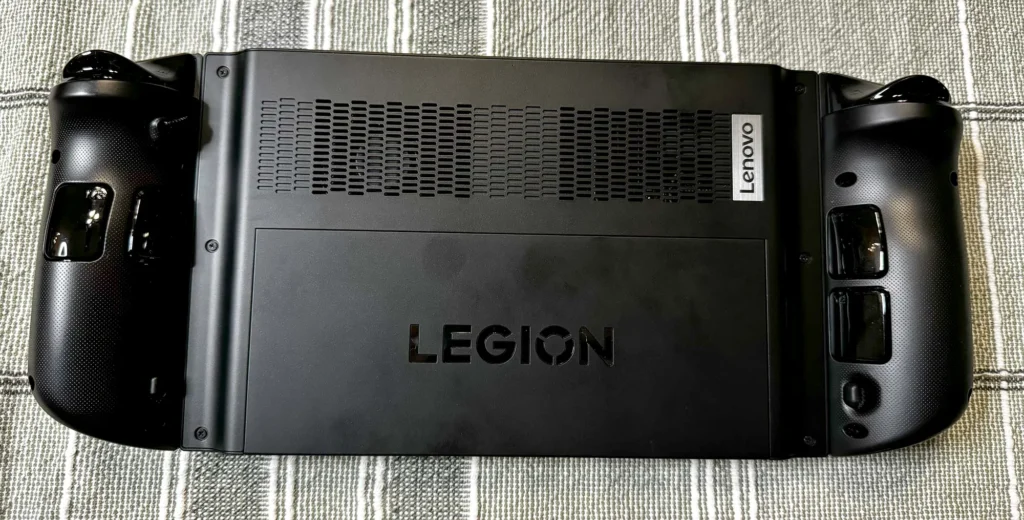
- Integrated kickstand facilitated comfortable tabletop gaming with detached controllers.
- Equipped with two versatile USB-C 4.0 ports, offering robust connectivity for peripherals and external GPUs.
- Hall Effect joysticks promised drift-free, accurate control.
Cons
- Considerable weight (854g with controllers) made extended handheld sessions challenging.
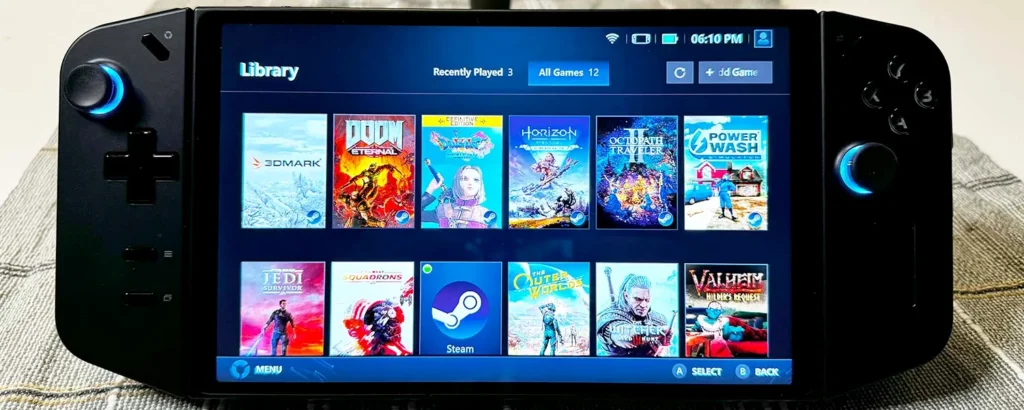
- Windows 11 operating system was often criticized for being clunky and unoptimized for a small touchscreen interface.
- Battery life (49.2Whr) was generally considered insufficient for demanding games, especially at higher TDPs.
- The high native resolution of the display often outstripped the AMD Ryzen Z1 Extreme’s ability to maintain high frame rates without significant graphical compromises.
- Initial software (Legion Space) was buggy and lacked features present in competitors, requiring multiple updates.
- Speakers, positioned at the top of the device, directed sound away from the user, diminishing audio immersion.
Refinement in Iteration: The Legion Go S Takes the Stage
| Feature | Lenovo Legion Go (Original) | Lenovo Legion Go S (Windows) | Lenovo Legion Go S (SteamOS) |
|---|---|---|---|
| CPU | AMD Ryzen Z1 Extreme | AMD Ryzen Z2 Go / Z1 Extreme | AMD Ryzen Z2 Go / Z1 Extreme |
| RAM | 16GB LPDDR5X-7500 | 16GB / 32GB LPDDR5X-6400MHz | 16GB / 32GB LPDDR5X-6400MHz |
| Storage | 256GB / 512GB / 1TB PCIe Gen 4 SSD | 512GB / 1TB PCIe Gen 4 SSD | 512GB / 1TB PCIe Gen 4 SSD |
| Display Size | 8.8-inch | 8-inch | 8-inch |
| Display Resolution | 2560×1600 (QHD+) | 1920×1200 (WUXGA) | 1920×1200 (WUXGA) |
| Display Refresh Rate | 144Hz | 120Hz | 120Hz |
| Display Panel Type | IPS | IPS | IPS |
| Battery Capacity | 49.2Whr | 55.5Whr | 55.5Whr |
| Operating System | Windows 11 Home | Windows 11 Home | SteamOS |
| Starting Price (Approx.) | $699 | $729 (Z2 Go, 32GB/1TB) | $599 (Z2 Go, 16GB/512GB) / $829 (Z1 Extreme, 32GB/1TB) |
| Weight | 854g (1.88 lbs) | 730g (1.61 lbs) | 730g (1.61 lbs) |
The OS Divide: Windows 11 vs. SteamOS on Handhelds
Windows 11
- Unparalleled Game Compatibility: Access to Steam, Epic, Xbox Game Pass, GOG, etc.
- Full Desktop Functionality: Complete desktop experience for productivity.
- Greater Versatility: Run non-gaming applications easily.
- Suboptimal UI for Touch: Clunky navigation on small screens.
- Higher Resource Overhead: Background processes impact performance.
- Frequent Software Issues: Manufacturer overlays can be buggy.
SteamOS
- Optimized Gaming Experience: Intuitive, console-like interface.
- Enhanced Performance & Battery: Lightweight Linux-based system.
- Seamless Steam Integration: Cloud saves and community features.
- Faster Load Times: Quicker UI and game loading.
- Compatibility Limitations: Relies on Proton; anti-cheat can be an issue.
- Learning Curve: Desktop mode requires Linux familiarity.
- Limited Ecosystem: Other launchers require complex workarounds.
“i was not a pc gamer, and def not a PC handheld gamer. because of this video i snagged one (same as this, Z1E, 32g, 1tb, steam os) during boxing day sales at bestbuy in canada for $799 CAD (~$585 usd). been having a blast, Steam OS just works…”
Performance Analysis & Benchmarks: Where the Rubber Meets the Road
Comparative Gaming Performance: Legion Go Series vs. Rivals
Performance figures are conceptual, based on reported trends and average benchmarks across various sources. 1% Lows provide insight into frame-time consistency.
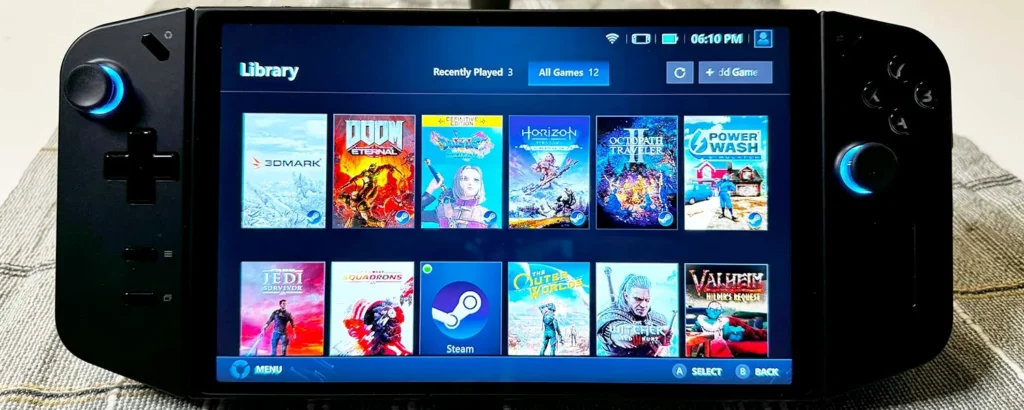
Design and Ergonomics: Lenovo’s Bold Vision
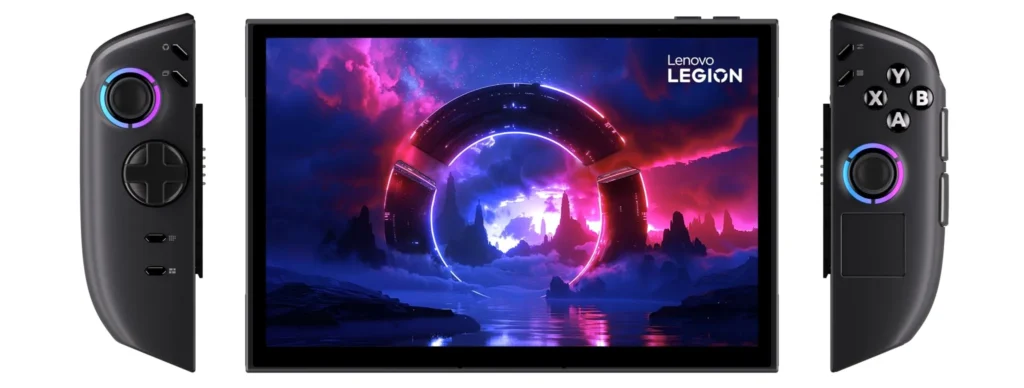
FPS Mode: A Niche, Yet Potent, Advantage
The Legion Go’s ‘FPS Mode’ is a standout differentiator. By simply activating a switch and attaching a specialized puck, the right TrueStrike controller transforms into a vertical mouse. This unique mechanic offers a surprisingly precise aiming solution for first-person shooters, particularly beneficial for older titles not optimized for traditional controllers.
“I got mine on Black Friday for $649, and it’s been my go-to handheld so far. Sure, it lacks an OLED panel, but the additional RAM, screen size, VRR, power, and ergonomics are perfect for my needs.”
“Unfortunetly, the right trigger on it broke off a week ago, less than a month of regular use with no drops… I hope that this trigger breaking off isn’t representative of the overall build quality of the device as a whole.”
The Horizon: What to Expect from the Legion Go 2
Lenovo Legion Go (8.8”, 2) – Official & Speculative Specifications
Making Your Move: A Buyer’s Guide
- Define Your Budget: Determine value proposition of current models on sale vs upcoming premium features.
- Prioritize Your OS Preference: Windows 11 for versatility, SteamOS for optimized gaming.
- Assess Your Primary Use Case: Lighter devices for travel, Legion Go for screen real estate and tabletop modes.
- Consider Waiting: Hold out for Legion Go 2 if OLED and Zen 5 are non-negotiable.
- Look for Sales: Legion Go S offers exceptional value when discounted.
Frequently Asked Questions
Is the Lenovo Legion Go series good for emulation?
Yes, particularly the Legion Go 2 with its AMD Zen 5 CPU and RDNA 3.5 graphics is expected to be capable of high-end emulation for all systems.
How does Legion Space compare to other handheld launchers?
Initially buggy, Lenovo has actively improved the UI with a significant overhaul in mid-2024 to offer a more seamless experience.
When is the Legion Go 2 expected to release?
Official release is anticipated for September or October 2025, with a starting price around €999 (~$1050 USD).
Final Verdict: The Lenovo Legion Go series represents a fascinating, if sometimes imperfect, evolution in the handheld PC gaming space. Its original iteration boldly pushed boundaries with a massive screen, versatile detachable controllers, and the unique FPS mode, though it grappled with Windows 11’s handheld shortcomings and battery life. Looking ahead, the Legion Go 2 promises to be a significant leap, addressing key criticisms with an OLED display, next-gen AMD silicon, and a larger battery.